
Store your oils in dark glass bottles or airtight containers away from light and heat to keep your oils fresh and flavorful. Aim for a cool, dark place with temperatures between 50°F and 64°F.
Seal containers tightly after each use to minimize oxygen exposure. Regularly check for signs of spoilage like off-smells, bitter tastes, or cloudiness. Different oils have varying shelf lives, so monitor expiration dates and use them accordingly. Transfer smaller amounts to dark glass bottles for daily use while keeping larger quantities in bulk storage.
Proper storage preserves quality and enhances nutritional profiles. Explore deeper to uncover more tips for maximizing your oil’s longevity and taste.
Quick Guide
- Store oils in dark glass bottles to protect from light and preserve quality.
- Keep oils in a cool, dark place between 50°F and 64°F for optimal freshness.
- Use airtight containers to minimize oxygen exposure and prevent rancidity.
- Regularly check for signs of spoilage like off-smells, bitter tastes, or cloudiness.
- Consider refrigeration for heat-sensitive oils to extend shelf life and maintain flavor.
Understanding Oil Storage Basics
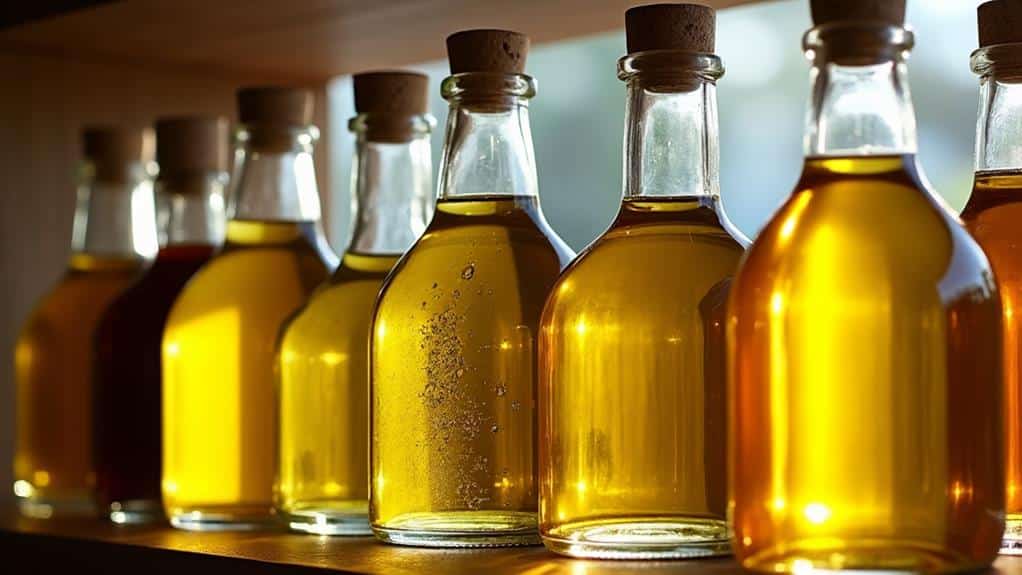
How you store your oils can make a difference in their freshness and flavor. Proper oil storage extends shelf life and preserves quality.
Use dark glass bottles to protect oils from light, which can create free radicals. Keep oils in a cool, dark place and seal them tightly in an airtight container after each use.
Regularly check for signs of spoilage and monitor the expiration date.
Best Containers for Oil Storage
Choosing the right container is essential for preserving your oil’s quality and flavor.
Opt for dark glass bottles to protect your extra virgin olive oil from light damage. Avoid plastic, as it can compromise oil quality.
Use airtight containers to prevent oxidation of unrefined coconut and other cooking oils.
Consider larger containers with spouts for bulk storage when storing your cooking oils, and transfer smaller amounts to dark glass bottles for daily use.
Ideal Storage Conditions
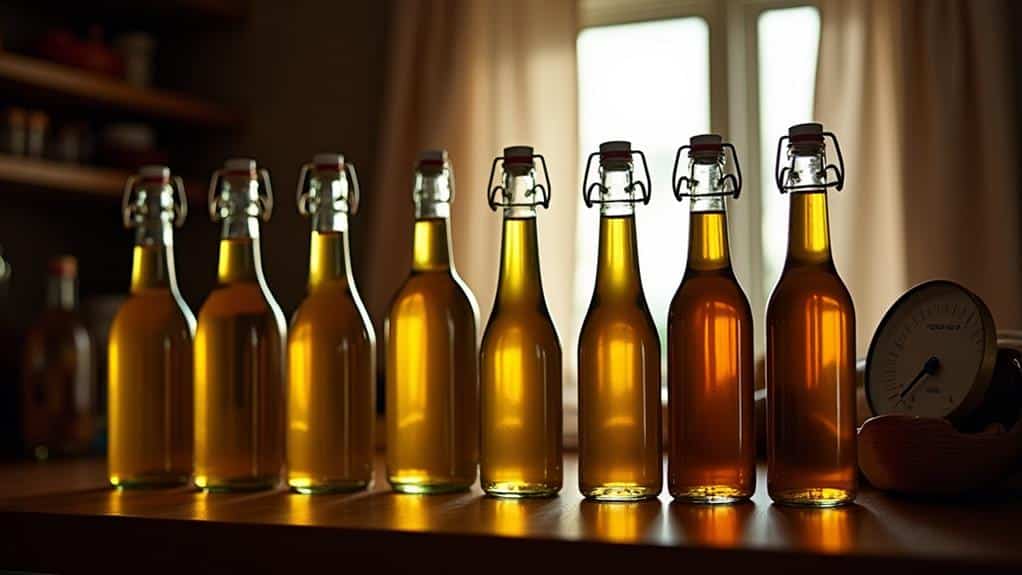
It’s essential to store cooking oils under ideal conditions to maximize their lifespan and quality.
Both Canola and Vegetable oils are sensitive to light and heat, affecting their flavor and health benefits. Keep your oils in a cool, dark place, away from heat sources and light exposure. Aim for temperatures between 50°F and 64°F to maintain freshness and nutritional value.
Check your cooking oil regularly for signs of deterioration, such as an unpleasant odor, to prevent potential health risks like heart disease.
Additionally, proper storage can enhance the nutritional profiles of oils and prolong their use in your culinary escapades.
Recognizing Signs of Spoilage
Proper storage is just one part of maintaining your cooking oils; you must also stay vigilant for signs of spoilage.
Watch for off-smells resembling wax or putty, bitter tastes, cloudiness, or color changes when checking your oils. These are telltale signs of rancid oil.
Always check the expiration date, especially for oils packaged in glass, and keep them away from heat to prolong freshness.
Extending Oil Shelf Life
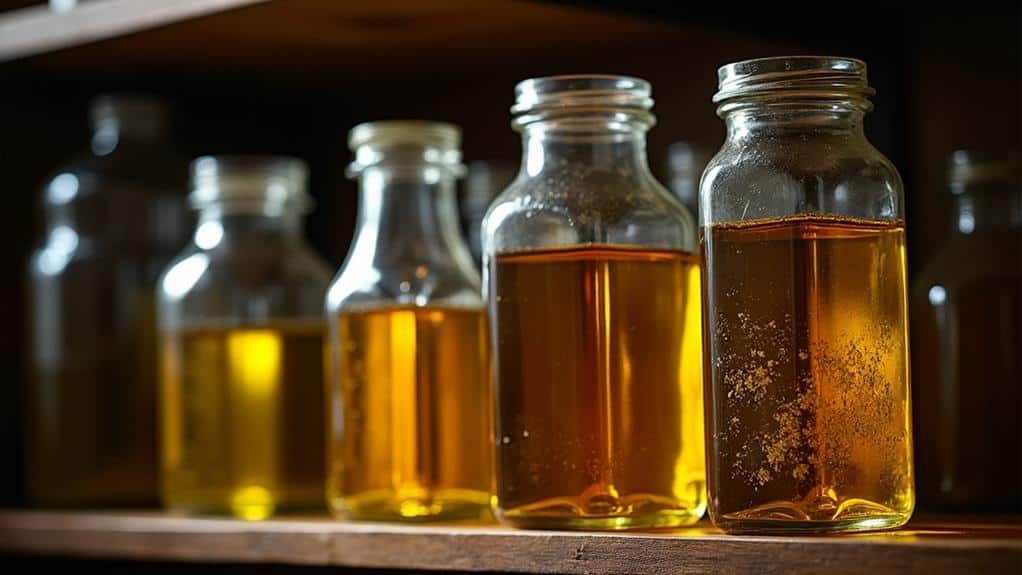
Once you’ve purchased your favorite cooking oils, you’ll want to guarantee they stay fresh for as long as possible.
Store them in a cool, dark place at room temperature to extend shelf life. Use opaque containers, keeping lids tight to protect from light and minimize oxygen exposure.
Regularly check for signs of spoilage and consider refrigeration for heat-sensitive oils.
These steps will help maintain your cooking oils’ quality and flavor.
Wrapping Up
By following these guidelines, you’ll guarantee your oils stay fresh and flavorful for longer. Remember to store them in dark, cool places, use appropriate containers, and check for signs of spoilage regularly.
Proper care will extend your oils’ shelf life and maintain their quality. Remember to use your oils within a reasonable timeframe, even when stored correctly.
Armed with this knowledge, you’re ready to preserve your oils’ freshness and enjoy their flavors to the fullest.


