
You can tell if spinach has gone bad by checking for several key warning signs. Look for slimy or mushy leaves, which indicate bacterial breakdown, and dark spots or significant discoloration beyond normal wilting. Smell your spinach—any sour, ammonia-like, or rotten odor means it’s time to toss it. White, gray, or fuzzy patches signal mold growth, and you shouldn’t try salvaging affected leaves. While slight wilting is reversible and safe, combining it with foul smells or sliminess confirms spoilage. Understanding these distinctions helps you avoid foodborne illness and make the most of your greens.
Quick Guide
- Fresh spinach has lively green leaves; yellow, brown, or dark-spotted leaves indicate deterioration and potential spoilage.
- Slimy or mushy texture signals bacterial breakdown; fresh spinach should feel crisp and firm to the touch.
- Sour, ammonia-like, or rotten odors indicate bacterial growth; fresh spinach has a mild, earthy aroma.
- White, gray, or fuzzy mold patches require immediate disposal; mold spores spread invisibly throughout the bunch.
- Slight wilting indicates moisture loss and can be revived; true spoilage includes slime, foul smell, or mushiness.
Visual Changes: Discoloration and Dark Spots
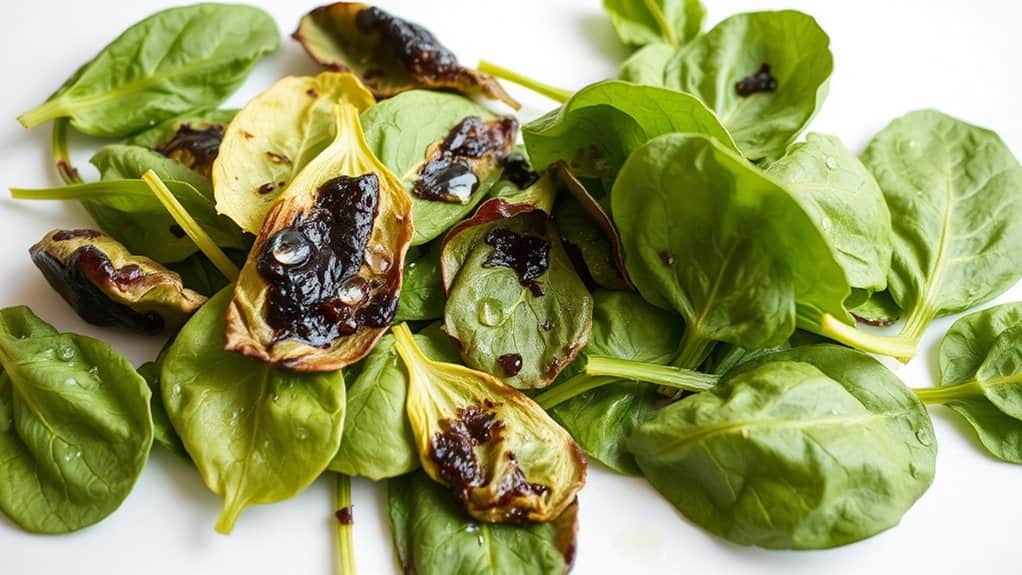
When spinach starts to go bad, the first signs you’ll notice are changes in its color. Fresh spinach has lively green leaves, but as it deteriorates, you’ll see yellowing or browning.
Dark spots may also appear on the leaves, indicating bacterial growth or oxidation. If your spinach shows significant discoloration or numerous dark patches, it’s best to discard it. Cooked spinach should be eaten within 3-5 days when stored in the fridge to maintain the best quality and safety.
Texture Changes: Slimy or Mushy Leaves
As spinach ages, the texture becomes one of the most reliable indicators that it’s no longer safe to eat. Fresh spinach should feel crisp and firm to the touch.
When leaves turn slimy, mushy, or excessively soft, bacteria has started breaking down the plant cells. This deterioration creates a slippery coating and waterlogged texture that’s unmistakable. Discard spinach immediately if you notice these changes. If you’re unsure, compare it to the crisp feel of Romaine lettuce as a quick reference point for freshness.
The Smell Test: Detecting Unpleasant Odors
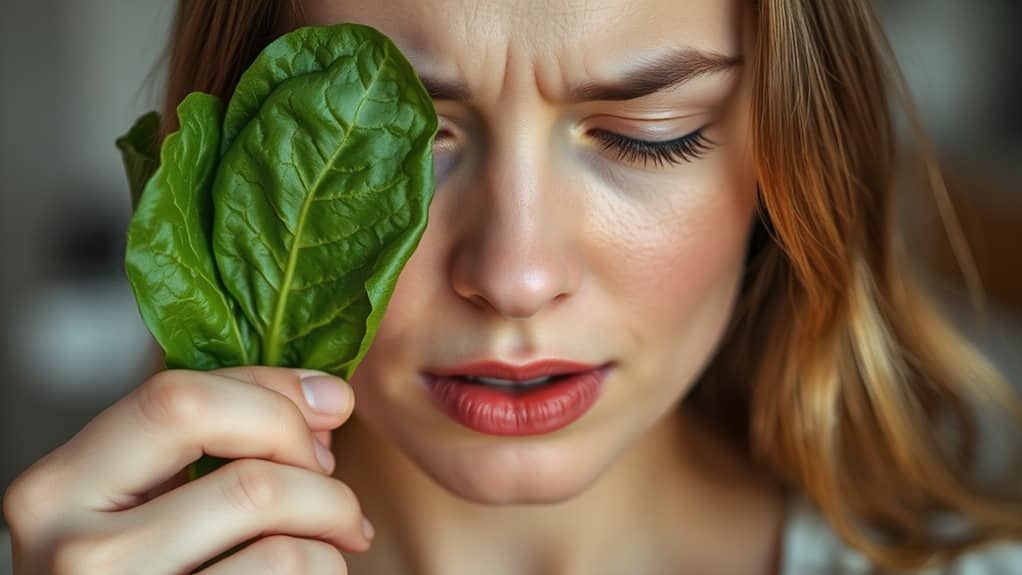
Your nose provides another essential tool for determining whether spinach has gone bad. Fresh spinach has a mild, earthy aroma that’s barely noticeable.
However, spoiled spinach emits a distinctly sour, ammonia-like, or rotten smell that signals bacterial growth and decomposition. If you detect any unpleasant or off-putting odors when you open the container or bag, discard the spinach immediately to avoid potential foodborne illness. Similar to the odor test, any sour or acrid smell is a clear sign the food should be thrown out.
Wilting vs. Spoilage: Understanding the Difference
You’ve probably noticed your spinach looking a bit droopy after sitting in the fridge for a day or two, but that doesn’t necessarily mean it’s gone bad.
Wilting simply indicates that the leaves have lost some moisture and may appear limp or less lively, while true spoilage involves bacterial growth that makes the spinach unsafe to eat.
Understanding this distinction will help you avoid throwing away perfectly good spinach and recognize when it’s actually time to toss it.
Just like fruit where humidity accelerates mold growth when left out too long, excess moisture can also speed up spoilage and off odors in delicate greens like spinach.
Normal Wilting Characteristics
Wilting doesn’t automatically mean your spinach has gone bad. Leaves naturally lose moisture and become limp when stored in the refrigerator, especially if they’re not in an airtight container.
This wilting is simply dehydration, not spoilage. You can often revive wilted spinach by soaking it in ice water for a few minutes, which will restore its crispness and make it perfectly safe to eat.
True Spoilage Indicators
However, genuine spoilage shows distinct signs that go beyond simple moisture loss. You’ll notice a slimy texture coating the leaves, accompanied by a foul, sour odor.
Dark spots or patches may appear, indicating bacterial growth. The leaves become mushy rather than just limp, and discoloration turns yellowish-brown or black. These warning signs mean the spinach is unsafe to eat.
Mold Growth: White or Fuzzy Patches
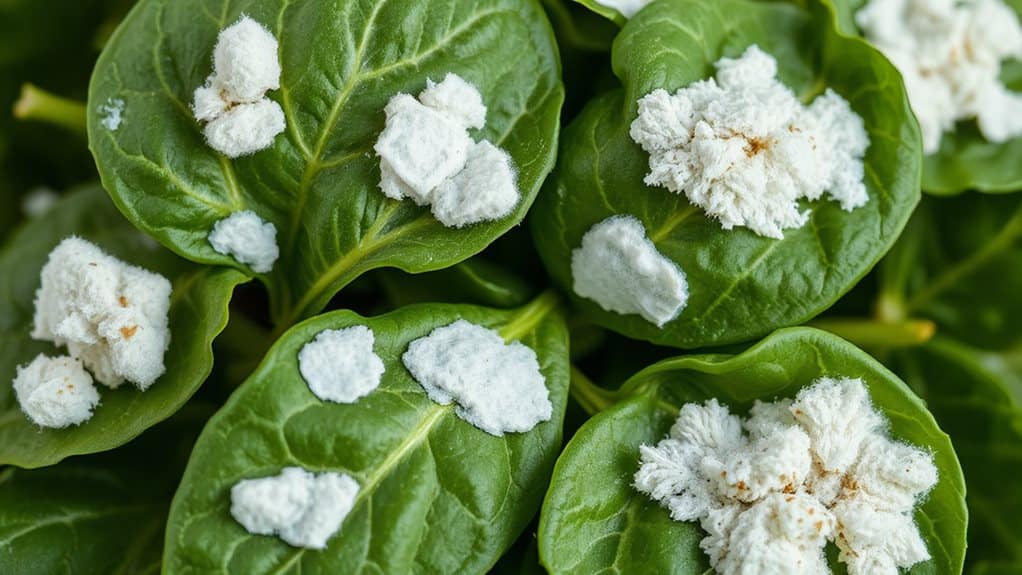
Spotting mold on spinach leaves is one of the clearest signs that your greens have gone bad and need to be thrown away immediately.
You’ll typically notice white, gray, or fuzzy patches developing on the surface. These growths often appear powdery at first but become more prominent over time.
Don’t attempt to salvage moldy spinach by removing affected leaves, as spores spread invisibly throughout the bunch.
As with peanut butter—which is often considered a spread but can function as a condiment in recipes—flavor enhancer ingredients are best kept separate from spoiled produce to avoid contamination.
How Long Does Fresh Spinach Last?
Understanding how quickly spinach can spoil will help you plan your grocery shopping and meal prep more effectively.
Fresh spinach typically lasts 5-7 days in your refrigerator when stored properly. Pre-washed bagged spinach often expires faster, around 3-5 days after opening. Unopened bags can last until their printed expiration date. Baby spinach tends to spoil quicker than mature leaves due to its delicate texture and higher moisture content.
Storage Mistakes That Speed Up Spoilage

Even if you’ve bought the freshest spinach available, you can accidentally ruin it within days by making common storage mistakes.
The two biggest culprits that cause premature spoilage are temperature fluctuations and improper moisture management, both of which create the perfect environment for bacteria growth and decay.
Understanding these mistakes will help you keep your spinach fresh for as long as possible and avoid wasting money on greens that go bad too quickly.
Improper Temperature Control Issues
Temperature fluctuations and improper storage conditions can convert fresh spinach into a slimy mess within days. You’ll accelerate spoilage by storing spinach at temperatures above 40°F or leaving it in your car after shopping.
Room temperature exposure, even briefly, encourages bacterial growth and moisture accumulation. Keep your refrigerator’s crisper drawer between 32-40°F, and don’t store spinach near the door where temperatures constantly shift.
Moisture and Airflow Problems
Excess moisture creates the perfect breeding ground for bacteria and mold on spinach leaves, while poor air circulation traps that moisture and compounds the problem.
You’ll notice slimy leaves and unpleasant odors when these conditions persist.
To prevent this, store spinach in containers with ventilation holes or slightly opened bags, and always remove excess water by patting leaves dry with paper towels before refrigerating.
Food Safety Risks of Eating Bad Spinach
When you consume spoiled spinach, you’re putting yourself at risk for foodborne illnesses that can range from mild discomfort to serious health complications.
Bacteria like E. coli, Salmonella, and Listeria thrive on decaying greens, causing symptoms such as nausea, vomiting, diarrhea, and abdominal cramps.
In severe cases, these pathogens can lead to dehydration, fever, and infections requiring medical attention, especially in vulnerable individuals.
When Slightly Wilted Spinach Can Still Be Used
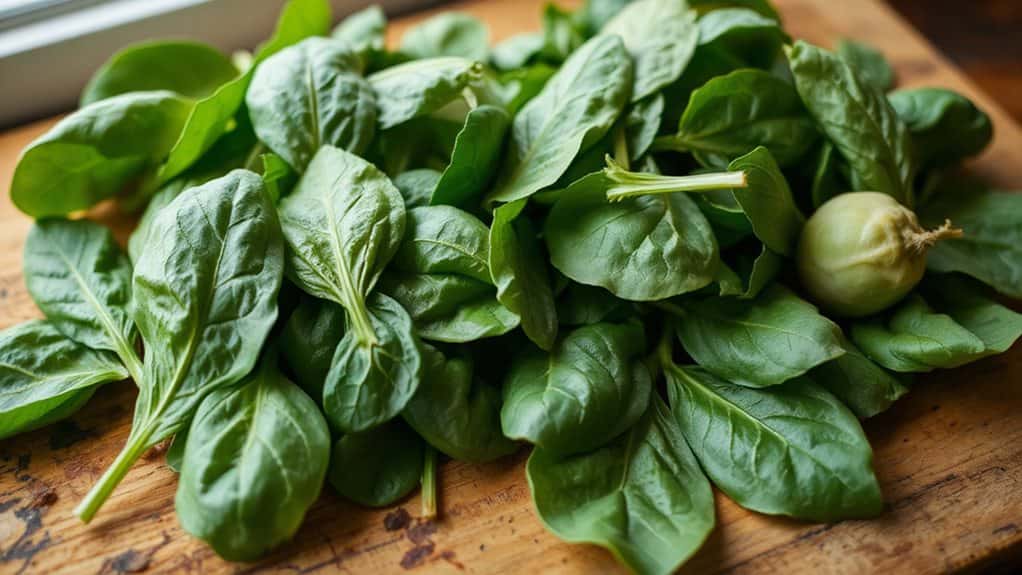
Spotting the difference between spinach that’s truly spoiled and leaves that are simply wilted can save you from unnecessary food waste.
Slightly wilted spinach remains safe to eat if it doesn’t have sliminess, off odors, or dark spots. You can revive limp leaves by soaking them in ice water for several minutes. They’re perfect for cooking in soups, sautés, or smoothies where texture matters less.
Proper Storage Tips to Extend Freshness
Knowing how to store spinach correctly makes all the difference in keeping those leaves fresh for as long as possible.
Keep your spinach in the refrigerator’s crisper drawer, where humidity levels stay ideal.
Don’t wash it before storing, as excess moisture accelerates spoilage.
Instead, place unwashed leaves in a breathable container or loosely sealed bag to maintain proper airflow and prevent premature wilting.
Wrapping Up
Keeping spinach fresh requires proper storage and regular checks for spoilage signs. You’ll know it’s gone bad when you spot discoloration, slimy texture, foul odors, or mold. While slightly wilted leaves can still work in cooked dishes, you shouldn’t risk eating spinach that shows clear spoilage. Store it correctly in your refrigerator’s crisper drawer, and you’ll extend its shelf life while protecting yourself from potential foodborne illness.


