
Trim the tomato’s ends to create flat surfaces, then wash and pat it dry. Place it on its side and hold it with your non‑dominant hand, tucking your knuckles in and keeping fingers away from the blade. Use a razor‑sharp serrated knife or a sharp straight edge, applying light, even strokes at a 14‑20° angle so the skin gives traction but the flesh stays intact. Slice vertically through the core, then cut the wedges, strips, or mince as needed; the next sections show you how to perfect each cut.
Quick Guide
- Use a serrated or razor‑sharp straight‑edge knife and apply light, even strokes to cut through the skin without crushing the flesh.
- Trim both ends of the tomato to create flat surfaces, then place it on its side and steady it with the non‑dominant hand, fingers tucked back.
- Position the knife at a 14–20° angle, using a pinch‑grip in the dominant hand to guide a gentle sawing motion while keeping pressure low.
- Keep the tomato dry and firm by patting it after washing; a dry surface reduces slip and allows cleaner cuts.
- Slice on a dedicated produce cutting board, store sliced pieces in a BPA‑free container at ≤41 °F, and finish within four hours to maintain texture.
How to Cut a Tomato Cleanly Without Crushing It?
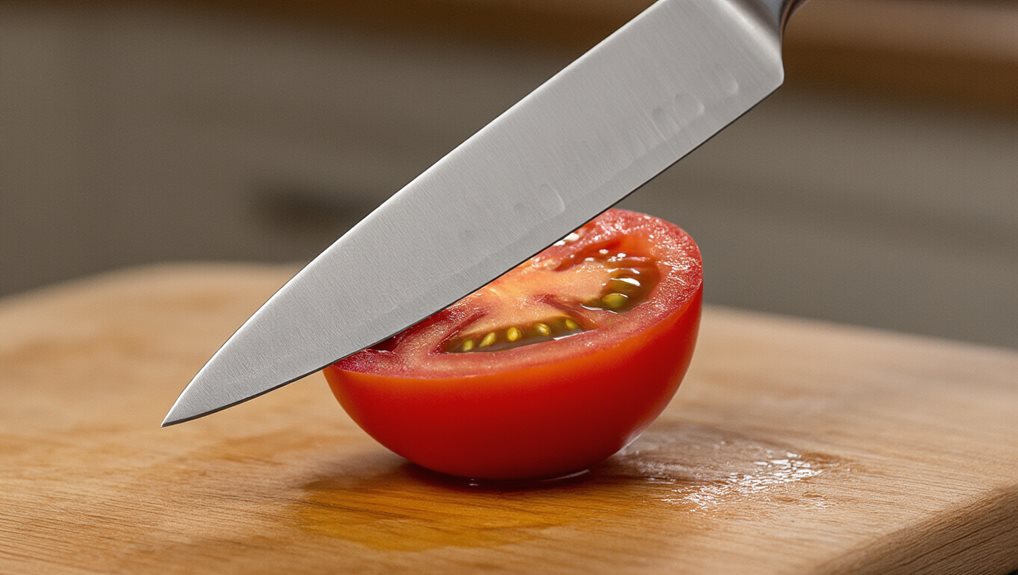
How can you slice a tomato cleanly without crushing it? Choose a serrated knife or a razor‑sharp straight edge; the serrated blade lets you saw gently, while a sharp straight blade cuts through skin without pressure. Position the fruit on its side, hold it steady with your non‑dominant hand, and slice vertically through the core. Use light, even strokes to keep juice inside and preserve shape. After slicing, store leftovers in airtight containers to reduce odor transfer and keep them fresh longer. Serrated knives provide traction on the slippery skin for clean cuts.
Safety Practices for Tomato Cutting
Ever wondered why a simple tomato slice can become a contamination hazard? Use a produce‑only cutting board; shared boards spread pathogens. Wash tomatoes under running water, never soak them. Wear clean gloves and wash hands before handling. Store sliced tomatoes in clear, BPA-free containers to improve visibility and reduce cross-contact risks, especially when using stackable bins. Keep cut tomatoes at 41°F or lower, or hot‑hold above 135°F, and finish within four hours. Separate them from raw meat and unwashed produce. The Ohio Administrative Code requires a written procedure and marking system for a 4‑hour hold under Time as a Public Health Control TPHC.
Prepare the Tomato for Stable Cutting
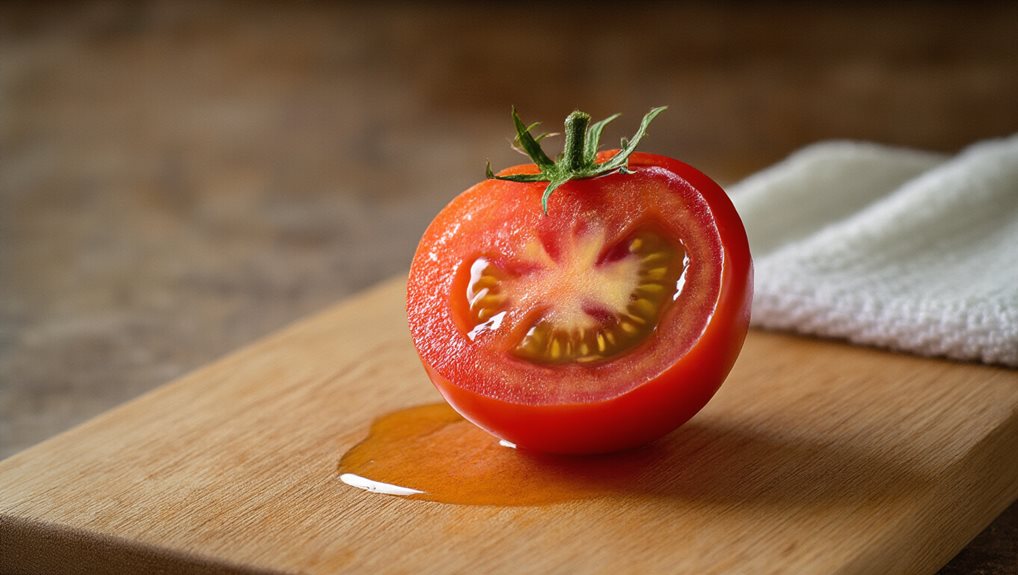
When you prep a tomato for stable cutting, start by trimming both ends to create flat surfaces that keep it from rolling.
Slice a thin piece off the top parallel to the stem, then remove the stem end for a solid base.
Wash under cool water, dry gently, and pat away excess moisture.
This yields a firm, non‑slipping tomato ready for precise slicing.
As with eggplants where eggplant skin is safe to eat, you can leave the tomato skin on while you slice for better structure and cleaner cuts.
Hand Positioning for Safe Tomato Cutting
Ever wondered why a steady hand matters more than a sharp knife when slicing tomatoes? You tuck your knuckles in, keeping fingers away from the blade, while your non‑dominant hand balances the fruit on its side, fingers pulled back.
Light pressure prevents squishing, and a pinch‑grip on the dominant hand guides a gentle sawing motion.
For best control, use a knife with an edge around 14–20° per side to improve slicing performance with less force.
Adjust positioning for left‑ or right‑handed use.
Finish Your Cuts With Tips for Perfect Tomato Wedges, Strips, and Mince
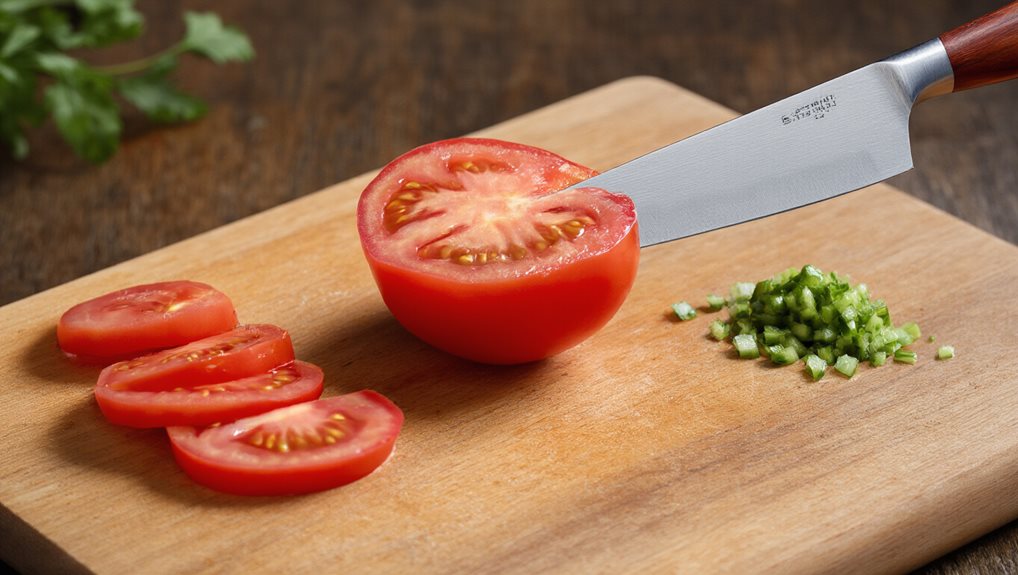
So how do you turn a sliced tomato into perfectly uniform wedges, strips, or mince without turning it into a mushy mess? Remove the stems and bottom, then cut the tomato sideways, flattening it.
Slice lengthwise into quarters, then along the core line for wedges.
Scoop out seeds, fillet the core, and slice thin strips.
Re‑arrange strips, turn 90°, and dice for mince, using gentle, short strokes.
Just like dry meat helps sauce adhere better, a dry surface helps your knife glide cleanly instead of dragging and squishing the tomato.
Wrapping Up
Now you’ve got the right knife, a stable board, and proper hand placement, you can slice tomatoes cleanly every time. Keep the blade sharp, use a gentle rocking motion, and let the tomato rest on its stem side for stability. By following these steps, you’ll avoid squishing the fruit and produce neat wedges, strips, or mince ready for salads, sandwiches, or sauces. Consistent practice will make the technique feel natural and reliable.


