
When you peel potatoes, enzymes like polyphenol oxidase react with oxygen, causing enzymatic browning. Damaging the cell tissues releases phenolic compounds, which then interact with these enzymes, forming dark pigments called quinones. Increased cell damage and oxygen exposure speed up this process, making the potato look brown. Cooler temperatures or adding acids like lemon juice can slow down browning. To learn more about how to prevent this, keep exploring the details below.
Quick Guide
- Peeling damages potato cells, releasing phenols that react with enzymes upon oxygen exposure.
- Polyphenol oxidase (PPO) catalyzes oxidation of phenols, forming brown pigments called quinones.
- Exposure to oxygen after peeling accelerates enzymatic browning and discoloration.
- Cooler temperatures slow enzyme activity, reducing browning rate.
- Adding acids like lemon juice inhibits PPO, preventing browning.
Why Do Potatoes Turn Brown After Peeling?
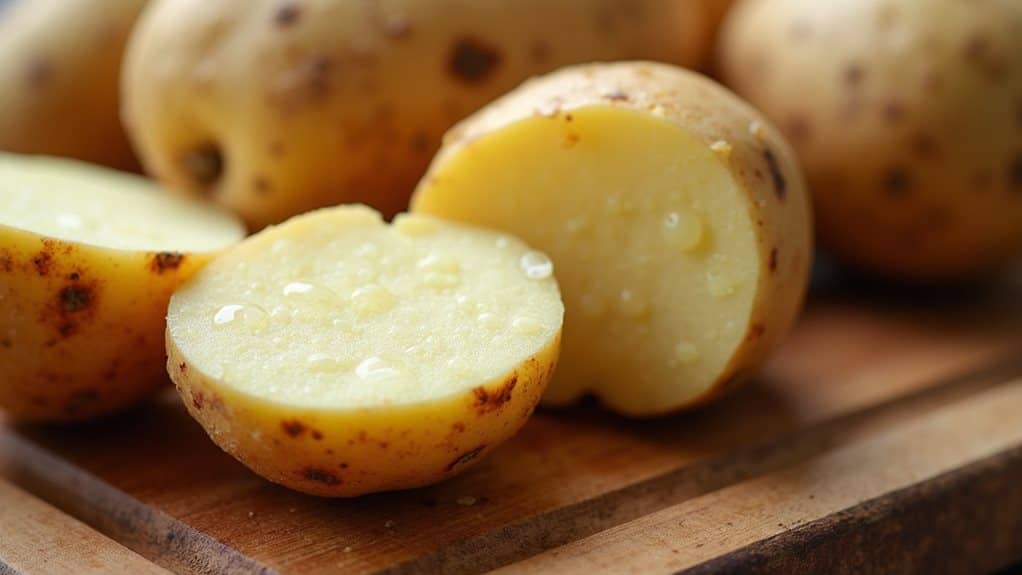
When you peel a potato, it often turns brown within a short period, and this change is caused by a natural chemical process called enzymatic oxidation.
Polyphenol oxidase (PPO) reacts with phenolic compounds when exposed to oxygen, leading to enzymatic browning.
Oxygen exposure damages the cells, triggering this process and causing the potato’s surface to discolor rapidly.
Like potatoes, eggplants contain antioxidants such as anthocyanins that help protect cells from damage.
How Do Enzymatic Reactions Cause Potato Discoloration?
When you peel a potato, you damage its cells, releasing phenolic compounds and enzymes like polyphenol oxidase (PPO).
These enzymes then come into contact with oxygen, which is usually kept apart by the cell structure.
This interaction triggers a chemical reaction that produces dark melanins, causing the potato to turn brown.
To slow this browning and keep cut potatoes fresh longer, you can reduce oxygen exposure by sealing them in a vacuum sealer bag.
Cell Damage Releases Phenols
Cell damage in potatoes triggers a series of enzymatic reactions that lead to browning. When cells are broken, phenols are released from vacuoles into the cytoplasm.
These phenols interact with polyphenol oxidase enzymes, causing oxidation. This process creates brown pigments called quinones, resulting in the characteristic browning seen after peeling or slicing.
Enzymes Contact Oxygen
Enzymatic reactions in potatoes happen rapidly once the protective cell barriers are broken, allowing key components to meet and react.
When exposed to oxygen, polyphenol oxidase (PPO) enzymes interact with phenolic compounds, leading to oxidation. This process produces melanin-like pigments, causing enzymatic browning and discoloration after peeling, especially with increased exposure and higher temperatures.
Discoloration Reaction Occurs
The discoloration reaction in potatoes occurs because of a chemical process triggered by the activity of polyphenol oxidase (PPO). During enzymatic reactions, PPO contacts phenolic compounds after cell damage, leading to oxidation.
This process causes phenols to polymerize, forming brown pigments that result in browning. The rate of this discoloration depends on enzyme activity and phenolic content.
What Role Does Oxygen and Cell Damage Play in Browning?
When you peel or cut into a potato, oxygen plays a key role in causing it to turn brown. Cell damage exposes phenolic compounds to enzymes like polyphenol oxidase (PPO), triggering browning.
The more the cells are damaged, the more phenols are released, and oxygen interacts with these compounds, accelerating the darkening process.
Just as visible changes like color change can signal spoilage in hot dog buns, the browning on peeled potatoes is a noticeable reaction caused by exposure to oxygen after cell damage.
How Do Temperature and Storage Conditions Affect Browning?
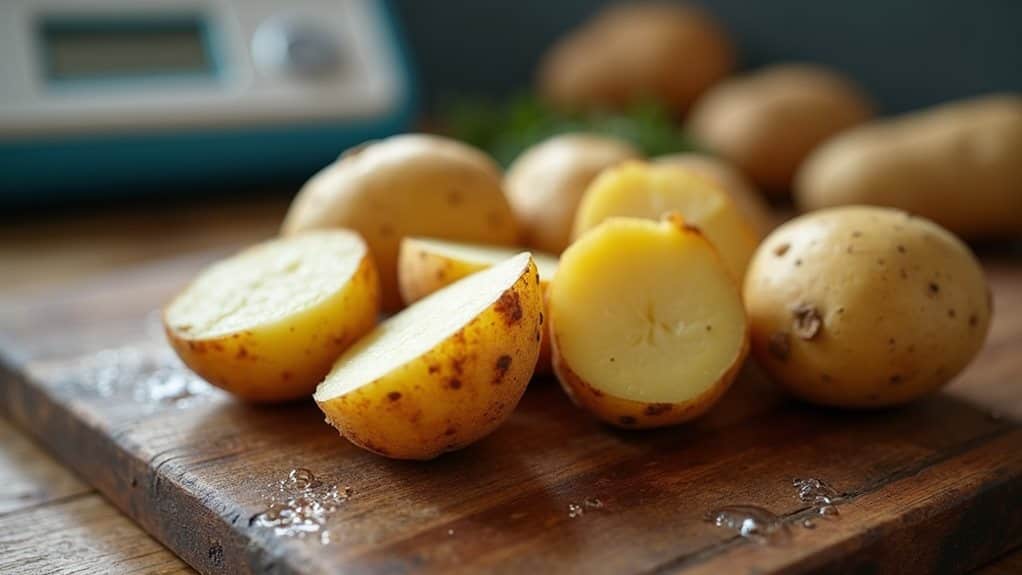
Temperature and storage conditions have a significant impact on how quickly potatoes turn brown after peeling. Cooler temperatures, especially refrigeration, slow down oxidation and enzyme activity that cause browning.
Storing peeled potatoes in airtight, water-submerged containers at low temperatures helps prevent oxygen exposure and further oxidation, keeping potatoes fresher and less discolored.
As with proper food storage practices like using clean utensils, keeping tools and containers uncontaminated can also help maintain quality during refrigerated storage.
How Can Acidity Prevent Potatoes From Browning?
Adding acidity to the water in which you soak peeled potatoes can effectively prevent browning. Lemon juice creates an acidic environment that inhibits the enzyme responsible for enzymatic oxidation, called polyphenol oxidase.
This slows down browning reactions, keeping potatoes looking fresh longer. Using about one tablespoon of lemon juice per half-gallon of water is typically sufficient.
Keep the soaking bowl in a cool, dark spot because heat and light can speed up oxidation-related reactions.
Are Browned Potatoes Safe to Eat, and When Should You Avoid Them?
Browned potatoes are generally safe to eat because the discoloration results from oxidation, not spoilage or bacteria.
However, if they develop an off smell, slimy texture, or mold, it’s best to discard them for safety reasons.
While appearance may be less appealing, you should avoid eating browned potatoes that show signs of spoilage to prevent health risks.
Edibility After Browning
Although peeled potatoes often turn brown due to oxidation, this discoloration doesn’t affect their safety to eat. The browning is purely cosmetic, with no impact on flavor or health risks.
However, avoid potatoes with a foul odor, slimy texture, or extensive browning, as these signs suggest spoilage.
Proper storage helps prevent unnecessary discoloration and maintains edibility.
Visual Appeal Concerns
When potatoes turn brown after peeling, it’s natural to wonder if they’re still safe to eat. The discoloration results from oxidation, which affects the visual appeal but not safety or flavor.
While browned potatoes may look less attractive, they’re still edible. To improve appearance, soak them in water or lemon juice; otherwise, they’re fine for cooking methods like frying or roasting.
Health Risks or Not
You can generally eat potatoes that have turned brown after peeling without worry, as the discoloration results from oxidation and doesn’t impact food safety or taste.
Discoloration is mainly cosmetic and not linked to spoilage. However, if potatoes develop a foul odor, mold, or sliminess, or if left out at room temperature, they should be discarded to prevent health risks.
Wrapping Up
In conclusion, potatoes turn brown after peeling mainly due to enzymatic reactions that occur when their cells are damaged, exposing them to oxygen. Proper storage, keeping them cool, and using acidic solutions can slow or prevent browning. While browned potatoes are generally safe to eat, excessive discoloration or an off smell may indicate spoilage. By understanding these factors, you can better maintain potato freshness and enjoy their flavor without unwanted discoloration.


