
Yes, flour can go bad, and its shelf life varies by type. You'll get about 2 years from refined white flour, while whole wheat lasts 3-6 months, and organic varieties typically expire within 100-180 days. To maximize freshness, store your flour in airtight containers away from light and moisture. Watch for signs of spoilage like color changes, unusual odors, or mold spots. You can extend your flour's life by freezing it for up to a year or using specialized storage methods like Mylar bags. Proper storage techniques and knowing your flour's shelf life will help you avoid waste and guarantee the best baking results.
Quick Guide
- Flour can spoil with telltale signs including color changes, rancid odors, lumpy texture, mold spots, or signs of pest infestation.
- White flour lasts up to 2 years when stored properly, while whole wheat flour has a shorter shelf life of 3-6 months.
- Store flour in airtight containers in a cool, dark place, or freeze it for up to one year for maximum longevity.
- Freezing flour for 48 hours upon purchase kills potential insect eggs and prevents future pest problems.
- Regular visual inspections are more reliable than printed expiration dates for determining flour's freshness and safety.
Understanding Flour Shelf Life

Understanding how long your flour will last is essential for both home bakers and cooking enthusiasts. Different types of flour have varying shelf lives: refined white flour can last up to 2 years in airtight containers, while whole wheat flour typically lasts 3-6 months. Proper storage is crucial for maximizing the shelf life of flour, as it helps prevent spoilage. You'll find that organic flours have shorter shelf lives, usually 100-180 days when stored properly. Using mylar bag storage can extend shelf life significantly, with white flour lasting over 10 years when properly sealed.
Different Types of Flour
The world of flour extends far beyond the basic all-purpose variety you'll find in most kitchens. High-protein flours like bread and durum are perfect for yeasted breads and pasta, while low-protein options such as cake flour create tender baked goods. You'll also find specialty flours, including gluten-free alternatives made from amaranth, chickpeas, and buckwheat, each serving specific culinary purposes. These specialty options benefit from being stored in the refrigerator or freezer to maintain freshness and extend their shelf life, as proper storage techniques can significantly enhance longevity and quality.
Storing Your Flour Properly
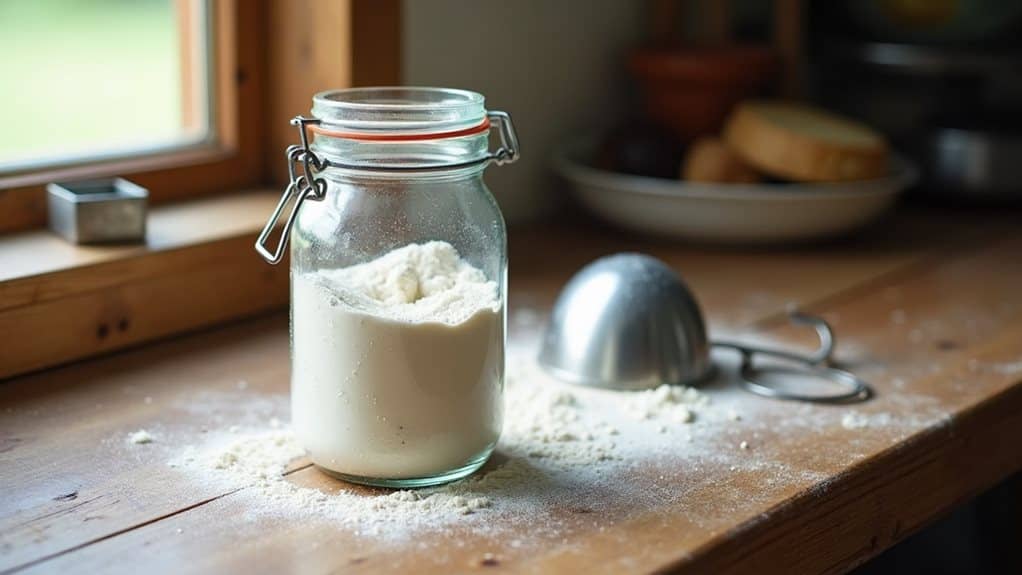
Proper storage of these diverse flour varieties makes all the difference in maintaining their quality and extending their shelf life.
You'll want to store your flour in airtight containers made of plastic, glass, or metal, keeping it in a cool, dark place. Consider placing newly purchased flour in the freezer for 48 hours to eliminate any potential weevils or insect eggs. Properly storing flour can help prevent spoilage and maintain the quality of grains over time.
For longer storage, consider freezing your flour for up to a year, and always label containers with the type and date.
Signs of Spoiled Flour
Signs of Spoiled Flour
Regularly checking your flour for signs of spoilage can prevent ruined recipes and potential health risks.
Watch for color changes from white to yellowish or gray, which signal oxidation. Proper storage can help extend the shelf life of your flour and maintain its quality.
Visual inspection is generally more reliable than checking the printed expiration date on packaging.
You'll notice texture problems if your flour becomes unusually lumpy or coarse.
Trust your nose – if you detect musty, sour, or rancid odors, it's time to discard.
Look for mold spots or signs of pests.
Extended Storage Methods
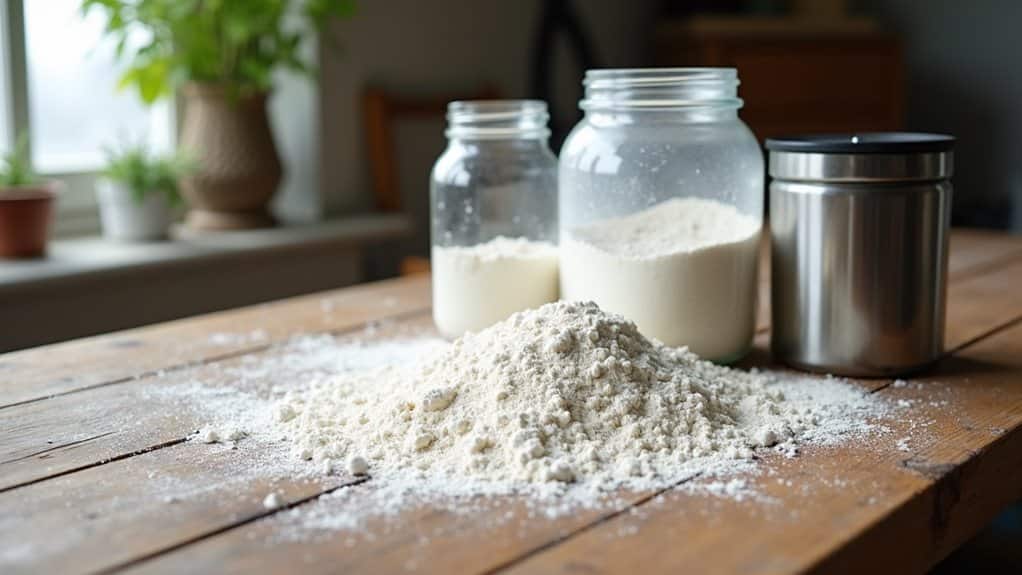
Protecting your flour with effective storage methods will greatly extend its shelf life and maintain its quality.
You'll get the best results by storing flour in airtight containers made of plastic, glass, or metal. Airtight storage is essential for preserving freshness. While your pantry works well for short-term storage of refined flours, you can extend shelf life by keeping flour in the refrigerator for up to 6 months or in the freezer for up to a year. Whole grain flours require freezer storage to prevent rancidity.
Wrapping Up
If you're mindful of proper storage techniques, you'll be able to keep your flour fresh and safe for months, or even years. Remember to store your flour in an airtight container, keep it in a cool, dry place, and always check for signs of spoilage before use. Whether you're working with all-purpose, whole wheat, or specialty flours, these storage principles will help guarantee your baking ingredients remain fresh and ready to use.

