
Yes, you can freeze pears, and it's a great way to preserve their freshness year-round. You'll want to choose firm, ripe pears and prepare them by washing, peeling, and cutting them into uniform pieces. To prevent browning, treat the cut pieces with lemon water, salt water, or vitamin C solution before freezing. You can use either a sugar pack or juice pack method for preservation, making certain to store them in airtight containers or freezer bags at 0°F (-18°C). When properly stored, frozen pears will maintain their quality for up to one year, and there's a specific technique to ascertain you get the best results.
TLDR
- Yes, pears can be frozen and will maintain quality for up to one year when stored properly at 0°F (-18°C).
- Select firm, ripe pears and cut them into sections after washing, peeling, and coring them.
- Prevent browning by treating cut pears with lemon juice, salt water, or vitamin C solution immediately after cutting.
- Pack prepared pears in sugar syrup or fruit juice, leaving proper headspace in containers before freezing.
- Thaw frozen pears overnight in the refrigerator or in cold water, and avoid refreezing once thawed.
Why Freeze Fresh Pears
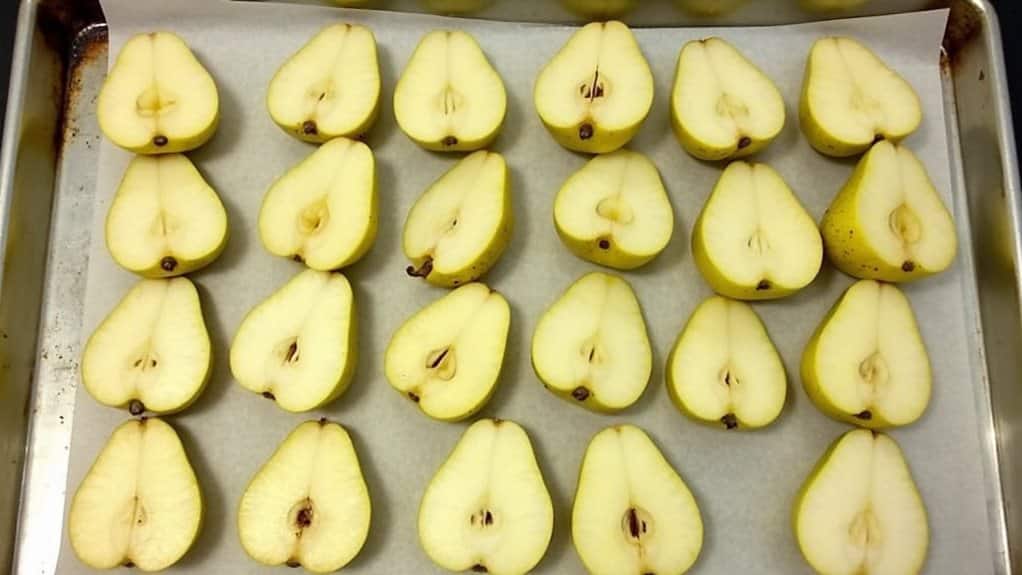
When considering the benefits of food preservation, freezing fresh pears stands out as an excellent method for extending their usability and enjoyment throughout the year. You'll find that freezing not only maintains the fruit's nutritional value and flavor but also offers convenience for year-round use. It's an effective way to prevent food waste while preserving peak ripeness, and you can easily use frozen pears in various recipes. Selecting perfectly ripe pears is crucial for achieving the best freezing results and optimal flavor preservation, as proper storage techniques can significantly impact the quality of frozen fruits.
Selecting Pears for Freezing
Selecting the right pears for freezing can make a significant difference in your final results.
You'll want to choose pears that are mature but still firm, testing ripeness by gently pressing near the neck. Properly frozen pears can last up to 2-3 months in the freezer without significant loss of quality.
Bartlett, Anjou, and Bosc varieties work well for freezing, while overripe or mushy pears won't hold up. Consider your intended use when selecting, as texture matters more for baking than for smoothies.
The proper freezing techniques will help maintain the natural sweetness and quality of your pears.
Required Tools and Equipment
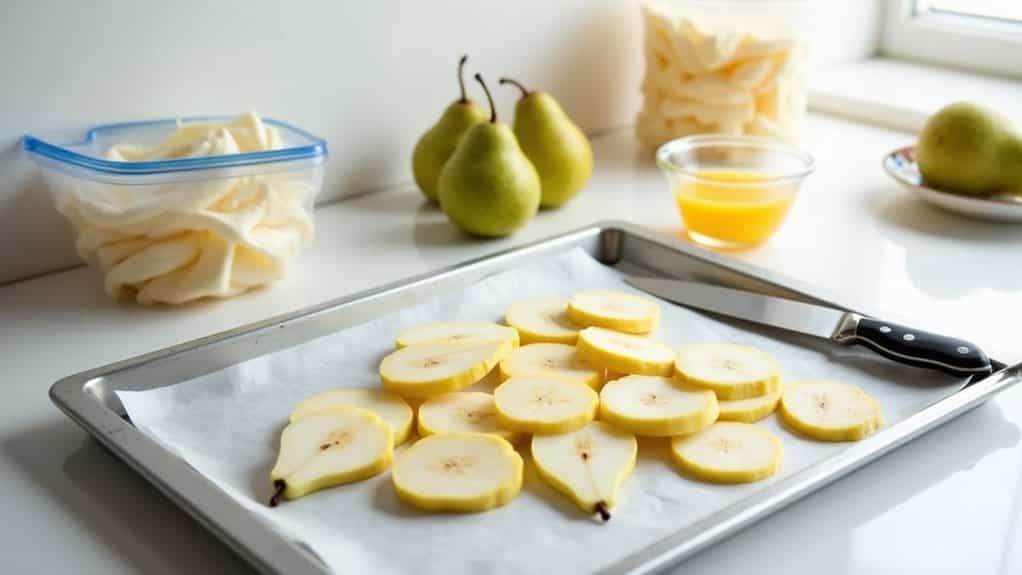
To freeze pears successfully, you'll need essential kitchen storage equipment like freezer-safe containers, bags, and lined baking sheets for the initial flash-freezing process. Additionally, ensure that the pears are kept at 0°F or below during storage to maintain their quality.
Your food processing tools should include a reliable paring knife, peeler, and cutting board for preparing the fruit efficiently. Having measuring instruments on hand will help you create proper anti-browning solutions and sugar syrups to protect your pears during freezing. A wax paper sheet helps keep pears submerged in liquid when using the juice or water method.
Kitchen Storage Equipment
Before diving into the freezing process, you'll need specific kitchen equipment to properly preserve your pears.
You'll require a freezer with adequate capacity, freezer-safe bags or containers with airtight seals, and parchment-lined baking sheets. Plan for approximately 2 pounds per cubic foot of available freezer space to ensure proper freezing of your pears.
Don't forget to have your refrigerator ready for temporary storage and an ice water bath setup for cooling the pears after processing.
Food Processing Tools
Proper food processing tools are essential for efficiently freezing pears while maintaining their quality.
You'll need sharp knives and a sturdy cutting board for slicing, plus a peeler to remove the skin.
Don't forget colanders for washing and spatulas for handling the fruit.
When it comes to treating your pears, you'll want bowls for anti-browning solutions and baking sheets for flash freezing. Prepare your workspace with parchment-lined sheets for optimal results.
Measuring Instruments
Accurate measuring instruments play an essential role in successfully freezing pears.
You'll need measuring cups and spoons for sugar, water, and additives, while quarts and pints help you measure fruit and syrup quantities.
Don't forget a thermometer to monitor temperatures during processing, and rulers to check proper headspace in containers.
These tools guarantee you'll get consistent, high-quality results every time.
Preparing Your Pears
Successfully preparing pears for freezing starts with selecting the right fruit. Choose firm, crisp pears during their peak season from August to October.
You'll want to wash them thoroughly, then peel, core, and stem each one. Cut larger pears into sixteenths and medium ones into twelfths, removing any blemishes.
Pat the pieces dry with paper towels before arranging them on a lined baking sheet. Additionally, consider storing your pears in optimal conditions to preserve their quality during freezing.
Preventing Browning Before Freezing
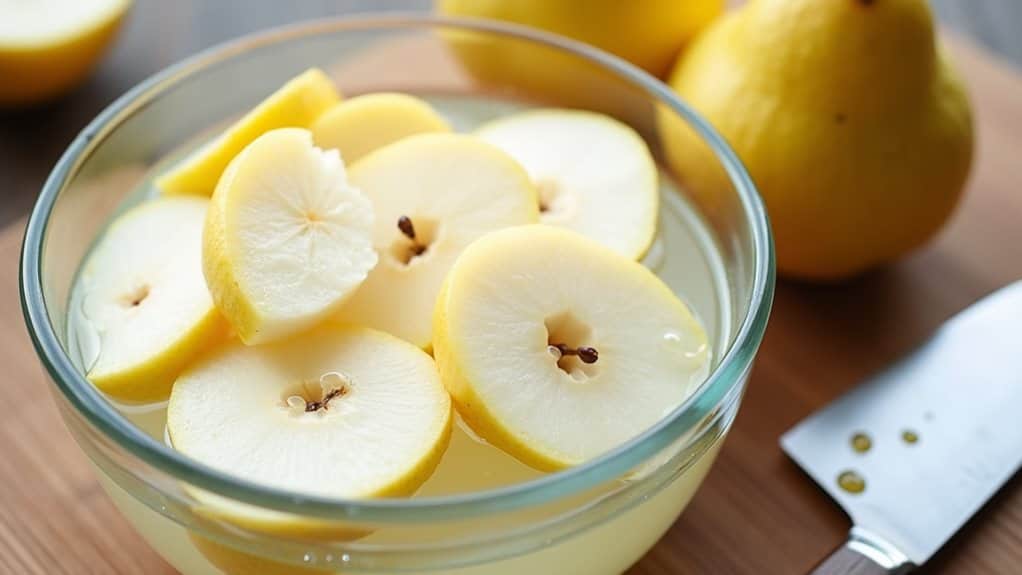
You'll need to treat your pears with an anti-browning solution before freezing, and you've got several reliable options to choose from, including a simple lemon water bath, a salt water soak, or a vitamin C powder treatment.
Each method works by preventing oxidation, which is what causes that unwanted brown coloring in your sliced pears. For optimal freshness, proper handling during washing is essential to ensure the best results, so choose the method that works best with your ingredients on hand, making sure to follow the proper ratios of solution to water and treating the pears immediately after cutting them.
Lemon Water Bath Method
Prior to freezing pears, a lemon water bath serves as an essential step to prevent unwanted browning.
You'll need to mix lemon juice and water in a specific ratio – either 1 tablespoon of juice per cup of water or 3 teaspoons per 4½ cups.
Once you've prepared your solution in a large bowl, place your freshly cut pear slices directly into the mixture, letting them soak for a few minutes.
Salt Water Soak Process
Effectively preserving pears through freezing starts with a simple salt water soak to prevent discoloration.
Fill a bowl with cold water and add salt until it covers the bottom, or use half a teaspoon per cup of water.
Drop your peeled, prepped pears into the solution and let them soak for 10 minutes.
Rinse thoroughly before arranging on baking sheets to freeze.
Vitamin C Powder Treatment
Another excellent way to prevent browning in pears before freezing is through a vitamin C powder treatment.
Mix ¾ teaspoon of vitamin C powder (ascorbic acid) with a quart of cold water, and treat your pear slices immediately after cutting.
This method is more effective than lemon juice or vinegar, and it'll help maintain your pears' color, texture, and flavor during storage.
Flash Freeze Method
Flash freezing pears helps preserve their individual shapes and prevents them from sticking together during storage.
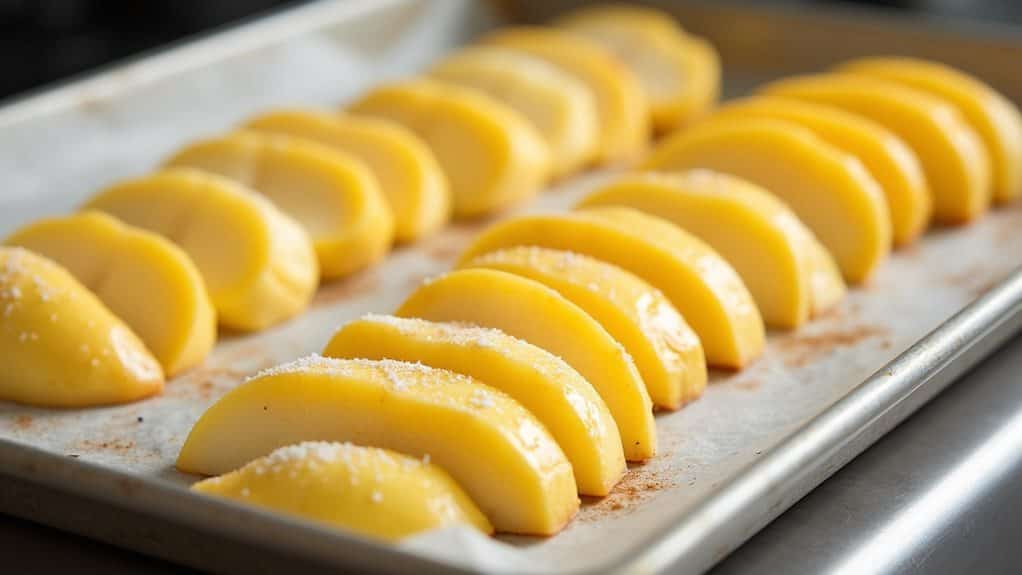
To flash freeze, arrange your treated pear slices in a single layer on a parchment-lined baking sheet, making sure they don't touch each other.
Place the sheet in your freezer for 30-60 minutes until firm, then transfer the frozen pieces to storage bags, removing as much air as possible.
Sugar Pack Method
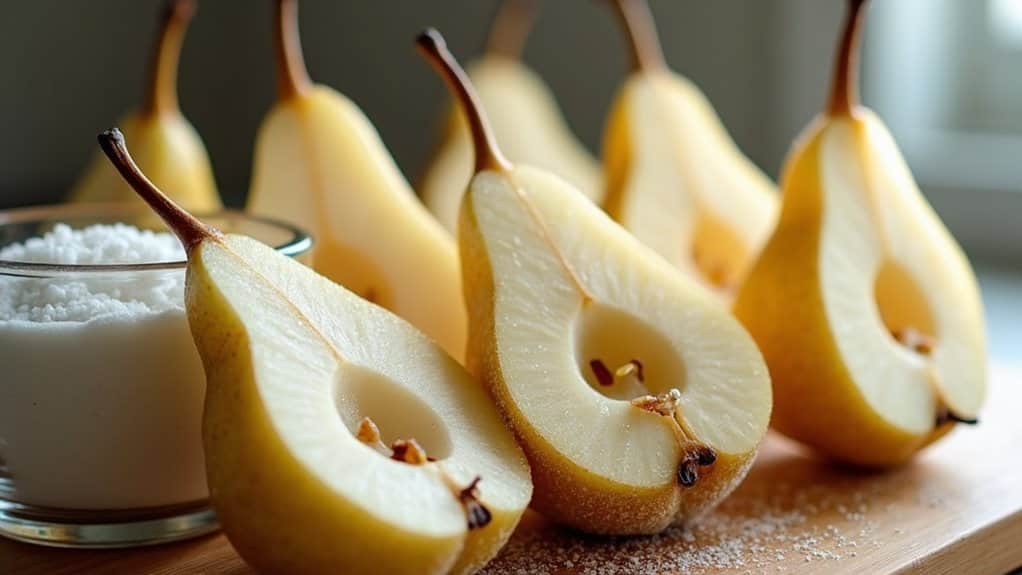
You'll find success with the sugar pack method by starting with a simple syrup mix of 2-3 cups sugar dissolved in 4 cups water, creating the perfect 40% solution for preserving your pears.
The best pear varieties for this method are firm, crisp ones that hold their shape well and aren't mealy in texture.
After packing your pears in the syrup, make sure to leave proper headspace in your containers, label them clearly with the date, and store them in the freezer where they'll maintain their quality for several months.
Preparing Sugar Syrup Mix
Creating the perfect sugar syrup mix stands at the heart of successfully freezing pears.
You'll need to combine 3 cups of sugar with 4 cups of lukewarm water to make a 40 percent medium syrup.
Bring this mixture to a boil, ensuring the sugar dissolves completely.
This recipe yields about 5 cups of syrup, which is enough to preserve 8-11 pints of pears.
Best Pear Varieties
Several excellent pear varieties work exceptionally well with the sugar pack freezing method.
You'll find Bartlett pears, with their classic bell shape, are a top choice for freezing. Comice pears offer a creamy texture and sweet, citrusy flavor, while Kieffer pears are ideal due to their crisp, juicy nature.
For reliable results, you can't go wrong with Conference pears' spicy-sweet flesh.
Storage Tips After Sugar-Packing
Proper storage methods for sugar-packed pears can make the difference between success and spoilage.
Once you've packed your pears in sugar syrup, place them immediately in a freezer at 0°F (-18°C) or below. You'll want to leave proper headspace – 1/2 inch for pints and 1 inch for quarts.
Label your containers with the date, and use the pears within a year for best quality.
Juice Pack Method
The juice pack method offers a reliable way to preserve pears while maintaining their flavor and texture.
First, peel and cut your pears, then soak them in a browning-prevention solution.
Blanch the fruit in boiling juice or water for 2 minutes, let it cool, and pack it into containers.
Pour in the blanching liquid, add wax paper to keep pears submerged, and seal tightly before freezing.
Proper Storage Techniques
Successful pear freezing relies on choosing the right storage method for your needs.
You'll want to remove as much air as possible from freezer bags to prevent freezer burn. When using containers, leave proper headspace and consider placing wax paper on top of syrup-packed pears to keep them submerged.
For best results, store your frozen pears at 0°F or below, and use airtight, freezer-safe packaging.
Thawing and Using Frozen Pears
When bringing frozen pears back to their ready-to-eat state, you'll want to choose from several reliable thawing methods.
Your safest option is refrigerator thawing overnight, which preserves quality and reduces bacterial growth.
For faster results, you can submerge sealed bags in cold water, changing it every 15 minutes.
While microwave thawing works quickly, you'll need to monitor carefully to prevent cooking.
And Finally
Now you're equipped to freeze pears like a pro. You'll find that properly frozen pears can last up to 10 months in your freezer, giving you plenty of opportunities to enjoy their sweet flavor in smoothies, pies, and other recipes. Remember to select firm, ripe pears and use either the sugar pack or juice pack method for best results. With these techniques, you'll have delicious pears ready whenever you need them.

