
Pork’s shelf life depends on its type and storage method. Fresh pork lasts 3-5 days in the fridge, while ground pork should be used within 1-2 days. For longer storage, freeze pork at 0°F (-18°C) for up to six months.
Always store fresh pork at 0-3°C (32-37°F) in the coldest part of your fridge, tightly wrapped to avoid contamination. When freezing, use airtight containers or freezer bags to maintain quality.
Thaw frozen pork safely in the refrigerator, allowing 3-5 hours per pound for small roasts. Watch for signs of spoilage like unusual odors, slimy texture, or discoloration. Proper handling and storage techniques guarantee both safety and flavor preservation.
Quick Guide
- Fresh pork lasts 3-5 days in the fridge, while ground pork should be used within 1-2 days.
- Properly wrapped and frozen pork can maintain best quality for up to 6 months at 0°F (-18°C).
- Store pork tightly wrapped or in sealed containers in the coldest part of the refrigerator at 0-3°C (32-37°F).
- Check for signs of spoilage such as unusual odors, slimy texture, or discoloration before use.
- Thaw frozen pork in the refrigerator, allowing 3-5 hours per pound for small roasts and 12-14 hours for chops.
Pork Storage Duration
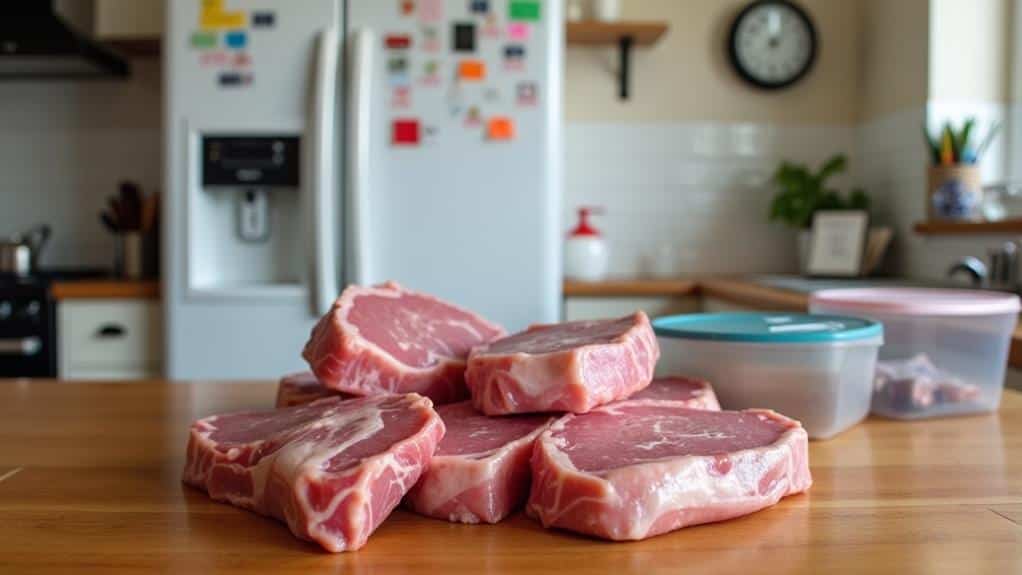
Regarding pork storage duration, knowing how long you can keep different cuts is essential for food safety and quality.
- Fresh pork typically lasts 3-5 days in the fridge, with ground pork lasting 1-2 days.
- Opened smoked ham can be stored for 3-4 days, while bacon is kept for 5-7 days.
- Don’t expose pork to too much air, as it can affect its shelf life.
Proper Refrigeration Techniques
Proper refrigeration techniques can greatly extend the shelf life of your pork.
Store fresh pork at 0-3°C (32-37°F) in the coolest part of your fridge, ensuring it’s kept at or below the recommended temperatures to prevent bacterial growth.
Wrap it tightly in plastic or use sealed containers to prevent contamination.
For ground pork, use within 1-2 days.
Always check for signs of spoilage like unusual odors, slimy texture, or discoloration.
Maintaining safe storage temperatures is essential for food safety.
Avoid storing pork in the refrigerator door, where temperatures fluctuate more.
Freezing Pork for Longevity
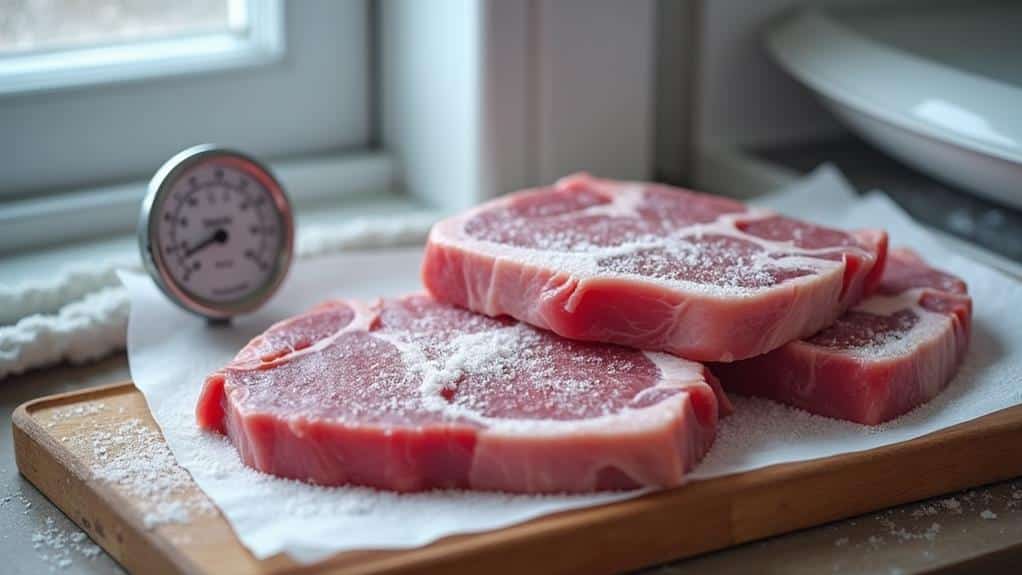
When it comes to freezing pork, you’ll want to perfect proper techniques to guarantee the best quality.
Frozen pork chops remain safe at 0°F (-18°C) indefinitely, but to maintain ideal flavor and texture, you should aim to consume them within six months.
If you wrap the pork correctly and remove as much air as possible from the packaging, you can store it in your freezer for up to six months.
To maximize flavor, use airtight containers or freezer bags for storage.
Place it in your refrigerator for 24-48 hours to thaw frozen pork safely, depending on its size.
Proper Freezing Techniques
Freezing pork correctly is essential for maintaining its quality and ensuring food safety.
Use freezer bags or airtight containers, removing as much air as possible to prevent freezer burn. For larger cuts, wrap them in food-safe plastic between layers.
Label all packages with the cut name and freezing date. To prevent puncturing the packaging, cover sharp bones with extra wrapping.
Properly stored, pork can last up to 6 months in the freezer.
Freezer Storage Duration
Now that you know how to freeze pork correctly, let’s consider how long it can be kept in the freezer.
When properly stored, pork maintains its best quality for up to 6 months.
Remember to use freezer bags or airtight containers, removing as much air as possible to prevent freezer burn.
Don’t forget to label your packages with the cut name and date, ensuring you use the oldest pork first.
Thawing Frozen Pork
Three critical factors come into play when thawing frozen pork: safety, quality, and time.
For best results, defrost pork in the refrigerator, allowing 3-5 hours per pound for small roasts and 4-7 hours for larger ones.
One-inch thick chops need about 12-14 hours.
If you’re short on time, you can use the microwave, but cook the meat immediately after thawing to guarantee safety.
Signs of Spoilage
Detecting spoilage in pork is essential for ensuring food safety and avoiding foodborne illnesses.
You’ll want to use your senses to check for freshness. Look for a pink color and firm texture; avoid grey or slimy pork. A sweet aroma is good, but it’s likely spoiled if it smells sour or overly meaty.
Always check the use-by date and remember: when in doubt, throw it out.
Thawing Methods
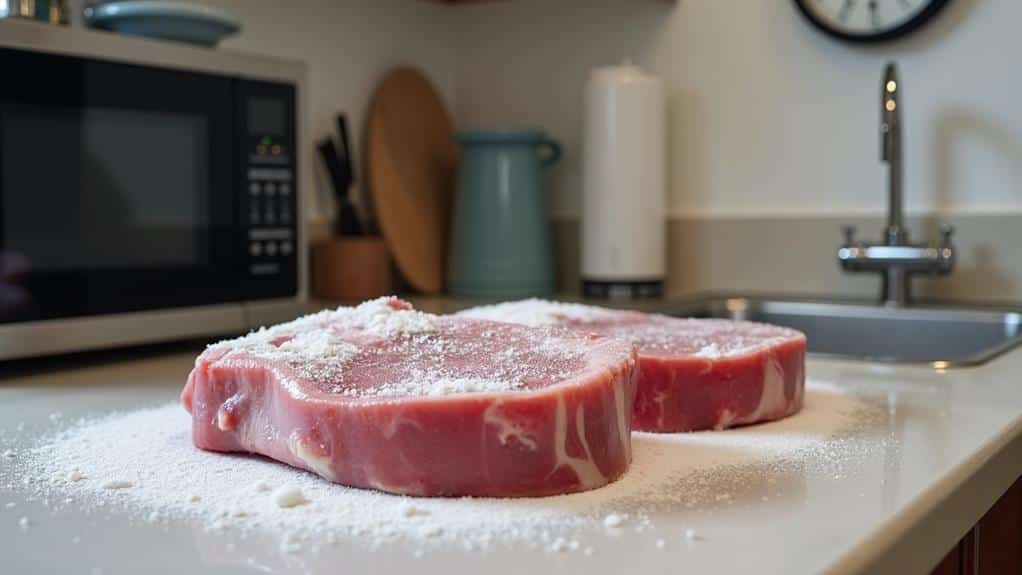
When it’s time to thaw your pork, you have a few safe options.
The refrigerator method is the most reliable, allowing for slow, even defrosting while maintaining food safety.
If you’re short on time, you can use the microwave or cold water method, but you’ll need to cook the pork immediately after thawing to prevent bacterial growth.
Safe Refrigerator Defrosting
Proper defrosting is essential to guarantee food safety and maintain the quality of your pork.
The best method is to thaw pork in the refrigerator while still wrapped. This allows for safe, gradual thawing.
Small roasts need 3-5 hours per pound, while larger ones may take 4-7 hours per pound.
For one-inch thick pork chops, plan 12-14 hours of thawing time in the fridge.
Microwave Thawing Technique
For those times when you’re in a hurry, microwave thawing offers a quick solution for defrosting pork.
Use your microwave’s defrost setting, wrapping the meat in a microwave-safe container to catch any juices.
Monitor the process closely, especially for thicker cuts, to prevent partial cooking.
Remember to cook the pork immediately after thawing to guarantee food safety.
Always check that it’s fully defrosted before cooking.
Cold Water Method
Another effective method for thawing pork is the cold water technique.
You’ll need to submerge the meat, still in its packaging or a sealed bag, in cold water. Change the water every 30 minutes to keep it cold.
This method’s faster than refrigerator thawing, taking about 30 minutes per pound.
Safe Handling Practices
Safety should be your top priority when handling raw pork. Always wash your hands thoroughly before and after touching raw pork.
Use separate cutting boards and utensils to prevent cross-contamination. Don’t taste raw pork; rely on visual and smell cues.
Store it below 40°F in the coldest part of your fridge. When cooking, use a meat thermometer to verify it reaches 145°F internally, followed by a three-minute rest.
Wrapping Up
You’ve now got the knowledge to keep your pork fresh and safe. Remember, proper storage is key to maintaining quality and preventing foodborne illness. Whether refrigerating for short-term use or freezing for later, always follow safe handling practices.
Pay attention to signs of spoilage and use appropriate thawing methods. By applying these tips, you’ll guarantee your pork stays delicious and safe to eat, maximizing its shelf life and your enjoyment.

