
First, check that your sugar is sifted and your butter is soft but not melted; grainy frosting usually comes from undissolved crystals or cold butter. Warm the butter to about 68‑70 °F, then cream it on low speed before gradually adding sifted powdered sugar, letting each addition dissolve before increasing to medium speed. If it’s still gritty, drizzle a teaspoon of warm milk or heavy cream while mixing on low, or replace half the butter with softened shortening. These steps smooth the texture, and the next tips will show you how to prevent the problem entirely.
Quick Guide
- Warm a small amount of milk or cream (≈1 tsp) and beat on low speed until the frosting becomes smooth.
- Sift powdered sugar before adding it to prevent coarse crystals from forming.
- Use room‑temperature butter (65‑70 °F) cut into cubes; avoid cold or hardened butter.
- Add liquid gradually, mixing on low then medium speed, and finish with a brief high‑speed burst to dissolve any remaining grit.
- If graininess persists, replace half the butter with soft shortening or incorporate a few drops of egg yolk to bind fats and smooth texture.
Identify the Cause of Grainy Buttercream

Why does your buttercream feel like sand? You’re probably using the wrong sugar, not enough liquid, or over‑mixing. Coarse or unsifted powdered sugar leaves grainy crystals, while granulated sugar won’t dissolve. Too much sugar relative to butter creates a gritty, breaking texture. Excessive beating traps air, making it feel sandy. Much like cooking eggplant seeds helps reduce bitterness, gently warming your buttercream can help dissolve lingering sugar crystals and smooth the texture. Check sugar type, sift, balance liquid, and mix just until smooth. Using hard butter can also contribute to a grainy texture.
Choose the Right Butter Temperature for Smooth Buttercream
You’ll notice that butter kept at room temperature—about 68‑70 °F—mixes easily and yields a creamy, lump‑free frosting.
If the butter is too cold, it clumps and traps air, which creates a grainy texture you’re trying to avoid. Using a paddle attachment with a rubber scraper helps keep the frosting smooth. For consistent batches, measure ingredients with a scale that has at least 1 g resolution.
Room‑Temperature Butter Benefits
A butter that’s kept at true temperature—roughly 65‑75 °F (18‑24 °C)—will cream smoothly, trapping air and forming a stable emulsion that keeps frosting silky and free of grain. At 65‑68 °F it feels cool, not soft or melted, allowing sugar crystals to create air pockets. This yields a light, airy buttercream, prevents graininess, and stays stable even after refrigeration.
Avoiding Cold Butter Lumps
If butter stays too cold, it clumps the sugar and air bubbles, turning a smooth buttercream into a grainy, uneven frosting. Aim for 65‑70 °F; the butter should indent slightly under finger pressure but not melt. Test with a gentle poke, then add powdered sugar gradually while mixing on low speed. Finish with a splash of warm milk to smooth any remaining lumps.
Master Mixing Speed and Order to Dissolve Sugar Crystals in Buttercream

You’ll want to start the mixer on the lowest speed, then gradually raise it to medium as the butter and sugar combine.
Adding the sugar slowly lets it dissolve evenly without creating a grainy texture, and it gives you time to incorporate air gently.
Just like double heat seal technology creates leak-proof closures for freezer storage, a steady, gradual mixing approach helps prevent texture “leaks” from undissolved sugar crystals in buttercream.
Start Butter Speed
How does the speed you start with affect the buttercream’s texture?
Begin mixing butter on low speed; this lets the softened, room‑temperature butter form a smooth base without trapping air. Low speed also helps dissolve sugar crystals gently.
Once the butter is fully creamed, you can raise to medium speed to finish the emulsion.
Avoid high speed at the start, as it creates bubbles and grainy texture.
Gradual Sugar Integration
Why does the way you add sugar matter? Adding powdered sugar a few cups at a time on low speed lets you scrape the bowl, preventing lumps. After each interval, switch to high speed for a minute to dissolve crystals fully.
Incorporate chilled butter in chunks on low, then enhance to high to emulsify.
Finish with a brief high‑speed whisk to integrate flavors and achieve a smooth, creamy texture.
Adjust Liquids and Shortenings to Prevent Grainy Buttercream
A smooth buttercream starts with the right balance of liquids and shortenings, because too much moisture or an uneven fat mix will quickly turn the frosting grainy.
Use softened, room‑temperature butter—cut it into cubes or microwave briefly in 8‑second bursts—then add heavy cream a teaspoon at a time, mixing fully after each drop.
Keep shortening low‑temperature, matching butter’s chill, and avoid excess liquid to preserve a silky texture.
For storing leftover frosting, press out air and seal it in a container with a double-zipper closure to minimize moisture loss and protect texture in the freezer.
Rescue Grainy Buttercream Quickly
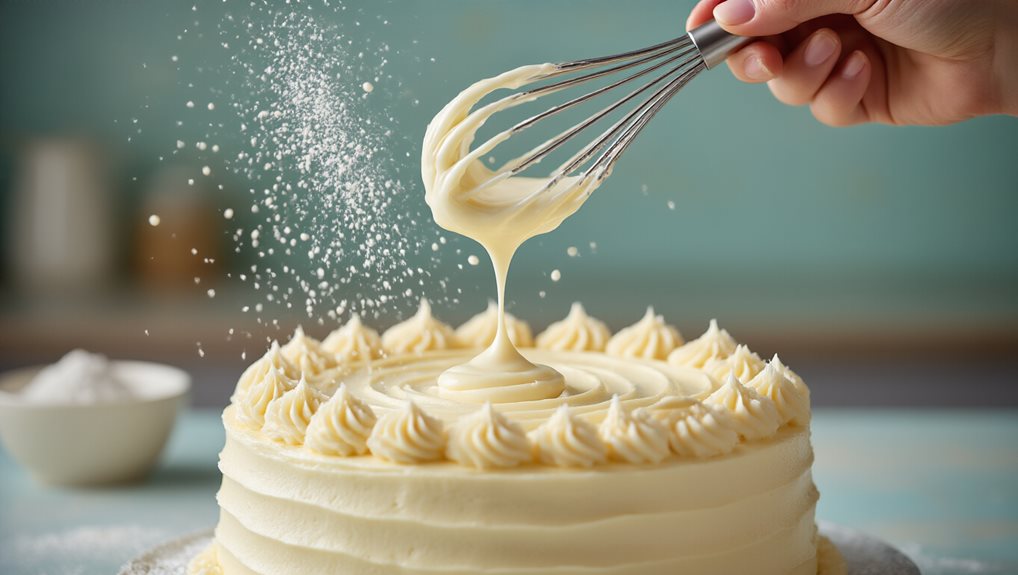
Ever found your buttercream turning grainy just as you were about to pipe it? Quickly rescue it by adding a teaspoon of warm liquid—milk, cream, or water—while you cream on low speed.
If graininess persists, switch half the butter for soft shortening, then keep creaming gently.
Finally, a few drops of egg yolk help bind fats, restoring a smooth texture.
If you’re using avocado oil in a frosting variation, store it in a cool, dark place and watch for signs of rancidity like a crayon-like smell or bitter taste.
Avoid Common Mistakes That Cause Grainy Buttercream
If you’ve just rescued a grainy buttercream by adjusting temperature or adding a bit of liquid, the next step is to prevent the problem from happening again. Keep butter at room temperature so it blends smoothly with sifted powdered sugar; never use unsifted or coarse sugar. Mix on low speed, adding liquids gradually, and avoid over‑mixing to keep air bubbles out. Balance sugar and liquid carefully for a creamy, grain‑free finish.
Wrapping Up
By understanding why buttercream turns grainy and controlling temperature, mixing speed, and ingredient ratios, you can prevent and fix the problem quickly. Use softened butter, dissolve sugar fully, and adjust liquids or shortenings as needed. If graininess appears, add a splash of warm liquid or a bit more butter and beat until smooth. Follow these simple steps, and your frosting will stay creamy, consistent, and ready for any cake.

