
Press the fleshy spot below your thumb with each finger: the thumb‑index feels like rare, thumb‑middle like medium‑rare, thumb‑ring like medium, and thumb‑pinky like well‑done. First, get a baseline by pressing the same spot on raw meat—soft, yielding, and slightly indented. Compare that feeling to the steak’s firmness, keeping pressure light and testing several spots. Use a thermometer for vulnerable groups, aiming for at least 145°F after a three‑minute rest. Continue for more detailed guidance.
Quick Guide
- Press the fleshy spot under the thumb with each finger; thumb‑index indicates rare, thumb‑middle medium‑rare, thumb‑ring medium, thumb‑pinky well‑done.
- Compare the steak’s resistance to the baseline hand‑test of raw meat softness: softer feels rare, firmer feels well‑done.
- Use the “OK” hand shape (thumb and index) to gauge medium‑rare firmness; press lightly and feel for a slight give.
- Ensure the steak is at least 1‑inch thick for reliable tactile feedback and consistent resistance across cuts.
- For safety, after tactile assessment, let the steak rest three minutes and aim for an internal temperature of at least 145 °F for vulnerable groups.
Hand‑Test Baseline: Feel Raw Meat Softness
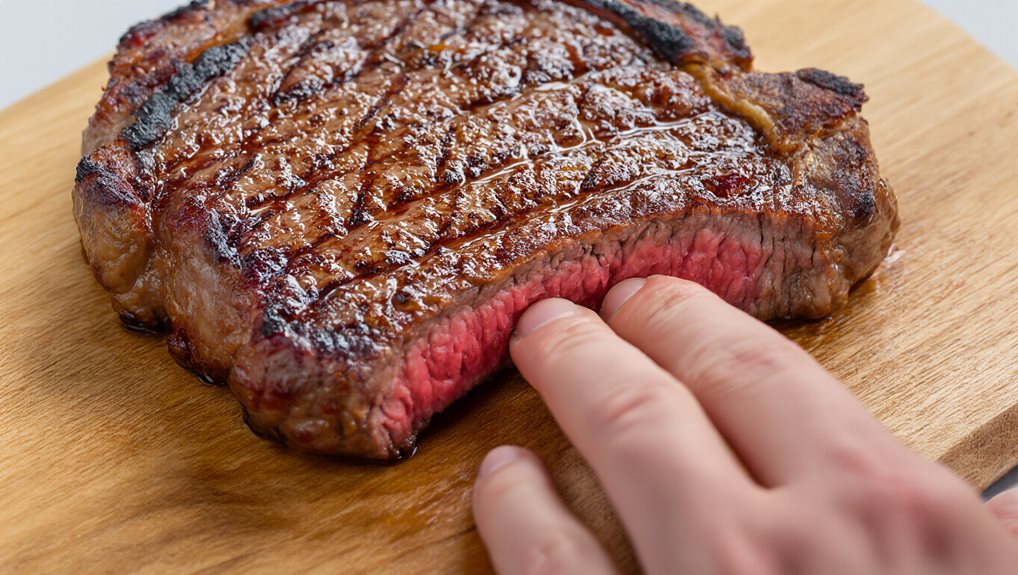
A good way to start judging steak doneness is to feel the texture of raw meat with your hand. Open your hand, relax it, and press your index finger into the fleshy area at the base of your thumb. That spot feels soft, yielding, and slightly indented—just like a raw steak. For safety, avoid leaving perishable foods out longer than 2 hours while you do prep and comparisons. Memorize this baseline, then you’ll have a reliable reference for comparing cooked firmness. The hand test works best when you also compare firmness across fingers to gauge doneness.
Hand‑Test Finger‑to‑Thumb Firmness Guide
How can you tell if a steak is rare, medium‑rare, medium, or well‑done just by feeling your hand? Press the fleshy spot below your thumb while touching each finger. The “okay” thumb‑index feel mimics rare, thumb‑middle matches medium‑rare, thumb‑ring signals medium, and thumb‑pinky gives the firmest, well‑done texture. Relax, compare, and practice for accurate results. Just as opened mayo lasts 1–2 months in the fridge at or below 40°F, keeping ingredients at 40°F helps ensure food safety while you cook. Ramsay’s method suggests that the base of the palm corresponds to rare doneness.
Hand‑Test Best Cuts for Accurate Results
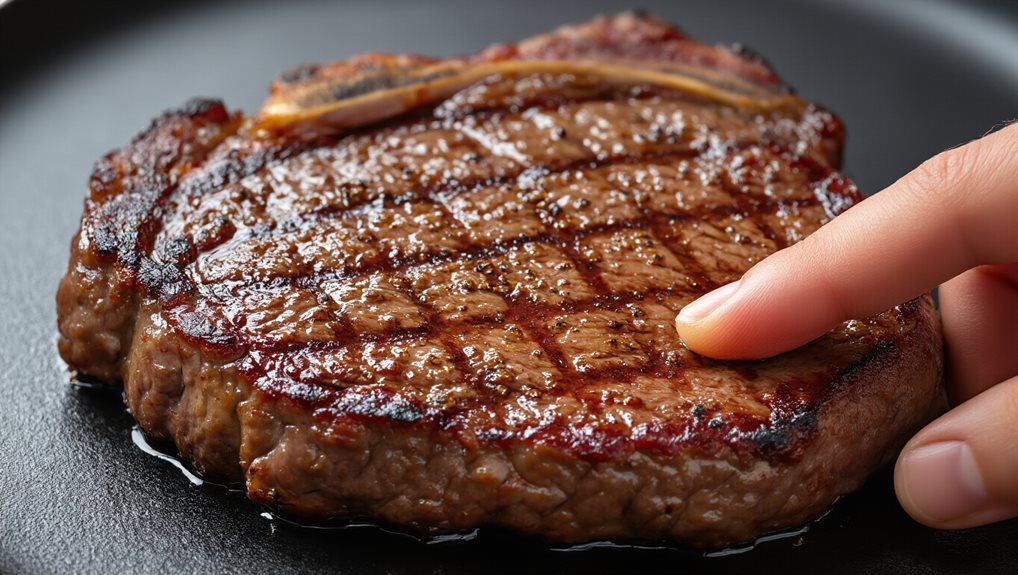
When you move from the finger‑to‑thumb firmness guide to selecting the right cut, the steak’s thickness and marbling become just as important as the hand test itself. Choose 1‑1.5‑inch ribeye, filet mignon, or strip for rare, because their soft, bright‑red centers match your palm.
For medium‑rare, pick ribeye or sirloin with uniform marbling and at least one‑inch thickness. These cuts give reliable resistance, letting you gauge doneness accurately. Keep your seasoning stored in an airtight container to block moisture and contaminants before you cook.
Hand‑Test Positioning Steps for Consistency
Ever wondered how to make your hand‑test reliable every time you flip a steak? Start by relaxing your hand, fingers extended, to gauge rare. Then form an OK sign with thumb and index for medium‑rare, press with middle for medium, ring for medium‑well, and pinky for well‑done. Keep pressure light, test multiple spots, and repeat each position until you recognize the resistance levels consistently. If you pause between flips, keep conditions steady—like maintaining a steady temperature to avoid swings that can throw off consistency.
Hand‑Test Common Mistakes & Simple Fixes
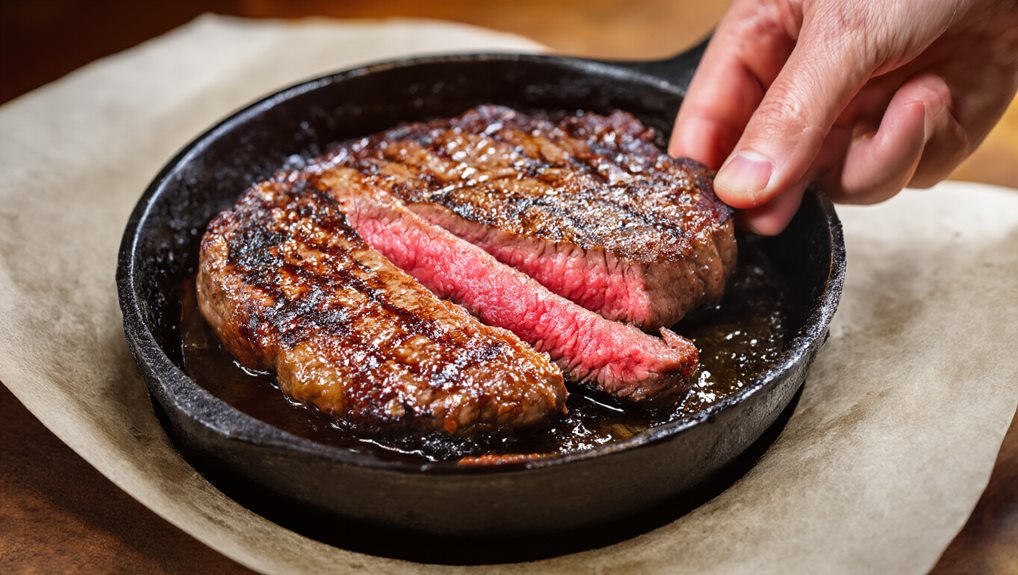
Why do hand‑test results often vary from steak to steak? Inconsistent pressure, wrong finger positions, and personal hand differences skew your readings. Apply light, steady pressure and follow the thumb‑to‑finger sequence without skipping steps. Standardize the raw‑hand reference, keep your hand relaxed, and test after the steak rests. These fixes reduce misreads and make the hand test reliable. For longer storage before cooking, a double‑seal vacuum sealer like the Precision Pro can help maintain freezer vacuum integrity with double heat seal closures.
When to Use a Thermometer for Safety
If you’re cooking for anyone who’s immunocompromised, very young, elderly, or otherwise vulnerable, you should always reach for a food thermometer. Insert it into the thickest part of the steak, away from bone or fat, and aim for at least 145°F with a three‑minute rest.
For ground beef, target 160°F. This ensures bacteria are destroyed and protects high‑risk diners.
Hand‑Test Quick Reference Cheat Sheet
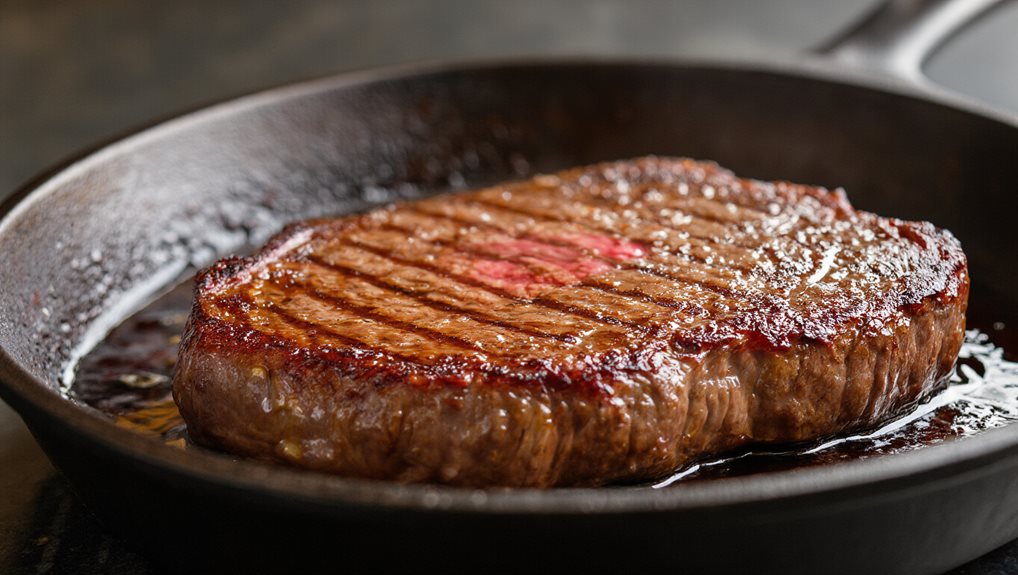
Even when you’ve got a thermometer handy, many home cooks prefer a quick, tactile method to gauge steak doneness, and the hand‑test cheat sheet gives you just that.
Press your palm with the thumb‑index for rare (soft, bouncy), thumb‑middle for medium‑rare (springy), thumb‑ring for medium (firmer springiness), thumb‑pinky for medium‑well (minimal give), and thumb‑pinky for well‑done (firm, no give).
Wrapping Up
By mastering the hand‑test techniques you can gauge steak doneness quickly and reliably, using feel instead of gadgets. Remember the raw‑meat softness baseline, then compare the firmness of your thumb‑finger pinch to the guide for rare, medium‑rare, medium, and well‑done. Position your hand consistently and avoid common mistakes like squeezing too hard. If you’re ever unsure or need safety assurance, pull out a thermometer. This simple, practical approach keeps cooking efficient and results tasty.
