
You get dry chicken because excess heat forces water out of the fibers, making the meat tough, especially if you overcook white, boneless cuts. Use a thermometer to stop cooking at the target temperature, choose darker or bone‑in pieces that retain moisture longer, and consider brining or a quick marinade to add water and flavor. Cook with a method that preserves juices—sous‑vide, pan‑searing with a hot, dry pan, or oven roasting with steam—and let the meat rest 5–15 minutes before cutting. Keep these steps in mind and you’ll uncover even more ways to keep your chicken juicy.
Quick Guide
- Overcooking forces water out of muscle fibers, making chicken tough and dry.
- Use a meat thermometer to stop cooking at the safe internal temperature (165 °F/74 °C).
- Brine or marinate the chicken before cooking to increase moisture retention.
- Rest the cooked chicken 5–15 minutes; this allows juices to redistribute and prevents drying.
- Choose darker, bone‑in cuts or sous‑vide cooking for higher fat content and slower heat transfer, which keeps meat juicier.
Why Overcooking Dries Chicken (and How to Stop It)
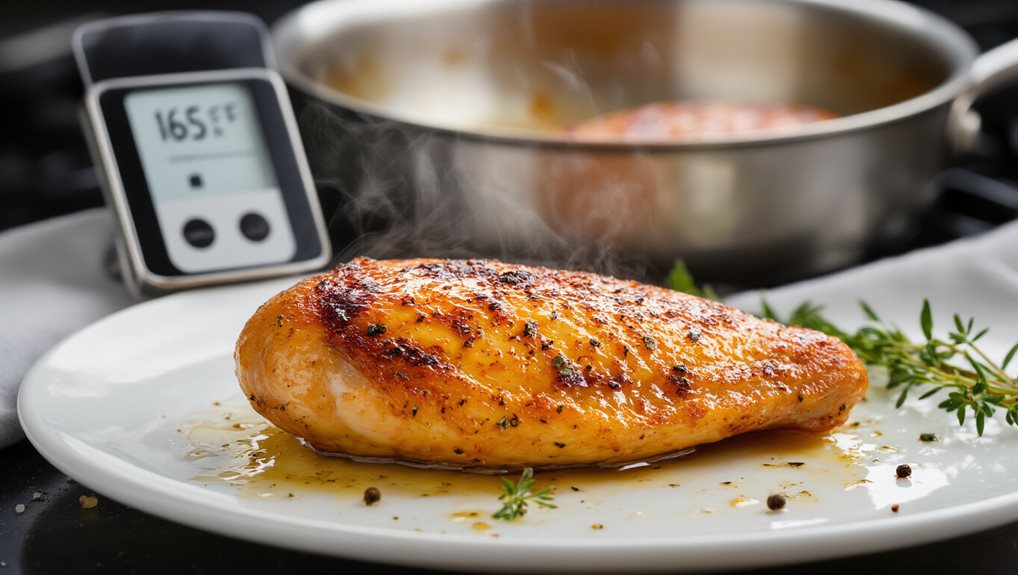
Why does chicken end up dry when you cook it too long?
Overcooking happens because you let the meat exceed safe internal temperature without monitoring it. The extra heat forces water out, making fibers tough and chewy. Use a thermometer to stop at the target temperature, cook low and slow, and rest the bird a few minutes before cutting. This preserves moisture and prevents dryness. Like how helpful bacteria in Yakult must survive harsh stomach conditions to be effective, chicken needs controlled heat and proper timing to stay juicy.
Including a meat thermometer ensures you never exceed the safe internal temperature.
Pick the Right Cut for Juicy Chicken
You’ll notice that dark‑meat cuts like thighs stay moist longer than lean breasts, especially when they retain the bone. Choosing bone‑in pieces adds flavor and helps regulate heat, while boneless options cook faster but can dry out if you’re not careful. For food safety, remember that dairy sides like goat cheese shouldn’t sit out longer than two hours during service. Pre‑cut thighs are especially popular for quick‑service kitchens because they combine convenience with the juiciness of dark meat.
Meat vs Dark‑Meat
Ever wondered which chicken cut will stay juicy on your plate? White meat—breast and tenderloin—offers lean protein and mild flavor but dries quickly if you overcook it.
Dark meat—thighs, legs, wings—contains more fat and myoglobin, giving richer taste and forgiving texture; it stays tender even with longer heat.
Choose white for low‑fat meals, dark for flavor and nutrient enhance.
Bone‑In vs Boneless
When you choose between bone‑in and boneless chicken, the key difference lies in how the bone affects cooking time, moisture, and flavor.
Bone‑in pieces need longer heat because the bone insulates, keeping meat juicier and adding depth from marrow and skin.
Boneless cuts cook faster, suit quick methods, but risk drying out without the bone’s protective heat distribution.
Choose based on time, method, and desired richness.
Choose the Ideal Cooking Method for Juicy Results
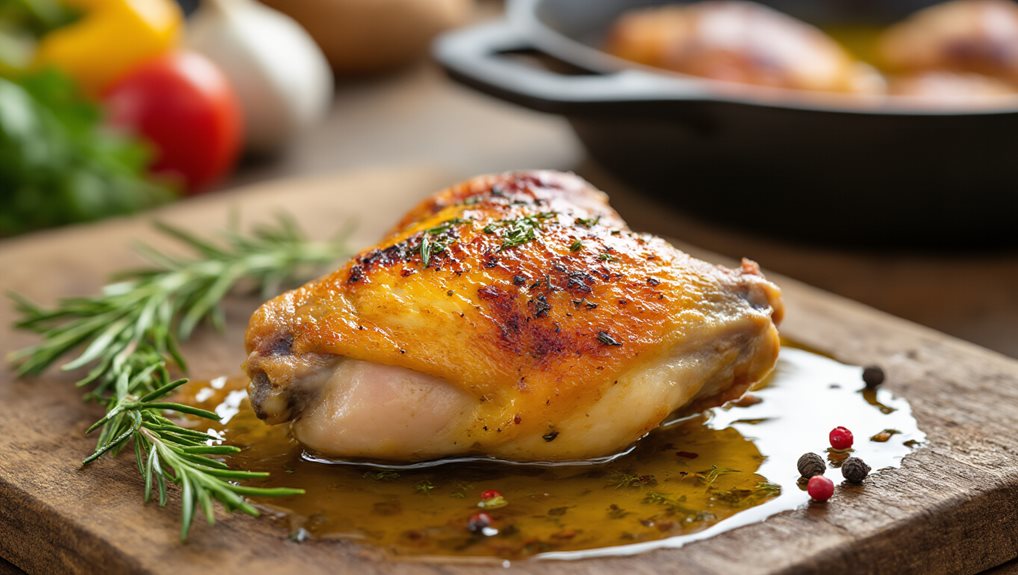
Which method will give you the juiciest chicken without sacrificing flavor? Sous‑vide scores top marks for flavor, aroma, and tenderness while locking in moisture, making it a reliable choice. Using a vacuum sealer with double heat seal closures can help maintain vacuum integrity during freezer storage so your sous‑vide portions stay protected from freezer burn. Air frying delivers a golden crust and comparable juiciness, but requires a flip at 360‑375°F. Pan searing offers precise heat control and Maillard richness, especially for boneless breasts, while oven roasting with steam and foil can also preserve juices. Choose based on texture preference and equipment.
Brine or Marinate for Juicy Chicken
You can start by soaking chicken in a simple brine—water, salt, and a touch of sugar—to let osmotic pressure pull moisture into the fibers, then let it rest so the water stays locked in.
If you prefer flavor over bulk moisture, a basic marinade of oil, acid, and seasonings will coat the surface and give a juicy feel without adding as much water.
Timing matters: brine for a few hours, rinse, then marinate for a shorter period before cooking to combine both moisture and taste.
To keep raw chicken contained and easy to spot on the shelf while it brines or marinates, store it in clear, BPA-free stackable bins in the fridge so it stays organized and helps prevent drips onto other foods.
Brine Basics
Ever wondered why a simple saltwater soak can turn a dry chicken breast into a juicy masterpiece?
Brining means soaking meat in a salt solution that dissolves proteins, forming a gel that holds water during cooking.
Use kosher salt, sugar, and optional herbs; stir, cool, then submerge chicken for an hour per pound.
Rinse and pat dry before cooking to keep skin crisp and meat moist.
Marinade Components
After soaking the chicken in a brine, the next step is to contemplate what a marinade can add. A good marinade mixes three parts fat with one part acid, plus salt and aromatics. Fat carries flavors deep, while a weak acid—like wine or cider—softens the surface without making it mushy. Balance these elements for tenderness and flavor without sacrificing moisture.
Timing and Resting
When you time the brine or marinate correctly and let the chicken rest before cooking, you lock in moisture and flavor. Salt breaks down proteins, so the meat stays tender and juicy.
Dry brine needs one to two hours for thighs, while wet brine requires three hours minimum.
After brining, pat dry, rest, and apply herbs. This ensures even moisture, better searing, and consistent flavor.
Pat Dry for a Juicy Sear – Select the Best Pan & Heat
How can a simple pat‑dry step turn a soggy piece of chicken into a golden, juicy masterwork? Pat the meat with paper towels, removing surface water so the pan makes direct contact. Choose a 10‑inch stainless steel or cast‑iron skillet, preheat four minutes on medium‑high until oil shimmers. Add the chicken, hear a steady sizzle, and let the Maillard reaction form a crisp, flavorful crust. If you’re meal-prepping, stash leftovers in platinum-cured silicone bags that tolerate freezer-to-oven temps for easy reheating without drying out.
Rest Chicken for Juicy Tenderness and Moisture Retention
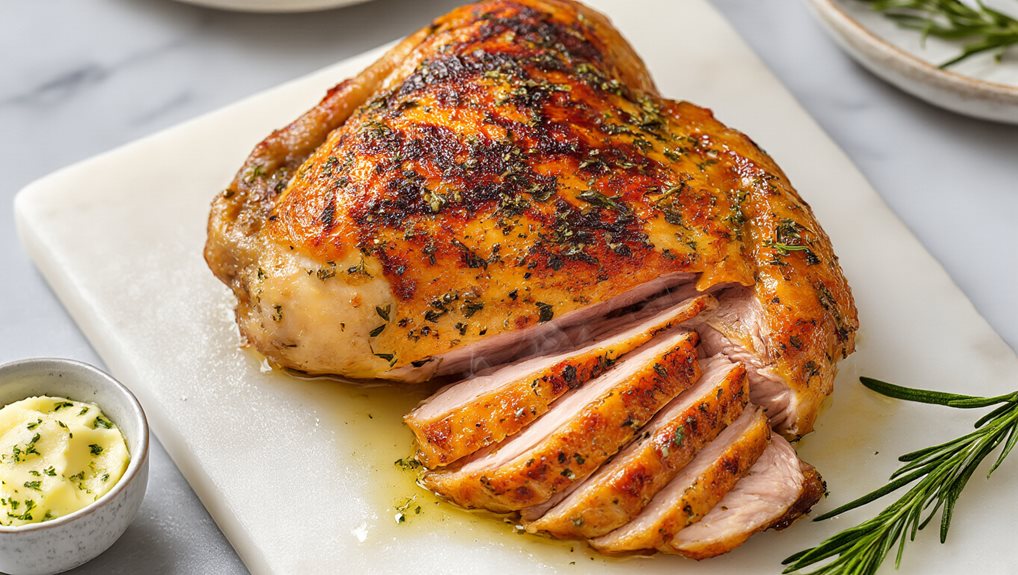
Most cooks skip the crucial rest step, yet it’s the difference between a dry breast and a juicy slice. After you pull chicken at 155‑160°F, let it sit 5‑15 minutes; carryover heat raises the core to a safe 165°F while proteins relax, locking in moisture. Resting lets juices redistribute, prevents outer drying, and yields tender, even texture without overcooking.
Wrapping Up
By mastering a few simple steps, you’ll keep chicken juicy every time. Choose the right cut, avoid overcooking, and pick a cooking method that suits the meat. Brine or marinate to add moisture, then pat the surface dry before searing in a hot pan. Finally, let the chicken rest so juices redistribute. These practical tricks prevent dryness, giving you flavorful, tender results with minimal effort.
