
To keep grapefruit fresh longer, store it at temperatures between 45-50°F (7-15°C) with 85-90% relative humidity. You'll want to keep your fruit in well-ventilated containers or mesh bags, and avoid washing it before storage. Place grapefruit away from ethylene-producing fruits like apples and bananas, which can speed up ripening. For refrigeration, use the crisper drawer with adjustable humidity settings, but don't store below 40°F (4°C) or above 77°F (25°C). While proper storage typically extends freshness for 4-6 weeks, specific techniques can help your grapefruit last even longer.
TLDR
- Store grapefruit at temperatures between 7-15°C (45-50°F), avoiding exposure to extreme cold or heat to maintain freshness.
- Keep relative humidity between 85-90% using well-ventilated containers or mesh bags for optimal moisture balance.
- Separate grapefruit from ethylene-producing fruits like apples and bananas to prevent premature ripening.
- Don't wash grapefruit before storage, as excess moisture can promote mold growth.
- Ensure proper air circulation by using ventilated containers and storing in a well-ventilated space.
Temperature Requirements For Grapefruit Storage
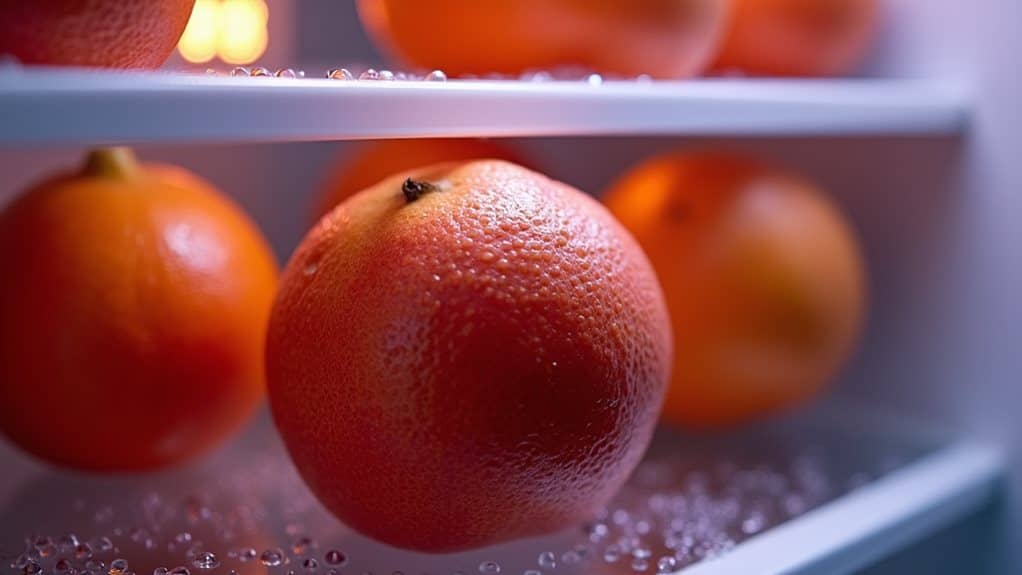
Proper temperature control plays an essential role in maintaining grapefruit quality during storage.
For ideal results, you'll want to store most varieties between 7-15°C (45-50°F), though specific ranges vary by region. California and Arizona grapefruits prefer slightly warmer temperatures of 14-15°C, while Florida, Texas, and imported varieties do best around 10-12°C. Fresh air ventilation needs to be maintained throughout storage to prevent the fruit from developing anaerobic conditions. Additionally, it's important to avoid exposure to heat and sunlight to ensure the fruit remains fresh.
Never store your grapefruit below 4°C or above 25°C.
Humidity Control Guidelines
You'll need to maintain a relative humidity level between 85-90% when storing your grapefruit, as this range helps preserve the fruit's natural moisture content and prevents both dehydration and mold growth. To achieve this balance, store your grapefruit in well-ventilated containers or mesh bags that allow air circulation while retaining moisture. Humidity control is essential for reducing waste and extending the quality of your citrus fruits. Additionally, proper storage practices, such as refrigeration of perishable items, can significantly enhance the shelf life of your grapefruit. Keep in mind that washing grapefruit before storage isn't recommended, as excess moisture can lead to premature spoilage, but you can use your refrigerator's crisper drawer with adjustable humidity settings for best results.
Ideal Humidity Levels
Maintaining the right humidity level is critical for storing grapefruit successfully.
You'll want to keep the relative humidity between 85-95% to preserve freshness and prevent spoilage. If humidity drops below 85%, your grapefruit will dry out, while levels above 95% can encourage mold growth.
Regardless of where your grapefruits come from or how you're storing them, this humidity range remains ideal. For proper airflow and humidity control, always use open containers when storing your grapefruit.
Maintaining Proper Moisture
Successfully controlling moisture levels requires a delicate balance when storing grapefruit, as these citrus fruits contain about 87% water content.
You'll need to protect your fruit from excess moisture sources like rain and condensation while maintaining enough humidity to prevent drying out.
Store your grapefruit in well-ventilated containers, and don't wash them before storage, as this can promote mold growth and spoilage. Maintain a relative humidity 85-90% to create optimal storage conditions for your grapefruit.
Proper Ventilation Methods
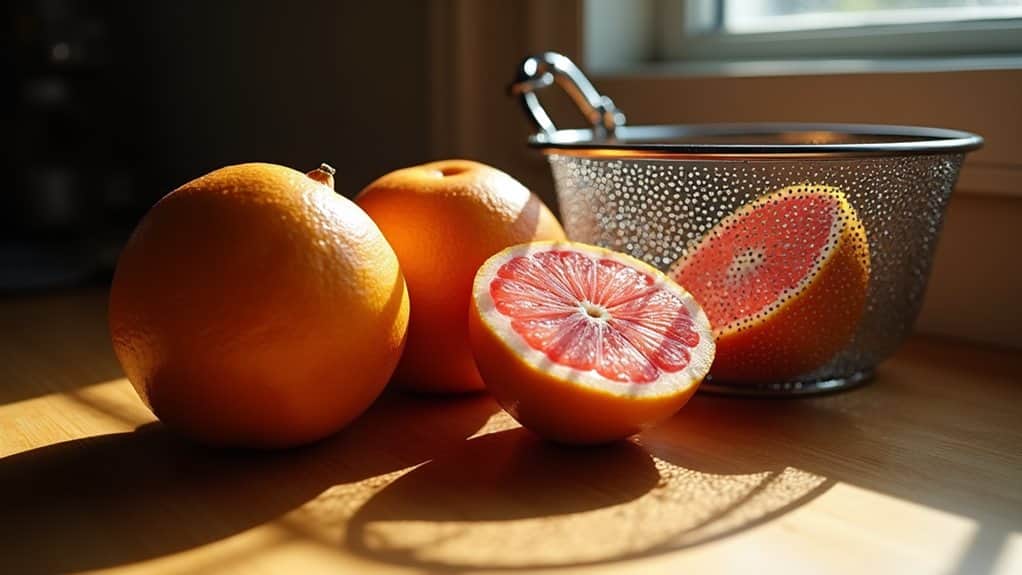
You'll need to maintain 60-80 air circulations per hour in your grapefruit storage area, ensuring fresh air flows consistently through your containers.
Set your ventilation equipment to provide between 70% and 100% air exchange per hour, which offers an energy-efficient balance while preventing ethanol buildup in the fruit.
When storing grapefruit in containers, choose mesh bags or crates with proper ventilation holes that allow air to flow freely around the fruit while protecting it from moisture damage. Since grapefruit is a citrus fruit, storing it outside of high-humidity crisper drawers will help maintain its best quality. Additionally, proper ventilation methods can prevent spoilage and extend freshness.
Air Circulation Best Practices
Proper air circulation stands as a critical factor in grapefruit storage success.
You'll want to maintain ventilation rates between 70% and 300%-hr-1, with higher rates needed for commercial storage.
Guarantee your system prevents air stagnation, as poor circulation can lead to increased CO2 levels and fruit decay.
You can choose between natural, mechanical, or mixed ventilation methods, depending on your storage setup.
Managing Container Vent Settings
Managing container vent settings comes down to striking the right balance of airflow for your grapefruit storage.
You'll want to maintain a ventilation rate between 70% and 100% per hour of the room's empty volume, while ensuring a fresh air supply of around 50 m³/hr.
Don't go below 30% ventilation, as this can lead to decay, and avoid excessive rates above 150%, which waste energy.
Storage Duration By Region
Grapefruit storage duration varies markedly across different growing regions, with temperature and humidity playing essential roles in preservation.
If you're storing Florida grapefruit, keep it at 10°C from January to September, or 15.5°C from October to December, for 4-6 weeks.
Israeli grapefruit lasts longer at 6-9°C for 12-16 weeks, while South African varieties need 11°C and last 3-4 weeks.
California grapefruit stores best at 14-16°C for 4-6 weeks. Additionally, proper storage methods are crucial to maintain freshness and prevent spoilage.
Ethylene Management Tips
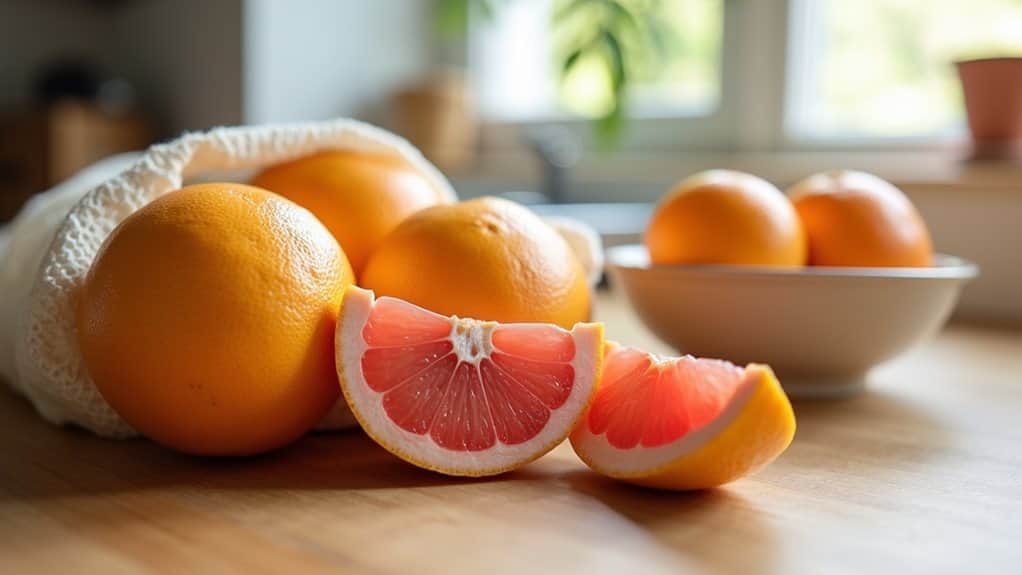
Beyond regional storage requirements, careful ethylene control makes a significant difference in preserving grapefruit quality.
You'll want to keep your grapefruit away from high ethylene-producing fruits like apples and bananas.
Guarantee proper ventilation in your storage area, and maintain temperatures between 59-65°F to minimize ethylene's ripening effects. Proper disposal methods for spoiled or excess grapefruit can also help maintain freshness in your storage area.
Good air circulation helps prevent off-flavors and decay while extending shelf life.
Home Storage Best Practices
Proper storage techniques make all the difference in maintaining your grapefruit's freshness and flavor.
If you'll eat your grapefruit within a week, room temperature storage works fine.
For longer shelf life, place it in your refrigerator's crisper drawer at 45-50°F.
Always verify your grapefruit is clean and dry before storing, and keep it in a plastic bag with 85-95% humidity for best results.
And Finally
You'll find that storing grapefruit properly isn't complicated once you understand the basics. Keep your fruit at 40-50°F (4-10°C), maintain moderate humidity, and guarantee good air circulation. Remember to check your fruit regularly for signs of spoilage, and use the ethylene management techniques you've learned. With these storage methods, you can extend your grapefruit's shelf life considerably, whether you're storing it in the fridge or a cool pantry.


