
Fresh thyme will last 3-5 days in your refrigerator when wrapped in damp paper towels and stored in a perforated plastic bag. You'll know it's spoiled if you spot brown or yellow discoloration, wilting, or sliminess. Dried thyme keeps much longer, staying fresh for 6-12 months when stored in airtight containers in a cool, dark place. For maximum longevity, you can freeze thyme for up to two years – just wash and dry the sprigs thoroughly before freezing on a baking sheet, then transfer to airtight containers. Proper storage techniques and preservation methods can greatly extend your thyme's usability and maintain its distinctive flavor.
TLDR
- Fresh thyme lasts 3-5 days in the refrigerator when wrapped in damp paper towels and stored in a perforated plastic bag.
- Dried thyme maintains quality for 6-12 months when stored in airtight containers away from heat and sunlight.
- Frozen thyme remains usable for up to two years, with best flavor retention within the first six months.
- Signs of spoilage include brown/yellow discoloration, wilting, sliminess, fuzzy mold spots, or musty odors.
- Proper preservation through freezing, drying, or oil-based storage significantly extends thyme's shelf life beyond fresh storage.
Fresh Thyme Storage Methods
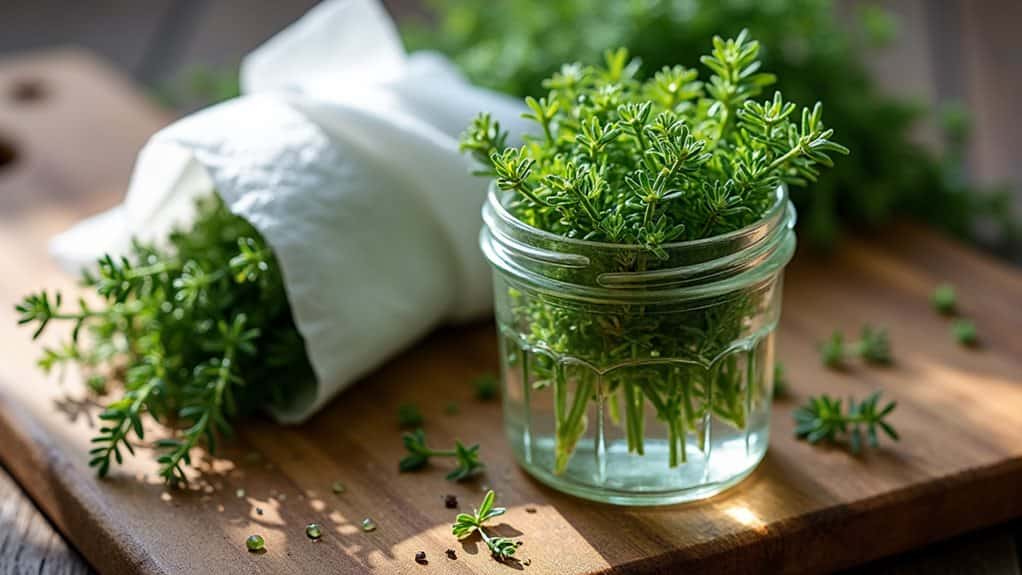
Storing fresh thyme properly can extend its shelf life and preserve its aromatic flavor.
You can keep thyme fresh by wrapping sprigs in a damp paper towel and placing them in a perforated plastic bag in your refrigerator's crisper drawer. This method helps maintain quality and prevents bacterial growth, which is essential for keeping herbs fresh.
Another effective method is placing the stems in a glass of water covered loosely with plastic, similar to fresh flowers, and storing them in the fridge.
For the best flavor and quality, harvest thyme in the late morning hours when any dew has evaporated.
Signs Your Thyme Has Spoiled
Whether you're working with fresh or dried thyme, recognizing signs of spoilage is essential for food safety and quality.
Check fresh thyme for brown or yellow discoloration, wilting, sliminess, or fuzzy mold spots. Fresh thyme should maintain a firm and springy texture, and it is best consumed within 3 to 5 days of purchase for optimal freshness.
For dried thyme, watch out for clumping, loss of aroma, or dull brown coloring.
Your nose is a reliable tool – if there's a musty or sour smell, it's time to discard.
Storing Dried Thyme
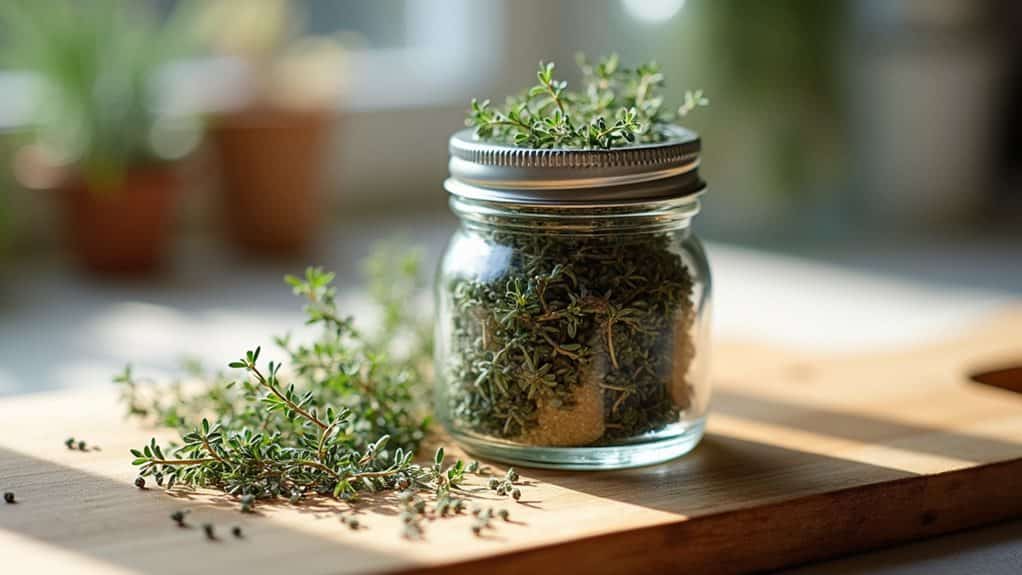
To keep your dried thyme at its peak flavor, proper storage is essential.
Store your herbs in clean, airtight glass jars, ceramic containers, or metal tins, and keep them in a cool, dark pantry away from heat sources and sunlight. Proper storage practices can help to extend shelf life and preserve flavor.
You'll want to remove leaves from stems before storing, and avoid using your hands to scoop directly from containers. With proper storage, dried thyme stays fresh for 6-12 months. You can also extend shelf life by storing in freezer for up to 2 years.
Freezing Thyme for Longevity
Freezing thyme offers a practical solution for preserving this aromatic herb's flavor and extending its shelf life. You'll want to wash and dry the sprigs thoroughly before freezing them on a baking sheet. Once frozen, transfer them to airtight containers or freeze them in ice cube trays with water or oil. For optimal preservation, store frozen thyme in vacuum-sealed bags to prevent freezer burn. Proper storage practices ensure prolonged usability and safety, much like how evaporated milk can be stored to extend its shelf life. While frozen thyme can last up to two years, you'll get the best flavor within six months.
Best Preservation Techniques
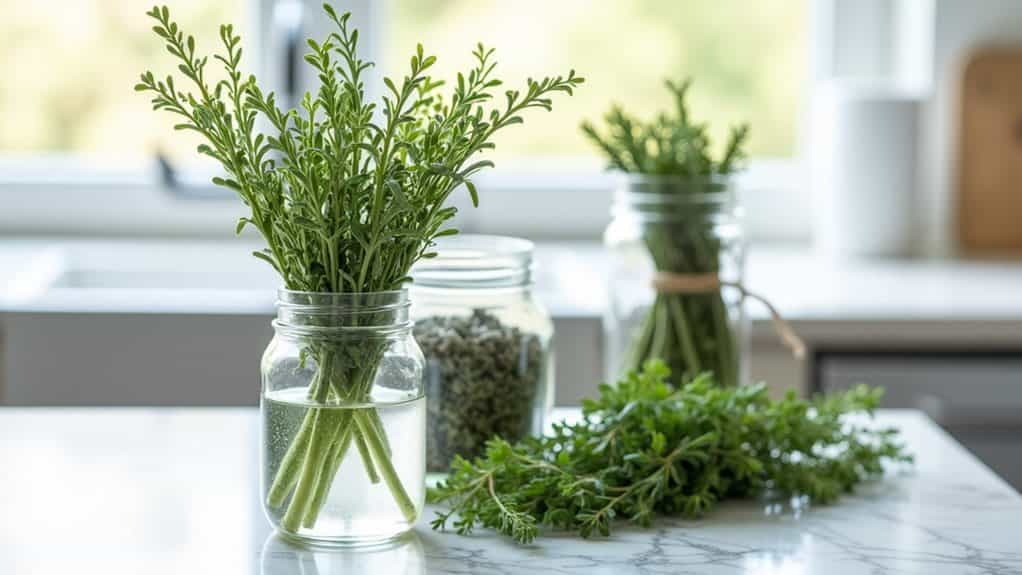
Preserving thyme effectively requires choosing the right method for your needs.
You'll find success with air-drying bundles in a dark, ventilated space for 2-4 weeks, or try oven-drying at 180°F for about 4 hours. Proper refrigeration can also help maintain the freshness of thyme for extended periods.
For an oil-based option, submerge fresh sprigs completely in quality oil, or create thyme pesto. These methods work especially well with French thyme varieties due to their strong flavor profile.
You can also preserve leaves between layers of salt or sugar for long-term storage.
And Finally
Proper storage of thyme can markedly extend its usability in your kitchen. You'll get the best results by keeping fresh thyme wrapped in damp paper towels in the refrigerator, freezing it for long-term storage, or drying it completely before storing in an airtight container. When you follow these methods correctly, you can enjoy thyme's distinct flavor for weeks or even months. Remember to check regularly for signs of spoilage to maintain quality.


