
Yes, jam can go bad, and you’ll want to check for mold, off smells, or discoloration. If you see fuzzy spots, toss the whole jar—mold spreads deep. Sour or alcoholic odors mean fermentation, even if the seal looks intact. Separation is normal, but slimy texture isn’t. A bulging lid signals dangerous gas buildup. Always use clean utensils and refrigerate after opening. Store properly, and you’ll catch early signs before it’s a problem—there’s more to keeping jam safe than most realize.
Quick Guide
- Mold growth, even in small amounts, means the entire jar of jam should be discarded immediately.
- Unusual colors like green or black spots indicate spoilage and potential mold contamination.
- Sour, alcoholic, or yeasty odors signal fermentation and microbial spoilage.
- Watery, slimy, or mushy textures suggest spoilage, especially in low-sugar or improperly stored jam.
- Bulging lids or jars indicate gas buildup from spoilage and require immediate disposal.
Recognizing Visible Mold Growth in Jam
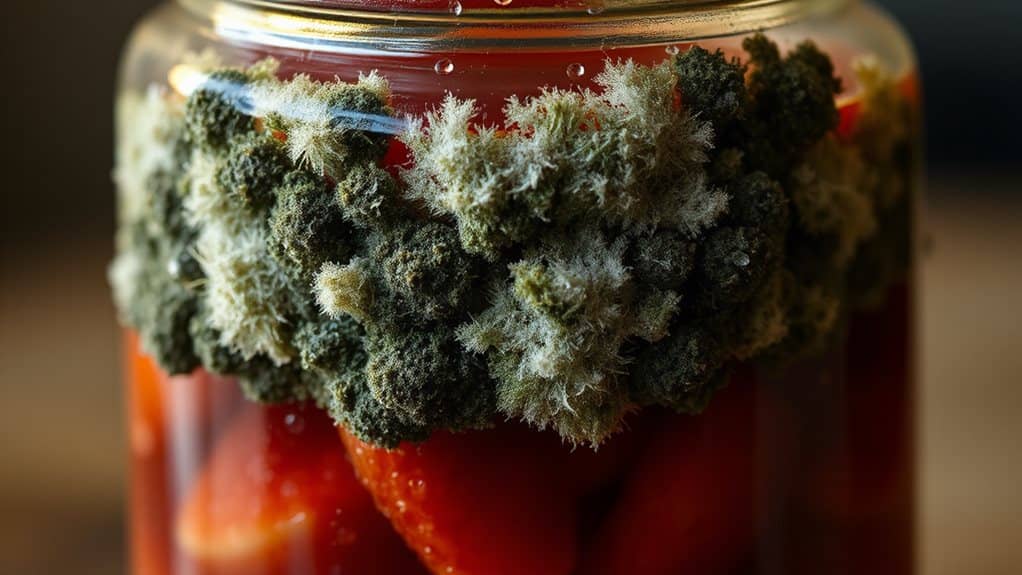
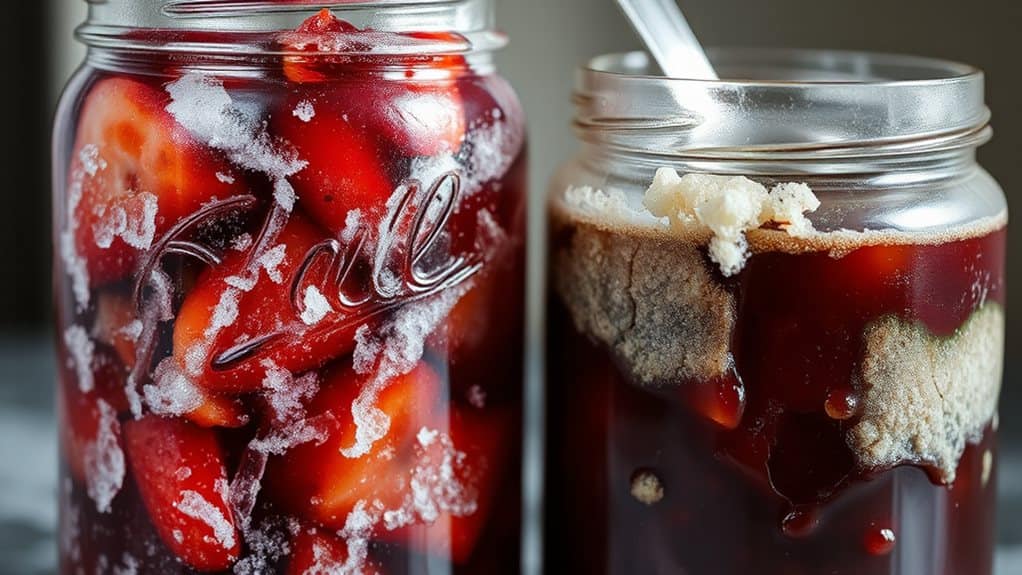
Have you ever opened a jar of jam only to spot something fuzzy or discolored on the surface? That’s likely mold. It can appear fuzzy, slimy, or powdery, often in green, white, black, or pink patches.
Mold spreads roots deep into the jam, even if you can’t see them. Don’t just scoop it out—toss the whole jar. Visible mold means it’s time to let go. Mold spores require moisture, warmth, and organic material to grow, and jam provides all three, creating an ideal environment for contamination once the seal is broken or moisture is introduced. This means that mold can develop even in refrigerated conditions if organic material is present. Proper sealing in an airtight container can help limit moisture exposure that encourages mold growth.
Identifying Unusual Color Changes and Darkening
Why does your once-bright strawberry jam now look dull or darker than when you first opened it? Some darkening is normal over time, especially in lighter jams, due to oxidation or sugar reactions. Store jam in a cool, dark place with a tightly sealed lid to limit air exposure and preserve overall quality. But watch for unnatural colors—like green or black spots—as they may signal spoilage from microbes. If the color change seems off, discard the jar without tasting. Mould growth can cause such discolouration and may produce harmful mycotoxins.
Detecting Fermented or Off-Putting Odors
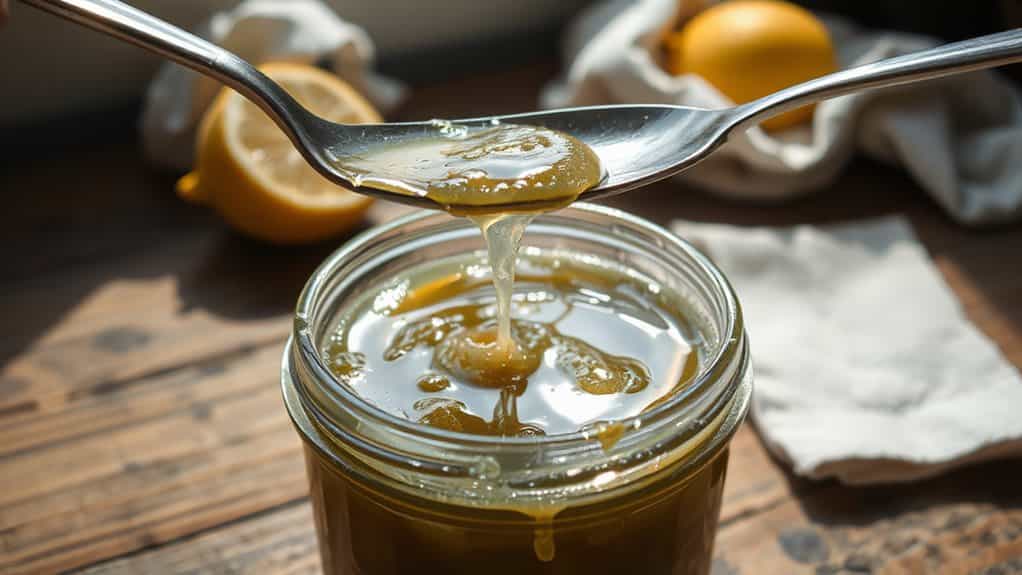
What does spoiled jam actually smell like, and how can you catch it before it ruins your toast? You might notice sour, alcoholic, or yeasty odors—signs of fermentation.
Off-putting smells can develop from spoilage yeasts or molds, even if the jar looks sealed.
Trust your nose: if it smells strange, don’t risk it.
Heating and sniffing helps reveal hidden off-odors.
For longer-lasting pantry staples like powdered sugar, proper storage in an airtight container helps prevent moisture and odors from affecting quality.
Noticing Separation and Texture Changes
While jam may look perfectly fine at first glance, changes in its texture or consistency can tell you a lot about its condition. You might notice liquid on top—this is normal and stirred back in.
But if it’s watery, slimy, or mushy, especially in reduced-sugar kinds, it could be spoiling.
Crystals? Just warm the jar.
Always check for mold or odd smells, too.
Keep it sealed and stored in a cool, dark place to slow oxidation and prevent signs of spoilage.
Checking for Bulging Lids and Gas Buildup
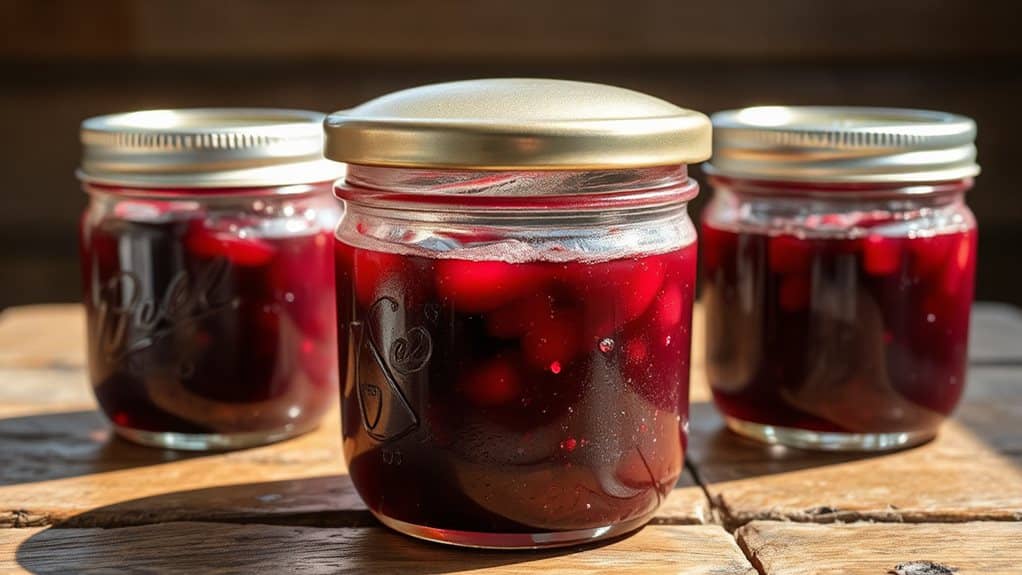
You’ve checked the texture and found no slime or separation, but there’s one more important sign to watch for before you crack open that jar: the lid.
If it’s bulging, don’t take chances—gas buildup likely means spoilage. Discard the jar safely.
A buckled lid right after processing may be harmless, but bulging during storage isn’t.
As with bulging cans, strange smells after opening can also signal spoilage and mean you should throw it out.
Understanding Shelf Life of Unopened Jars
You can keep unopened commercial jam in your pantry for up to 2 years, while homemade versions stay good for about a year.
Store them in a cool, dark place to protect the flavor and texture from heat and light damage.
The sugar content and proper sealing play big roles in how long your jam stays fresh and safe to eat.
Shelf Life Basics
How long can a jar of jam really last on your shelf?
Unopened commercial jam stays safe for 1 to 2 years in a cool, dark pantry.
Homemade versions last up to a year if properly canned.
Sugar, seal, and storage all play key roles—higher sugar and airtight seals extend freshness, while heat and light shorten it.
Storage Impact
A jar’s longevity isn’t just about the date printed on the label—where and how you store it plays a major role in preserving its quality.
Keep unopened jam in a cool, dark pantry to avoid heat and light damage.
Avoid damp or humid spots, and don’t refrigerate regular commercial jams unless opened.
For low-sugar or sugar-free varieties, fridge storage is best even before opening to prevent mold.
Proper Storage of Opened Jam in the Refrigerator
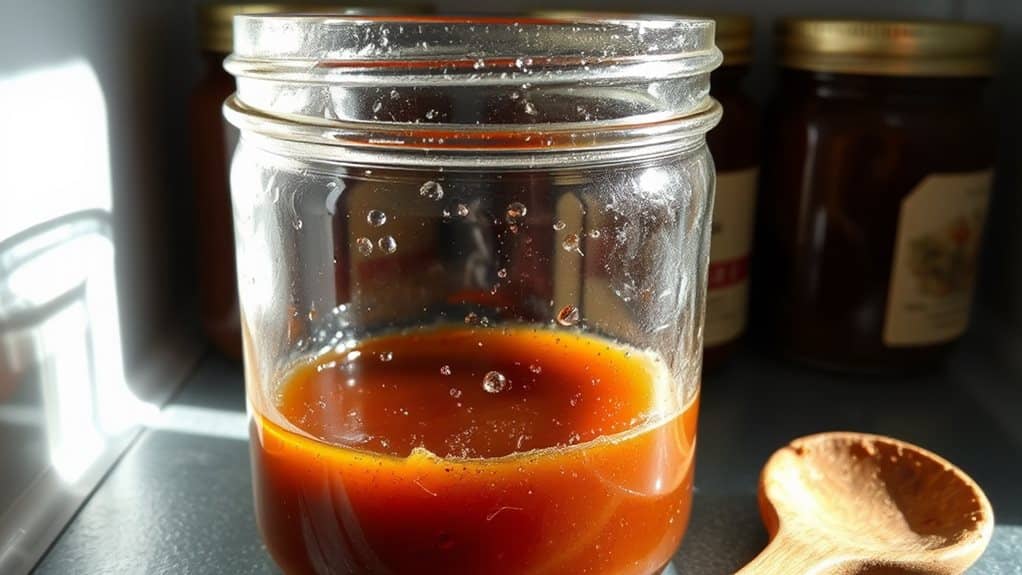
Once you open a jar of jam, keep it in the fridge at 40°F or below to slow spoilage.
Always use a clean spoon when scooping to avoid introducing bacteria.
This simple habit helps your jam stay safe and tasty for weeks.
Refrigerate After Opening
While you might be tempted to leave that jar of jam on the pantry shelf after opening, refrigerating it’s the best way to keep it safe and flavorful. You should seal it tightly to block air and contaminants.
The fridge’s stable, cool temperature slows mold and bacteria. Even high-sugar jams benefit from refrigeration, staying fresh for up to six months.
Use Clean Utensils
Keep your jam safe and fresh by always using clean utensils when scooping from the jar.
Avoid double dipping, which introduces bacteria and speeds up spoilage.
Clean spoons limit moisture, air, and microbes, preserving flavor and safety.
Even refrigerated jam can grow mold if contaminated.
Always seal the lid tightly and store away from the fridge door for best results.
How Sugar Content Affects Spoilage Rates
Most traditional jams rely on high sugar content to stay fresh, and for good reason—sugar plays a key role in slowing spoilage by limiting microbial growth.
You’ll find that jams with around 68% sugar resist most bacteria, but molds like Aspergillus glaucus can still grow.
Low-sugar versions spoil faster, so check them often.
Freezing Jam for Long-Term Preservation
Freezing jam is a simple and effective way to preserve homemade spreads without the need for canning. You’ll skip sterilizing jars and lengthy processing.
Just use clean containers, leave ½-inch headspace, and freeze at 0°F.
Thaw it overnight in the fridge and use within 3 weeks.
Freezing keeps flavor fresh and reduces spoilage risk—perfect for small batches.
Best Practices for Storing Jam to Maximize Freshness
While you’ve gone to the trouble of making or buying a great batch of jam, storing it the right way guarantees it stays fresh, flavorful, and safe to eat.
Use sterilized, airtight glass jars and fill them while hot to seal properly.
Keep unopened jars in a cool, dark place, and once opened, refrigerate tightly and use clean spoons to extend freshness.
Wrapping Up
You now know how to spot spoiled jam—watch for mold, odd smells, or color changes. Always store opened jars in the fridge and check the lid for bulging. High sugar content helps preserve it, but it won’t last forever. When in doubt, throw it out. Freezing extends shelf life if you won’t use it soon. Following these steps keeps your jam safe, fresh, and tasty longer. Stay smart, stay safe.


