
Vinegar won't spoil thanks to its high acidity level (4-8%), making it one of the most shelf-stable items in your kitchen. While you might notice changes like cloudiness, sediment, or color variations over time, these don't affect safety – they're merely cosmetic. You'll want to store your vinegar in a cool, dark place using glass or non-reactive plastic containers with tight-fitting lids. No refrigeration is needed, but proper storage helps maintain quality. While "Best By" dates indicate quality rather than safety, vinegar can last indefinitely when stored correctly. Let's investigate the specific storage practices that'll help you maximize your vinegar's longevity.
Quick Guide
- Vinegar doesn't spoil due to its high acidity level, and properly stored vinegar can last indefinitely without safety concerns.
- Store vinegar in a cool, dark place using glass or non-reactive plastic containers with airtight lids to maintain quality.
- Cloudiness, sediment, or mother formation are natural occurrences that don't affect vinegar's safety or indicate spoilage.
- Regular visual checks for unusual changes and optional filtration through coffee filters can maintain vinegar's clarity and quality.
- Vinegar must maintain 5% acidity for safe canning, and proper storage prevents quality degradation over time.
Understanding Vinegar's Shelf Life

Most people wonder whether vinegar can spoil, but it's one of the most stable food products you'll find in your pantry. Due to its high acidity, vinegar doesn't expire in the traditional sense and can last almost indefinitely when stored properly. While you'll see "Best By" dates on bottles, these refer to quality rather than safety, as vinegar is naturally self-preserving and doesn't need refrigeration. The 4-8% acetic acid content gives vinegar its remarkable preservation properties, similar to how evaporated milk can spoil if not stored properly.
Signs of Quality Changes
While vinegar remains safe indefinitely, you'll notice several natural changes that can occur over time. You might see cloudiness from harmless bacteria growth, color changes in red wine or fruit vinegars, sediment formation in less filtered varieties, or the development of 'mother' – a slimy mass of beneficial bacteria. Regular checks on expiration dates can help you determine the best time to use your vinegar, even if it remains safe. Don't worry though – these changes are cosmetic and won't affect your vinegar's safety. Vinegar's high acidity level makes it naturally resistant to spoilage even as these physical changes occur.
Types of Vinegar Storage Containers

Choosing the right storage container can make or break your vinegar's longevity.
You'll want to opt for glass containers, which are non-reactive and preserve flavor best, especially dark glass bottles that block light. Properly stored vinegar can maintain its quality for a long time, similar to cocoa powder shelf life which can extend up to three years with the right conditions.
While BPA-free plastic containers can work too, you should avoid metal or wooden containers, as they'll react with vinegar's acidity.
Always guarantee your container has an airtight seal. Proper storage in non-reactive containers helps maintain vinegar's self-preserving properties and virtually indefinite shelf life.
Best Storage Practices
Proper storage practices can greatly extend your vinegar's shelf life and maintain its quality.
Keep your vinegar in a cool, dark pantry away from heat sources and direct sunlight. You'll want to use containers with tight-fitting lids and replace them immediately after each use. Additionally, proper storage can help ensure that vinegar remains free from harmful bacteria, which can compromise its quality. While most vinegars don't need refrigeration, storing less acidic varieties like balsamic in the fridge can help preserve their flavor longer. It's best to store vinegar in non-reactive containers to prevent any unwanted chemical interactions.
Common Visual Changes

Even with ideal storage conditions, you'll likely notice some visual changes in your vinegar over time.
White vinegar usually stays clear, while other types may darken or lighten. In addition to these changes, it's important to remember that fresh strawberries should be refrigerated to extend their freshness and quality.
When it comes to crushed fruit vinegar, experts recommend checking for changes in color or odor before using the product. You might spot cloudiness, sediment, or "mother" (stringy formations) in unpasteurized varieties, especially apple cider vinegar.
While these changes can indicate decreased quality, they don't make your vinegar unsafe to use.
The Mother of Vinegar
You'll often notice a cloudy, slimy substance floating in your vinegar, known as the "mother," which forms naturally when beneficial bacteria convert alcohol into acetic acid.
While some people strain out this harmless substance, the mother actually contains proteins, enzymes, and friendly bacteria that can enhance your vinegar's nutritional value.
The mother's presence indicates that your vinegar is raw and unpasteurized, which many health enthusiasts prefer for its potential probiotic benefits.
What Is The Mother
Have you ever noticed a cloudy, gelatinous mass floating in your vinegar bottle?
That's called the mother of vinegar, a harmless formation of cellulose and bacteria that develops in unpasteurized or opened vinegar.
While it might look unappetizing, the mother won't affect your vinegar's safety or flavor.
You can easily strain it out using a coffee filter or leave it in, as it's completely safe.
Benefits of Mother Formation
The mother of vinegar offers several extraordinary health benefits that extend beyond its unusual appearance.
You'll find it's packed with probiotics, beneficial bacteria, and antioxidants that may support digestive health.
The mother also enhances vinegar's flavor profile and serves as a natural fermenting agent, allowing you to create new batches of homemade vinegar while maintaining the product's authenticity and self-preserving qualities.
Temperature and Light Considerations
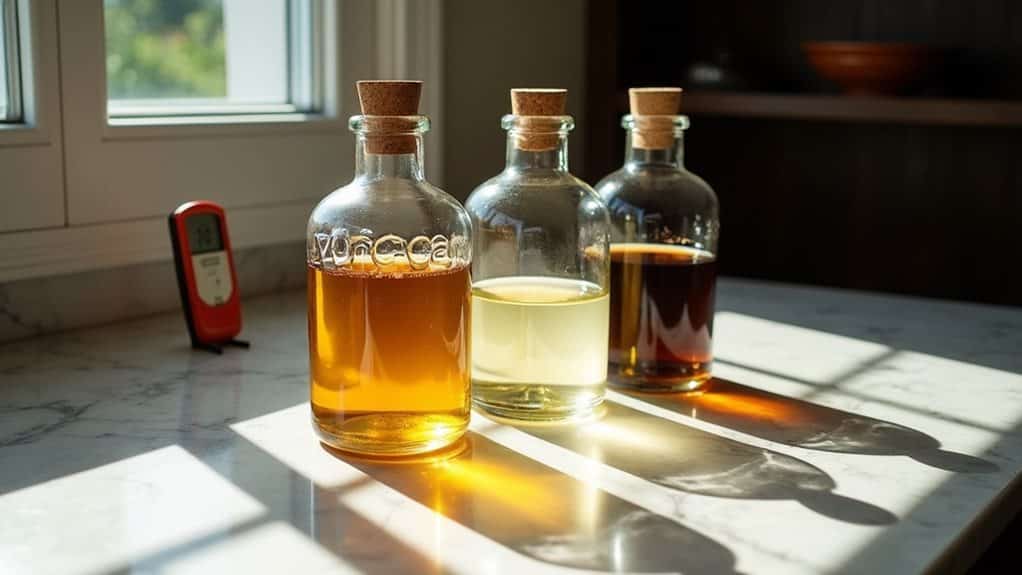
While vinegar is generally stable, proper temperature and light storage greatly impact its quality over time.
You'll want to keep your vinegar in a cool environment, away from direct sunlight and heat sources. For ideal preservation, store it in dark glass bottles inside a pantry or cupboard.
While room temperature works for highly acidic vinegars, less acidic varieties like balsamic benefit from refrigeration.
Vinegar Safety Guidelines
While vinegar rarely becomes unsafe due to its high acidity, you'll want to watch for signs of spoilage like mold growth, unusual discoloration, or strange odors that differ from the typical vinegar smell.
To maintain safe acidity levels, keep your vinegar in a well-sealed container away from moisture and excess air exposure, which can dilute its concentration over time.
If you notice significant changes in your vinegar's appearance or smell, it's best to replace it, especially if you plan to use it for canning or pickling where proper acidity is essential for food safety.
Signs of Unsafe Vinegar
Spotting unsafe vinegar isn't always straightforward, but several key indicators can help you determine if your vinegar has gone bad or become compromised.
Look out for visible mold, unusual odors, or slimy growth (not to be confused with harmless mother).
If you notice significant darkening beyond normal color changes, or if there's moisture under the lid indicating seal problems, it's best to discard the vinegar.
Maintaining Safe Acidity Levels
Beyond identifying spoiled vinegar, proper storage and handling practices directly impact its safety and shelf life.
You'll want to maintain vinegar's natural acidity by keeping it in airtight, non-reactive containers away from moisture.
Stick to glass or plastic containers, and avoid metal ones that could react with the acid.
For ideal safety in canning and pickling, make certain your vinegar maintains at least 5% acidity.
Straining and Filtering Methods
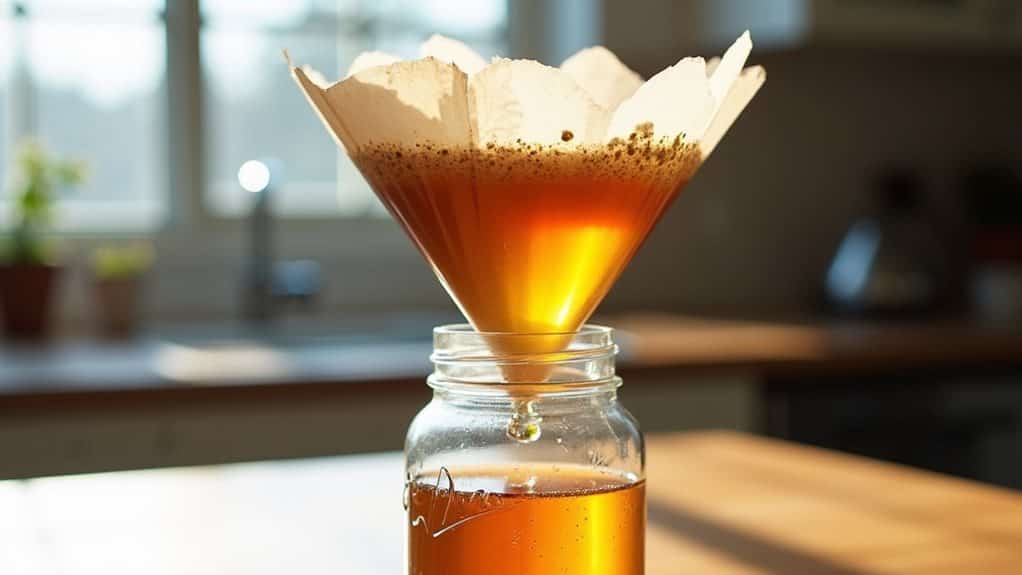
Maintaining vinegar's clarity sometimes requires simple filtering techniques.
You can easily strain cloudy vinegar or remove sediment by using a coffee filter placed in a fine-mesh strainer.
If you notice a slimy substance called "mother" forming at the bottom, don't worry – it's harmless and can be filtered out.
While these changes don't affect vinegar's safety, filtered vinegar works best for canning and pickling.
Maintaining Vinegar Quality
To keep your vinegar fresh and flavorful, you'll want to store it in a dark cupboard or pantry away from direct sunlight and heat sources.
You should regularly check the container's seal to prevent air from getting in, which can affect the vinegar's quality over time.
If you notice any cloudiness or particles, you can strain the vinegar through a coffee filter to remove sediment and maintain its clarity.
Store In Dark Places
Proper storage in dark places plays an essential role in preserving vinegar's quality.
You'll want to keep your vinegar away from all light sources, especially sunlight, as UV rays can damage its color and taste.
Store your bottles in a dark corner of your pantry or use dark glass containers to protect against light exposure, which can reduce acidity and alter flavor profiles.
Check Seals Regularly
Beyond keeping vinegar in dark spaces, regular seal checks play a key role in preserving its quality.
You'll want to inspect your container's seals for proper closure and any signs of wear.
Look out for condensation inside the container, which can indicate moisture entry and affect acidity.
Always make sure lids are tightly secured after use, and avoid metal containers that might react with the vinegar.
Filter When Necessary
Maintaining clear vinegar is straightforward with occasional filtering when cloudiness or sediment appears.
You can easily strain your vinegar through a coffee filter to remove any sediment, mother formation, or cloudiness that develops over time.
While these changes don't affect safety or acidity, filtering helps restore clarity and maintain aesthetic appeal.
Proper Container Selection

When storing vinegar, selecting the right container plays an essential role in preserving its quality and flavor.
Choose glass containers or non-reactive plastic bottles that seal tightly to minimize oxygen exposure. You'll want to avoid metal containers, as they can react with vinegar's acidity.
Dark glass bottles are particularly effective since they protect against light, while airtight lids prevent contamination and preserve freshness.
Vinegar for Canning
When you're planning to preserve produce through canning, you'll need vinegar with at least 5% acidity to guarantee food safety and proper preservation.
You'll want to store your vinegar in a cool, dark place with a tight-fitting lid before using it for canning projects.
While vinegar doesn't technically expire, you should check for any signs of spoilage, such as mold or off odors, and opt for fresh vinegar if you notice changes in appearance or smell that could affect your preserved foods.
Proper Acidity For Safety
Since safe canning depends heavily on proper acidity levels, you'll need vinegar with a pH between 2 and 3 to prevent harmful bacteria growth.
Over time, vinegar's acidity can decrease as it absorbs moisture or breaks down, making it less effective for preservation.
That's why you should always use fresh vinegar for canning and store it properly in sealed containers away from heat and light.
Storage Before Preserving Produce
Proper storage of vinegar before canning can make the difference between successful and failed preservation.
Keep your vinegar in a cool, dark cupboard away from heat and sunlight, using glass or plastic containers with tight-fitting lids.
You'll want to check for clarity and strain out any sediment or "mother" through a coffee filter before using it for preserving produce.
Different Vinegar Applications
Vinegar's versatility extends far beyond the kitchen, making it one of the most adaptable household products you'll find.
You can use it for cleaning surfaces, disinfecting appliances, and removing stubborn odors.
In your cooking, it's perfect for marinades, pickling, and balancing flavors in recipes.
For health purposes, you'll find it useful in natural remedies, skin care, and immune system support.
Storage Location Tips
Maintaining ideal storage conditions for vinegar guarantees its longevity and preserves its quality.
You'll want to store your vinegar in a cool, dark cupboard away from direct sunlight and heat sources.
Choose a lower shelf in your pantry where temperatures remain consistent, and make sure the area stays dry.
Avoid places with moisture or UV exposure, as these can affect your vinegar's acidity and flavor.
Wrapping Up
You can trust that your vinegar will remain safe to use indefinitely, though you'll want to store it properly to maintain its quality. Keep your vinegar in a cool, dark place using airtight glass or plastic containers, and you'll prevent unnecessary quality changes. While you might notice some natural sediment or color variations over time, these don't affect the vinegar's usefulness for cooking, cleaning, or canning purposes.


