
Start your eggs in boiling water, not cold, then simmer for 9‑12 minutes. Immediately plunge them into an ice‑water bath for at least ten minutes; this stops cooking and contracts the egg inside the shell, loosening the membrane. After cooling, add a teaspoon of neutral oil per quart of water, lower the eggs gently, and simmer another 10‑12 minutes for a hydrophobic layer that prevents sticking. Tap, roll, and peel under a steady stream of cool running water, beginning at the wider end. Continue for more tips.
Quick Guide
- Start eggs in boiling water, then plunge into cold running water for a few minutes to contract the egg and loosen the membrane.
- Add 1 tsp neutral oil per quart of water after cooling; the oil creates a hydrophobic layer that prevents the membrane from sticking.
- Immediately transfer hot eggs to an ice‑water bath for at least ten minutes to stop cooking and further loosen the membrane.
- Tap the egg all over, then roll it under your palm 5–10 times to create fracture points that separate the shell and membrane.
- Peel under a steady stream of cool running water, beginning at the wider end where the air pocket is located.
Warm Eggs & Prepare the Pot for Easy Boiled‑Egg Peeling
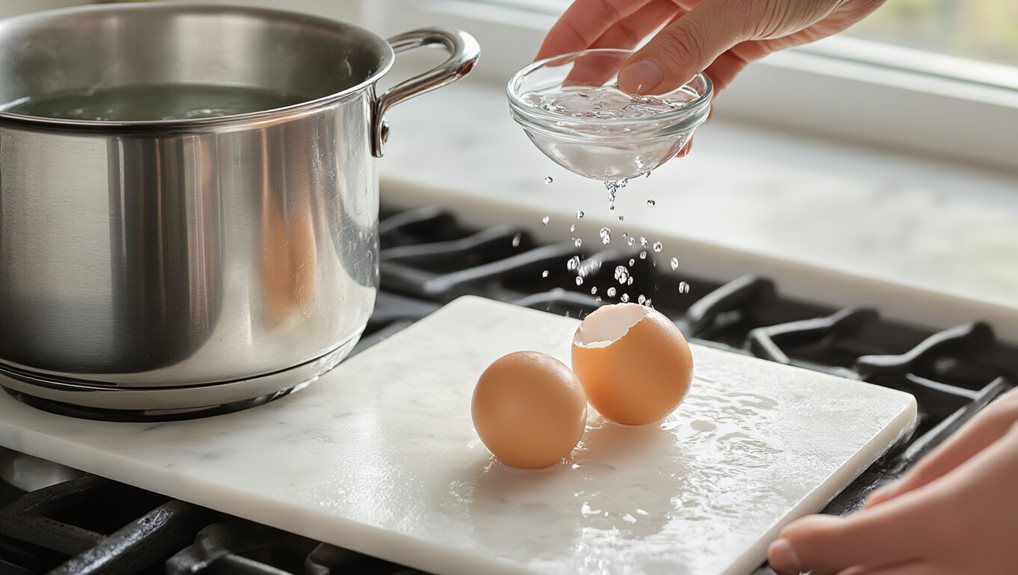
Ever wonder why some boiled eggs peel like a dream while others cling stubbornly to their shells?
Start them in boiling water, not cold, so the whites separate from the membrane.
After cooking, plunge the pan into cold running water, rinse, and keep the flow until the eggs feel cool.
This quick chill contracts the egg inside the shell, making peeling effortless. Short cooling improves peelability.
Just like cooked artichokes last only 3 to 5 days in the refrigerator, peeled boiled eggs stay freshest when promptly chilled and stored cold.
Add Oil to the Water for a Slip‑Free Boiled‑Egg Peel
After cooling the eggs in running water, you can make peeling even easier by adding a splash of oil to the boiling water before the eggs go in. Stir 1 tsp neutral oil per quart of water, then lower room‑temperature eggs gently. The oil forms a hydrophobic layer, preventing the membrane from sticking, so after a 10‑12‑minute simmer you’ll peel smoothly under running water. Store oil in a cool, dry place and discard it if you notice a foul odor. Method 2 is the preferred approach for easy‑peel hard‑boiled eggs.
Use an Ice‑Bath to Stop Cooking and Separate the Membrane
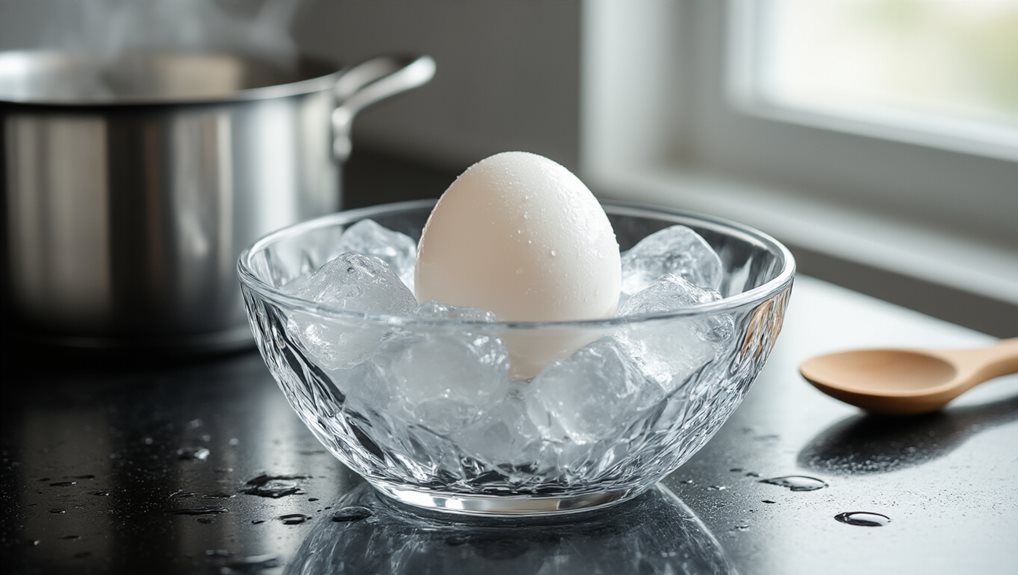
You’ll want to drop the hot eggs straight into an ice‑water bath the moment you turn off the burner, because the instant cooling stops the cooking process and prevents over‑cooking.
The cold water quickly loosens the thin membrane that clings to the white, making it easier to separate later. Keep the eggs submerged for at least ten minutes, and you’ll notice the shell slipping off with far less effort. Just as gentle reheating helps maintain a stable emulsion in creamy sauces, rapid chilling helps keep egg whites firm and easier to separate cleanly from the shell.
Instant Cooling Stops Overcooking
An ice‑bath right after the boil instantly halts the cooking process and creates a tiny air pocket between the white and the shell, making the membrane easy to separate.
The rapid temperature drop contracts the egg white away from the shell, preventing overcooking and rubbery texture.
You stop the heat within seconds, keep yolk color lively, and guarantee a tender, peel‑ready egg without extra waiting.
Cold Water Loosens Membrane
Why does a quick dip in cold water make peeling boiled eggs a breeze? The sudden temperature drop contracts the inner membrane faster than the white, creating a thin gap between shell and egg. A minute of cold tap water, or a brief ice‑bath, halts cooking and loosens the bond. Running cool water while cracking the fat end further separates the membrane for easy peeling.
Crack and Roll Eggs for Faster Boiled‑Egg Peeling
When the water’s off, tap the egg on a firm countertop until cracks form all around its surface, then give it a gentle roll under your palm; this simple motion creates many fracture points while keeping the shell fragments small enough not to cling to the white.
Roll back and forth five to ten times, applying light, even pressure. The rolling separates the membrane, letting you start peeling at the large end where the air pocket expands, and the shell pieces slide off in seconds.
If you’re serving the eggs alongside roasted vegetables, remember that eggplant seeds are edible and taste best when cooked to reduce bitterness.
Peel Boiled Eggs Under Running Water for a Clean Finish
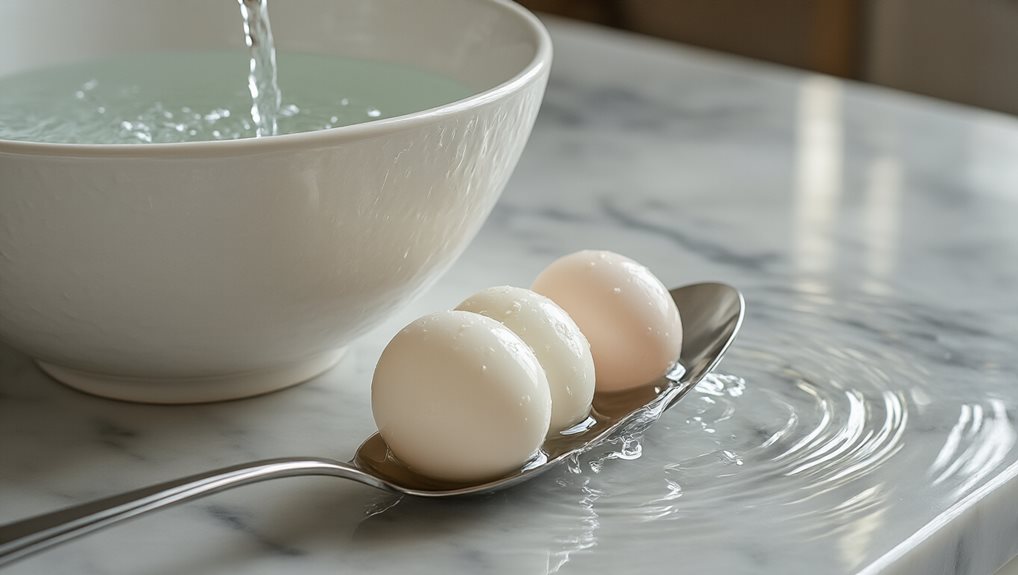
Place the egg under a steady stream of cool running water, then give it a gentle tap and roll it between your hands to crack the shell all over. As the water seeps into the cracks, it loosens the membrane and carries away tiny shell fragments, making the peel slide off smoothly. Start peeling at the wider end where the air pocket is, and let the continuous flow keep the surface clean and free of residue. If you’re prepping fruit alongside eggs, wash cantaloupe rind under cool running water before cutting to help reduce contamination risk.
Cold Water Stream Guidance
Ever wonder how a simple cold water stream can turn a stubborn boiled‑egg peel into a quick, clean task? Hold the cracked egg vertically and aim a 10‑15 °C stream at the bottom, rotating it every five seconds. The cold flow contracts the membrane, loosens shell fragments, and prevents re‑adhesion, cutting peeling time in half while keeping the white intact.
Gentle Rolling Technique
A gentle rolling motion over a steady stream of cold water does the trick for a clean peel. You tap the egg’s top and bottom, then roll it lightly under the water, letting cracks spread while the cool flow seeps under the membrane. The water rinses away shell pieces and membrane bits, leaving a smooth white surface and minimizing damage.
Why Some Eggs Still Stick and How to Fix It?
Why do some boiled eggs still cling to their shells even after you follow the usual steps?
Fresh eggs have a tight membrane that adheres to the white, and dropping cold eggs into boiling water contracts proteins, tightening that bond.
Warm the eggs first, simmer for 13 minutes, then plunge them into an ice bath for at least 15 minutes.
This rapid cooling loosens the membrane, making peeling easier.
Wrapping Up
Now these tips and you’ll crack eggs in seconds, not minutes. Warm the water, add a splash of oil, and shock the shells in ice water to separate the membrane. Crack, roll, and peel under running water for a clean finish. If shells still cling, a little extra ice‑bath time usually does the trick. Follow the steps and you’ll enjoy perfectly peeled boiled eggs every time.


