
You get watery scrambled eggs when excess liquid—often from milk, over‑cooking, or insufficient early salting—fails to coagulate, so the proteins release moisture instead of forming a fluffy curd. Milk adds water and dilutes the egg flavor, while early salting neutralizes protein charges and lets them bond at lower temperatures, keeping the mixture creamy. Over‑cooking squeezes moisture out, and a hot, oiled pan helps form larger curds. If you keep going, you’ll uncover how to prevent this and get dry, fluffy eggs.
Quick Guide
- Excess liquid from milk or added dairy evaporates slowly, causing syneresis and a wet, bouncy texture.
- Early salting neutralizes protein charges, allowing proteins to bond at lower temperatures and retain moisture.
- Insufficient heat or low‑heat cooking prevents proper protein coagulation, leaving liquid pockets in the curds.
- Overcooking squeezes moisture out of the egg matrix, resulting in watery, separated pools.
- Adding acid or adjusting heat when yolk droplets appear can prevent further moisture separation.
Why Milk Makes Scrambled Eggs Watery
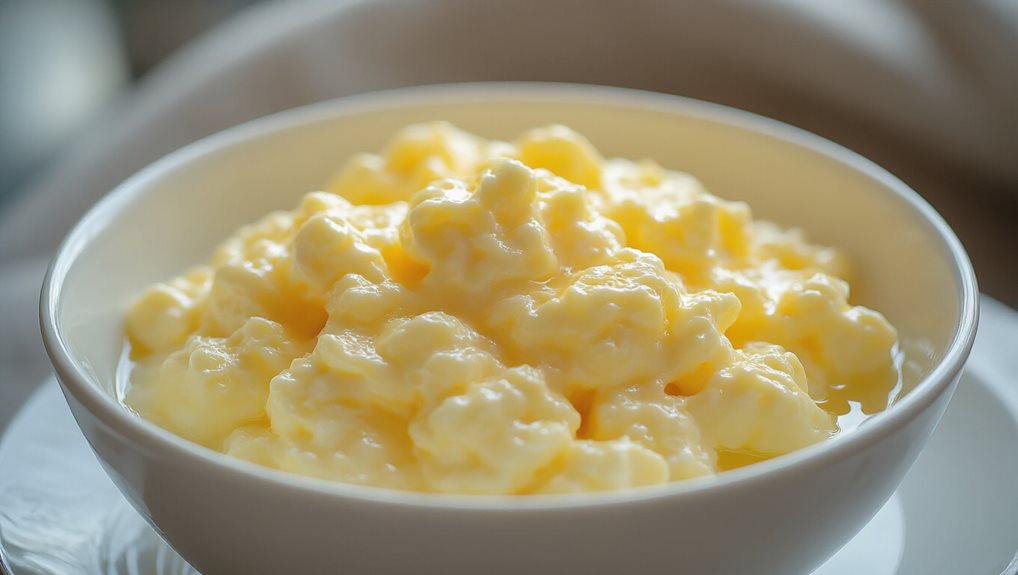
Why does adding milk make scrambled eggs turn watery? You’ll notice milk creates a denser curd because its proteins and water evaporate quickly, forcing liquid out through syneresis. That expelled steam‑rich liquid pools, producing a wet, bouncy texture.
Milk also dilutes the egg’s flavor and makes the mixture thinner, so it overcooks faster and loses the silky, fluffy quality you expect. Just like humidity above 65% can cause hard clumps in protein powder by driving moisture changes, extra liquid in your egg mixture can separate and pool as it cooks. Adding cold water to the pan can enhance lifting via steam, further increasing fluffiness.
How Early Salting Weakens Egg Structure
When you add milk to scrambled eggs, the extra liquid makes the mixture more prone to releasing steam‑rich water as it cooks.
Early salting neutralizes protein charges, causing them to uncoil and bond at lower temperatures. Like soft cheeses such as goat cheese, which should not sit out for more than two hours to avoid bacterial growth, eggs also benefit from careful handling and timing to maintain their best texture.
This loosens the egg’s structure, keeping proteins slightly separated, so they retain moisture, stay creamy, and avoid the tight, watery bonds that form without salt.
Pre‑salting lowers the temperature at which egg white proteins bond together.
What Hot Pan and Oil Do for Texture
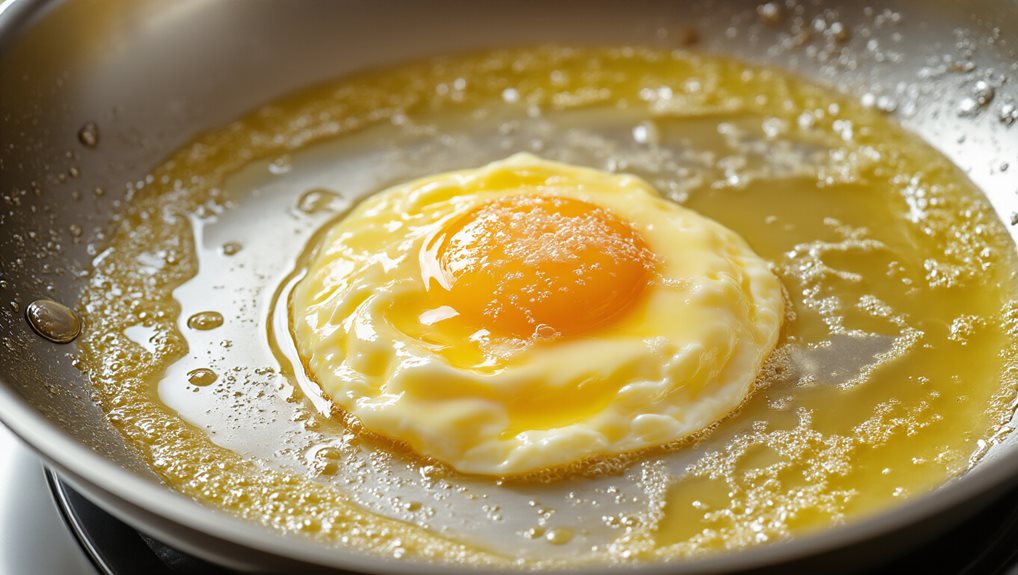
A hot, preheated pan combined with the right oil sets the stage for perfect scrambled‑egg texture.
When you add eggs to a sizzling surface, medium heat cooks whites evenly, preventing chewiness.
Oil creates a thin barrier, stops sticking, and transfers heat quickly, forming larger curds and a crisp edge.
Choosing olive oil or ghee gives high‑heat tolerance, while butter adds flavor without sacrificing the silky bite you want.
Just like the 6-8 hour window for room temperature thawed Uncrustables, limiting how long eggs sit out before cooking helps reduce watery separation and safety risks.
Common Myths About Overcooking Scrambled Eggs
The hot pan and oil you just learned about set the stage, but the next factor that trips up many cooks is how long they keep the eggs on the heat. You might think adding salt early or dairy makes eggs watery, but timing matters less than temperature. Overcooking squeezes moisture out; low heat and removing eggs while still soft preserve juiciness. If you’re storing leftovers, keep them in a sealed container to help prevent moisture loss and off smells. Reheating only worsens dryness.
Step‑by‑Step Guide to Dry, Fluffy Eggs
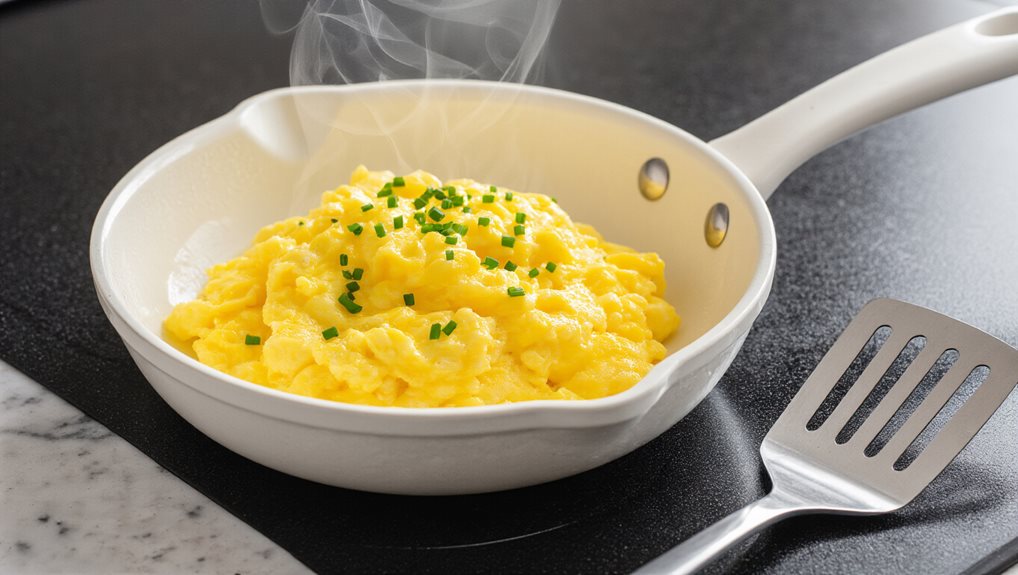
Getting dry, fluffy scrambled eggs starts with a few simple steps that keep moisture out while building volume. Let eggs sit 30 minutes to reach room temperature, then whisk in a teaspoon of lemon juice per two eggs. Heat a pan low, add the mixture, and let it sit 30 seconds. Swirl gently with a silicone spatula, cover briefly near the end, and remove from heat before it overcooks. If you add dairy for richness, use only fresh ingredients and watch for signs of spoilage like a lumpy texture or off smell before mixing anything into your eggs.
Visual Signs Your Eggs Are Getting Watery
You’ll notice the yolks turning a dull orange hue as they lose firmness, and you’ll see small puddles of liquid gathering around the edges of the pan. Those droplets usually form when excess moisture separates from the eggs, especially if you added milk or salt earlier. Spotting these signs early lets you adjust the heat or timing before the scramble becomes soggy.
Orange Color Change
Ever notice a faint orange halo forming around the yolk remnants as your scrambled eggs start to turn watery? That hue appears when heat denatures yolk proteins and oxidizes beta‑carotene, shifting pigments toward orange.
Above 160°F, the Maillard reaction deepens the color, while uneven heating creates a yellow‑to‑orange gradient.
A uniform orange rim signals moisture separation beginning, so you can lower temperature or add acid to prevent further watery texture.
Puddles of Liquid
What does it look like when your scrambled eggs start leaking liquid? Small clear puddles form on the plate, indicating that proteins have released trapped moisture. Overcooking, high heat, or too much milk can force water out of the egg matrix. Adding vegetables or salting early also separates liquid.
Keep heat medium, limit milk, and pre‑cook veggies to prevent these watery spots.
Wrapping Up
By now you’ve seen how milk, early salting, and a hot pan can turn scrambled eggs into a watery mess, while proper technique keeps them dry and fluffy. Remember to add liquid sparingly, season just before cooking, and use high heat with a little oil. Watch the eggs closely and remove them from the pan the moment they firm up. Follow these steps, and you’ll consistently enjoy light, tender scrambled eggs without the unwanted sogginess.


