
A single drop of water instantly wets the sugar particles in chocolate, causing them to clump into a jammed network that overwhelms the emulsifiers, so the smooth melt turns thick and grainy. Even a tiny amount—about 0.05 g in a 50 g batch—raises moisture to 1.5–3 % and spikes viscosity. Overheating or sudden temperature changes can also separate cocoa butter, further destabilizing the emulsion. If you keep tools dry, melt at moderate heat, and avoid sudden shocks, you’ll prevent seizing and learn how to rescue it later.
Quick Guide
- Moisture introduces water droplets that wet sugar, creating jammed sugar‑fat clusters that increase viscosity and cause seizing.
- Even a tiny amount of water (≈0.8 % of the batch) overwhelms emulsifiers, disrupting the chocolate’s stable emulsion.
- Overheating separates cocoa butter from solids, leading to grainy texture and loss of gloss.
- Sudden temperature changes or adding liquid destabilize the butter crystal network, causing phase separation.
- Dry tools, controlled heating, and low humidity are essential to prevent moisture and temperature‑related seizing.
Why Does a Single Drop Cause Chocolate Seizing?
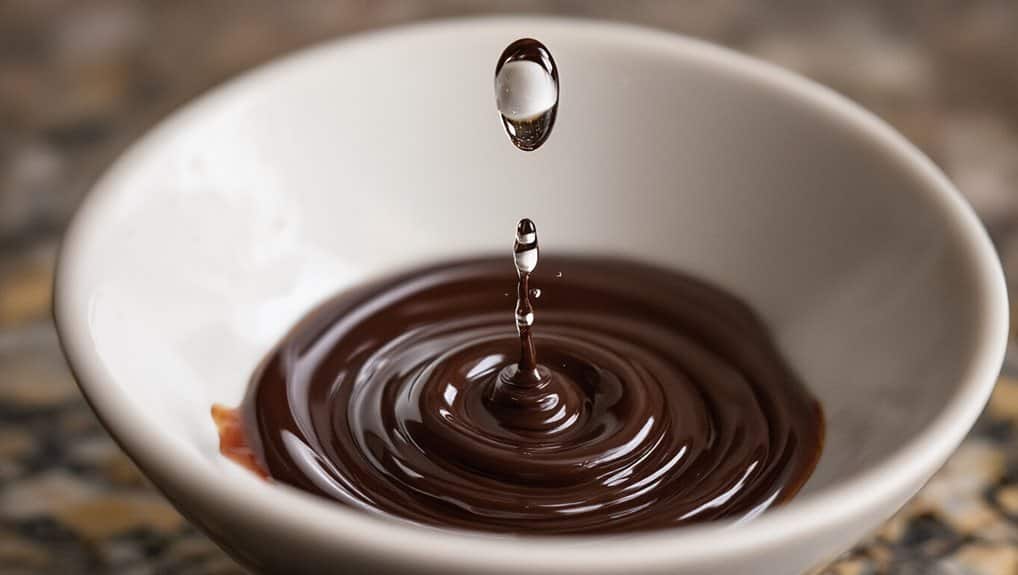
Why does a single drop of water turn a smooth melt into a grainy mess? When that tiny 0.05 g droplet hits 50 g of chocolate, it raises the water content to about 1.5‑3 %, enough to disrupt the fat‑sugar emulsion.
Water wets sugar, causing clumps, and forms droplets that the emulsifier can’t stabilize. The result is a grainy, seized texture that spreads throughout the melt. Like iodine’s metallic taste, the effect can be noticeable even in tiny amounts. Adding even 0.8% distilled water to 200 g of melted chocolate can increase viscosity by 370 % in just four seconds.
How to Prevent Chocolate Seizing Before It Starts
Ever wonder how a smooth chocolate melt stays silky from the first stir? Keep every bowl, spatula, and pot completely dry—wipe them with rubbing alcohol if needed.
Use a double‑boiler or microwave at 50 % power, stirring every 30 seconds, and pull off heat at 80 % melt.
Store tools separately, control humidity, and add only fat‑based liquids to prevent seizing. Like cream cheese, freezing can cause ice crystal formation that changes texture even when flavor stays the same.
Moisture is the primary enemy of smooth, workable chocolate.
How Moisture Triggers Chocolate Seizing
When a single droplet of water lands in melted chocolate, it immediately pulls sugar crystals together, forming clumps that trap fat. This agglomeration turns the smooth emulsion into a grainy mess, because the sugar‑fat bonds become too large to stay suspended.
As a result, the chocolate seizes, becoming thick and unworkable.
To prevent texture and flavor breakdown, keep moisture out and store fats like avocado oil tightly sealed away from heat, light, and air exposure.
Water Droplet Initiates Agglomeration
How does a single water droplet set off chocolate seizing? When it lands on dry sugar fines, the droplet pulls particles onto its surface, forming a jammed cluster held together by surface tension. Liquid bridges create capillary links, and cocoa butter strengthens the network. These agglomerates increase viscosity, so the chocolate thickens and appears seized, even though the solid volume stays unchanged.
Sugar Crystals Bind With Fat
Why does a tiny drop of water make chocolate turn grainy? When moisture reaches sugar crystals, they hydrate and form tiny syrup patches. These wet particles stick together, creating clumps that trap cocoa butter. The trapped fat can’t flow, so the smooth liquid turns into a thick, grainy paste.
Even a small amount—about 1.5 % water by weight—overwhelms lecithin’s ability to keep sugar dispersed, causing seizing.
How Overheating Leads to Chocolate Seizing
When you heat chocolate past its butter‑separation threshold, the cocoa butter pulls away from the solids, leaving a gritty base.
The excess heat also forces sugar crystals to clump together, creating a coarse texture that feels grainy on the tongue.
As the emulsion breaks down, the surface becomes dull and the chocolate loses its smooth, fluid shine.
To avoid moisture-related seizing, use clean utensils and keep air exposure minimal since introducing contaminants can accelerate unwanted texture changes.
Butter Separation Threshold
Ever wondered why chocolate turns grainy and greasy before it actually seizes? When you heat dark chocolate past 120 °F, or milk chocolate above 115 °F, the cocoa butter separates from the solids, creating a greasy, grainy texture.
White chocolate loses stability even lower, over 110 °F, because it lacks cocoa solids. This separation happens without moisture, yet it still feels off‑balance.
Sugar Crystal Agglomeration
How does overheating turn sugar crystals into gritty clumps that make chocolate seize? When you heat chocolate past its safe range, cocoa butter liquefies and separates, exposing sugar particles.
Water droplets form, wetting the sugar and causing it to stick together. The sugar‑water syrup thickens, emulsifiers fail, and the mixture becomes a grainy, non‑fluid mass that refuses to flow.
Surface Dullness Development
Why does the chocolate’s surface turn matte instead of staying glossy? When you overheat dark, milk, or white chocolate, the cocoa butter separates from the solids, forming clumps. This breakdown destroys the smooth matrix that reflects light, leaving an uneven, dull finish.
Even after cooling, the loss of shine persists because the structural damage remains, signaling improper heat exposure.
Why Temperature Shock Causes Chocolate Seizing
What happens when chocolate faces a sudden temperature shift? The rapid change destabilizes cocoa‑butter crystals, breaking the precise molecular alignment that keeps chocolate smooth.
Butter separates separates cocoa solids and sugar, forming clumped particles that can’t stay evenly suspended.
This phase separation creates a gritty, paste‑like texture and a loss of glossy finish, causing the chocolate to seize. For best results when storing chocolate-based desserts, use airtight seals to prevent odor transfer and quality loss during freezing.
How Added Liquid Breaks Chocolate’s Emulsion
Ever notice how a splash of milk or cream can turn smooth chocolate into a grainy mess? When you add liquid, it frees water trapped in solid fat particles, creating a watery lattice that pulls cocoa particles out of the fat. The immiscible fat and water phases then separate, especially if you don’t stir enough. Surfactants like lecithin or PGPR can help, but excess liquid still overwhelms the emulsion, causing the chocolate to seize.
Temperatures That Keep Chocolate From Seizing
Could you keep chocolate from seizing simply by watching the thermometer? You’ll want dark chocolate at 86‑90 °F, staying under 120 °F while melting, and reheating to 88‑90 °F after cooling.
Milk chocolate should stay 84‑86 °F, never exceed 110 °F, and reheat to 85‑87 °F.
White chocolate works best at 82‑84 °F, with a maximum melt of 110 °F.
Keep tools dry and avoid high heat to preserve crystal stability.
Step‑by‑Step Rescue for Seized Chocolate
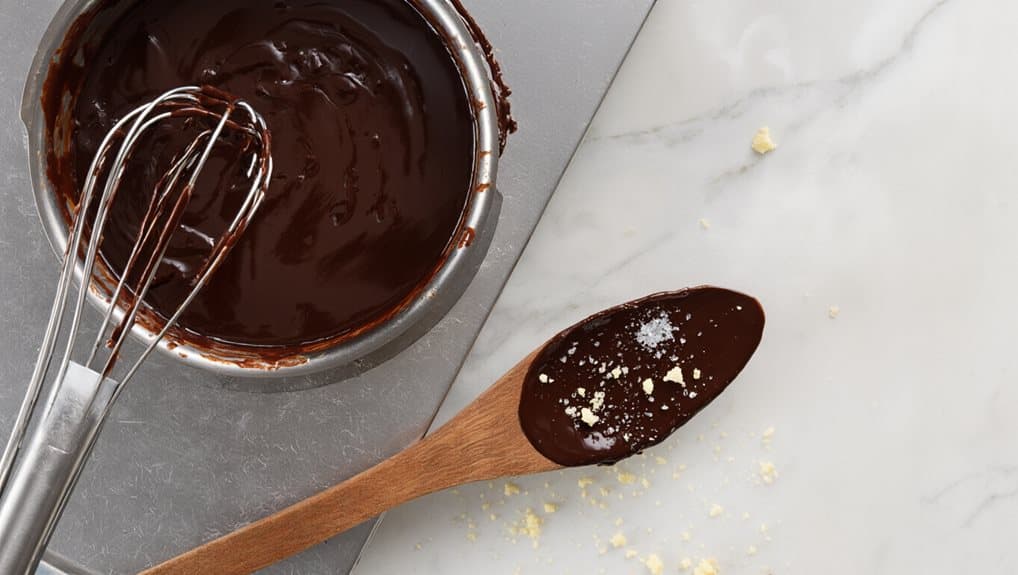
How can you bring seized chocolate back to a usable state? Stop heating immediately, remove the bowl, and stir vigorously to gauge texture. Add a little neutral oil—about half a teaspoon per ounce—while whisking until smooth. If oil isn’t enough, drizzle warm cream, one teaspoon at a time, stirring constantly. For stubborn lumps, blend with oil on high speed, then stir the final, glossy mixture.
When and How to Add Liquid Without Seizing
When you add liquid to chocolate, timing and proportion are everything, so you’ll want to wait until the chocolate is about 80 % melted before introducing any water‑based ingredient.
Use one tablespoon of water per quarter‑cup of chocolate, adjusting upward for higher cocoa percentages.
Add hot, not boiling, liquid gradually while stirring.
Fat‑based additions like oil or butter can be added any time without seizing risk.
Ensure the bowl is dry and keep temperature below 120°F for dark chocolate.
Wrapping Up
Remember, chocolate seizes when moisture, heat, or sudden temperature changes disturb its delicate emulsion. Keep your workspace dry, melt gently over low heat, and add liquids slowly while stirring. If it does seize, a small amount of warm liquid can coax it back to a smooth texture. By controlling temperature and moisture, you’ll prevent most problems and enjoy glossy, pliable chocolate every time.


