
To dry fresh herbs at home, start by selecting healthy, undamaged stems, trimming them to about 1.5 inches, and gently washing them in cool water. For air drying, bundle small amounts in breathable materials and hang in a well-ventilated, shaded area until crispy, which usually takes a week. Alternatively, oven drying at around 170°F for 2-3 hours offers a faster option. Proper storage in airtight jars keeps herbs fresh; exploring different methods reveals more tips for perfect drying results.
Quick Guide
- Select healthy, undamaged herbs and trim stems to about 1.5 inches before drying.
- Hang small bundles upside down in a dark, well-ventilated area for air drying.
- Use oven drying at low temperatures (~170°F) for tender herbs like basil and oregano.
- Store dried herbs in airtight containers in a cool, dark place to preserve flavor.
- Use dehydrators for controlled, even drying of large quantities of herbs.
How to Prepare Fresh Herbs for Drying
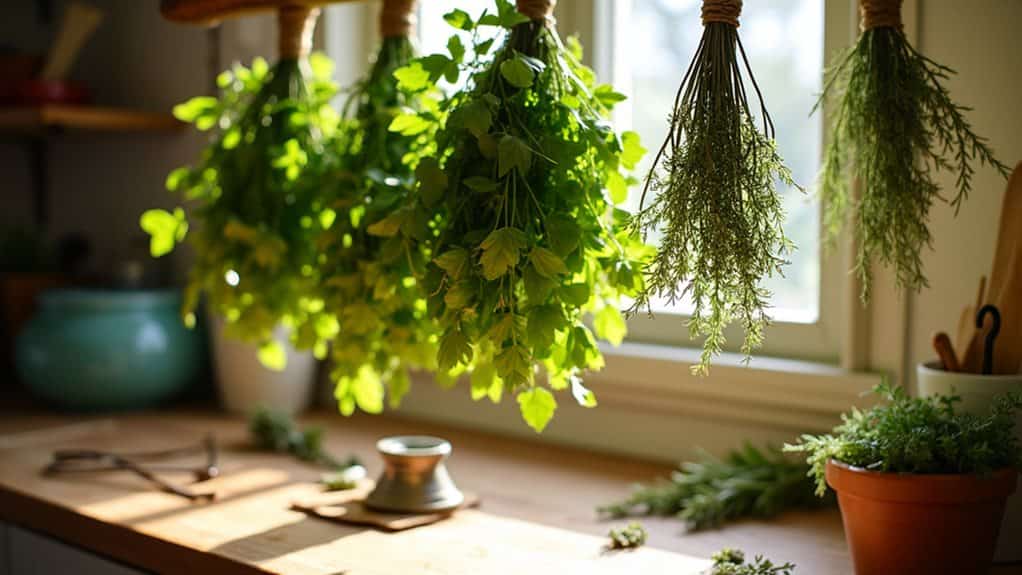
Before you start drying your herbs, it’s important to prepare them properly to guarantee the best flavor and quality. Select healthy herbs, trim stems to about 1.5 inches, and remove any leaves that are damaged or yellowed.
Gently wash fresh herbs in cool water, then shake or pat them dry.
For air drying, bundle small amounts and hang in a well-ventilated area.
If you need to store any leftover herbs before drying, a vacuum sealer with dry and wet modes can help keep them fresh longer by reducing exposure to air.
Which Drying Method Is Right for Your Herbs?
Choosing the right drying method depends on the type of herbs and your goals.
For sturdy herbs like rosemary and thyme, air drying in a dark, ventilated area works well.
Tender herbs like basil and oregano dry faster with oven drying but require careful monitoring.
Dehydrators provide controlled, even drying, ideal for large quantities or herbs with high moisture content.
Just as butter is not essential and can be replaced with butter substitutes like margarine, yogurt, or olive oil, you can adjust your herb-drying approach based on what you have on hand and the results you want.
How to Air Dry Herbs for Best Flavor Preservation
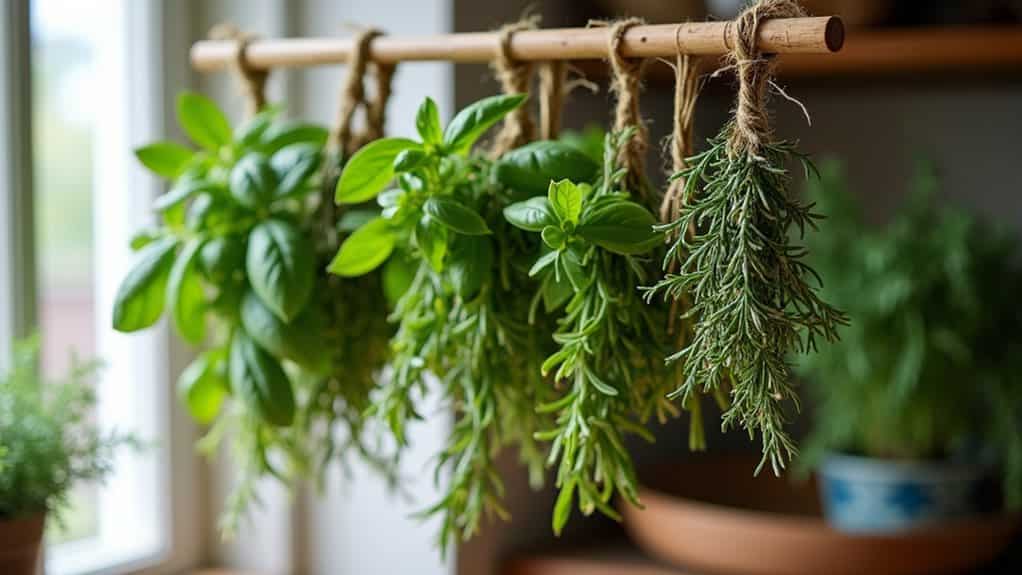
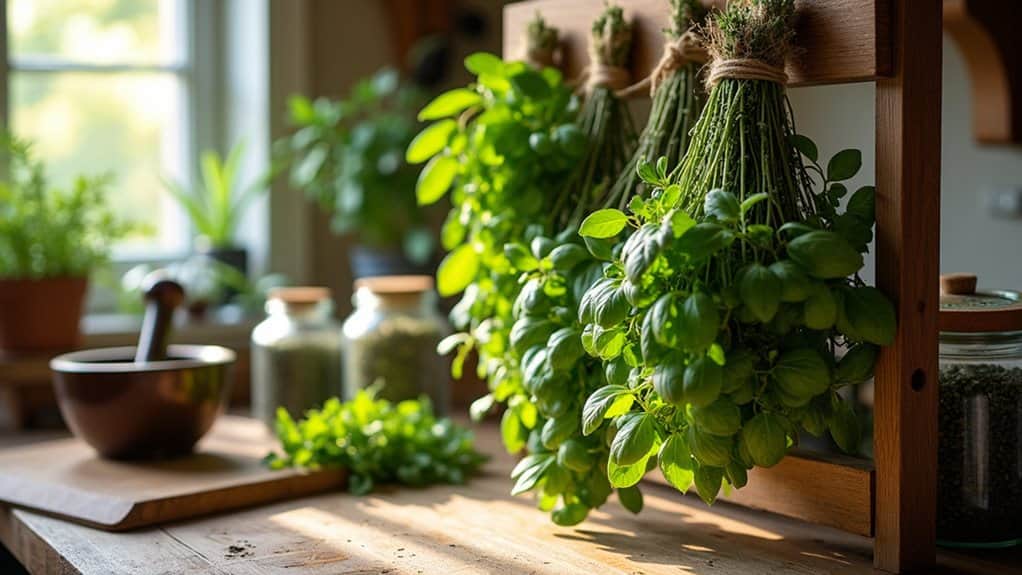
Air drying herbs is a simple and effective way to preserve their flavor and color, especially if you follow some key steps. Hang small bundles upside down in a well-ventilated area, avoiding direct sunlight.
Use breathable materials like cotton ties, ensuring the herbs are completely dry and stems are brittle before storing. Regularly check for dryness.
Just as overpowering tomato flavor in chili can be balanced by careful ingredient adjustments, air-dried herbs benefit from small process tweaks to preserve their best taste.
How to Dry Herbs Using the Oven
Drying herbs in the oven is a quick and efficient method that works well when you need to preserve herbs in a short amount of time.
Preheat your oven to around 170°F (77°C), line a baking sheet with parchment paper, and arrange the herbs in a single layer.
Keep the oven door slightly open and check every 30 minutes until herbs are crispy and stems snap easily.
Just as cooking can reduce bitterness in eggplant seeds, gently drying herbs at low heat helps preserve their flavor without scorching.
How to Recognize When Herbs Are Fully Dried
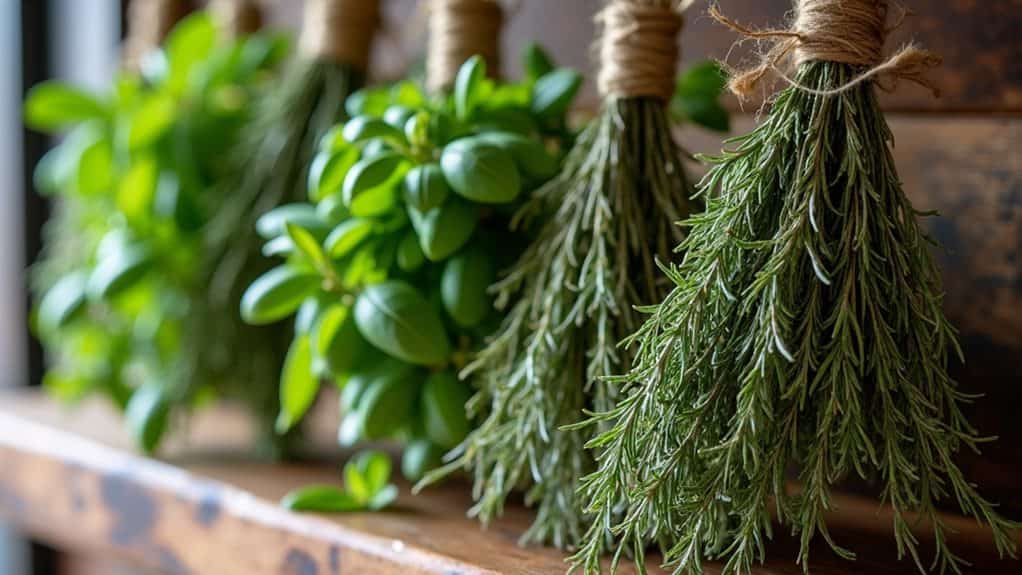
Knowing when herbs are fully dried is key to preserving their flavor and aroma. Fully dried herbs feel crispy and brittle, crack easily when bent, and crumble or snap when crushed.
Stems become stiff and often break rather than bend. When herbs emit a faint, aromatic scent and have a uniform, papery texture, they’re ready to use. For best results, use airtight container storage to help maintain freshness and quality over time.
How to Store Dried Herbs to Keep Them Fresh
Once your herbs are fully dried, proper storage becomes essential to preserve their flavor, aroma, and color.
Use airtight containers like glass canning jars to prevent exposure to moisture and air.
Keep them in a cool, dark place such as a pantry, and label each jar with the herb’s name and drying date.
Regularly check for moisture or mold to maintain freshness.
Tips for Drying Delicate and Sturdy Herbs
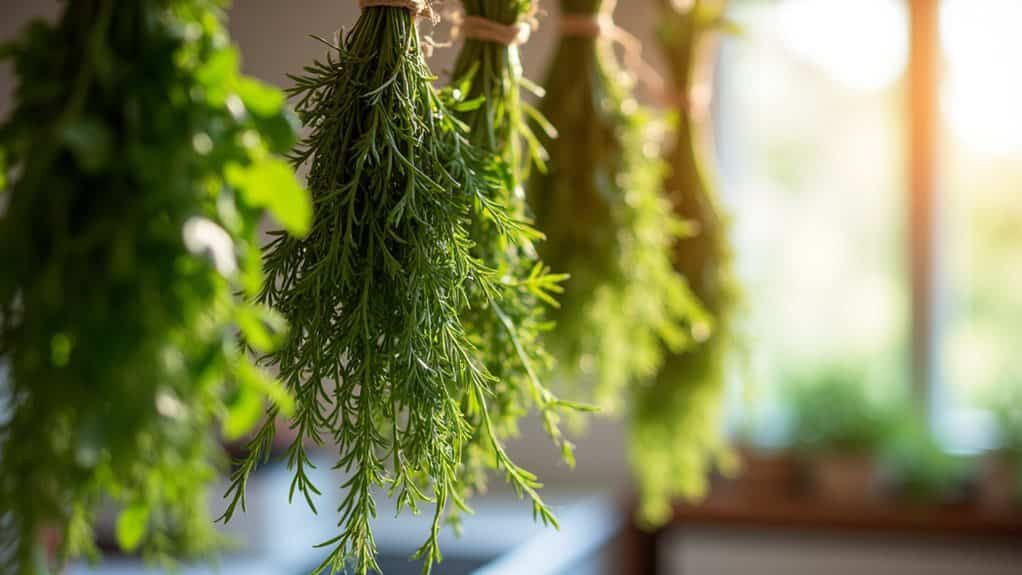
When drying herbs, it’s important to tailor your methods to the type of herb you’re working with, as delicate and sturdy herbs require different treatments to preserve their quality.
For delicate herbs like basil and mint, air-drying in paper bags with holes or laying leaves flat on paper towels helps prevent damage.
Sturdy herbs, such as rosemary and thyme, hang in well-ventilated areas for best results.
Troubleshooting Common Drying Problems
Drying herbs can seem straightforward, but common problems often arise if conditions aren’t just right. Insufficient airflow can trap humidity, encouraging mold growth or spoilage.
Herbs that aren’t fully dried remain flexible and may rot if stored prematurely. Over-dried herbs become brittle, losing flavor and aroma.
Proper airflow and monitoring humidity help guarantee herbs are evenly dried and ready for storage.
Creative Ways to Use and Incorporate Dried Herbs in Cooking
Once you have dried herbs, you can use them to enhance sauces and soups by adding small amounts to *amplify* flavor without overpowering the dish.
Creating flavorful herb blends allows you to customize seasonings for different recipes, making your dishes more aromatic and well-rounded.
Incorporating dried herbs into marinades, dressings, or infusing oils can also add depth and complexity to your cooking.
Enhancing Sauces and Soups
Adding dried herbs to sauces and soups is an effective way to deepen their flavor and aroma. Crushed dried herbs release essential oils, enhancing taste.
Incorporate them early to let flavors meld or add delicate herbs at the end to preserve aroma.
Store herbs properly after air-drying herbs to maintain their potency for recipes.
Flavorful Herb Blends
Creating your own dried herb blends opens up a world of flavor possibilities and allows you to customize tastes for different dishes.
Store your dried herbs, like rosemary, in airtight containers away from light and heat to preserve their flavor.
Use smaller amounts—about a quarter to a third of fresh herbs—and incorporate these blends into marinades, spice rubs, and baked goods for enhanced taste.
Wrapping Up
Drying herbs at home is simple once you understand the best methods and proper storage. Whether you air dry or use your oven, paying attention to timing and conditions guarantees your herbs retain flavor and aroma. With a little practice, you can enjoy lively, homemade dried herbs all year round. Keep experimenting with different herbs and techniques, and you’ll find the perfect way to preserve their freshness for your cooking needs.


