
When substituting fresh herbs with dried ones, you’ll generally use a ratio of 3 parts fresh to 1 part dried, meaning 1 tablespoon of fresh equals 1 teaspoon of dried. Keep in mind, dried herbs are more concentrated and potent, so start small and adjust as needed. Use dried herbs earlier in the cooking process to allow flavors to develop fully. For more practical tips and specific herb conversions, consult the full guide.
Quick Guide
- Use a 3:1 ratio: 3 parts fresh herbs equal 1 part dried herbs.
- For ground herbs, use one-third the amount of fresh herbs.
- Dried herbs are more concentrated; start with less and adjust as needed.
- Add dried herbs early in cooking for better flavor infusion.
- Store dried herbs in airtight containers away from heat and light for optimal freshness.
How to Convert Fresh Herbs to Dried : A Simple Guide
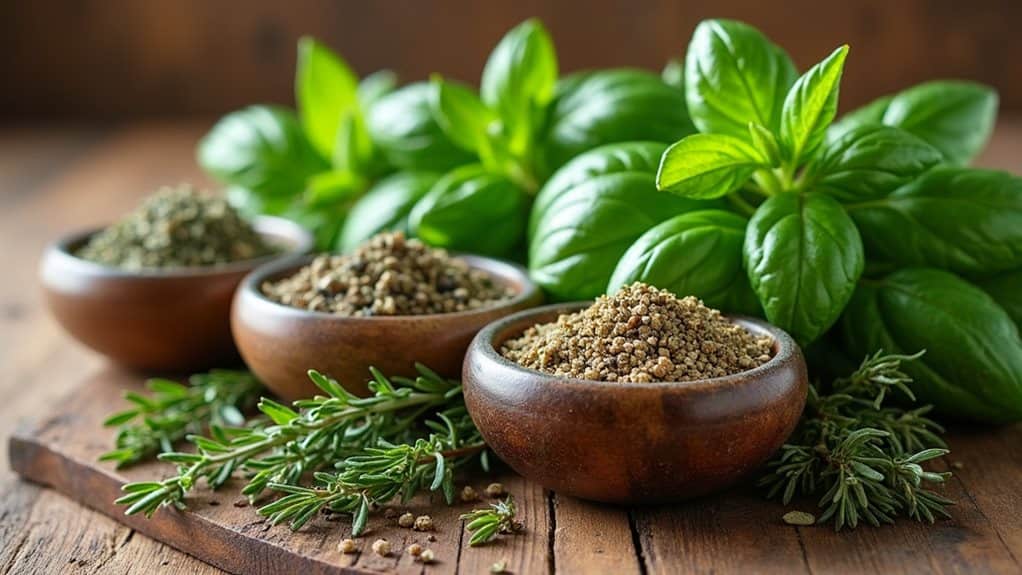
When converting fresh herbs to dried, it’s important to understand that dried herbs are more concentrated in flavor, so you generally need less of them.
Using a conversion ratio of 3 parts fresh to 1 part dried, you can substitute dried herbs in recipes.
For delicate herbs, like basil, add slightly more dried herb to maintain flavor during cooking.
To keep fresh herbs tasting vibrant longer before you convert or cook them, vacuum sealing can help preserve them up to 5–7× longer.
What’s the Difference Between Fresh and Dried Herbs?
Understanding the differences between fresh and dried herbs helps you use each type more effectively in your cooking. Fresh herbs contain more water and have a bright flavor.
While dried herbs are concentrated with essential oils, making them more potent. Their flavor profiles differ, affecting herb conversion and the cooking process, so adjust quantities based on recipe calls. A common guideline is the 3:1 ratio for converting fresh herbs to dried herbs.
When Should You Use Dried Herbs Instead of Fresh?
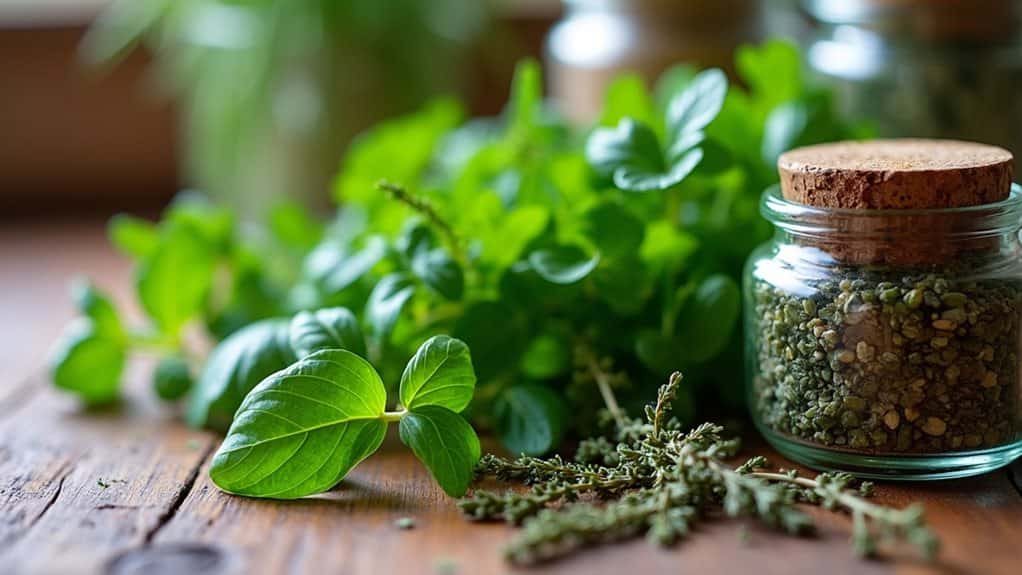
Dried herbs are especially useful when you need to add flavor to dishes that require long cooking times, such as stews, soups, and sauces.
Use dried herbs in recipes that need herbs to be incorporated early, allowing flavor concentration over time.
They’re best in cooked dishes, where their strong, preserved flavors serve as a good substitution for fresh herbs.
Like eggplants, which contain antioxidants such as anthocyanins, dried herbs can be ideal in slow-cooked meals where their flavors develop over time.
Herb Conversion Ratios: Fresh to Dried and Ground Herbs
Converting fresh herbs to dried or ground form requires knowing the right ratios to achieve the desired flavor without overpowering your dish. The standard conversion is 3 parts fresh to 1 part dried herbs, so a tablespoon of fresh equals about a teaspoon of dried.
Ground herbs are more potent, requiring only one-third of the amount, like ½ teaspoon for substitution.
How to Dry Herbs at Home for Maximum Flavor
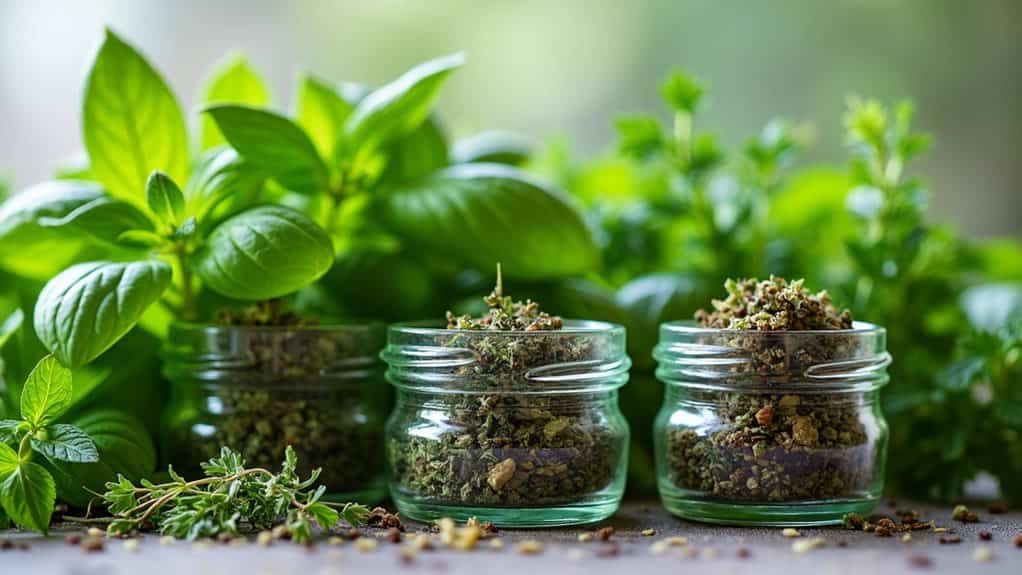
Drying herbs at home is a simple process that, when done correctly, preserves their maximum flavor and aroma. To achieve this, hang fresh herbs upside down in a dry, dark, well-ventilated area.
Use low-temperature dehydration methods, like an oven or dehydrator, to dry herbs evenly.
Store dried herbs in airtight containers, away from heat and light, for the best flavor retention.
If you’re warming almond milk to pair with dried herbs in a drink, keep it around 140-150°F and heat it slowly to avoid scorching.
How to Store Dried Herbs to Keep Them Fresh
To keep your dried herbs fresh, store them in airtight containers like glass jars and place them in a cool, dark, and dry spot.
Avoid exposing the herbs to sunlight, heat, or humidity, as these can cause them to lose their flavor and potency.
Label each container with the herb name and storage date to help you monitor their freshness and replace them when needed.
Regularly check your dried herbs for signs of spoilage like off smells or mold so you can replace them before they lose quality.
Proper Storage Containers
Using the right storage containers is essential for keeping dried herbs fresh and flavorful. Airtight glass or metal containers prevent moisture exposure and help preserve flavor.
Store them in a cool, dark place like a pantry, label each container with the herb name and date, and avoid temperature fluctuations.
Proper storage extends shelf life and maintains herb potency.
Optimal Storage Conditions
Ever wonder how to keep dried herbs as fresh and flavorful as when you first stored them? Proper storage involves using airtight containers, like glass jars or tins, kept in a cool, dark place away from moisture, heat, and sunlight.
This preserves their aroma, flavor, and extends shelf life, ensuring your herbs stay potent for 6 to 12 months.
Tips for Using Dried Herbs Effectively in Cooking
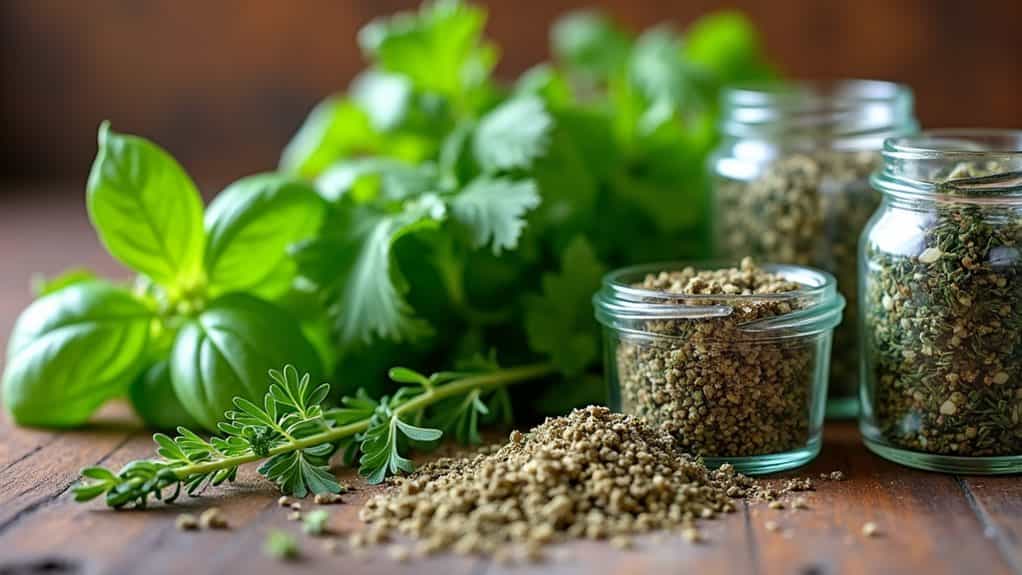
To get the most flavor from dried herbs, add them early in the cooking process so they can rehydrate and release their aroma.
Start with a smaller amount than the recipe suggests, then taste and adjust as the dish cooks, since dried herbs become more concentrated over time.
Crushing or grinding the herbs beforehand also helps release essential oils, making their flavor more potent.
Add Early for Flavor
Adding dried herbs early in the cooking process allows their flavors to fully develop and infuse your dish. By adding early, you enable the aromatic oils to rehydrate and release slowly, creating a richer taste.
This method enhances flavor infusion, especially in long-cooking dishes, and helps dried herbs blend seamlessly, providing a more integrated, well-rounded flavor compared to fresh herbs added later.
Start Small and Adjust
When using dried herbs in cooking, starting with a small amount is the key to achieving the right flavor balance. Begin with about 1/4 teaspoon, then taste the dish before adding more.
Adjust dried herbs gradually, as their flavor intensifies over time. Keep in mind the ratio, and always taste frequently to guarantee the flavor remains harmonious.
Common Questions About Herb Substitutions and Storage
Herb substitutions and storage questions often come up when you’re trying to make a dish work with what you have on hand. Using the right conversion ratios helps maintain flavor, especially when replacing fresh herbs with dried ones.
Proper storage tips extend herb shelf life, while crushing dried herbs before cooking improves flavor preservation. Freezing herbs offers long-term options for convenience.
Herb-Specific Conversion Tips for Better Cooking Results
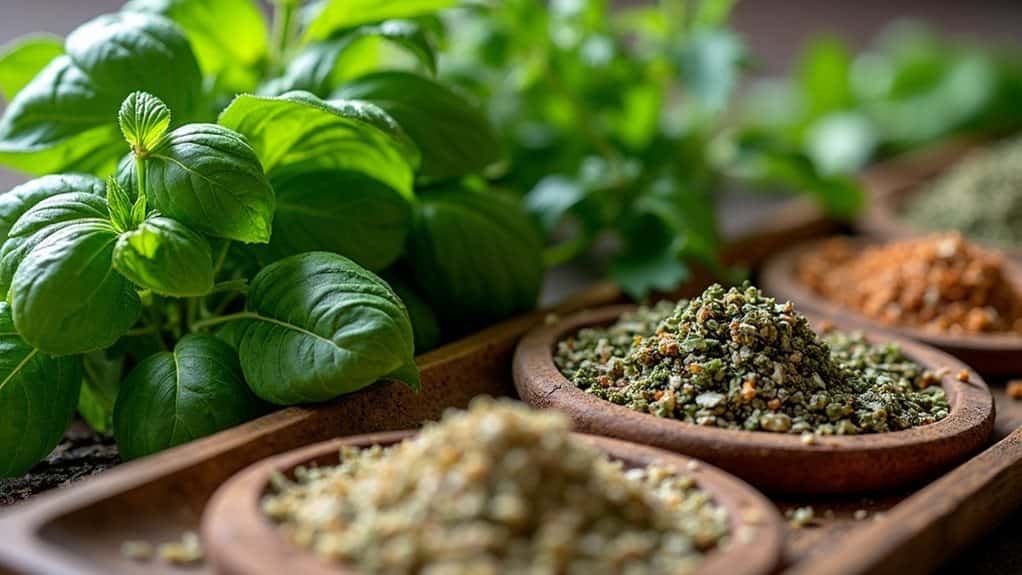
Understanding how to convert fresh herbs to dried—and vice versa—can considerably improve your cooking results.
For example, dried thyme needs only 1 teaspoon for every 3 tablespoons of fresh thyme.
Dried rosemary is more potent, so ⅓ teaspoon replaces 1 teaspoon of fresh.
Crushing dried oregano enhances flavor, and dried basil requires a smaller ratio for best use.
Wrapping Up
Understanding how to convert fresh herbs to dried guarantees your dishes are flavorful and well-balanced. By knowing the right ratios, proper drying methods, and storage tips, you can make the most of your herbs year-round. Remember, each herb has specific needs, so use these guidelines to enhance your cooking confidently. With practice, you’ll effortlessly adjust recipes, saving time and reducing waste, while still enjoying the full aroma and taste of herbs in every meal.


