
To zest a lemon without a zester, start by washing and drying the fruit thoroughly. Use a vegetable peeler or a Y-shaped peeler to gently remove thin strips of the bright yellow peel, avoiding the bitter white pith. Alternatively, hold a box grater and carefully grate the outer layer, stopping before white pith appears. For more tips on effective techniques and storage options, keep exploring this guide.
Quick Guide
- Use a vegetable peeler to remove the yellow outer layer, avoiding the white pith beneath.
- Carefully chop or mince the peeled zest with a sharp knife for finer pieces.
- Grate the lemon using a fine grater or the small holes on a box grater’s side.
- Alternatively, finely chop the zest with a paring knife for small, uniform pieces.
- Store leftover zest in airtight containers or freeze for future use.
How to Prepare Your Lemon for Zesting
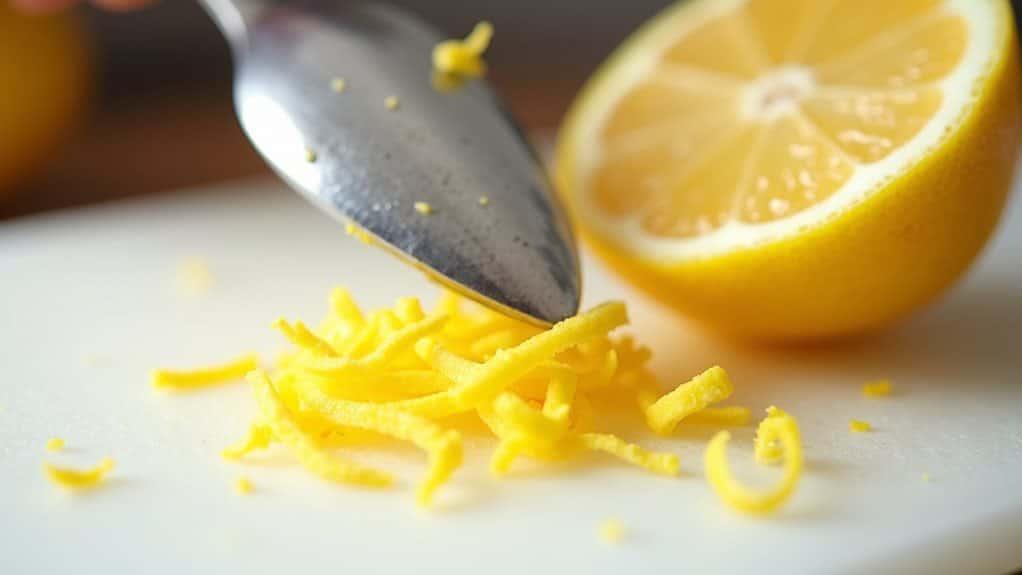
Before you start zesting, it’s important to properly prepare your lemon to make certain of the best results. First, wash the lemon thoroughly to remove dirt, wax, or pesticides. Then, dry it completely to prevent slipping and guarantee a clean cut.
If necessary, remove labels and scrub waxed lemons with a vegetable brush. Choose a firm, smooth lemon for ideal zesting. While you’re prepping ingredients, store add-ins like chia seeds in airtight containers away from moisture to help prevent spoilage.
Choosing the Right Tool to Zest a Lemon Without a Zester
When choosing a tool to zest a lemon without a zester, your options include a box grater, a vegetable peeler, and a paring knife, each offering different advantages.
A box grater with small holes effectively creates fine zest.
A vegetable peeler removes the bright yellow outer layer.
A paring knife allows precise peeling, helping avoid bitter pith.
If you plan to store leftover lemon zest, a vacuum sealer with double heat seal technology can help maintain freshness longer.
Using a Y-Peeler or Swivel Peeler to Zest a Lemon
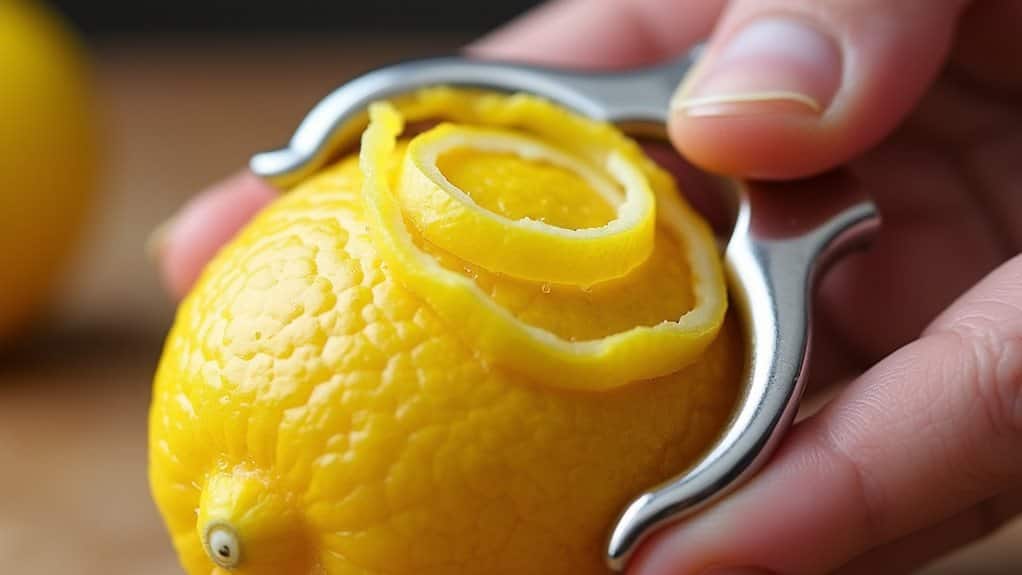
Using a Y-peeler or swivel peeler to zest a lemon is an effective alternative when you don’t have a traditional zester. You’ll want to choose a sharp, comfortable peeler and learn the proper technique of gently peeling the bright yellow layer without removing the bitter white pith.
Just as raw eggplant seeds may taste bitter, cooking can help reduce bitterness in fresh seeds and make them more enjoyable. Once you become proficient in the process, storing the zest properly and knowing how to incorporate it into recipes will help you make the most of your lemon zesting.
Selecting the Right Peeler
Choosing the right peeler is essential for removing lemon zest cleanly and efficiently. A Y-peeler or swivel peeler helps you peel the citrus fruit, avoiding the white pith, which can add bitterness.
Select a peeler with sharp blades and a comfortable grip. Use the peeling technique carefully, rotating the lemon to access all sides evenly for best results.
Technique for Peeling
To effectively peel a lemon using a Y-peeler or swivel peeler, it’s important to apply gentle, controlled strokes to remove only the yellow outer layer.
Focus on the peel technique that targets the lemon peel’s colorful zest while avoiding the white pith.
Rotate the fruit on a stable surface, using peeling tools carefully to extract even strips for your zesting method.
Storage and Usage Tips
Once you’ve peeled and collected your lemon zest, proper storage guarantees it stays fresh and flavorful for future use.
Keep the zest in an airtight container and store it in the freezer for up to six months to preserve its flavor.
For quick drying, microwave the zest on a paper towel in short bursts, extending shelf life and preventing mold.
Grating Lemon Zest With a Box Grater: Tips and Techniques
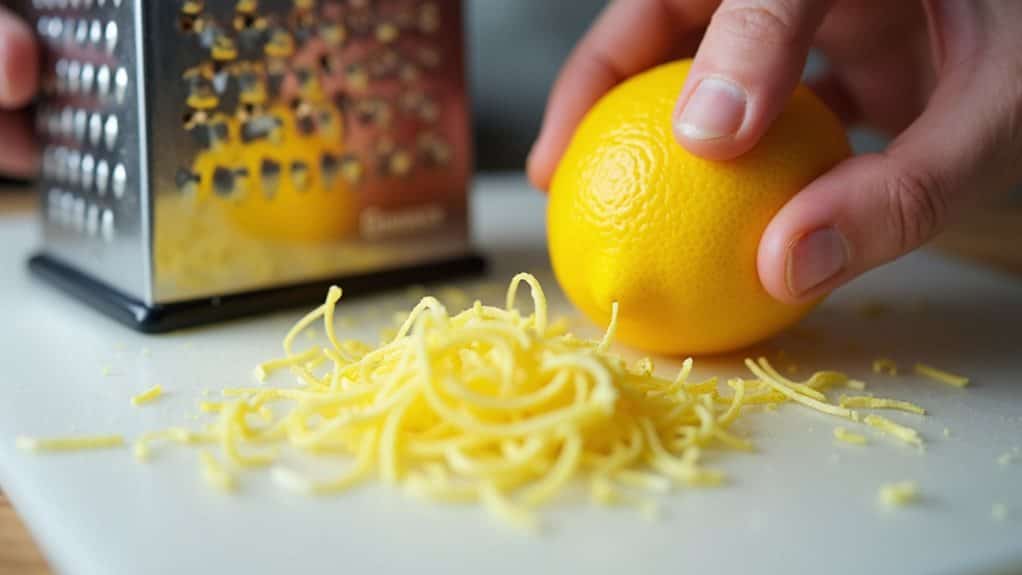
Using a box grater to zest a lemon can be an effective method if you approach it carefully.
Hold the lemon firmly over a plate and gently rub the yellow lemon peel against the small-hole side, applying light pressure.
Rotate the fruit frequently, stopping when white pith appears, to avoid bitter flavors and produce aromatic zest without over-grating into the pith.
Just as you should avoid letting French toast sit out for more than 2 hours to prevent bacteria growth, try to zest only what you need and use it promptly for the best flavor and freshness.
Finely Chopping Lemon Zest With a Paring Knife
To finely chop lemon zest with a paring knife, you need to use proper technique, starting with a sharp knife and careful, controlled motions.
Keep your fingers curled inward to protect them from slips and work slowly to achieve uniform, tiny pieces.
For even finer zest, gather the chopped bits and run the knife through them a few more times to create aromatic, delicate fragments.
As a reminder when prepping ingredients, high sodium intake can increase risks of stroke and heart disease.
Proper Knife Technique
Holding the lemon securely with one hand helps keep it stable as you work, allowing for better control of the paring knife.
Use a gentle, controlled cutting technique, slicing the peel away without exposing the white pith.
Rotate the lemon as you peel and chop, creating finely chopped yellow zest while avoiding crushing the peel for even, consistent pieces.
Achieving Fine Zest Pieces
After removing the bright yellow zest from the lemon, place it flat on your cutting board.
Use a sharp paring knife to chop the citrus peel into small, fine pieces with a gentle rocking motion.
For even finer zest, gather the chopped peel and mince repeatedly until the zest is finely chopped, spreading it out to dry before use.
How to Store and Preserve Your Lemon Zest for Later Use
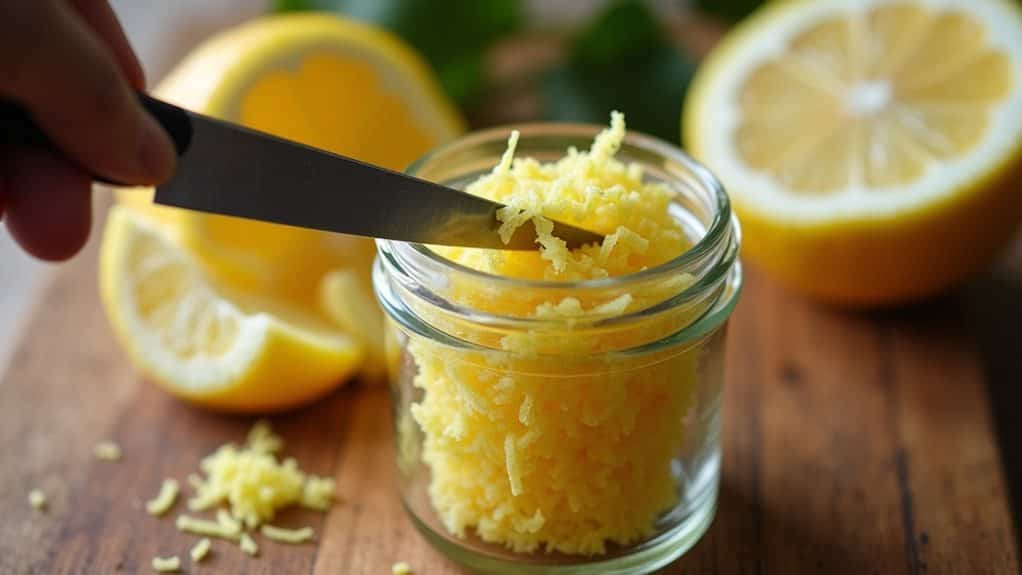
Storing lemon zest properly guarantees you can enjoy its bright flavor long after zesting your lemon. Keep fresh lemon zest in an airtight container in the freezer, where it can last up to six months.
For longer preservation, dry the zest and store it in a sealed jar for up to two years.
Freezing minced zest flat in a zip-top bag also offers quick, easy access.
Creative Ways to Use Lemon Zest in Cooking and Baking
Lemon zest isn’t just for adding flavor directly to recipes; it can also be used creatively to enhance a variety of dishes and beverages.
You can add lemon zest to baked goods for a citrus flavor increase or sprinkle it over roasted vegetables and seafood for a fragrant touch.
Using fresh lemon zest in zesting techniques adds brightness and depth to both savory and sweet dishes.
Wrapping Up
Now that you know how to zest a lemon without a zester, you can easily add fresh lemon flavor to your dishes using simple tools like a peeler or grater. With practice, you’ll quickly become proficient in these techniques and find creative ways to incorporate lemon zest into your cooking and baking. Proper storage guarantees your zest stays fresh longer, so don’t hesitate to experiment. These methods make zesting accessible, practical, and straightforward for any kitchen.


