
Your chicken breast might turn rubbery because it’s overcooked or heated too high, causing the proteins to tighten excessively. Using lower-quality or heavily processed chicken, which may be injected with water or chemicals, can also result in a tougher, spongy texture. Proper cooking at medium heat, resting the meat, and ensuring even temperature control help keep it tender and juicy. Keep going to uncover even more tips to improve your chicken’s texture and avoid rubberiness.
Quick Guide
- Overcooking or cooking at too high a temperature causes proteins to tighten, resulting in a rubbery texture.
- Using lower-quality or heavily processed chicken can lead to a spongy or tough final product.
- Insufficient resting time prevents juices from redistributing, making the chicken feel rubbery and dry.
- Not using a thermometer may lead to overcooking, increasing the risk of rubberiness.
- Improper handling, such as uneven pounding or slicing, can cause inconsistent cooking and a rubbery texture.
Why Does Chicken Breast Turn Rubbery When Cooking?
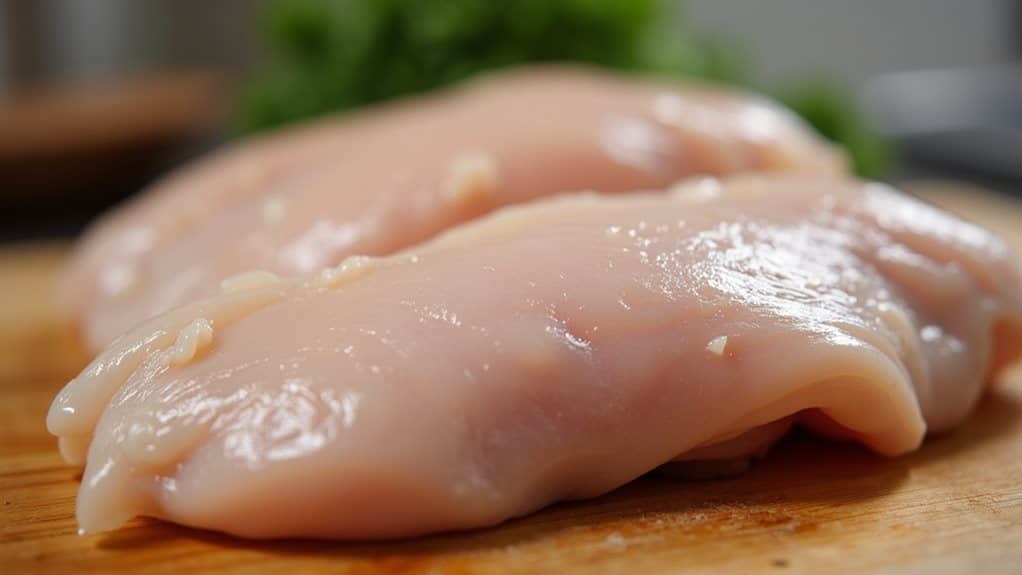
When chicken breast turns rubbery during cooking, the main cause is often overcooking or cooking at too high a temperature.
Using chicken breasts cooked at medium heat can prevent this.
If you cook chicken at too high a heat, the proteins tighten excessively, resulting in rubbery chicken.
Proper temperature control helps guarantee tender, juicy chicken without the rubbery texture.
For longer storage before cooking, vacuum sealing with double heat seal technology can help maintain freezer freshness and reduce freezer burn.
How Do Chicken Processing and Quality Affect Its Texture?
The way chicken is processed and its quality can considerably influence its texture once cooked. Chicken that’s pumped with water or chemicals often becomes spongy or rubbery because of water retention. Like how eggplant seeds can taste bitter when raw but improve with cooking, chicken texture can shift noticeably depending on how it’s handled and prepared.
Lower-quality, heavily processed, or frozen chicken may turn tough and less tender. These processing methods and quality issues directly affect how well the chicken retains moisture and achieves a desirable, firm texture.
What Are the Best Cooking Techniques to Keep Chicken Tender?
Preheating your pan before adding chicken is essential to achieve even searing and prevent sticking, which can cause uneven cooking and rubbery textures.
Cook chicken at medium heat to keep it tender and avoid drying out.
Use a meat thermometer, aiming for 160°F, then let it rest to reach 165°F.
Pounding or slicing evenly promotes uniform cooking and better texture.
How Do Resting and Temperature Control Make Your Chicken Juicier?
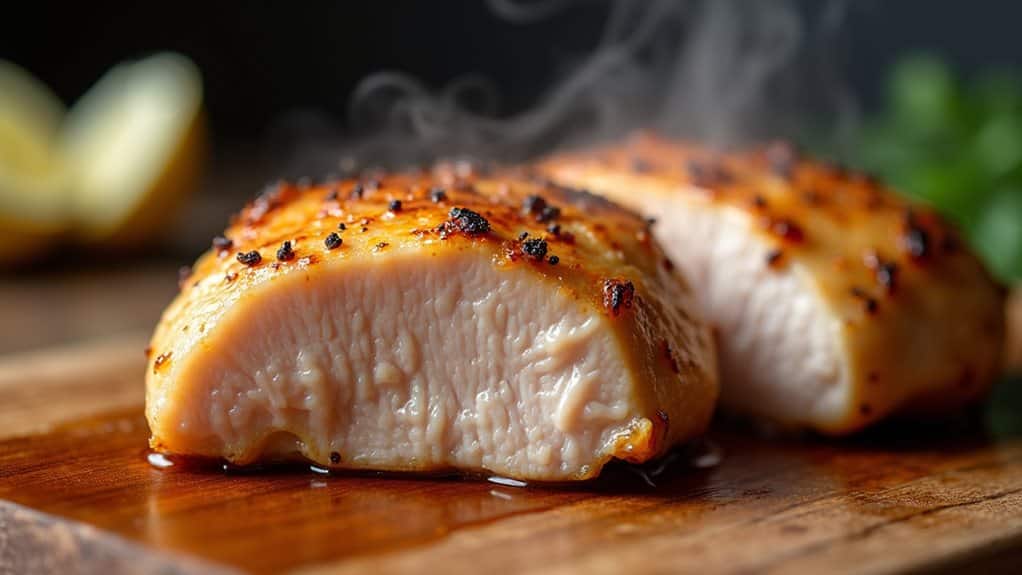
Resting your chicken after cooking is a crucial step that many overlook, yet it can greatly influence the juiciness of your meat. Allowing it to rest for 5-10 minutes helps juices redistribute, preventing them from escaping when cut.
Using a thermometer to reach 160°F and controlling heat during cooking also preserves moisture, keeping your chicken tender and juicy. For safety and quality, don’t leave cooked chicken at room temperature for more than 2 hours before refrigerating.
Tips for Achieving Juicy, Tender Chicken Breast Every Time
Achieving juicy, tender chicken breast every time mainly depends on proper cooking techniques and preparation methods.
Brining chicken in saltwater for 30 minutes to an hour helps retain moisture.
Cooking at 150°F to 160°F guarantees even doneness.
Resting the chicken, slicing thick breasts in half, and using a thermometer to reach 160°F all promote juiciness and tenderness.
If you’re saving leftovers, use an airtight container and follow freezing guidelines to prevent texture changes when storing cooked meals for later.
Wrapping Up
To avoid rubbery chicken breasts, pay attention to how you cook and handle them. Choose good quality meat, use gentle cooking methods, and don’t overcook. Rest the chicken afterward to let juices redistribute and maintain moisture. By controlling temperature and timing, you’ll guarantee your chicken stays tender and juicy every time. With these simple tips, you can confidently prepare chicken that’s flavorful, moist, and perfectly cooked—making every meal a success.


