
The best substitute for tomato paste depends on your needs, but common options include tomato sauce or pureed canned tomatoes, which you should simmer to thicken and concentrate their flavors. To imitate the rich thickness of tomato paste, reduce the liquids over low heat for about 10-15 minutes, stirring frequently. Canned tomatoes are convenient and need less reduction, while fresh tomatoes require peeling, seeding, and longer simmering. Perfecting these techniques guarantees your dish remains flavorful; uncover more tips to enhance your substitution skills.
Quick Guide
- Use tomato sauce or pureed canned tomatoes, simmered until thickened, as a quick, effective substitute.
- Reduce liquids by simmering for 10-15 minutes to concentrate flavor and achieve a paste-like consistency.
- Canned tomatoes are more convenient and require less reduction than fresh tomatoes.
- Homemade tomato paste can be stored in the freezer in small, portioned amounts for quick use.
- Avoid using un-reduced liquids; always simmer to intensify flavor and achieve the proper thick texture.
How to Choose the Best Tomato Paste Substitute for Your Recipe
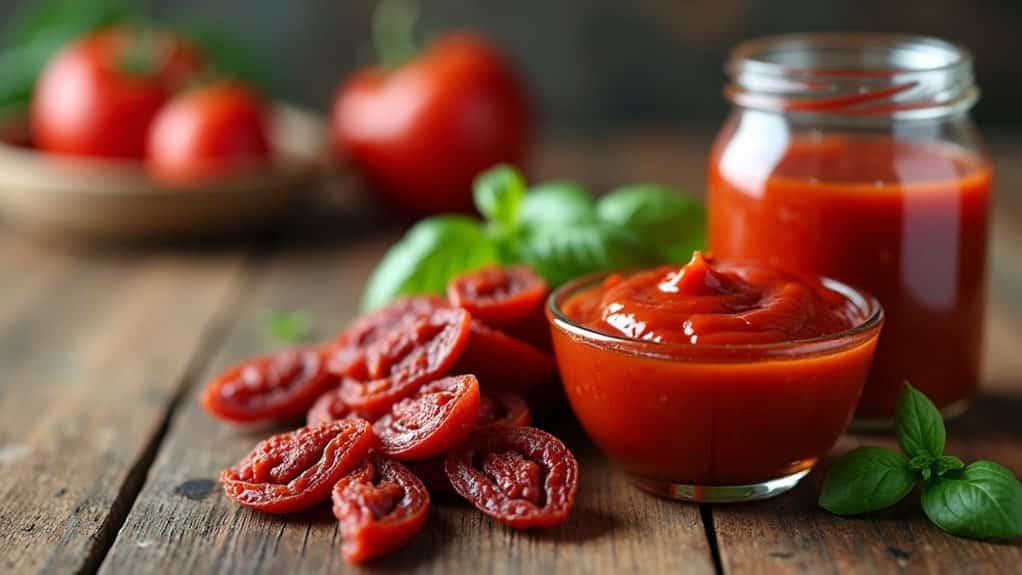
When choosing a substitute for tomato paste, it’s important to take into account the flavor and texture you want to achieve in your dish.
For a natural taste, fresh pureed tomatoes work well, but they need to be cooked down.
Ketchup adds sweetness, while tomato sauce can be reduced to mimic the concentrated texture of tomato paste in your recipe.
If your substitute includes oil for richness, store it properly to avoid signs of rancidity that can create off flavors.
Quick Fixes: Using Tomato Sauce or Pureed Canned Tomatoes
To make tomato sauce or pureed canned tomatoes work as a substitute, you need to cook them down until they thicken and develop a concentrated flavor.
This process involves simmering the sauce or puree until about two-thirds of the liquid evaporates, matching the consistency of tomato paste.
Proper thickening enhances both the texture and taste, ensuring your dish still has that rich, tomato flavor.
Thickening Through Cooking
If you need a quick way to thicken tomato sauce or pureed canned tomatoes to replace tomato paste, simmering them until they reduce is effective. This process involves simmering to evaporate excess moisture, leading to thickening and flavor concentration.
Regular stirring prevents sticking, and the reduction typically takes 10-15 minutes, resulting in a thicker, more intense tomato mixture suitable for your recipe.
Flavor Concentration Tips
Reducing tomato sauce or pureed canned tomatoes is a quick and effective way to concentrate their flavor and achieve a texture similar to tomato paste.
Thicken and Reduce Tomato Substitutes for Better Texture
To improve the texture of tomato substitutes, you should simmer them over low heat until their liquid reduces by about two-thirds. This process concentrates the flavor and thickens the mixture.
Stir continuously during cooking to prevent burning and guarantee an even reduction. This will result in a smooth, paste-like consistency.
If needed, adding a small amount of cornstarch or flour slurry can further enhance thickness without altering the flavor.
Much like how cooking can reduce the bitterness of eggplant seeds, gently simmering your substitute helps mellow sharper notes as it thickens.
Simmer to Reduce Liquids
Simmering tomato substitutes like sauce, puree, or canned juice is an effective way to thicken their texture and reduce excess liquid.
By simmering for about 10-15 minutes, you can reduce the liquid volume, concentrating flavors and achieving a thicker consistency.
Stir frequently to prevent sticking, and use low to medium heat for better control and even thickening.
Stir Continuously During Cooking
Stirring continuously while cooking your tomato substitute is vital for achieving the right texture and consistency. Regular stirring promotes even heat distribution, speeds up reduction, and prevents sticking or burning.
This consistent agitation helps evaporate excess moisture, resulting in a thicker, more concentrated consistency. Proper stirring guarantees your substitute reduces uniformly without uneven clumping or texture issues.
Achieve Thick, Concentrated Flavor
Achieving a thick, concentrated flavor from your tomato substitute involves careful reduction through simmering.
By cooking the sauce over low heat, excess moisture evaporates, creating a thicker, more intense flavor similar to tomato paste.
Stir frequently to prevent burning, and add a pinch of salt to enhance the concentration, resulting in a richer, more authentic taste.
When to Use Canned or Fresh Tomatoes as a Tomato Paste Substitute
Choosing between canned and fresh tomatoes as a substitute for tomato paste depends on your convenience and flavor preference.
Canned tomatoes are quicker, requiring less reduction, since they’re already cooked and pureed.
Fresh tomatoes need peeling, seeding, and longer simmering to reduce moisture and concentrate flavor.
Use canned for speed, fresh for a natural taste.
How to Store Homemade and Store-Bought Tomato Paste Alternatives
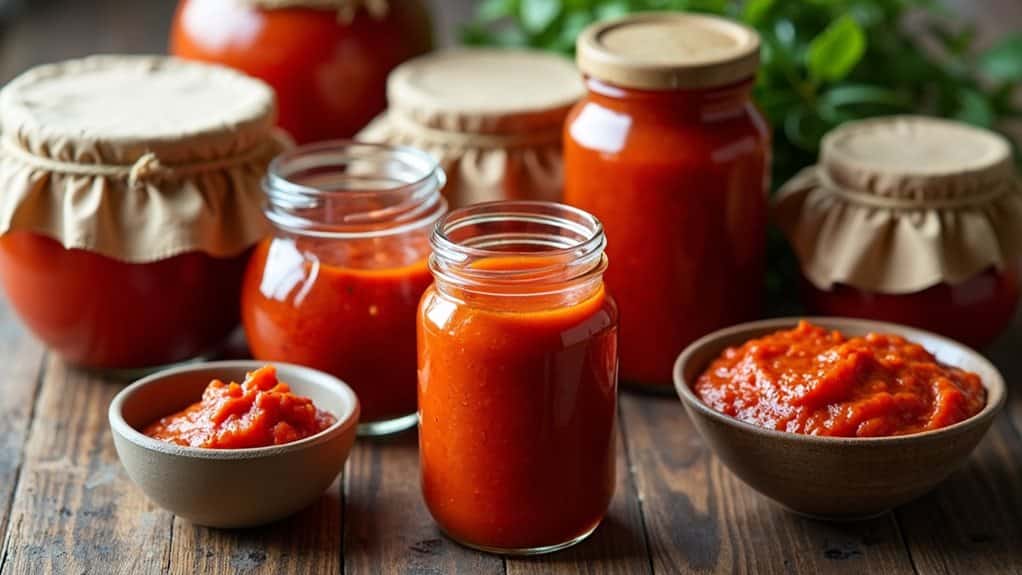
Proper storage is essential to keep your homemade or store-bought tomato paste fresh and flavorful.
Store homemade tomato paste in airtight glass jars and refrigerate for 3-4 weeks.
For longer storage, freeze in small portions using ice cube trays or resealable bags.
For precise, mess-free portions, consider freezing in 1-cup and 1/2-cup portions to make thawing only what you need easier.
Always label containers with the date, and keep tomato paste away from strong odors to maintain quality.
Avoid These Common Mistakes When Substituting Tomato Paste
Many common mistakes can derail your efforts when substituting tomato paste, so it’s important to be mindful during the process.
Using liquids like tomato juice or sauce without reducing moisture can weaken your dish’s flavor and texture.
Always cook or simmer your substitute to reduce moisture and develop a concentrated flavor, ensuring it mimics tomato paste effectively.
How to Make Your Own Tomato Paste at Home
Making your own tomato paste at home is a straightforward process that allows you to control the flavor and quality of your ingredients.
Start with homemade tomato puree made from ripe, peeled tomatoes. Simmer the puree in a saucepan, stirring frequently, to reduce it to about one-third of its original volume.
Continue cooking until it’s thick, deep red, and flavorful.
To keep your homemade paste fresher for longer, portion it into small amounts and use a vacuum sealer with double heat seal technology for leak-proof freezer storage.
Wrapping Up
Choosing the right substitute for tomato paste depends on your recipe’s needs and what you have on hand. Whether you opt for tomato sauce, canned tomatoes, or make your own, understanding how to adjust texture and flavor guarantees a successful outcome. Proper storage helps maintain quality, and avoiding common mistakes keeps your dish tasting its best. With these tips, you can confidently substitute tomato paste, saving time and enhancing your cooking without sacrificing flavor or consistency.


