
To reheat steak without overcooking, take it out of the fridge and let it sit at room temperature for 15-20 minutes, especially thicker cuts. Reheat slowly in the oven at 250°F, placing the steak on a wire rack over a baking sheet, and cover it to lock in moisture. For quicker options, use low-medium heat on the stovetop with a bit of butter or oil, flipping often, or gently microwave with a damp cloth. These methods help keep your steak juicy and flavorful; keep exploring to excel at reheating perfectly.
Quick Guide
- Reheat steak slowly at low temperatures, like 250°F in the oven, to prevent overcooking.
- Let steak sit at room temperature for 15-20 minutes before reheating for even warming.
- Cover steak with foil or a damp cloth to retain moisture and avoid drying out.
- Use a meat thermometer to ensure internal temperature stays below overcooking levels.
- Rest the steak for a few minutes after reheating to allow juices to redistribute and maintain tenderness.
What Mistakes Ruin Reheated Steak: And How to Avoid Them
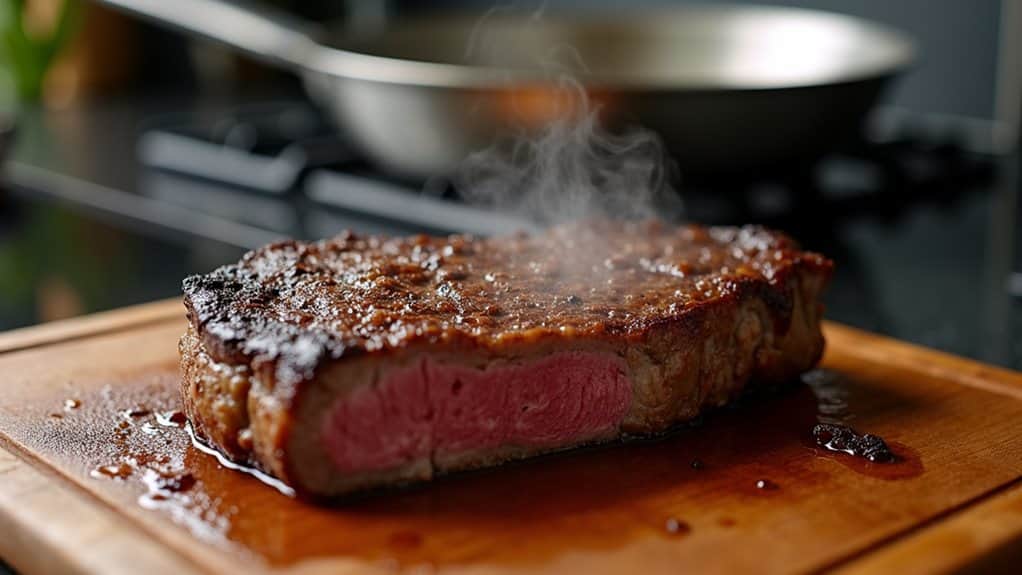
One common mistake that ruins reheated steak is overcooking it, which causes moisture loss and results in dry, tough meat.
Reheating at high temperatures, like boiling or quick searing, leads to uneven heating and microwave-drying.
Skipping the step of resting the steak before reheating can also reduce moisture retention, damaging tenderness and making it less enjoyable to eat.
If you stored your leftovers using a vacuum sealer, choosing one with double heat seal can help maintain vacuum integrity in the freezer and reduce moisture loss before reheating.
How to Prepare Your Steak for Reheating to Keep It Juicy
Before reheating, let your steak sit at room temperature for 15-20 minutes to promote even heating. This step prevents the outside from overcooking while the inside remains cold, helping to keep the meat juicy.
Allowing the steak to rest also helps redistribute the juices, ensuring it stays tender and moist during reheating.
Avoid leaving cooked meat out at room temperature for extended periods, since proper thawing helps prevent spoilage and maintain quality.
Rest Steak Before Reheating
Allowing your steak to rest at room temperature for 15 to 20 minutes before reheating helps guarantee even reheating and better moisture retention.
Proper resting allows the internal temperature to distribute evenly, maintaining tenderness and preventing moisture loss.
Resting steak longer, especially for thicker cuts, promotes uniform heat, making the reheating process more effective and preserving the meat’s flavor.
Bring to Room Temperature
Bringing your steak to room temperature before reheating helps guarantee it stays juicy and evenly warmed. Resting the steak allows for proper temperature distribution, preventing overcooking and cold spots.
Thicker cuts benefit from up to 45 minutes of resting to promote moisture retention and uniform temperature. This proper resting reduces temperature shock, ensuring even reheating and better overall texture.
Reheat Steak in the Oven for Even, Gentle Warming
Reheating steak in the oven is an effective way to warm it evenly and gently, preventing it from becoming dry or overcooked.
Set the oven to 250°F for gentle warming.
Place the steak on a wire rack over a baking sheet, and use a meat thermometer to monitor internal temperature.
This slow reheating guarantees even heat distribution and prevents overcooking.
For best results, keep the heat steady on a bottom-middle rack to promote even heat distribution.
How to Use Moisture and Covering Techniques to Prevent Dry Reheated Steak
To keep your reheated steak moist, it’s helpful to cover it with a damp cloth, microwave-safe lid, or foil to trap steam and prevent drying out.
Adding a small amount of broth, butter, or juices before reheating can also help maintain flavor and tenderness.
Using these covering techniques along with moisture helps guarantee your steak stays juicy and evenly warmed.
For extra insurance against dryness, you can brush the steak lightly with simple syrup before reheating to help lock in moisture without making it soggy.
Cover Steak During Reheat
Covering your steak during reheating is an effective way to keep it moist and prevent it from drying out. Using a lid or aluminum foil traps steam and humidity, creating coverage that promotes even heat.
This helps preserve moisture, keeping the steak juicy and tender. Proper coverage reduces evaporation, maintains flavor, and guarantees your reheated steak stays as close to its original texture as possible.
Add Moisture Before Reheating
Adding moisture before reheating your steak can make a significant difference in keeping it tender and juicy. By incorporating added liquids like broth or juices, and covering the steak to trap steam, you create a humid environment that prevents drying.
This gentle reheating preserves juiciness and flavor, ensuring your steak stays moist and tender without overcooking.
Reheat Steak on the Stovetop or in a Skillet
Reheating steak on the stovetop or in a skillet is a straightforward method that allows you to warm your meat evenly while maintaining its texture.
Use medium-low heat and add a little oil or butter for even heating.
Cover loosely, flip frequently, and monitor the internal temperature to avoid overcooking.
Thin slices help keep the steak juicy.
As a reminder, even a small snack bag of chips can come from a single medium potato, so portion sizes can be more deceptive than they look.
Quick Tips for Reheating Steak in the Microwave Safely
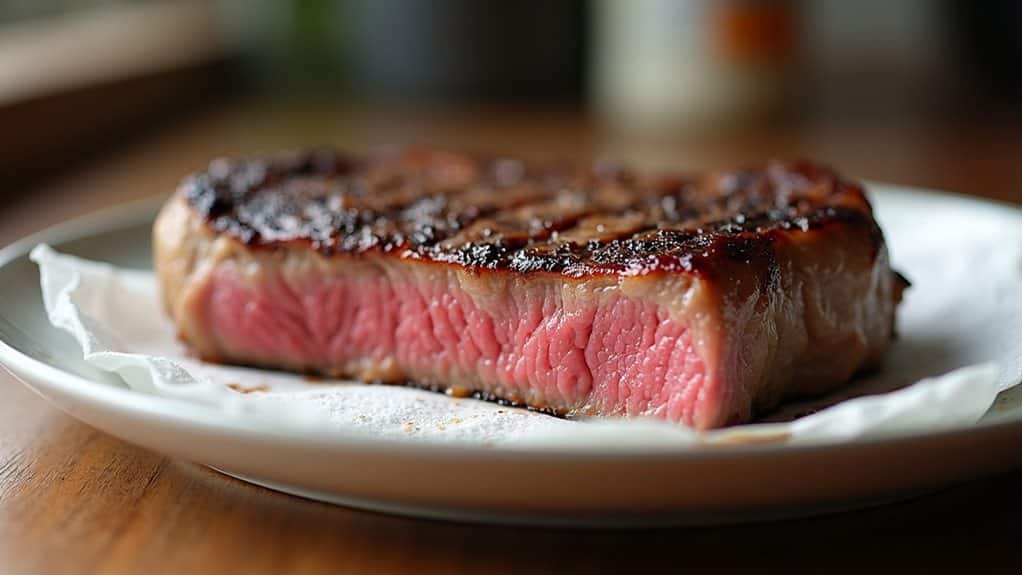
Microwaving steak can be quick and convenient, but it requires careful attention to prevent overcooking and dryness. Use medium heat and short intervals, around 30 seconds, to help with even heating.
Cover the steak with a damp paper towel to retain moisture. Flip gently between intervals, and frequently check the internal temperature to avoid overdoing reheating steak.
How to Finish Reheated Steak With a Quick Sear for Better Texture
After you’ve reheated your steak to a safe temperature, a quick sear can restore texture and develop a crispy crust.
Use a hot pan with high smoke point oil like grapeseed, pat the steak dry, and sear for 30-60 seconds per side.
Rest after searing to allow juices to redistribute, ensuring your reheated steak stays tender and flavorful.
Troubleshooting Common Reheating Problems Like Dryness and Uneven Heating
To prevent dryness and uneven heating, it’s important to understand how reheating methods impact your steak.
Gentle reheating at low temperatures, such as 250°F, helps with temperature control and moisture retention.
Covering the steak traps steam, reducing moisture loss.
Bringing the steak to room temperature first prevents cold spots.
This low and slow approach minimizes uneven heating and dryness.
Final Tips for Perfectly Reheated Steak Every Time
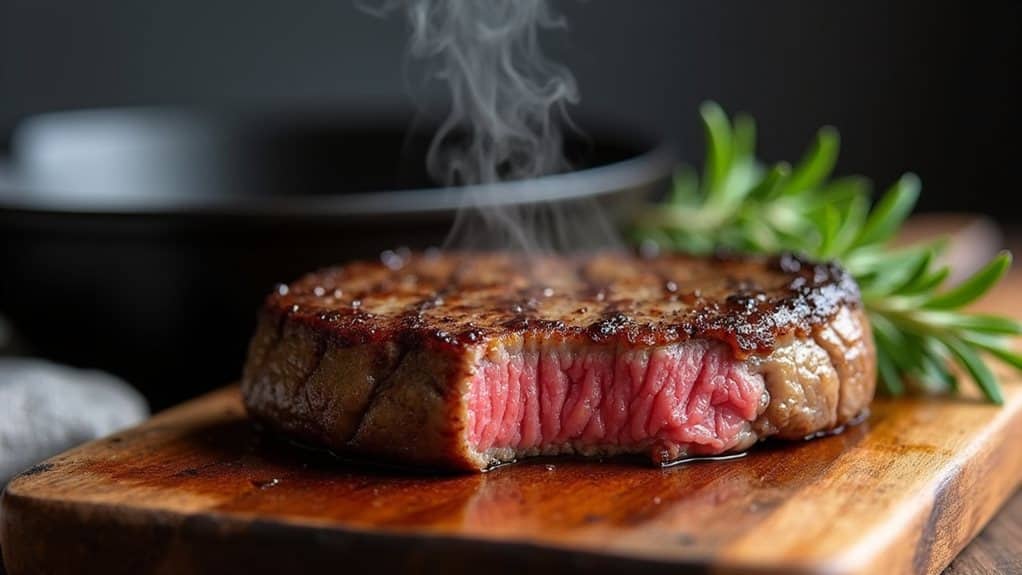
For consistently perfect reheated steak, paying attention to a few final steps can make a big difference.
Use gentle reheating at low temperatures, cover with foil to retain moisture, and monitor internal temperature with a meat thermometer for even heating and desired doneness.
Rest the steak for 3-5 minutes, then finish with a quick sear to restore the crust.
Wrapping Up
Reheating steak without overcooking is achievable by using gentle methods like the oven or stovetop, and by adding moisture to keep it juicy. Covering the meat or finishing with a quick sear can improve texture and flavor. Avoid high heat in the microwave to prevent dryness, and watch for uneven heating. With these techniques, you can enjoy your steak reheated to near perfection, maintaining its tenderness and taste with minimal effort.


