
Line the chilled dough with parchment, fold the edges over to seal a pocket, and fill it with dry beans, rice, or a second pan to keep the crust flat while it bakes. Dock the bottom with a fork, bake at 350 °F for 20‑25 minutes until the edges turn golden, then remove the filler and finish baking if needed. Chill the dough before baking to prevent sagging, and store reusable fillers in a dry bin for quick setup next time. Continue for deeper tips.
Quick Guide
- Line the chilled dough with parchment, fold edges over, and fill with dry beans, rice, or sugar to hold shape.
- Use a second, slightly smaller pan or a disposable sheet pan inside the pie plate as a weight‑free barrier.
- Dock the crust with a fork after removing parchment and fillers, then bake at 350 °F for 20‑25 minutes until golden.
- Chill the dough at least 15 minutes before blind baking to prevent shrinking and side collapse.
- Store reusable fillers in dry containers for quick setup, and avoid over‑stretching the dough to keep edges intact.
Choose a Weight‑Free Substitute for Pie‑Baking Weights
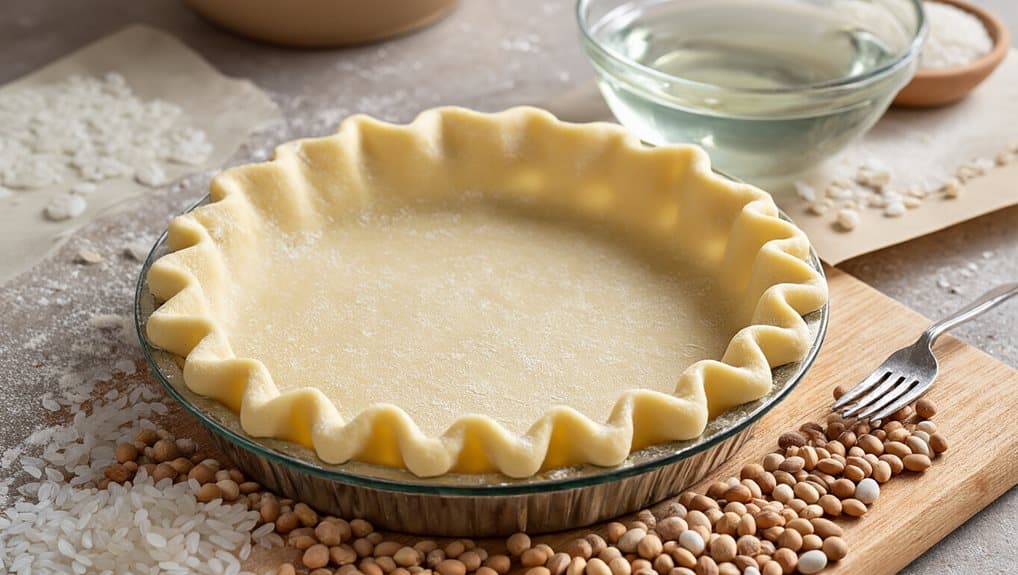
Choosing a weight‑free substitute for pie‑baking weights is simple once you know the options. You can use cheap bulk pinto beans, uncooked rice, granulated sugar, heavy‑duty foil, or clean pennies. Each fills the crust, prevents bubbling, and supports edges.
Once cooled, store your reusable fillers in BPA-free plastic bins to keep them dry, visible, and ready for the next bake. Beans, rice, and sugar are reusable after cooling; foil and coins need no store run. All work without special tools, keeping the crust flat and even. Vent‑ed shells eliminate the need for any weights at all.
Prepare the Dough for a Blind Bake Without Weights
Ever wondered how to get a perfectly flat crust without a single weight? Roll chilled dough into a 12‑inch circle, turning it a quarter turn every few rolls for even thickness. Keep it at least 1/16‑inch thick, then fit it gently into a 9‑inch pie plate, pressing edges and tucking excess under the lip. Prick the bottom and sides with a fork, then chill for at least 15 minutes, preferably longer, before baking. For consistent results, you can measure flour and butter by grams using a scale with 1 g resolution to avoid throwing off the dough’s texture. Blind baking prevents the crust from puffing and ensures a crisp, even base.
Apply the No‑Weight Technique: Parchment, Beans, or a Second Pan
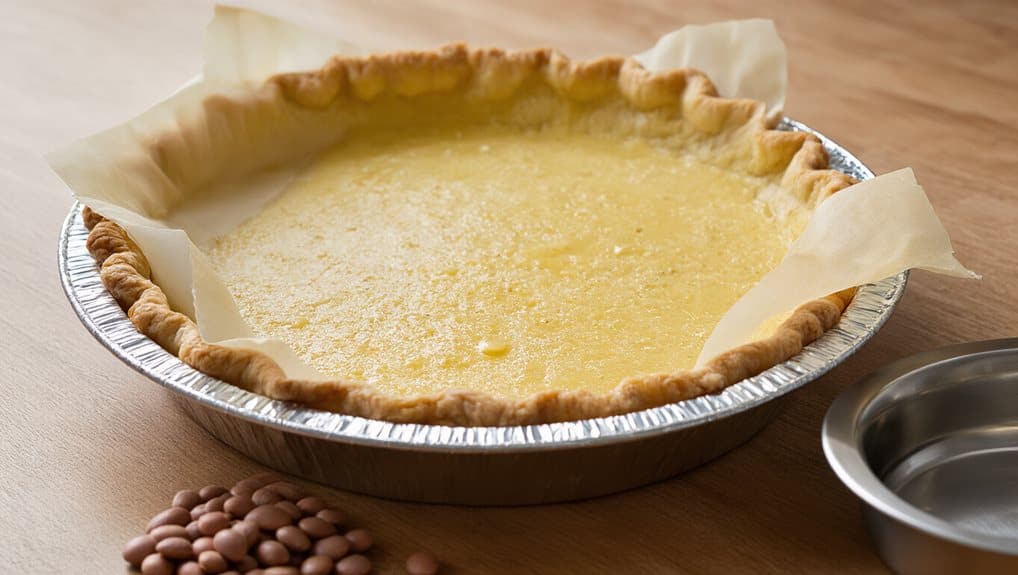
You line the chilled crust with parchment, fold it over the edges, and fill it with dried beans or rice to keep the dough flat while it bakes.
After a 20‑minute bake, you lift the parchment and beans, dock the bottom with a fork, and finish the bake to a golden color.
If you prefer a simpler setup, you can place the crust in a disposable pan inside the main pie plate and bake it on a sheet, which eliminates the need for any filler at all.
To quickly crisp and deepen the color at the end, you can use a brief low broil setting.
Parchment Lining Technique
How can you keep a pie crust from puffing or slumping while it bakes without using traditional weights?
First chill the crust, then crumple parchment and press it snugly into the pan, covering bottom and sides. Leave an overhang, fold it against the baking sheet, and bake on a bottom‑middle rack. The parchment acts as a second skin, preventing puffing and absorbing butter drips.
Bean‑Based Weight Substitute
After lining the pan with crumpled parchment, you can add a simple, inexpensive weight: dried beans.
Fill the crust nearly to the edges, spreading beans evenly across the bottom and up the sides, then bake at 375 °F for about 15 minutes.
Remove beans once edges turn light gold, dock the bottom, and finish baking until the crust is fully golden brown.
Dock, Bake, and Finish Full or Partial Crusts
Ever wondered how to keep a blind‑baked pie crust from puffing up while still getting a crisp bottom? After removing parchment and weights, use a fork to dock the surface, creating even holes. Return the crust to the oven at 350°F, baking 20‑25 minutes until edges turn golden. Let the fully baked crust cool before adding any filling. If you’re planning ahead, you can even stash extra dough near your optimal freezing temperature to help preserve its best qualities until you’re ready to bake.
Troubleshoot Common Weight‑Free Blind‑Baking Issues
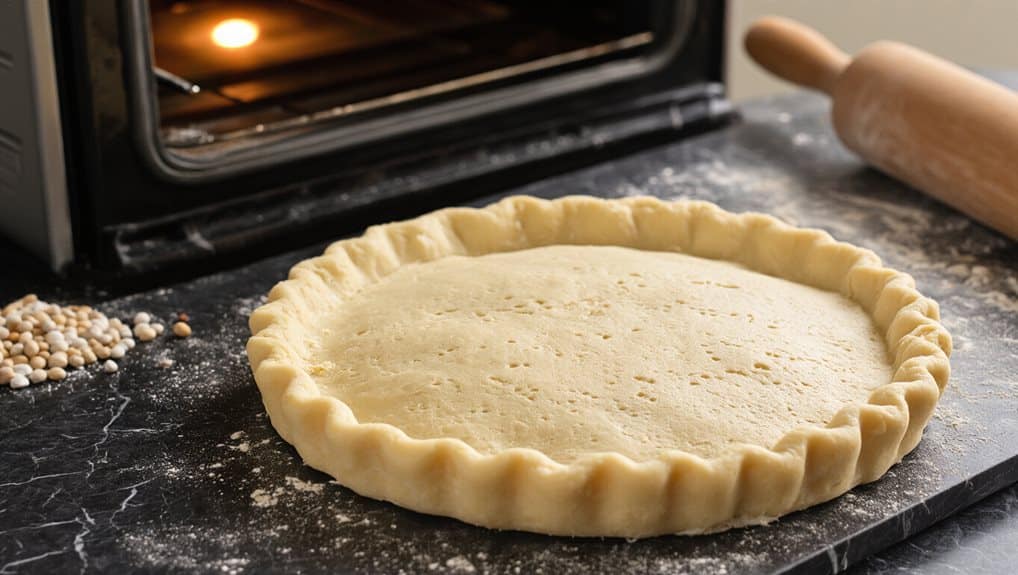
When you skip traditional pie weights, a few predictable problems can arise, and understanding why they happen helps you prevent them.
Sides collapse if the dough isn’t chilled or you over‑stretch it; lack of weights lets steam puff the center, especially with insufficient docking holes.
Uneven browning appears when parchment hangs or the pan isn’t pressed fully.
To avoid soggy or misshapen crusts, press the secondary pan snugly, fit parchment tightly, and chill the dough before baking.
Just as improper storage can increase bacterial growth in foods left out too long, leaving your crust warm and uncovered can invite excess moisture that compromises crispness.
Tips to Keep the Bottom Crisp and Achieve a Golden, Flaky Crust
If you want a pie crust that stays crisp at the bottom while the edges turn a deep golden hue, start by firming the shell before it hits the oven. Freeze the shell 15‑20 minutes, then bake on a preheated sheet at 375 °F. Dock the crust after 15 minutes, remove weights, raise oven to 400 °F for edge color, then drop to 350 °F until golden and flaky.
Wrapping Up
Now you’ve learned how to blind‑bake a crust without weights, using parchment, beans, or a second pan to keep the dough flat and prevent bubbling. Docking the surface and baking at the right temperature guarantees a crisp, golden base ready for any filling. Follow the steps, watch for soggy spots, and adjust time if needed. With these tricks, you’ll achieve a flaky, professional‑quality crust every time.


