
To store leftover turkey safely, cool it quickly by dividing it into shallow, covered containers made of glass or BPA-free plastic. Refrigerate within two hours at 40°F or lower, and use it within 3 to 4 days. For longer storage, freeze portions in airtight bags or silicone molds, labeling each with the date. Proper packaging prevents spoilage, keeps the meat moist, and makes reheating easier. Keep exploring to learn helpful tips for reheating and using leftovers effectively.
Quick Guide
- Cool turkey promptly after cooking, divide into small, shallow containers, and remove stuffing before storing.
- Use airtight glass, BPA-free plastic, or vacuum-sealed bags for quick cooling and preservation.
- Refrigerate leftovers within 2 hours at 40°F (4°C), and consume within 3-4 days.
- Freeze turkey in small portions, label with dates, and store for up to 3-4 months.
- Reheat to an internal temperature of 165°F (74°C), covering to retain moisture.
How to Cool and Prepare Your Turkey for Safe Storage
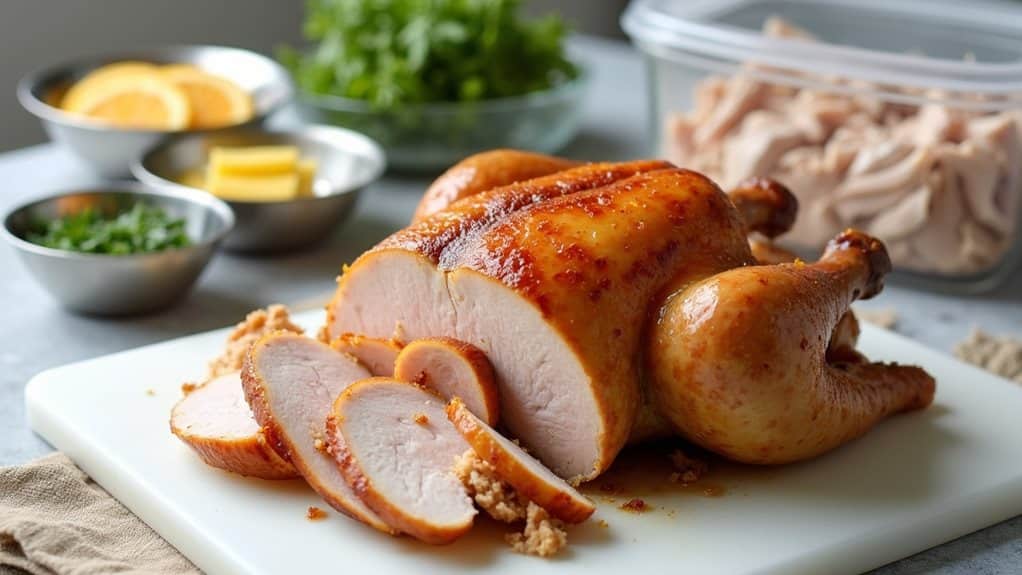
To guarantee your leftover turkey stays safe to eat, it’s essential to cool it promptly after cooking.
You should divide the leftovers into smaller, shallow portions to help them cool quickly and prevent spoilage.
Remove stuffing and carve the turkey before storing.
Use covered, shallow containers or resealable bags for fast heat dissipation and to keep your leftovers fresh.
After storing, keep leftovers in a cool, dark spot to limit heat and light exposure that can speed up spoilage.
What Are the Best Containers for Leftover Turkey?
Choosing the right containers for leftover turkey is essential to keep it fresh and safe to eat. Look for shallow, covered containers made of glass or BPA-free plastic, as they help cool the meat quickly and prevent spoilage.
Additionally, airtight options like vacuum-sealed bags or silicone containers protect against freezer burn and save space in your fridge or freezer.
For freezer-friendly portioning, consider 1-cup portions using silicone molds with individual lids to reduce odor transfer and make it easy to thaw only what you need.
Material Matters for Storage
Using the right containers can make a significant difference in keeping leftover turkey fresh and safe to eat. Choose food-safe plastic or reusable silicone bags with airtight seals to prevent air exposure, which can cause spoilage.
Shallow, covered containers promote quick cooling, while plastic bags maximize storage space and extend freshness. Always cover or seal your containers properly for ideal storage.
Space-Saving Container Options
What’re the best containers for leftover turkey if you want to save space in your fridge or freezer? Stackable, space-efficient storage containers are ideal, as they optimize refrigerator space and prevent cross-contamination.
Use shallow, covered containers like glass or plastic dishes for quick cooling.
Or, vacuum-sealed bags and reusable silicone bags to reduce air exposure and keep turkey fresh longer.
Sealability and Leak Prevention
Ensuring that leftover turkey stays fresh and safe to eat depends heavily on how well it’s sealed. Airtight containers, especially those with secure lids, prevent leaks and keep moisture inside.
Vacuum-sealed bags and BPA-free plastic containers create a tight, leak-proof environment that extends shelf life and protects against freezer burn, ensuring your leftovers stay flavorful and safe.
How to Store Leftover Turkey to Keep It Fresh and Safe
To keep leftover turkey fresh and safe to eat, proper storage is essential.
Store leftover turkey in shallow, covered containers or resealable plastic bags to promote quick cooling and prevent spoilage.
Remove bones and stuffing before storing, and refrigerate within 2 hours at 40°F (4°C).
Consume within 3-4 days or freeze for longer preservation.
For longer freezer storage, consider vacuum sealing portions using double heat seal technology to help maintain vacuum integrity and reduce freezer burn.
How Long Can You Keep Turkey in the Refrigerator and Freezer?
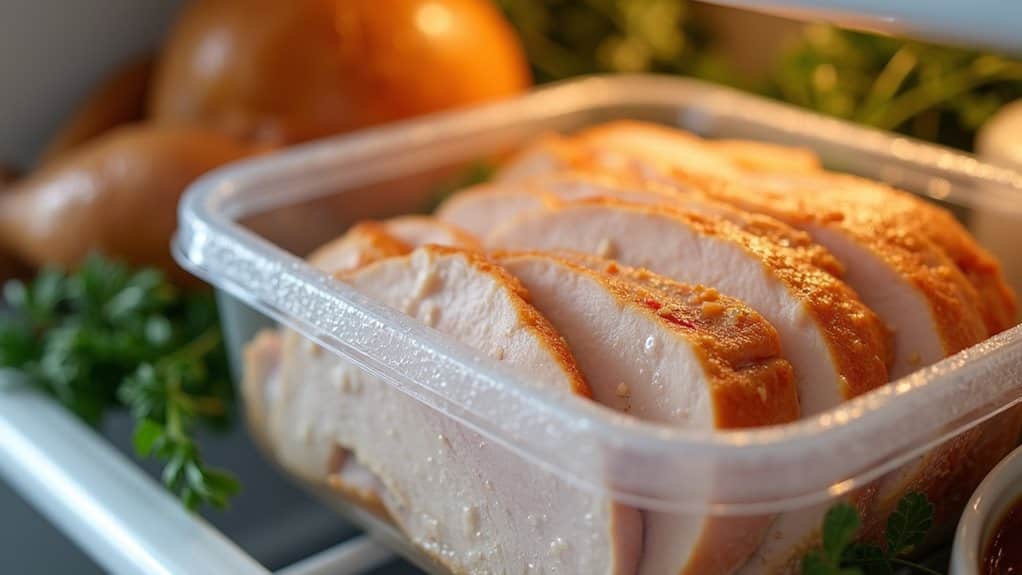
You can keep cooked turkey in the refrigerator for up to 3 or 4 days before it should be eaten or discarded.
If you want to store it longer, freezing is your best option, with proper packaging helping it stay safe for 3 to 4 months.
Using airtight containers or vacuum sealers guarantees the turkey maintains its quality and safety during storage.
As with freshly squeezed lemon juice, it helps to store leftovers in a sealed container to maintain freshness for a few days.
Refrigerator Storage Duration
Wondering how long leftover turkey stays safe in your fridge? Generally, leftover turkey can be kept in the refrigerator for up to 3-4 days, according to USDA guidelines.
To maximize safety and freshness, store it in shallow containers and seal them tightly.
After four days, bacterial growth increases, raising the risk of spoilage and foodborne illness.
Freezer Storage Duration
When it comes to storing leftover turkey, understanding how long it remains safe in your freezer is crucial.
The typical freezer storage duration for cooked turkey is 3 to 4 months, but properly wrapped or vacuum-sealed turkey can last up to 6 months for maximum quality.
Label your packages with dates to guarantee proper rotation and avoid freezer burn.
Proper Storage Techniques
Proper storage techniques help guarantee your leftover turkey stays safe and retains its flavor. Make sure you refrigerate leftover Thanksgiving Turkey within two hours of cooking.
Store cooked turkey in shallow containers to cool quickly. Leftover turkey can stay in the fridge for three to four days, ensuring your family and friends enjoy delicious leftovers safely.
How to Freeze Leftover Turkey to Maintain Quality and Safety
To keep leftover turkey fresh and safe to eat, it’s essential to freeze it properly. Cool it within 2 hours, then divide it into small portions.
Use airtight containers or vacuum-sealed bags, remove excess air, and label with the date.
Freeze in thin layers to promote quick freezing and even thawing, preserving the turkey’s quality and flavor.
Just as consistent cooking temperatures matter when using tools like a pizza stone, keeping your freezer at a steady temperature helps maintain turkey quality and safety.
How to Divide and Organize Turkey Leftovers for Easy Reheating
Dividing and organizing your leftover turkey into manageable portions makes reheating more convenient and helps prevent waste. Slice the turkey into smaller, uniform pieces, separating white meat from dark meat for efficiency.
Use airtight containers or resealable bags, pressing out excess air to prevent freezer burn. Label each with the date, and store for quick access and easy reheating.
Creative Ideas for Using Leftover Turkey Beyond Sandwiches
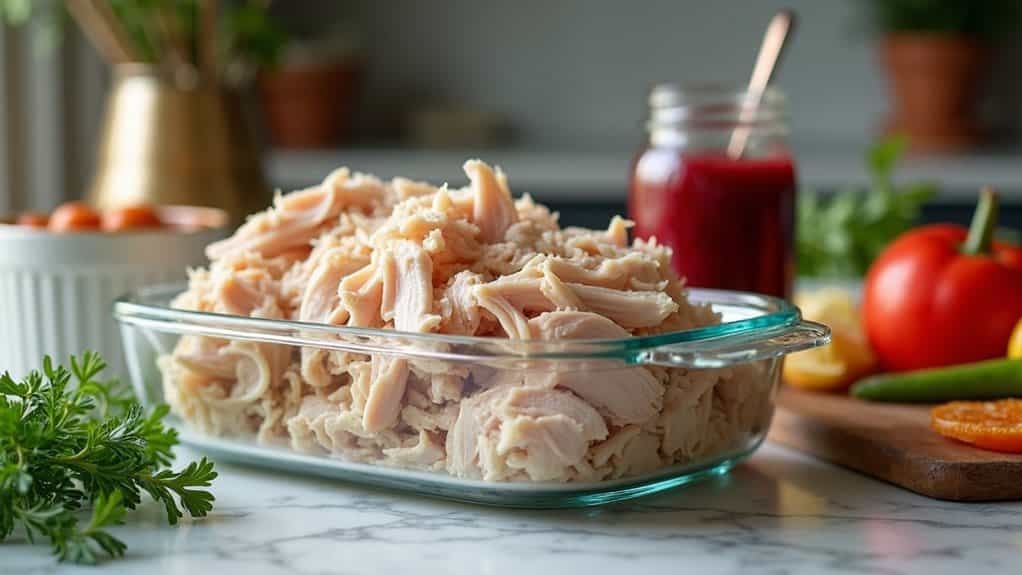
Once you’ve enjoyed your leftover turkey, there are many creative ways to incorporate it into new dishes beyond just making sandwiches. You can add Thanksgiving leftovers to salads, soups, casseroles, or make turkey enchiladas, spaghetti, or dumplings.
Freezing sliced or shredded turkey allows quick meal prep later, ensuring you maximize the value of your leftovers while following food safety guidelines.
How to Reheat Leftover Turkey Safely and Effectively
Reheating leftover turkey properly guarantees it stays safe to eat and maintains its flavor and moisture. Use a food thermometer to make certain the internal temperature reaches 165°F (74°C).
Cover the turkey during reheating, whether in a microwave, oven, or stovetop, and stir or rotate for even heating.
Reheat directly from fridge or frozen without thawing.
Common Mistakes to Avoid When Storing and Reheating Turkey
Many common mistakes can compromise the safety and quality of your leftover turkey if you’re not careful. Failing to refrigerate within two hours can lead to bacteria growth, especially in large or uncut pieces.
Reheating only partially can leave harmful bacteria alive, and storing leftovers too long or multiple times increases the risk of food poisoning.
Proper labeling helps prevent spoilage.
Wrapping Up
Properly storing and reheating your leftover turkey guarantees it stays safe and tasty. Use the right containers, divide leftovers into manageable portions, and keep track of storage times in the fridge or freezer. Avoid common mistakes like leaving turkey out too long or reheating improperly. By following these guidelines, you can enjoy your turkey leftovers safely for days, and even get creative with new dishes. Staying informed helps you make the most of your holiday feast.


