
To reheat rice safely, make certain you’ve stored it properly in an airtight container in the fridge within 1-2 hours of cooking, and consume it within 3-4 days. Reheat to at least 165°F using a microwave or stovetop, stirring frequently for even warmth, and avoid reheating multiple times. Watch for signs of spoilage like a sour smell or slimy texture. If you want to guarantee your rice stays fresh and safe, keep going for more useful tips.
Quick Guide
- Reheat rice to at least 165°F (73.8°C) using a food thermometer for safety.
- Add a splash of water and cover to keep rice moist during reheating.
- Reheat in short intervals, stirring between each to ensure even temperature distribution.
- Reheat only once to minimize bacterial growth and spoilage risks.
- Discard rice if it develops an unpleasant smell, slimy texture, or discoloration.
How to Store Leftover Rice Safely to Prevent Food Poisoning
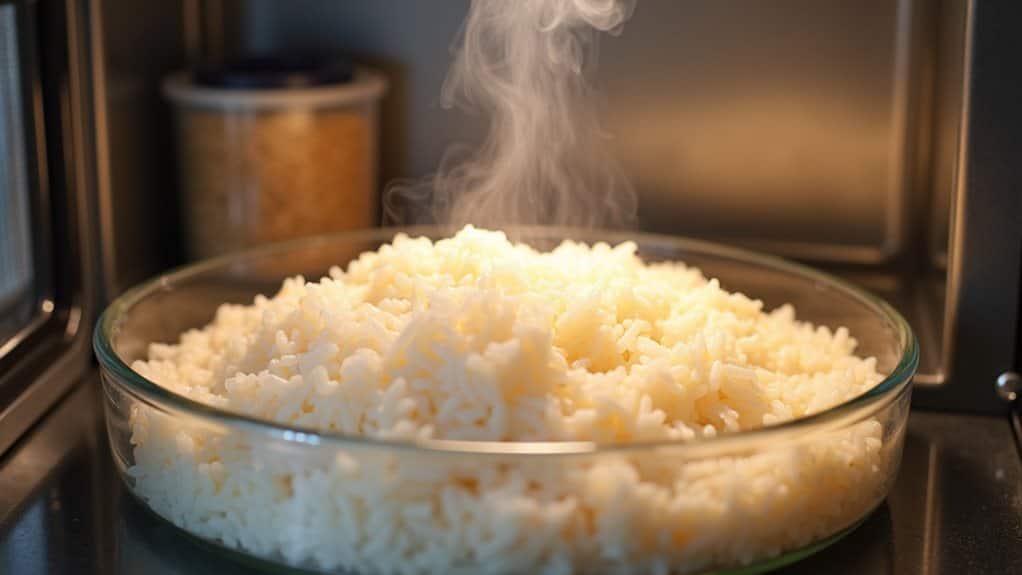
Have you ever wondered how to store leftover rice safely to prevent food poisoning?
To do so, you should store leftover rice in an airtight container in the refrigerator at 40°F or below, and consume it within 3-4 days.
If not eaten quickly, freeze leftover rice in freezer-safe containers for up to 3-4 months to reduce bacteria called Bacillus cereus.
For longer freezer storage, consider using a vacuum sealer with double heat seal technology to help maintain vacuum integrity and reduce freezer burn.
Why Cooling and Refrigerating Rice Quickly Is Important
Cooling and refrigerating rice quickly after cooking helps prevent the growth of bacteria like Bacillus cereus, which can cause food poisoning.
Rapid refrigeration within 1-2 hours keeps rice out of the temperature danger zone of 40°F to 140°F, reducing bacterial growth.
Proper cooling methods guarantee food safety, preserve rice quality, and make reheating safe later.
Eggplants are rich in antioxidants like anthocyanins, which provide anti-inflammatory benefits for arthritis.
Best Reheating Methods for Safe and Moist Rice
To reheat rice safely and keep it moist, you can use methods like the microwave, stovetop, or oven, but each requires careful attention.
Using a small amount of water or broth and covering the rice helps retain moisture, while stirring frequently guarantees even heating.
Remember to reheat the rice to at least 165°F and only reheat it once to reduce any health risks.
For baking, a simple milk + lemon juice mixture can mimic buttermilk’s acidity and tang when you need a quick substitute.
Microwave Reheating Tips
Microwave reheating is one of the quickest and most convenient ways to warm up leftover rice, but doing it correctly is essential to guarantee safety and maintain moisture.
To reheat rice safely, add water, cover it to trap steam, and use 45-second intervals on full power, stirring between each.
Check that the temperature reaches at least 165°F before serving.
Stovetop and Oven Techniques
Reheating rice on the stovetop or in the oven are effective methods for ensuring it warms evenly and stays safe to eat.
To reheat rice, add water—1-2 tablespoons per cup—cover the dish, and heat until the temperature reaches at least 165°F.
Covering retains moisture, preventing dryness and maintaining safety during the reheating process.
What Temperatures and Times Ensure Your Reheated Rice Is Safe?
Ensuring your reheated rice is safe to eat requires reaching the right temperature, which is at least 165°F (73.8°C). Use a food thermometer to verify the internal temperature.
Reheat in short intervals, stirring for even heating.
Avoid multiple reheatings, as bacteria growth can increase, making safe reheating times essential for preventing food poisoning.
Just like heat can speed up oil degradation through oxidation, leaving rice warm for too long can increase food-safety risks.
Signs Your Reheated Rice Has Gone Bad
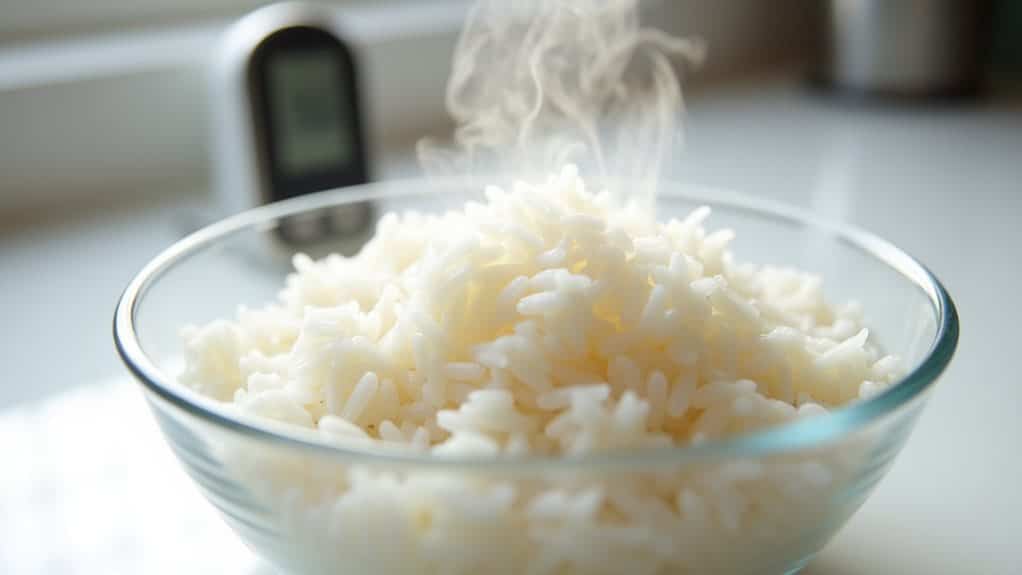
If your reheated rice develops an unpleasant smell, a slimy texture, or noticeable discoloration, it’s a strong sign that it has gone bad.
These changes indicate bacterial growth or spoilage, making the rice unsafe to eat.
Always trust your senses—discard the rice if any of these signs are present to avoid health risks.
Unpleasant Odor
How can you tell if reheated rice has gone bad just by its smell? An unpleasant odor, such as sour, musty, or rotten smells, signals spoilage.
These off-odors often indicate bacteria or mold growth, which can produce harmful toxins. If the rice smells unsafe, it’s best to discard it, as eating spoiled rice can cause food poisoning.
Slimy Texture
A slimy texture on reheated rice is a strong sign that it has gone bad. This indicates spoilage caused by bacterial growth, such as Bacillus cereus, which can produce toxins even after reheating.
Poor storage or improper reheating can lead to excess moisture and bacteria buildup. If rice feels slimy, it’s safest to throw it away to guarantee food safety.
Discoloration Presence
Discoloration is a key sign that reheated rice may no longer be safe to eat. Yellowing, browning, or greenish and black spots indicate spoilage, mold, or bacterial growth, making the rice unsafe to consume.
If discoloration occurs along with a bad odor or sliminess, it’s a warning sign that the rice has gone bad and should be discarded.
Common Mistakes When Handling and Reheating Rice
One common mistake people make when handling and reheating rice isn’t cooling it quickly enough after cooking. This allows bacterial toxins to form, increasing food poisoning risks.
When reheating rice, make sure it reaches a proper temperature, avoid storage mistakes, and use microwave reheating carefully.
Failing to do so can leave bacteria alive, risking illness from bacterial toxins.
As a general rule, don’t leave cooked foods sitting out for more than two hours, since this falls within the 40-140°F danger zone where bacteria can multiply quickly.
Tips for Flavourful, Moist Reheated Rice Every Time
Reheating rice properly isn’t just about safety; it’s also about ensuring the final result is flavorful and moist.
To reheat rice, add a small amount of water or broth, then cover and use gentle reheating like steaming or low heat.
Fluff with a fork after reheating, and add flavor with butter, herbs, or oil to keep it safe to eat, moist, and delicious.
Wrapping Up
Reheating rice safely is essential to avoid food poisoning. Always store leftover rice promptly in the fridge, reheat it to the right temperature, and check for signs of spoilage. Use proper methods like steaming or microwave reheating to keep it moist and flavorful. By following these guidelines, you can enjoy your rice without health risks, ensuring it remains safe, tasty, and enjoyable for your next meal.


