
You can replace buttermilk with a simple milk‑plus‑acid blend, whisking 1 Tbsp lemon juice or white vinegar into 1 cup whole milk and letting it sit 5–10 minutes; the mixture curdles, mimicking the pH and thickness of real buttermilk. For a richer texture, mix ¾ cup Greek yogurt with ¼ cup milk, or combine ½ cup sour cream and ½ cup milk for a creamy, tangy base. Vegan bakers can use ¾ cup plant milk plus 1 Tbsp acid. These options give the same lift and moist crumb, and the next section shows which works best for biscuits, pancakes, and cakes.
Quick Guide
- Mix ¾ cup plain Greek yogurt with ¼ cup whole milk for a thick, tangy base ideal for pancakes, biscuits, and scones.
- Combine ½ cup sour cream with ½ cup whole milk to achieve a creamy texture and subtle tang, perfect for flaky biscuits.
- Use 1 cup kefir as a 1:1 replacement; it provides acidity and moisture without thickening, great for cupcakes and scones.
- Add 1 tablespoon white vinegar or lemon juice to each cup of whole (, let sit 5‑10 minutes; this curdles the milk and mimics cultured buttermilk.
- For vegan baking, blend ¾ cup plant milk (e.g., flax, oat, almond) with 1 tablespoon lemon juice or vinegar to create the required acidity and tang.
Choosing the Right Buttermilk Substitute
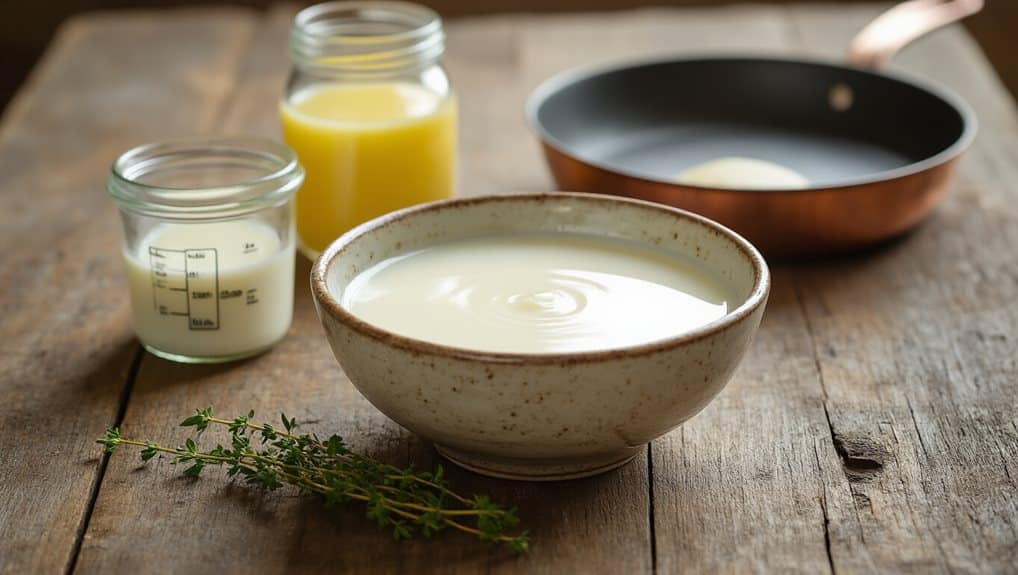
Looking for a buttermilk stand‑in? You’ll choose based on flavor, texture, and recipe complexity. Greek yogurt mixed with milk (¾ cup yogurt, ¼ cup milk) mimics tang and thickness, ideal for pancakes and biscuits. Sour cream or yogurt with whole milk (½‑½ ratio) adds fluffier texture, great for flaky biscuits. Kefir works 1:1 for scones and cupcakes, preserving acidity without adjustment. If you’re whisking the substitute by hand, cut any add-ins small and mix thoroughly for a smoother texture—similar to using a hand mixer when you don’t have a blender. Use these substitutes when buttermilk is a minor component; for larger quantities, real buttermilk remains best. Historically, buttermilk was the liquid left after churned butter, giving it a natural sour profile.
How Milk + Lemon Juice or Vinegar Replicates Real Buttermilk
Why does a splash of lemon juice or vinegar turn ordinary milk into a buttermilk stand‑in? The acid lowers pH, causing milk proteins to curdle and thicken, which mimics the tang and texture of cultured buttermilk.
Use one tablespoon of white vinegar or lemon juice per cup of whole milk, stir, then let it sit five to ten minutes at room temperature before measuring for baking. Just as dry meat helps sauces adhere, giving this mixture a brief rest encourages milk proteins to thicken for more reliable baking results. This creates a tender crumb that improves the texture of baked goods.
How Yogurt‑Based Mixes Provide Thickness and Tang
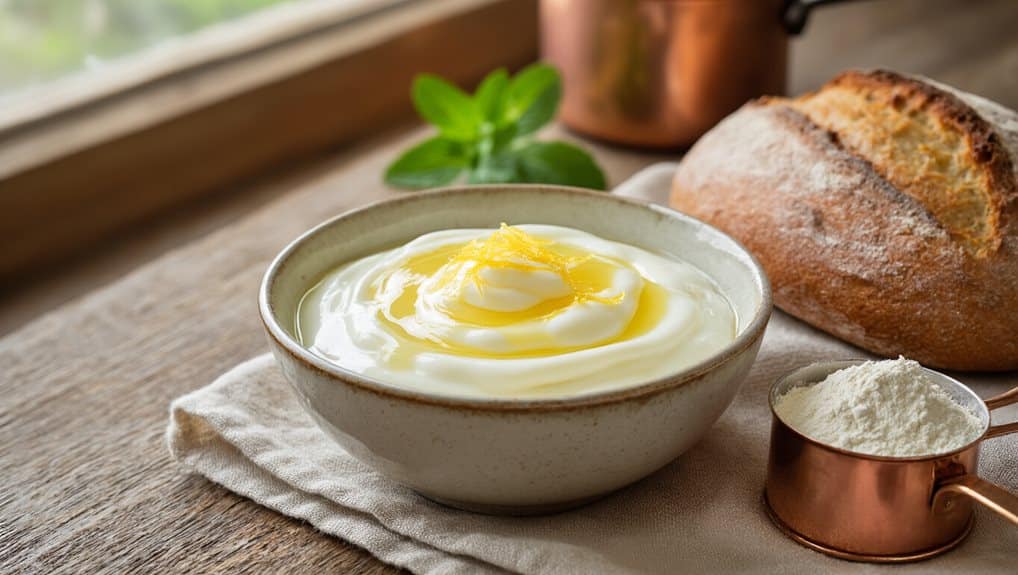
Ever wondered how a simple yogurt‑based mix can give your batter the same body and bite as real buttermilk? Greek yogurt’s thick, strained texture mimics buttermilk’s creaminess, while its protein supports structure and rise.
Mix one part yogurt with two parts milk, or thin with water, to hit heavy‑cream consistency.
The lactic acid adds a bright tang that balances sweetness and reacts with baking soda for proper leavening.
Just as pepperoni should be stored safely to prevent bacteria growth, keep yogurt‑based substitutes refrigerated when not in use.
How Sour Cream + Whole Milk Gives a Rich, Tangy Substitute
Mix equal parts sour cream and whole milk, then whisk until smooth, and you’ll get a thick, creamy base that mimics the texture of real buttermilk.
The sour cream’s natural acidity balances the milk’s richness, giving a subtle tang that works well in cakes, muffins, and quick breads.
Let the blend sit for at least ten minutes so the flavors meld, and you’ll have a reliable, tangy substitute ready for any recipe.
For best quality, follow proper storage guidelines and keep ingredients tightly sealed in a cool, dry spot away from sunlight.
Rich Creamy Texture
A simple blend of full‑fat sour cream and whole milk creates a buttermilk substitute that’s both thick and velvety. The full‑fat cream gives a dense, smooth mouthfeel while the whole milk adds body and richness, avoiding the watery texture of milk‑acid mixes. Whisk until smooth, let it sit briefly, and you’ll get a velvety consistency that supports tender crumbs and steady rise in biscuits, quick breads, and cakes.
Balanced Tangy Flavor
Why does a simple blend of sour cream and whole milk deliver that perfect, balanced tanginess? The fermented cultures in sour cream supply a natural bite, while whole milk dilutes intensity just enough to keep the acidity needed for leavening. Whisk equal parts until smooth, let it rest ten minutes, and you’ll achieve a rich, authentic tang that outshines vinegar‑only substitutes.
How Powdered Buttermilk Offers Shelf‑Stable Convenience
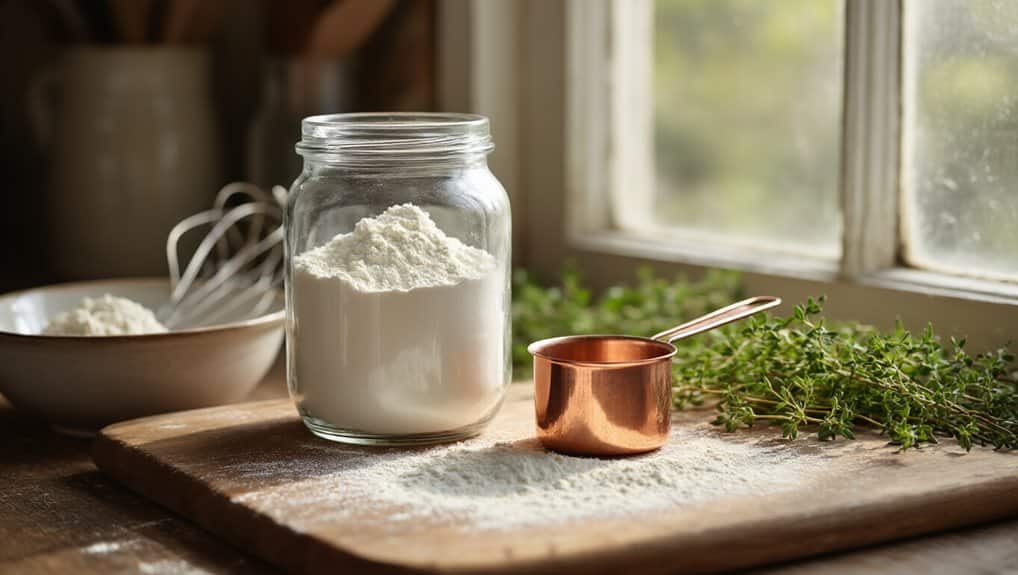
Ever wonder how powdered buttermilk stays fresh for years without a refrigerator? When you store it in a cool, dark spot at 60 °F or less, an unopened package can last five to ten years, and non‑fat varieties even longer. After opening, keep it in a pantry for up to ten weeks, or freeze it. Mylar bags with oxygen absorbers, silica packets, or vacuum sealing further extend its shelf life.
Can Cream of Tartar Turn Milk Into Buttermilk in Minutes?
Can cream of tartar really turn milk into buttermilk in minutes? You’ll need 1 cup warm milk plus 1.5 tsp cream of tartar, or 1 cup room‑temperature milk with 2 tsp.
Stir vigorously, let sit 10‑15 minutes, then whisk again.
The mixture thickens gradually, resembling buttermilk after about 15 minutes, though it isn’t instant and may need a quick re‑whisk before use.
Just like an Alfredo sauce is a delicate emulsion, adding cold ingredients to a hot mixture can cause separation, so keep the milk at warm or room temperature.
Non‑Dairy Buttermilk Substitutes for Vegan Baking
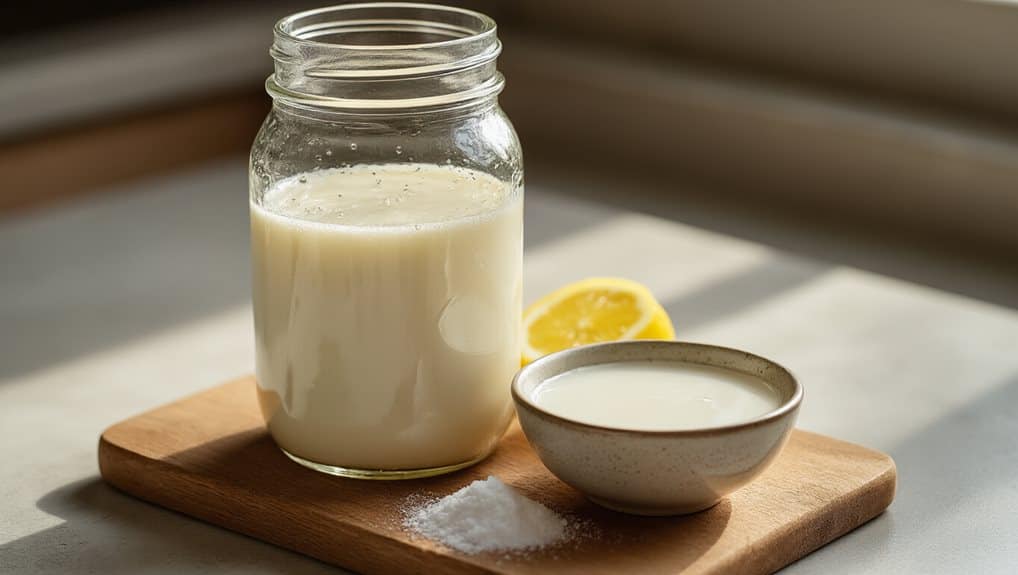
Looking for a dairy‑free way to give your vegan baked goods the same tang and lift that buttermilk provides? Mix ¾ cup plant milk with 1 Tbsp lemon juice or vinegar; it curdles in minutes, giving acidity for soda activation. Flax milk works best, but oat, almond, or soy are usable. Adjust ratios proportionally for larger batches, and use the mixture immediately.
Which Substitute Works Best for Biscuits, Pancakes, and Cakes?
After exploring dairy‑free options, it’s time to see which buttermilk substitutes shine in specific baked goods.
For biscuits, a sour‑cream‑and‑milk blend gives the tender crumb and rise you expect;
milk‑plus‑lemon works well for scones.
Pancakes benefit from milk‑plus‑vinegar or yogurt‑milk mixes that stay light and fluffy.
Cakes respond best to kefir or a yogurt‑milk blend, providing tang and moisture without over‑thickening.
Troubleshooting Common Issues With Buttermilk Replacements
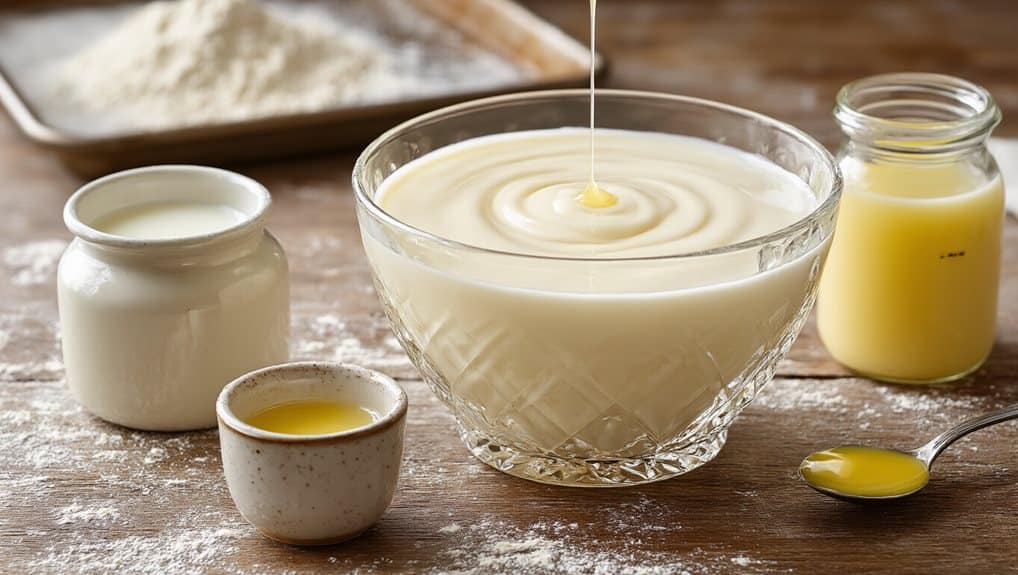
Ever wondered why your baked goods sometimes turn out dense, flat, or oddly flavored when you swap out real buttermilk? Powdered buttermilk clumps if you don’t pre‑mix with water, causing uneven texture and lower rise.
Whole milk lacks acidity, leaving bitter soda and brick‑like crumb. Adjust fat by diluting Greek yogurt or using milk + lemon to balance flavor, texture, and leavening.
Wrapping Up
Pick the substitute that matches your recipe’s texture and flavor needs, then adjust the amount to keep the batter’s consistency right. Lemon‑or‑vinegar‑spiked milk works for most quick breads, while yogurt or sour‑cream blends add extra richness to cakes and pancakes. Powdered buttermilk is handy for pantry storage, and non‑dairy options let vegans bake without compromise. Test a small batch, note any texture changes, and you’ll consistently achieve the desired tang and moisture.


