
Your mac and cheese may turn dry if you overbake or cook at high temperatures, causing moisture to evaporate. Using too little sauce, hard cheeses, or over-thickening with flour can also make it less creamy and more crumbly. Additionally, cooking pasta too long or at improper times can release excess starch, leading to dryness. Properly balancing sauce, cheese types, and cooking times can help keep it moist—keep going for more tips to prevent dryness.
Quick Guide
- Overbaking or cooking at high temperatures causes moisture to evaporate, leading to dryness.
- Using insufficient or overly thickened sauce results in a less creamy, dry dish.
- Hard cheeses with low moisture content can dry out the dish if not balanced with softer cheeses or liquids.
- Overcooking pasta releases starch and makes it mushy, increasing dryness.
- Reheating without adding moisture or covering can cause mac and cheese to become dry and crumbly.
Why Does Mac and Cheese Turn Dry? Common Causes Explained
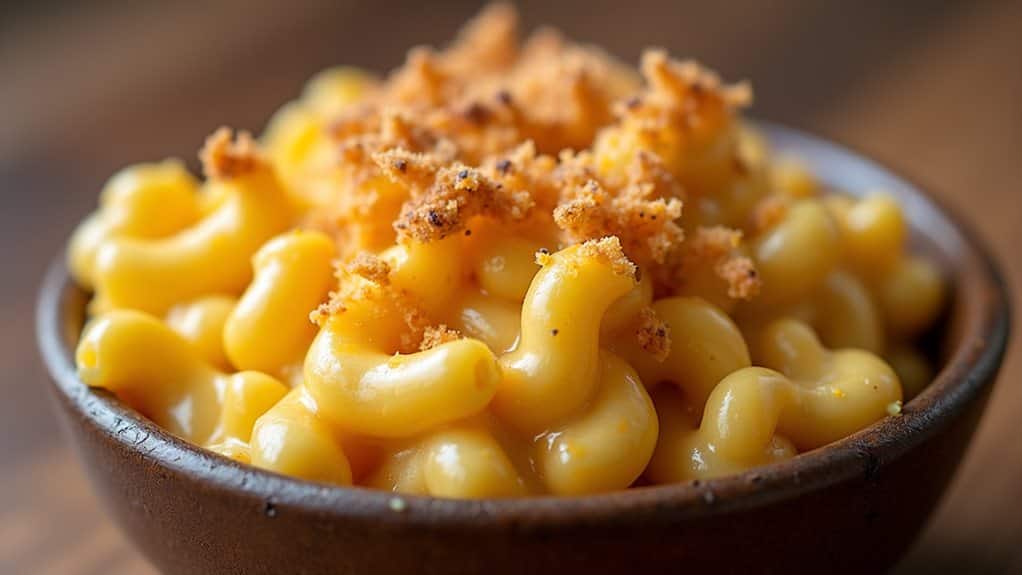
One of the main reasons your mac and cheese turns dry is because it’s overbaked or cooked at too high a temperature. This causes moisture to evaporate, leaving the dish dry.
Additionally, using too much thickening agent like flour or not adding enough liquid, such as milk or cream, can result in a dry, stiff sauce.
Hard cheeses or excessive cheese also contribute to dryness.
If you’re storing leftovers, using double heat seal vacuum sealing can help maintain moisture during freezer storage and reduce the drying effects of freezer burn.
Overbaking and High Temperatures Make It Dry: Here’s Why
When you bake your mac and cheese at too high a temperature or for too long, moisture evaporates quickly, leaving the dish dry and less creamy.
The heat also causes the cheese sauce to thicken and break down, which makes it less smooth and more brittle.
As a result, your dish can end up hard and crumbly instead of tender and moist.
Just like keeping food in an airtight container helps prevent moisture loss and quality issues, covering your mac and cheese while it bakes can help retain creaminess.
Excessive Heat Evaporates Moisture
Excessive heat during baking can quickly turn your creamy mac and cheese into a dry, crumbly dish. When the oven temperature is too high, moisture from the cheese sauce and pasta evaporates rapidly, especially above 375°F.
Without covering the dish, this evaporation accelerates, causing the cheese to break down and the dish to lose its desired creamy texture.
Overcooking Thickens Sauce
Overbaking your mac and cheese causes the sauce to become thick and dry because the prolonged exposure to heat drives out the moisture.
High oven temperatures accelerate this process, breaking down fats and starches, resulting in a less creamy, clumpy sauce.
Overbaking also denatures cheese proteins, making the sauce less smooth and more rubbery.
Loss of Creamy Texture
Baking your mac and cheese for too long or at too high a temperature causes the sauce to lose its smooth, creamy texture.
The heat accelerates evaporation of the liquid components, including the cheese, which reduces moisture and leads to dryness.
Overbaking allows the cheese to harden and set, diminishing its natural creaminess and making your dish less luscious.
Insufficient Sauce or Moisture Will Leave Your Mac and Cheese Dry
When there isn’t enough sauce or moisture in your mac and cheese, it can quickly turn dry after baking.
Without enough sauce, the pasta isn’t properly coated, leading to a dry texture.
If the sauce is too thin, it evaporates during cooking, leaving the dish less creamy and moister.
Adequate sauce guarantees the dish stays moist and tender.
Just as eggplant seeds can taste bitter when left raw, a lack of sufficient sauce can leave your baked mac and cheese with an unbalanced, dry finish.
Hard or Harder Cheeses Can Dry Out Your Dish: What to Use Instead
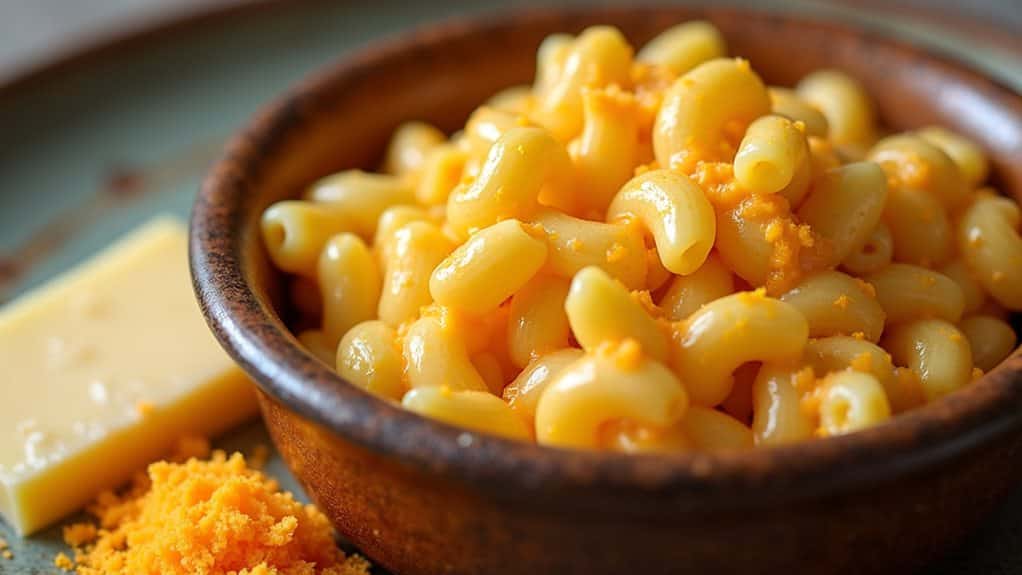
Hard cheeses like Parmesan and Pecorino are popular for adding sharp flavor to mac and cheese, but they can also cause the dish to become dry if used improperly.
Hard cheeses contain less moisture and melt less smoothly, which can make your dish grainy and less creamy.
To avoid dryness, combine hard cheeses with softer, melty cheeses like Cheddar or Mozzarella.
Because hard cheeses are lower in moisture, adding a small splash of ice-cold liquid can help create a smoother, more stable sauce similar to an emulsion-type bind.
How Pasta Type and Cooking Time Affect Creaminess and Moisture
Choosing the right pasta shape and cooking it properly can considerably impact the creaminess and moisture of your mac and cheese.
Pasta shapes like rotini and ziti hold more sauce and retain moisture better than thin, smooth noodles.
Avoid overcooking, as it makes pasta mushy and releases starch, which can make your dish dry and slimy.
If you’re thinning your sauce with a dairy-free option, gently warming almond milk before stirring it in can help it blend smoothly without separating.
The Best Way to Cover Your Mac and Cheese to Prevent Dryness
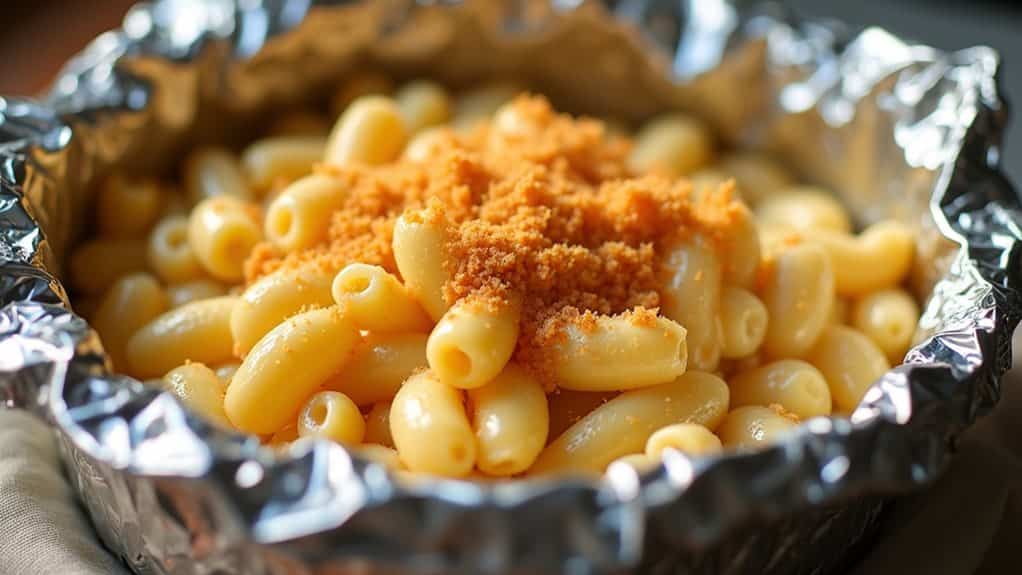
Covering your mac and cheese properly during baking is essential for keeping it moist and preventing it from drying out. Use a tight-fitting aluminum foil to trap moisture and maintain a creamy texture.
Remove the foil in the last 5-10 minutes to brown the cheese without losing too much moisture.
Double layers and damp paper towels can add extra humidity.
Too Much Flour or Thickening Agents Can Dry Out Your Mac and Cheese
Using too much flour or thickening agents can make your mac and cheese turn dry by creating a dense, pasty sauce that traps less moisture.
When the sauce becomes overly thick, it resists melting and can develop a raw flour taste, which affects the overall flavor and texture.
To avoid this, measure your ingredients carefully and cook the roux until it’s golden, ensuring a smooth, moist cheese sauce.
Excess Flour Causes Dryness
When too much flour or other thickening agents are added to your cheese sauce, it can turn into a stiff, dry mixture that pulls moisture from the pasta during baking.
Excess flour makes the sauce overly thick and pasty, resulting in a dry, crumbly texture once baked.
To prevent this, use minimal flour and balance it with enough milk or cream.
Over-Thickened Sauce Issues
Adding too much flour or thickening agents might seem like a good way to make your cheese sauce thicker, but it can backfire. An over-thickened sauce loses moisture during cooking, resulting in dryness and a crumbly texture.
When the sauce is too firm, it doesn’t coat the pasta evenly, making your mac and cheese less creamy and more dry.
Raw Flour Taste
A raw flour taste in your mac and cheese often signals that the thickening process wasn’t done properly. If you don’t cook the flour enough, it leaves raw flour particles that can cause dryness and a chalky mouthfeel.
Over-thickening with excess flour stiffens the sauce, reducing creaminess and contributing to dryness after baking. Proper whisking and adding liquid can help prevent this.
Storage and Reheating Mistakes That Make Your Mac and Cheese Dry
Storing and reheating mac and cheese incorrectly can quickly turn it into a dry, unappetizing dish. If you don’t cover or add moisture during reheating, the cheese and pasta dry out and become rubbery.
Using high heat or reheating without extra liquid causes evaporation, leading to a grainy, less creamy texture. Proper reheating methods help maintain moisture and flavor.
Simple Tips to Keep Your Mac and Cheese Creamy and Moist
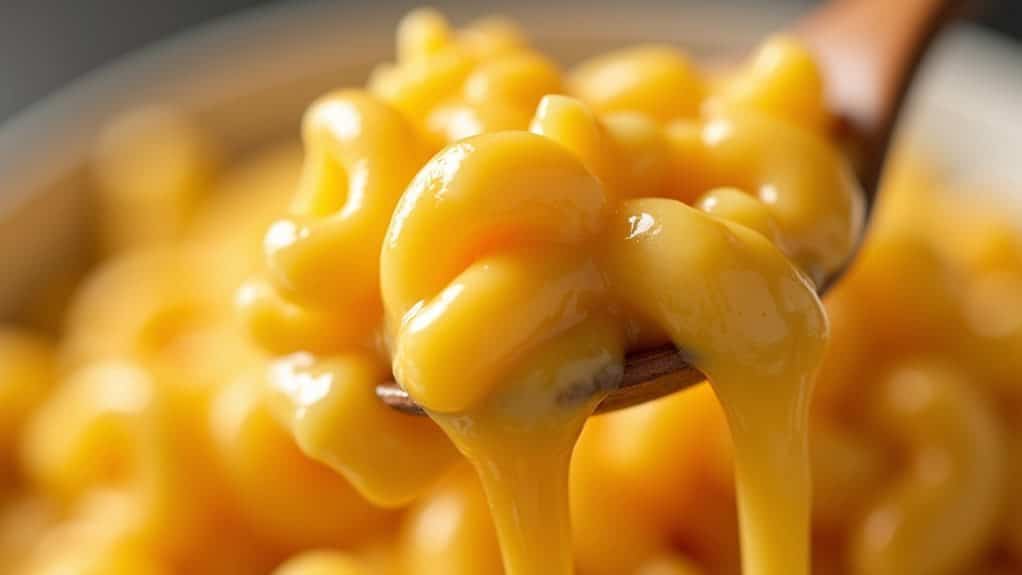
To keep your mac and cheese creamy, make sure to use enough cheese and cream in the sauce, as this helps retain moisture during baking.
Cover the dish with aluminum foil while baking to trap steam and prevent it from drying out.
Additionally, avoid overbaking, since prolonged heat causes liquid to evaporate and the dish to become dry.
Use Extra Moisture
Adding extra moisture to your mac and cheese is one of the simplest ways to keep it creamy and prevent it from drying out during baking.
You can do this by adding more cheese sauce, milk, or heavy cream before baking.
Incorporating moist ingredients like sour cream or cream cheese also enhances the dish’s overall moisture, ensuring it stays rich and tender.
Cover During Baking
Cover during baking by wrapping your mac and cheese with foil. This is an effective way to secure in moisture and keep it creamy.
This method traps steam, preventing drying out, and promotes even heat distribution.
Using a well-sealed cover guarantees the cheese and noodles stay moist.
Remove the foil in the last few minutes to allow for browning without losing too much moisture.
Quick Fixes to Restore Moisture and Creaminess to Dry Mac and Cheese
When your mac and cheese turns out dry, quick fixes can help revive its moisture and creaminess. Adding a splash of milk, cream, or broth and gently stirring helps rehydrate the dish.
Covering it with foil while reheating traps moisture, preventing further drying out.
Incorporating extra cheese or sour cream also enhances creaminess and improves texture.
Wrapping Up
To prevent your mac and cheese from turning dry, focus on maintaining proper moisture levels by using the right cheese, avoiding overbaking, and adding enough sauce. Be mindful of cooking times and temperatures, and store leftovers carefully. If your dish does dry out, quick fixes like adding milk or cheese can help restore creaminess. Paying attention to these details guarantees your mac and cheese stays moist, flavorful, and satisfying with every bite.


