
For the best melting in sauces, choose high-moisture, high-fat cheeses like cheddar, Gruyère, Swiss, and mozzarella, as they melt smoothly and evenly. Soft cheeses like cream cheese also work well, adding creaminess. To get perfect results, shred cheese finely, bring it to room temperature, and melt slowly over gentle heat while stirring constantly. Avoid pre-shredded varieties with anti-caking agents, and you’ll achieve a silky, uniform sauce. Keep exploring for more tips to perfect your cheese sauce technique.
Quick Guide
- Use high-moisture, high-fat cheeses like Cheddar, Gruyère, and Swiss for smooth melting in sauces.
- Grate cheeses finely and bring them to room temperature before melting for even consistency.
- Melt cheeses slowly over low heat, stirring constantly to prevent fat separation and lumps.
- Avoid pre-shredded cheeses with anti-caking agents, which hinder smooth melting.
- Soft cheeses like cream cheese melt easily for creamy, velvety sauces.
What Are the Best Cheeses for Melting?
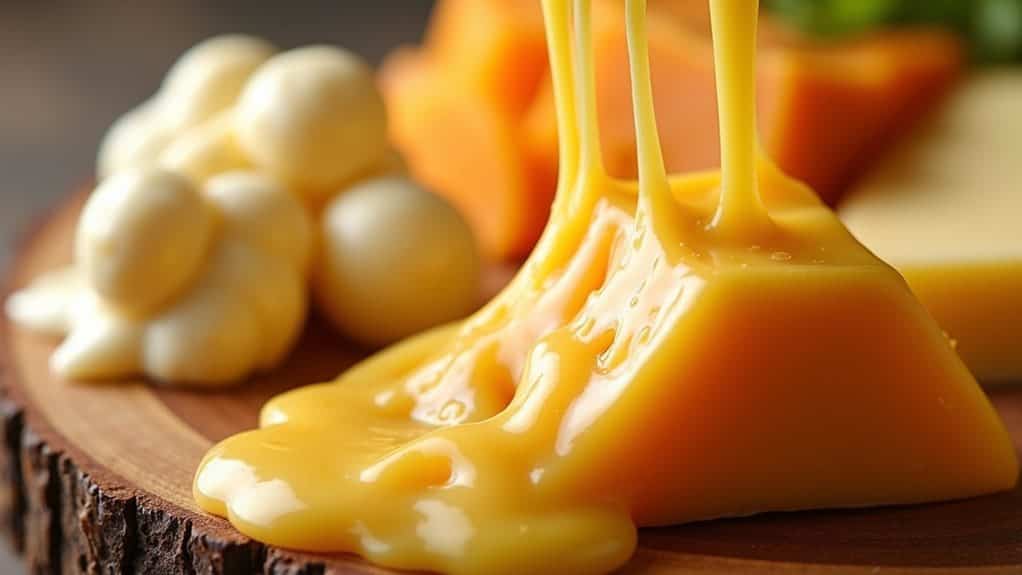
When it comes to melting cheese for sauces, some varieties perform better than others because of their fat and moisture content.
Melting cheeses like Cheddar, Swiss, and Gruyère have a high moisture content and melt evenly, creating a smooth melt ideal for cheese sauce.
Soft cheeses such as cream cheese melt easily, offering a creamy cheese texture for sauces.
For best results, store sauce-ready shredded cheese in the freezer using a vacuum sealer with double heat seal technology to help maintain freshness and prevent freezer burn.
What Makes a Cheese Perfect for Melting?
A cheese’s ability to melt well depends mainly on its moisture and fat content, which influence how smoothly it becomes when heated. Cheeses with higher moisture and fat levels, like Fontina or Havarti, tend to melt into a creamy, elastic consistency.
Harder cheeses with less moisture, like Parmesan, only soften. Additionally, the protein structure and texture of a cheese determine how evenly it melts and whether it stays smooth or becomes greasy. Just like oxidation can degrade oils when exposed to heat, light, and air, prolonged heat can also affect a sauce’s texture if it’s held too long.
Moisture and Fat Content
Cheeses that melt well share certain characteristics, primarily their moisture and fat content. High moisture cheeses like mozzarella and fontina melt smoothly and evenly, producing a gooey texture.
Meanwhile, high fat cheeses such as cheddar and gouda enhance meltability, creating a creamy sauce. These factors substantially influence cheese softening and overall cheese melt quality.
Protein Structure and Texture
The protein structure of a cheese plays an essential role in how well it melts, especially during heating. A softer protein network, influenced by moisture content and casein, allows for better meltability.
Higher fat content creates a creamy texture, while protein denaturation in aged cheeses makes melting tougher.
Emulsifying agents stabilize protein and fat, ensuring smooth, uniform melts.
How to Prepare and Choose Cheese for Melting?
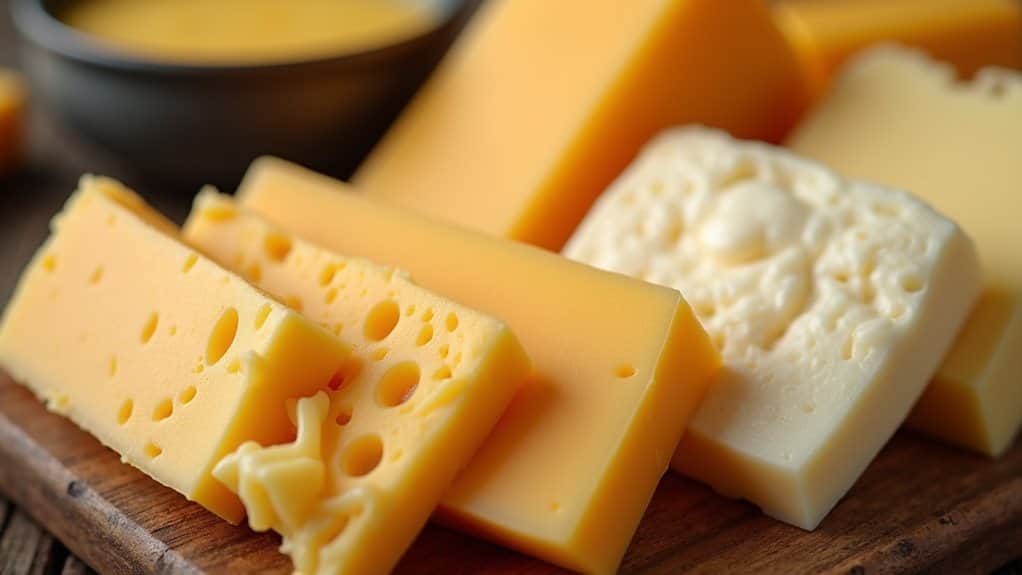
Choosing the right cheese and preparing it properly can make a big difference when making melting sauces.
Use shredded cheese for even melting, and bring it to room temperature to reduce melting time.
Opt for high-moisture, high-fat cheeses like Cheddar or Gruyère, and avoid pre-shredded varieties with anti-caking agents, which can hinder melting smoothness.
For extra anti-inflammatory benefits, consider pairing your sauce with vegetables rich in anthocyanins like eggplant.
How to Melt Cheese Perfectly in Sauces?
To melt cheese perfectly in sauces, it’s essential to use gentle heat and proper techniques that prevent the cheese from becoming greasy or grainy.
Start by coming to room temperature and grating the cheese finely.
Use low heat, like a double boiler, and stir continuously to create a smooth cheese sauce, preventing clumping and ensuring ideal cheese texture.
If you’re planning a meal alongside your sauce, remember that 1 pound of rice equals 16 ounces (about 454 grams), which can help with portion planning.
Common Mistakes When Melting Cheese (and How to Fix Them)?
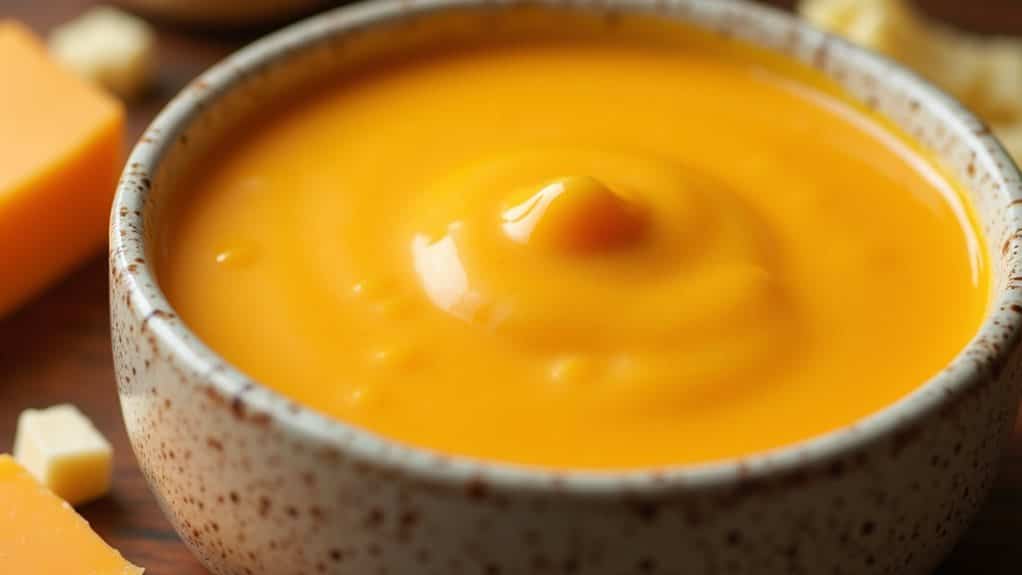
When melting cheese, overheating can cause fat to separate and create lumps, so it’s best to melt it slowly over low heat.
Using pre-shredded cheese can hinder smooth melting because of added anti-caking agents, making freshly grated cheese a better choice.
Additionally, skipping proper preparation, like not bringing cheese to room temperature or not removing rinds, can lead to uneven textures and burning.
Overheating Cheese Causes Lumps
Overheating cheese is one of the most common mistakes when melting it for sauces, and it often results in lumps and a grainy texture that’s hard to fix.
To melt smoothly, use low heat and stir constantly.
Removing the cheese from direct heat once it’s just melted, along with stabilizing agents, helps prevent lumps by protecting the protein structure.
Using Pre-Shredded Cheese
Have you ever noticed how pre-shredded cheese doesn’t melt as smoothly as block cheese? Its melting quality is affected by anti-caking agents and added potato starch, which can cause clumping or prevent smooth melting.
For a creamier sauce, use freshly grated cheese and melt it slowly at low temperatures, adding milk or cream to fix melting issues.
Skipping Proper Preparation
Skipping proper preparation is a common mistake that can sabotage your cheese melting efforts. Without cheese preparation like shredding or bringing it to room temperature, you risk uneven melting and clumping.
Overheat the cheese too quickly or at high temperatures, causing fat separation and lumpy textures. Use gradual heating and proper technique to guarantee smooth, consistent melting.
Tips for Achieving Smooth and Creamy Cheese Sauces?
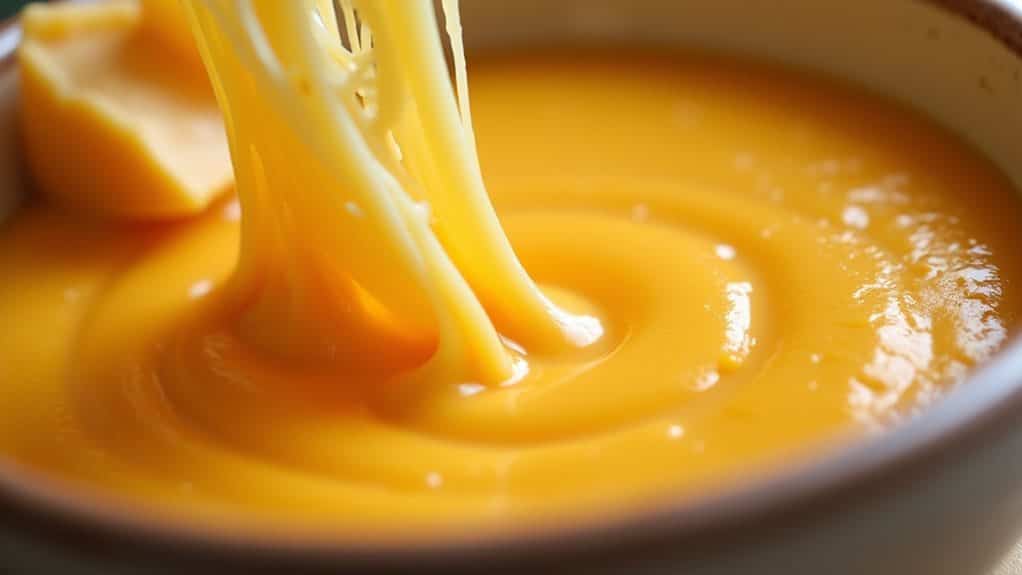
To achieve a smooth and creamy cheese sauce, you need to pay attention to how you melt the cheese. Use low to medium heat and melt slowly, stirring constantly to prevent lumps and fat separation.
Pre-thicken with a roux or béchamel for even melting.
Opt for freshly grated cheese to avoid moisture content issues that cause stringiness.
Just as avoid heat helps prevent spoilage in goji berries, keeping your sauce at low to medium heat helps prevent the cheese from separating.
Best Cheeses for Specific Dishes and Uses?
Choosing the right cheese for specific dishes can make a significant difference in flavor and texture.
For cheese for sauces and fondue, cheeses like Gruyère and Fontina melt well, offering smooth melts and rich flavors.
Mozzarella is ideal for pasta and grilled cheese because of its excellent meltability and stretchy cheese texture.
Proper cheese temperature guarantees ideal meltability.
Troubleshooting Cheese Melting Problems?
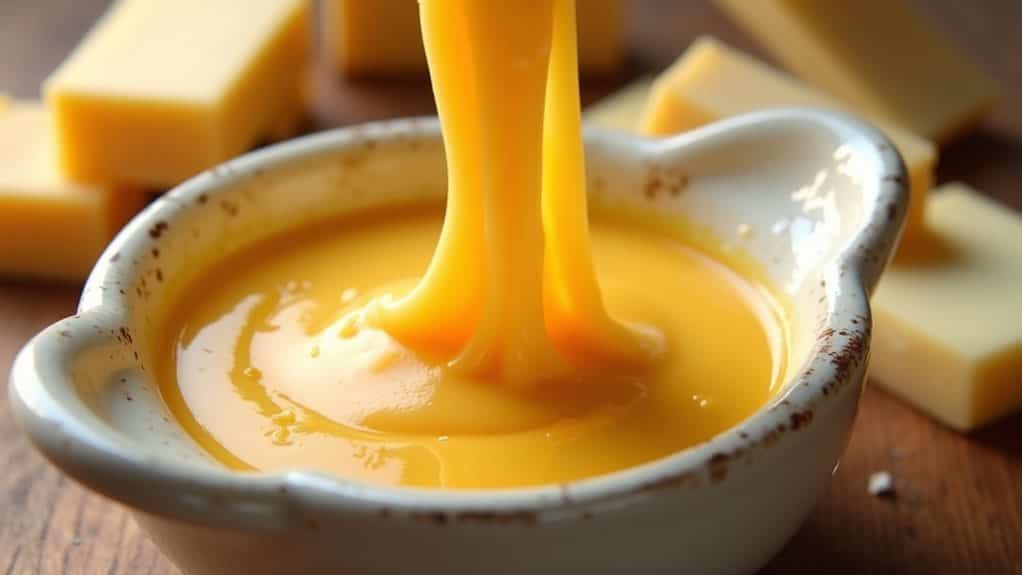
When cheese doesn’t melt properly, it can ruin your dish, but understanding common issues helps troubleshoot.
Low moisture cheeses like Parmesan may resist melting, while overheating cheese causes fat separation.
Using freshly grated cheese prevents anti-caking agents from blocking smooth melting.
Removing rinds, controlling temperature, and adding a roux improve cheese texture and achieve better, more consistent melting.
Wrapping Up
Choosing the right cheese for melting depends on the dish and your desired texture. Hard cheeses like Parmesan melt slowly and add flavor, while softer cheeses like mozzarella create gooey textures. To guarantee a smooth sauce, use low heat, add an acid like lemon juice, and avoid overcooking. With these tips, you’ll consistently achieve creamy, tasty sauces. Remember, experimenting with different cheeses helps you find the perfect melt for every recipe.


