
To keep meatballs from falling apart, use enough binding ingredients like eggs and breadcrumbs, which create a strong protein network. Handle the mixture gently, shaping the balls with moist or lightly floured hands, and chill them for 10-20 minutes before cooking to firm up the structure. Cook using methods that create a crust, like baking or browning, to help maintain their shape. For more tips on perfecting your meatballs, consider the additional techniques that follow.
Quick Guide
- Use sufficient binding agents like eggs and breadcrumbs to hold the mixture together.
- Handle the mixture gently and avoid overmixing to preserve the protein structure.
- Chill shaped meatballs for 10-20 minutes before cooking to firm up and set the shape.
- Shape meatballs with firm, gentle pressure and avoid overcrowding during cooking.
- Brown meatballs thoroughly and consider braising in sauce to maintain cohesion during cooking.
Understand Why Meatballs Fall Apart and How Binding Works
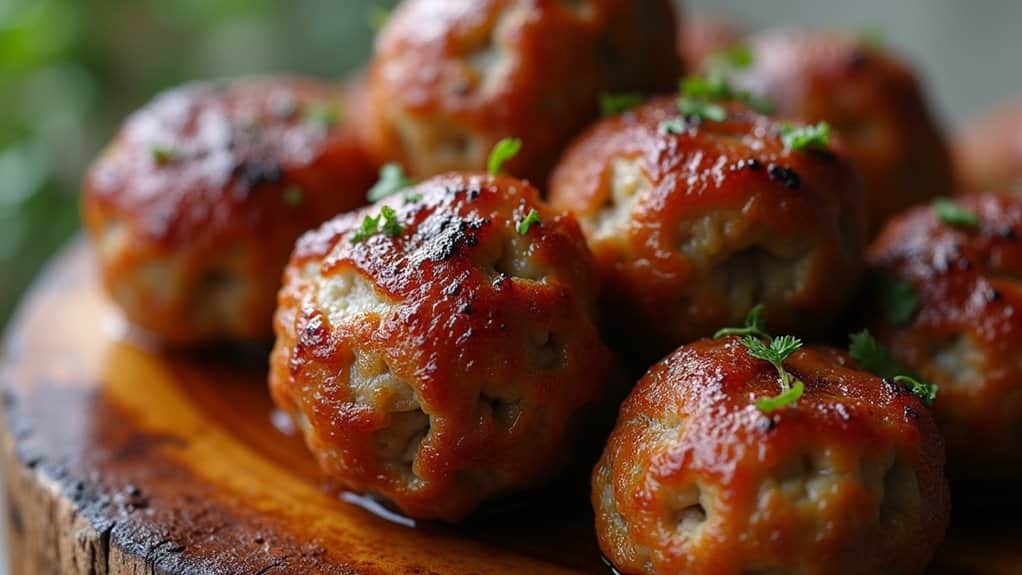
Meatballs often fall apart because they lack enough ingredients to hold their shape during cooking. Binding is crucial, and eggs are a key ingredient—usually one per 500 grams of meat—to create a strong protein network.
Gentle mixing, rather than overmixing, preserves this structure, preventing crumbling. Proper binding guarantees your meatballs stay intact while cooking. Eggplants are rich in antioxidants like anthocyanins, which provide anti-inflammatory benefits for arthritis.
Choose the Right Ingredients to Keep Meatballs Together
Choosing the right ingredients is essential for ensuring your meatballs stay intact during cooking. Use at least one egg per pound of meat to act as a binder.
Add 3-4 tablespoons of breadcrumbs or soaked bread to absorb moisture and hold the mixture together.
Keep ingredients finely diced or use onion powder to prevent large pieces from disrupting the structure.
For longer storage without freezer burn, package cooked meatballs using a vacuum sealer with double heat seal technology to help maintain vacuum integrity during freezer storage.
Handle and Shape Meatballs Carefully for Better Structure
Handling and shaping meatballs carefully is key to preventing them from falling apart. Keep the mixture cold and use gentle, firm pressure when forming each ball to guarantee they hold their shape.
Resting the shaped meatballs in the refrigerator before cooking also helps improve their structure and reduces crumbling.
Use Gentle Handling Techniques
To prevent meatballs from falling apart, handle the mixture gently when shaping. Use light pressure and moist or lightly floured hands to maintain control and reduce sticking.
Avoid overworking the mixture, as this can weaken the protein bonds. Gentle handling helps shape the meatballs properly, keeping them cohesive and preventing meatballs from breaking apart during cooking.
Keep Mixture Cold
Keeping the meat mixture cold is essential for creating meatballs that hold their shape during cooking. To achieve this, keep the mixture refrigerated until just before shaping to prevent the fat from softening.
Handle the mixture gently, and avoid overworking it to keep it firm.
Chill formed meatballs in the refrigerator for 10-20 minutes before cooking.
Properly Shape and Firm
Gently shaping your meatballs is essential for ensuring they hold their form during cooking. Firmly press the mixture together when forming each meatball, making sure they’re tightly packed.
Chill the shaped meatballs in the refrigerator for 10-20 minutes to help them set.
Avoid overcrowding the pan during cooking to prevent them from losing their shape.
Use the Best Cooking Methods to Prevent Falling Apart
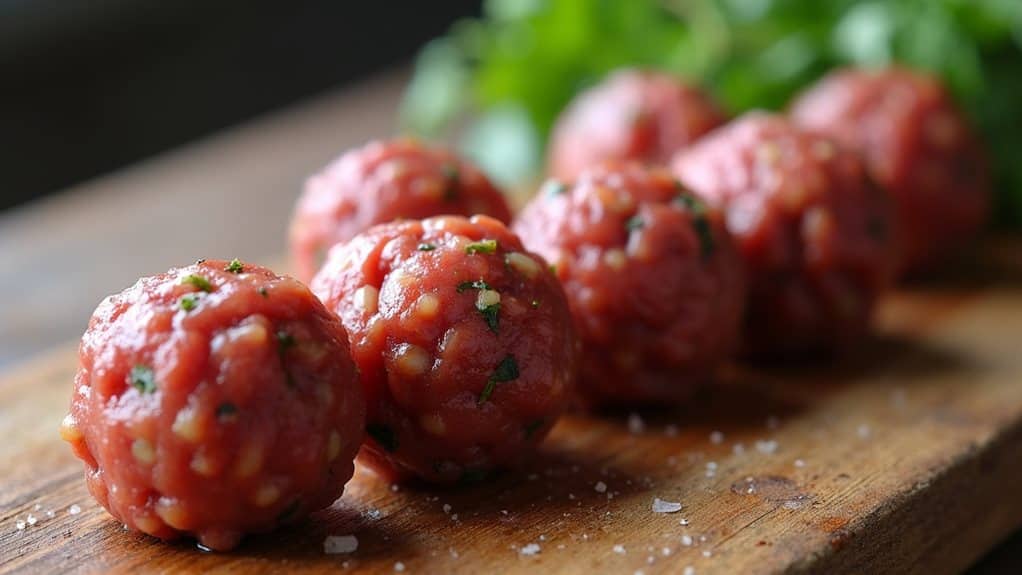
Choosing the right cooking method can make all the difference in keeping meatballs intact. Browning meatballs first creates a crust that helps hold their shape during cooking.
Baking meatballs at 350°F for 15-20 minutes guarantees even cooking with less risk of falling apart.
Braising meatballs in sauce after browning provides gentle heat, maintaining cohesion and preventing disintegration. If you’re reheating leftover meatballs, use an air fryer approach that preserves the crisp so the exterior stays firm and helps prevent crumbling.
Chill and Rest Meatballs Before Cooking for Better Shape
Chilling meatballs for 10 to 20 minutes helps the fats firm up, making them less likely to fall apart during cooking.
Resting the shaped meatballs in the refrigerator relaxes the proteins and firms the mixture, which helps maintain their shape.
When you handle cold meatballs, they’re easier to work with and less sticky, reducing the chance of breaking apart in the pan.
Just as butter is optional in some packaged recipes, using butter substitutes can help you adjust richness without changing the core cooking process.
Chilling Enhances Firmness
Chilling meatballs before cooking substantially improves their firmness and shape, making them easier to handle and less likely to fall apart during cooking.
Resting in the refrigerator allows the binders like eggs and breadcrumbs to set, which increases firmness. This chilling process firms up the mixture, helping the meatballs stay intact and cook evenly without disintegration.
Resting Improves Shape
Resting meatballs in the refrigerator for 10 to 20 minutes before cooking allows the fats and proteins to solidify, which helps them hold shape better.
Resting also firms up the mixture, making it easier to handle and reducing the risk of falling apart during cooking.
This step helps ingredients fully bind, resulting in meatballs that stay cohesive and resilient.
Troubleshoot Common Meatball Problems and Fix Them
If your meatballs keep falling apart, the problem often lies in how they’re prepared and cooked. Insufficient binding agents like eggs or breadcrumbs weaken cohesion, causing meatballs to fall apart.
Overmixing the mixture or not chilling before cooking can also cause crumbling.
To prevent sticking to the pan, maintain moderate heat, cook in batches, and use oil or non-stick liners. For best results, use oil that’s been stored in a cool, dark place to prevent oxidation from affecting flavor and quality.
Wrapping Up
By understanding the factors that cause meatballs to fall apart and applying proper techniques, you can guarantee they stay intact during cooking. Use the right ingredients, handle the mixture gently, and choose suitable cooking methods. Chilling the meatballs before cooking helps maintain their shape, while troubleshooting common issues can save your dish from falling apart. With these tips, you’ll consistently create firm, well-structured meatballs that hold together beautifully and taste great.


