
For a creamy texture in soup without heavy cream, you can use alternatives like coconut milk, Greek yogurt, or blended cooked potatoes. These options add richness and thickness while keeping the flavor balanced. Plant-based milks combined with melted butter or cornstarch also work well. Using an immersion blender to purée vegetables like cauliflower or carrots further enhances creaminess. Keep exploring for more tips to perfect your soup’s texture and flavor with these versatile substitutes.
Quick Guide
- Coconut milk or coconut cream offer rich, dairy-free alternatives that add creaminess and flavor to soups.
- Greek yogurt provides tanginess and protein, creating a thick texture without heavy cream.
- Silken tofu blended with plant-based milk delivers a smooth, neutral, dairy-free substitute.
- Combining milk with melted butter or cornstarch can mimic the richness and thickness of heavy cream.
- Pureed vegetables like potatoes, cauliflower, or carrots naturally thicken soups for a creamy consistency.
What’s the Best Way to Make Soup Creamy Without Heavy Cream?

If you want to make your soup creamy without using heavy cream, there are several effective methods you can try.
Using a substitute like milk combined with melted butter or cornstarch can mimic rich, thickened cream.
An immersion blender helps purée vegetables, making the soup smoother and creamier.
Coconut milk or Greek yogurt also make excellent, flavorful dairy-free thickening options.
For make-ahead meals, you can freeze creamy soups and follow the best way to thaw them to keep the texture from turning watery.
Top Dairy-Free and Non-Dairy Heavy Cream Substitutes for Soup
Dairy-free and non-dairy options for heavy cream have become popular choices for making soups creamy without animal products. Coconut cream and coconut milk provide rich, plant-based options.
While silken tofu blended with plant-based milk creates a protein-rich, dairy-free thickening agent. Cashew cream and vegan whipped toppings also serve as versatile non-dairy substitutes for achieving creamy soup textures. Like guava, whose aroma comes from 173 different components, ingredient complexity can shape how we experience flavor and scent in a finished dish.
How Can You Achieve the Perfect Texture Without Heavy Cream?
Achieving a creamy, smooth texture in soup without heavy cream is entirely possible with a few simple techniques.
Using an immersion blender to blend ingredients directly in the pot creates a velvety texture.
Incorporate pureed vegetables like cauliflower or carrots, or add coconut milk for richness.
Thickeners like cooked potatoes or plant-based alternatives, such as natural thickeners, also help achieve the desired consistency.
When adding cocoa or chocolate for depth, keep tools completely dry to prevent chocolate seizing from moisture disrupting the mixture.
How Do Different Substitutes Change the Flavor of Your Soup?

Different substitutes for heavy cream can considerably impact your soup’s flavor, texture, and overall taste.
For example, coconut cream adds sweetness and richness but may introduce a coconut flavor.
While Greek yogurt provides tanginess and brightness.
Understanding these flavor changes can help you choose the best option to match your soup’s desired profile.
If you add roasted eggplant for creaminess, its anthocyanin antioxidants can also contribute anti-inflammatory benefits.
Flavor Impact of Coconut
Coconut-based substitutes, like coconut cream or milk, can markedly change the flavor of your soup by adding a sweet, tropical note that isn’t found in traditional dairy options.
This flavor impact introduces a coconut flavor and aroma, especially in lighter, broth-based soups.
While it adds a creamy texture, balancing with herbs is necessary to prevent the coconut flavor from overpowering savory soups.
Protein and Texture Changes
When you swap out heavy cream in your soup, the protein and texture of your substitute can considerably affect the final dish.
Greek yogurt and cottage cheese increase protein and add a tangy flavor, altering the taste.
Thickeners like flour or cornstarch improve creaminess and velvety texture without changing flavor.
Silken tofu offers a neutral, smooth base.
Practical Tips for Incorporating Heavy Cream Alternatives in Cooking
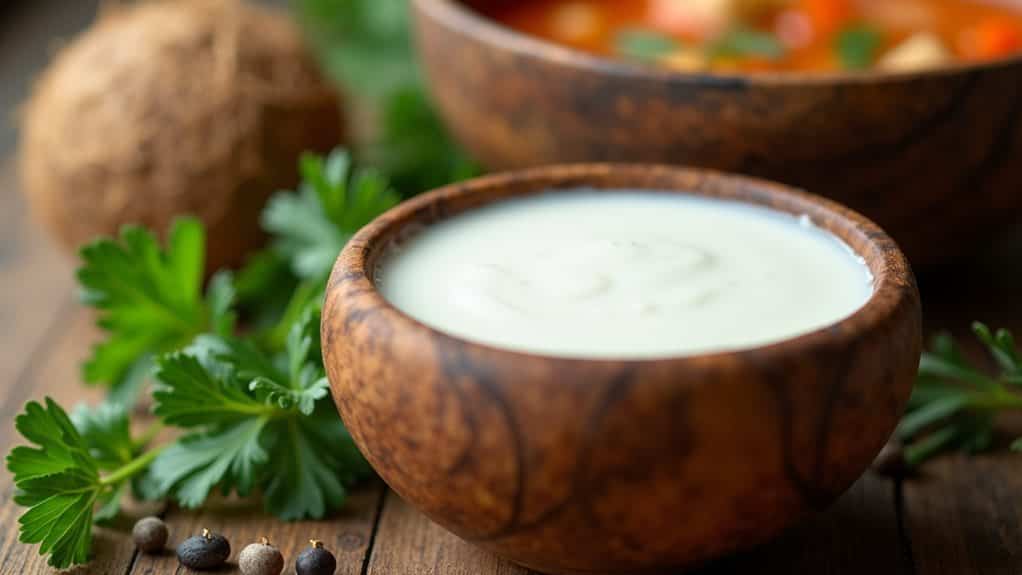
To successfully incorporate heavy cream alternatives into your soup, it’s important to prepare your chosen substitute properly before adding it to the dish.
Warm or whisk your heavy cream substitute, like milk and butter or coconut cream, to guarantee smoothness.
Adjust thickening agents as needed, add flavorings carefully, and blend with an immersion blender for the desired consistency.
For a convenient flavor boost, keep frozen minced garlic on hand and stir it straight into soups or sauces without thawing.
Comparing Nutritional Benefits of Common Heavy Cream Substitutes
Understanding the nutritional differences among heavy cream substitutes can help you make healthier choices for your soups.
Greek yogurt offers high protein and low fat, making it a nutritious option.
Coconut cream provides dairy-free, healthy fats with about 20-22 grams per 1/4 cup.
Evaporated milk has a similar protein and fat content.
Plant-based alternatives like soy milk with olive oil deliver fewer calories and dairy-free options.
Wrapping Up
Choosing the right substitute for heavy cream in your soup depends on your dietary needs and desired texture. Options like milk, coconut milk, or blended vegetables can provide creaminess without sacrificing flavor or nutrition. Experimenting with these alternatives allows you to enjoy rich, satisfying soups while keeping ingredients healthier or suitable for specific diets. With a bit of practice, you’ll find the perfect substitute that balances taste, texture, and nutritional benefits for your culinary creations.


