
Guava has a unique smell that combines sweet, musky, and tropical scents. When the fruit is unripe, it gives off a light, grassy aroma. As it ripens, the smell becomes stronger and more floral.
You can detect a sweet fragrance with notes of pear and strawberry, often accompanied by a hint of musk. The scent can change based on the type of guava and where it is grown, with some varieties smelling stronger than others. This special aroma makes guava popular in perfumes and food.
The smell is enjoyable and connected to various cultural meanings and health benefits.
Quick Guide
- When ripe, guava has a strong, sweet smell with floral hints. When unripe, the scent is fresh and green.
- The fragrance blends sweetness with a hint of musk, creating a lively and often nostalgic aroma.
- Guavas’ smell can vary depending on where they are grown. Tropical guavas usually have stronger and sweeter scents than those from subtropical areas.
- As the fruit ripens, its scent changes a lot. It goes from sharper notes to sweeter ones.
- Some people find guava’s smell exotic and pleasant, while others think it can be overwhelming or a bit “stinky,” especially when the fruit is overripe.
The Essence of Guava

Every guava has a special and strong smell you can recognize immediately. This tropical fruit has a complex scent, including floral, green, spicy, and woodsy hints. When you first smell a fresh guava, its strong aroma stands out.
As the fruit ripens, its scent changes from fresh and green to sweet, and some even say it can smell a bit “stinky.” Guava is rich in vitamin C, and its smell is as unique as its taste.
Guava’s Chemical Composition
The strong smell of guava comes from its complex chemical structure, which is as intricate as its flesh. This fruit has 173 different components that contribute to its powerful scent. While this may seem like a lot for Fall Flavours, it makes guava special.
As guavas ripen, their aroma changes from aldehydes to esters. This means the smell shifts from fresh, green scents to a stronger odor that some say resembles stinky feet.
Cultural Perceptions of Guava Scent
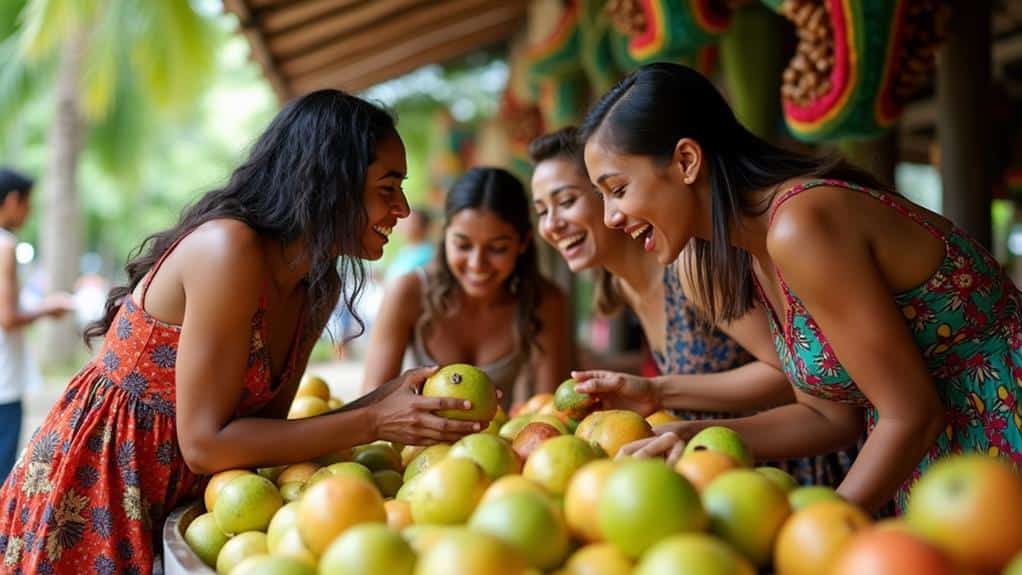
Guava has a scent that people around the world view in different ways. Its smell often brings back happy memories in tropical areas and is tied to important traditions.
However, in other places, guava’s scent might seem unusual or unpleasant, with some even saying it smells like vomit. How people feel about the scent can also change with age. Older folks may have a stronger emotional connection due to their long cultural experiences.
Regional Scent Associations
Guava has a unique smell that means different things to different cultures. Its scent is often linked to freshness and local celebrations in tropical areas. Many people have strong memories tied to the smell of guava from their childhood.
In Israel, the scent is especially important during Yom Kippur, when families cook special recipes and the aroma fills their homes. While some people think guava smells strong, others enjoy its mix of floral and fruity scents.
Symbolic Meanings Worldwide
Guava has a unique smell that means different things in different cultures worldwide. In tropical areas, it often represents abundance and energy. The meanings of guava can vary widely; for example, in Israel, it might bring back memories of family traditions, while in Latin America, it can hold literary significance.
The smell of guava can create feelings of nostalgia, stirring up both happy and sad emotions, much like the scent of pineapple. Additionally, the scent of guava is often used in rituals during community events and cultural celebrations, where guava salsa is a highlight.
Generational Fragrance Perceptions
How do different generations feel about the smell of guava? Older people often have fond memories tied to its smell like guava, linking it to traditional foods and their childhood. In contrast, younger people may find the smell exotic or strange. These differences in how generations perceive guava show cultural gaps.
In some places, guava’s sweet and strong smell is loved, while in others, it can be seen as off-putting. For some, the aroma brings back strong memories; for others, it sparks their curiosity based on where they come from.
Ripe Vs. Unripe Guava Aromas
Guava aromas depend heavily on the fruit’s ripeness. Ripe guavas smell strong and sweet, with hints of flowers and other fruits. In contrast, unripe guavas have a more subtle, grassy scent, lacking the sweetness of the ripe flesh.
As guavas ripen, their smell changes from a sharper scent filled with aldehydes to a sweeter smell dominated by esters. These changes in aroma show how the fruit’s chemical makeup shifts as it ripens.
Guava in Perfumery

Guava has a special smell that goes beyond just being a fruit. Its sweet and strong scent adds richness to perfumes, especially in fruity-floral and dessert-like blends.
While it isn’t as popular as other fruit scents, guava has been used in well-known perfumes like “Calyx” by Prescriptives and “Adam Levine for Men.” These perfumes get a fun tropical touch from the guava.
Guava’s Fragrance Profile
Guava has a special smell that is popular in perfumes. Its scent delightfully mixes sweetness and muskiness. This fragrance is fresh and lively, bringing back memories when you smell it.
Guava helps keep things from being too sweet when used with other scents, balancing the flavor profile like pineapple does. Its bright aroma can remind you of orange leaves, making it a useful ingredient in fruity-floral and dessert-like fragrances.
Popular Guava-Inspired Perfumes
Perfume lovers have embraced the unique smell of guava, and that’s why it’s found in many popular fragrances. You can smell guava in scents like Kahala Guava Nectar and Bond No. 9’s Coney Island.
Guava is a trend in Adam Levine for Men and Calyx by Prescriptives. If you’re interested in trying guava essential oils, Stetson’s All American is a great choice to experience the charm of this tropical fruit.
Regional Variations in Guava Fragrance
Guava fragrances vary greatly depending on where the fruit is grown. Different types of guava produce different smells. Tropical guavas usually have strong, sweet scents, while subtropical guavas have softer aromas.
The scent of guava can change depending on how ripe the fruit is and the climate in which it grows. In some cultures, the smell of guava plays an important role in celebrations.
For example, in Israel, people celebrate the rich fragrance of the Ben Dov guava. Pink guavas, however, tend to have a milder aroma.
Culinary Impact of Guava Scent
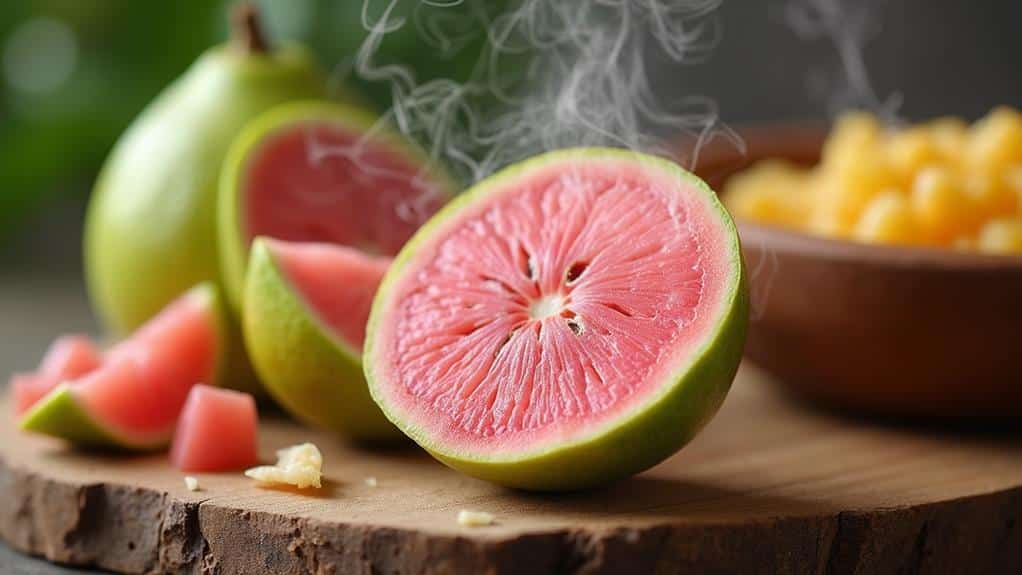
Guava has a strong and unique smell that makes it important in cooking. Its bittersweet aroma can improve the taste of many dishes and drinks. People often pair guava with other tropical flavors to enhance their meals.
The scent of guava can also make desserts more interesting. It is a star ingredient in fruit salads and salsas.
New ideas for using guava’s aroma keep coming up, helping to blend flavors and highlight its cultural importance in old and new recipes.
Guava’s Aromatic Relatives
Guava has a unique smell but is not the only plant with an interesting aroma. Guava belongs to the myrtle family, which shares some scents with relatives like eucalyptus and clove.
If you compare guava to other tropical fruits, you’ll find that mangoes and papayas have similar scents. They all have sweet and musky notes that make them smell delightful.
Myrtle Family Connections
Ever wonder why guava has a familiar smell? It is part of the Myrtle family, which includes fragrant plants like clove and eucalyptus. This family has various scents that influence how guava grows and changes its aroma over time.
The sweet and strong smells you notice in guava come from its plant relatives. As methods for extracting the scent of guava improve, its unique fragrance will be appreciated more in many different uses, potentially intoxicating those who encounter it.
Tropical Fruit Comparisons
Guava has a unique smell that reminds people of other tropical fruits. Its scent is sweet and fruity, like passionfruit and mango, with earthy hints similar to overripe bananas.
Unlike the light scent of lychee, guava has a stronger aroma, which some compare to jackfruit or durian. People have different opinions about guava’s smell; while some enjoy it, others find it too strong compared to the more familiar scents of other tropical fruits.
Seasonal Changes in Guava Odor
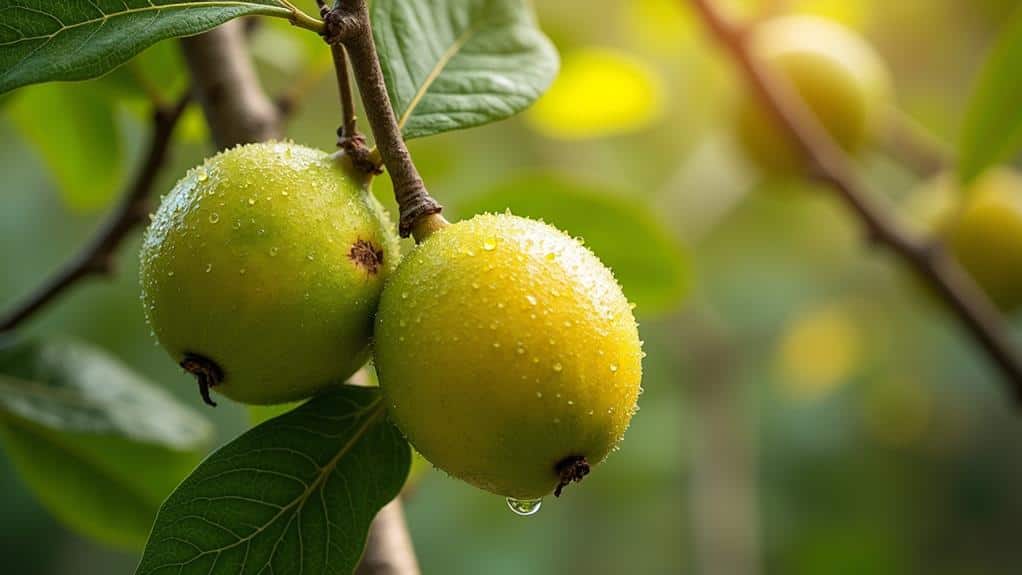
The smell of guavas changes a lot with the seasons. You can see this change as the fruit goes from unripe to ripe. At first, it has a fresh, green smell, but as it ripens, it develops a more complex sweetness, reminiscent of guava juice.
The strongest smell happens during the warmer months when ripe guavas give off a sweet, strong fragrance.
Different seasons also affect how guavas smell. Temperature and humidity play a big role in this. For example, in autumn, if a guava is overripe, it can give off a scent that some people say reminds them of stinky feet.
Health Benefits and Aroma
Guava has a sweet smell and offers many health benefits. Its aroma combines floral, green, and spicy notes, which can be enjoyable. This pleasant scent indicates that guava is rich in vitamin C, helping to boost your immune system, just like the benefits of guava jam.
But guava’s nutrition doesn’t stop there. It also contains calcium, making it a delicious way to support overall health.
Guava Scent in Popular Culture
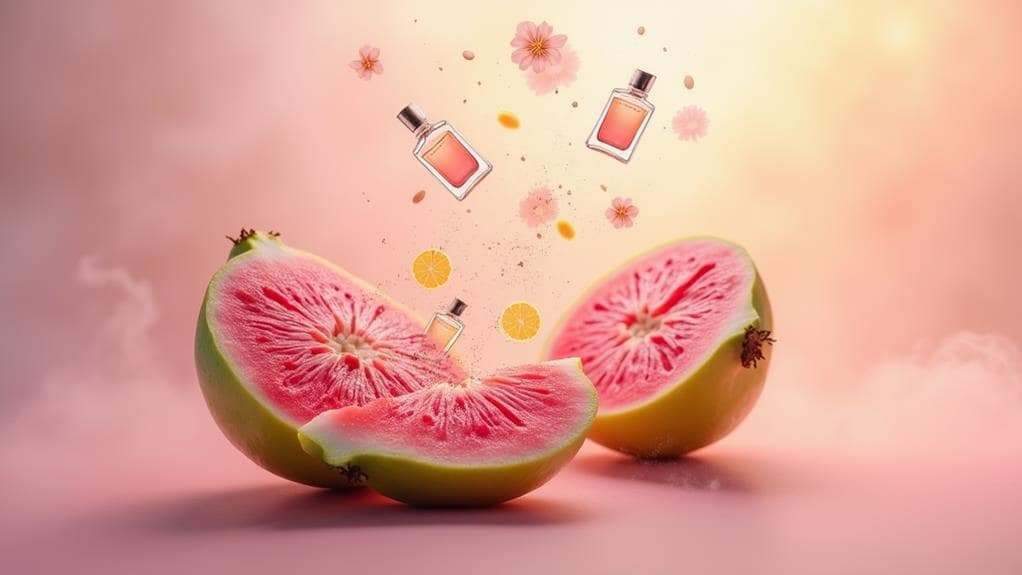
Guava has a unique smell that people often have strong feelings about, but it has greatly impacted popular culture. Stories about guava can be found in books, like Gabriel Garcia Marquez’s “Fragrance of Guava.”
Many traditions celebrate the harvesting of guava. Perfume makers also use its special scent in their products. Beyond its smell, guava stands for tropical beauty and has important meaning in many cultures.
Enhancing Guava’s Natural Fragrance
Guava has a unique smell that many people love, making it a favorite in guava salsa. There are some easy ways to enhance its fragrance. One way is to mix guava with lime or chili in a salsa. You can also add fresh herbs like cilantro or mint to enhance the scent.
To boost the guava aroma when cooking, try adding spices like cinnamon or cardamom in your preserves. You can serve guava with creamy foods or blend it into cocktails and smoothies to balance the flavors. These tips will help you enjoy guava’s fragrance even more!
Wrapping Up
You’ve explored the fascinating world of guava’s smell. You’ve learned about its chemical makeup and its importance in different cultures. The aroma of guava can change based on its ripeness, and it affects many areas of life.
Whether you’re enjoying a ripe guava or using its scent in a perfume, you can see how complex its fragrance is.
Remember, the smell of guava is more than just nice; it can help you understand how good the fruit is, how ripe it is, and even its health benefits.


