
Rinse the pan with hot water right after cooking to loosen food, then wipe the interior with a soft sponge or wet paper towel in gentle circles; a tiny drop of mild soap is okay if needed, but rinse it off promptly. Dry every surface thoroughly—paper‑towel it and finish on a low burner for a minute to evaporate moisture. While still warm, spread a thin coat of high‑smoke‑point oil (like grapeseed or avocado) and wipe until only a barely‑visible film remains. This protects seasoning and prevents rust, and the next steps will show you how to handle tougher grime and long‑term storage.
Quick Guide
- Rinse the pan with hot water immediately after cooking, then wipe the interior with a damp paper towel or soft sponge in gentle circles.
- Dry the entire surface, including handles and rims, with a paper towel and finish it on a low stovetop burner for a few minutes to evaporate residual moisture.
- While the pan is still warm and dry, apply a thin coat of high‑smoke‑point oil (e.g., grapeseed or avocado) and heat briefly until the oil stops smoking.
- For stubborn residue, use coarse kosher salt as an abrasive; for heavier baked‑on grime, employ steel wool or a chain‑mail scrubber, then re‑oil immediately after cleaning.
- Store the pan completely dry, sealed with a light oil film, and keep it away from humid environments to prevent rust formation.
Quick‑Start: Rinse, Wipe, and Dry Your Cast‑Iron Pan
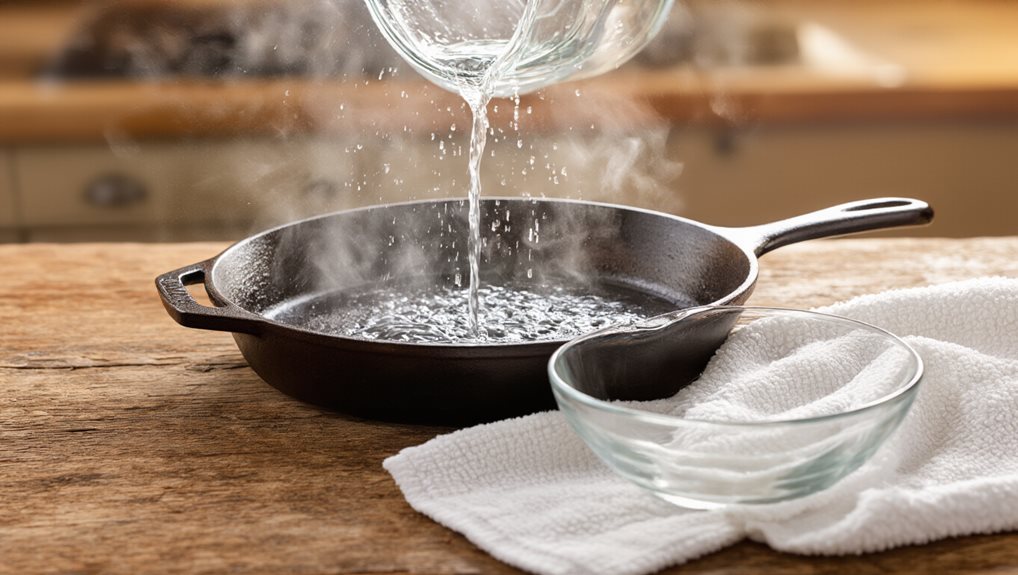
Ever wondered why a quick rinse right after cooking makes cast‑iron care so easy? You run hot water over the pan immediately, loosening food before it dries. Then you wipe the interior with a wet paper towel or soft sponge, using gentle circles to lift residue without harming the seasoning. For food safety, refrigerate cooled leftovers within two hours to prevent spoilage. A tiny drop of mild soap is safe if needed, keeping the surface clean and ready for the next use. After cleaning, apply a thin coat of oil to protect the skillet and maintain its seasoning.
Dry Quickly to Prevent Rust After Washing
After you rinse the pan, grab a paper towel and wipe every surface, including the handle and rims, to soak up any water.
Then set the pan on a low stovetop burner for a couple of minutes, letting the residual moisture evaporate without overheating. Keep the pan away from moisture levels that can cause rust to develop faster.
Finally, while it’s still warm, spread a thin layer of neutral oil to seal the surface and keep rust at bay.
Prolonged moisture exposure will cause rust, so ensure the pan is completely dry before oiling.
Heat onStovetop
When you finish scrubbing your cast‑iron grates, place them on a heated stovetop right away; the gentle heat drives off any lingering moisture, which is the main cause of rust. Use low‑to‑medium heat for a minute or two per side, allowing the burner to evaporate water quickly. This prevents oxidation, avoids long soaking, and read the surface ready for immediate oiling and seasoning.
Paper Towel Drying
How can you keep your cast‑iron from rusting right after you wash it? Immediately after rinsing with hot water, grab a clean paper towel and wipe the surface thoroughly. The towel absorbs residual moisture that water otherwise cause oxidation. Make sure no water droplets remain, even in crevices, before you store the pan. This quick drying preserves seasoning and prevents rust.
Immediate Oil Application
Ever wondered why a quick oil coat right after drying makes such a difference? You should oil the pan the instant it’s dry; water left in pores sparks rust and weakens seasoning. Use a clean cloth, a half‑teaspoon of coconut or flaxseed oil, and spread a thin sheen in circular motions, covering interior, exterior, and handle.
Heat low for one to two minutes until the oil stops smoking, sealing the surface and preventing moisture.
Oil the Pan Thinly: Best Oils and How to Wipe Off Excess
Which oil should you spread on a cast‑iron pan to keep it seasoned without creating a greasy mess? Use a high‑smoke‑point oil like grapeseed or avocado for the base, then finish with a solid fat such as tallow, lard, or coconut for a non‑stick sheen. After dab‑applying, wipe the surface with a paper towel until only a barely‑visible film remains, absorbing excess and ensuring a thin, even coat. For longer-term storage, keep your leftover aromatics sealed in airtight containers to prevent odor transfer.
Choose Salt Scrubbing or Steel Wool: When to Use Each Abrasive
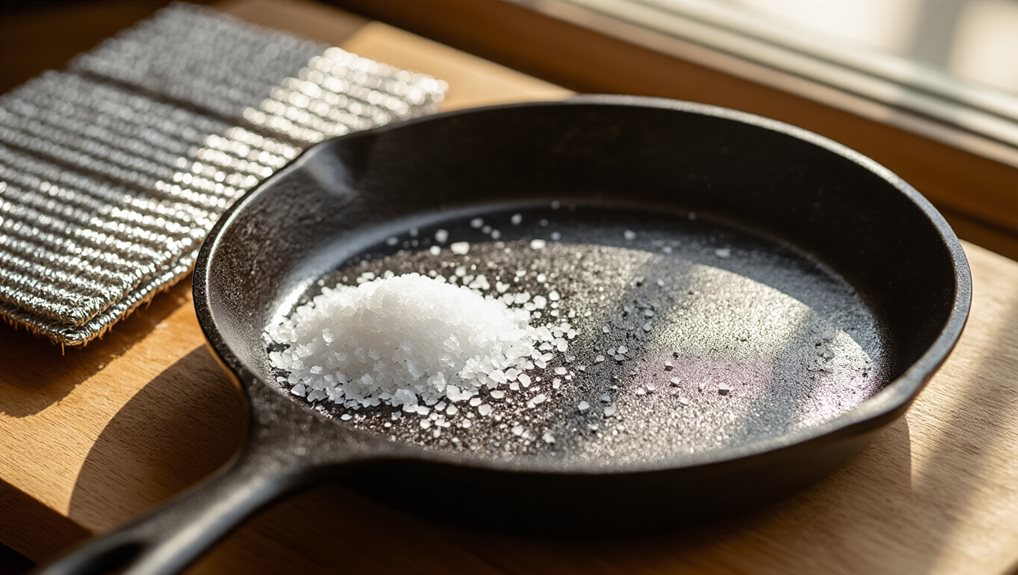
You decide between salt scrubbing and steel wool based on the type of food residue you’re facing, the pan’s seasoning condition, and any rust risk you’ve noticed.
If the stuck bits are light and you want to protect the seasoning, coarse kosher salt gives enough traction without scratching, while a chain‑mail scrubber works better for heavier, baked‑on grime after you’ve cleared the loose debris.
Assess any rust spots first—salt won’t aggravate rust, but steel wool can if the surface is already compromised, so choose the abrasive that matches the pan’s current state.
As a general food-safety habit after cooking, refrigerate perishable dips like guacamole within two hours of preparation to reduce spoilage risk.
To Choice
When deciding whether to reach for salt or steel wool, consider how much seasoning you want to preserve and how tough the residue is. Use coarse kosher salt for light to moderate stains; it lifts debris without scratching or stripping seasoning.
Reserve steel wool for severe rust or baked‑on food that salt can’t handle, but scrub gently and re‑season promptly afterward.
Food Residue Type
Ever wondered which abrasive to reach for when your cast‑iron skillet is covered in food residue? Use coarse kosher salt for light stains or when water’s scarce; sprinkle 2‑3 tablespoons, scrub with a folded towel, then rinse.
For heavy, baked‑on bits, grab steel wool (or a chainmail scrubber), add mild soap, and scour vigorously. Salt protects seasoning, while steel wool handles tough grime efficiently.
Rust Risk Assessment
Coarse kosher salt works great for light food residue, but once you spot rust, you need to decide whether to keep using salt or switch to steel wool. Use salt for superficial rust and routine cleaning; it’s gentle, quick‑drying, and protects seasoning.
Choose fine‑grade steel wool for deep rust or bare metal, but re‑season immediately to prevent further oxidation.
Assess rust depth, pan condition, and environment before deciding.
Use Soap Sparingly When Cleaning Cast‑Iron
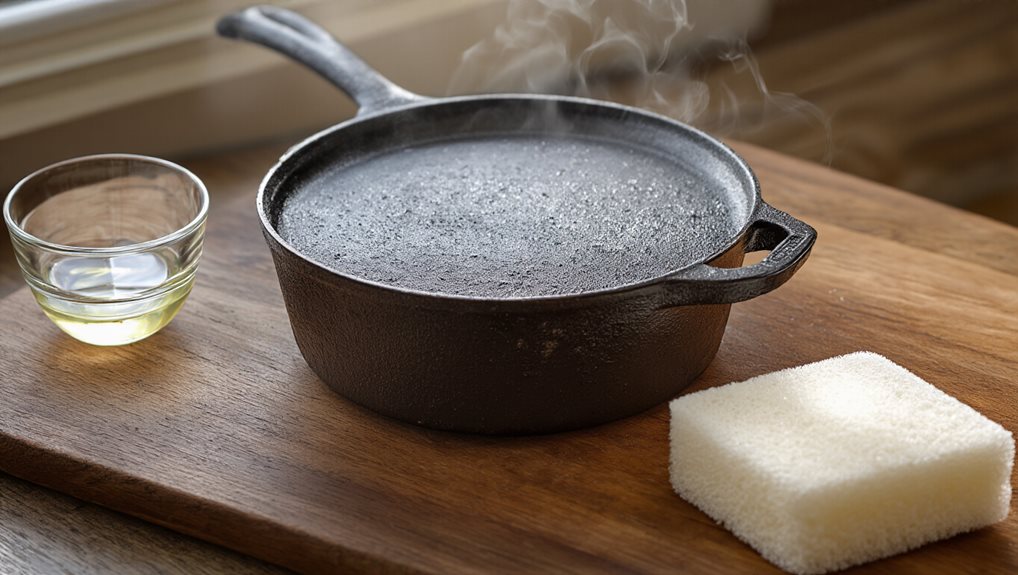
Do you really need to reach for the soap every time you clean a cast‑iron pan? Modern dish soaps lack lye, so a few drops on a damp sponge won’t strip the polymerized oil layer. Scrub gently, rinse immediately with hot water, and pat dry.
After drying, apply a thin layer of oil and keep it in a cool, dark place to help preserve freshness and prevent rancid odors.
Limit soap to once per use; light cleaning after cooking usually needs only hot water and a dry towel.
Remove Rust With a Wire Brush and Re‑Season the Pan
If you’ve just finished a quick rinse and a light soap swipe, you may notice a few specks of rust that didn’t disappear. Grab a stainless‑steel wire brush and scrub the rusted spots, using gentle pressure to avoid deep gouges.
Follow with a 50/50 vinegar‑water soak for ten‑minute intervals, then rinse with hot water, dry instantly with a lint‑free cloth, and apply a thin oil layer before heating the pan to re‑season.
Season and Store for Long‑Term Cast‑Iron Maintenance
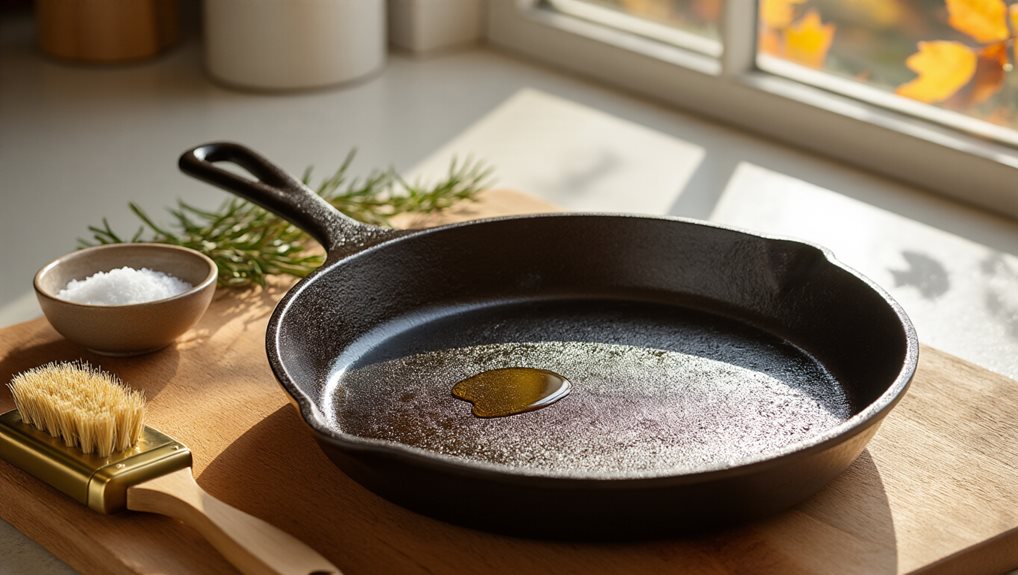
Why does a well‑seasoned cast‑iron pan stay non‑stick and rust‑free for years? You heat the pan, dry it completely, then apply a thin oil coat—about half a teaspoon of flaxseed or similar high‑smoke‑point oil—wiping excess off. Bake upside‑down at 450‑500°F for an hour, cool in the oven, and repeat 4‑6 times. After each use, lightly oil and store in a dry place.
Troubleshooting: Common Issues and How to Fix Them
A well‑seasoned pan can still develop problems, so it’s worth knowing how to troubleshoot common issues before they ruin your cookware. If rust appears, scrub with salt and a potato, rinse, dry, heat, then oil thinly; for stubborn rust soak in vinegar‑water (1:8) 30 minutes before scrubbing.
Sticky residue? Bake upside‑down at 450‑500 °F an hour, then wash, dry, and oil lightly.
Lingering odors vanish after a salty overnight sit, then a 400 °F bake 15 minutes.
Burnt food on enameled iron? Scrape, boil water with baking soda, or paste and scrub.
Stains or mold? Use baking soda paste, or bleach solution for tough spots, then dry, heat, and oil.
Wrapping Up
By following these steps—rinse, wipe, dry, oil thinly, and choose the right abrasive—you’ll keep your cast‑iron pan in top shape. Prompt drying prevents rust, while a light oil coating restores the seasoning after each use. Use salt for light cleaning, steel wool for tougher grime, and soap only when necessary. If rust appears, brush it off and re‑season. Proper storage and occasional re‑seasoning ensure the pan stays durable and non‑stick for years.


