
Add about 10 g of salt per liter of water—roughly one tablespoon of table salt for a four-quart pot. That creates a mild 1% brine that seasons the pasta evenly without overwhelming the dish. If you prefer a stronger taste, bump it up to 15 g per liter (about 1½ tablespoons), or cut it to 7 g per liter for salty sauces. Weighing salt gives the best consistency, but a kitchen spoon works fine for most home cooks. Adjust the amount to suit your palate, and you’ll discover more tips ahead.
Quick Guide
- Use about 10 g of salt per liter of water (≈1 % solution) for a mild, balanced flavor.
- For a 4‑quart (≈3.8 L) pot, this equals roughly 1 Tbsp table salt or 1.5 Tbsp kosher salt.
- Increase to 15 g per liter (≈1.5 % solution) if you prefer a saltier taste or are using fresh pasta.
- Reduce the amount by ~30 % (≈7 g per liter) when the sauce already contains salty ingredients like anchovies or bottarga.
- Add the salt after the water reaches a rolling boil to ensure quick dissolution and even seasoning.
Standard Pasta Water Salt Ratio: 10 g per L
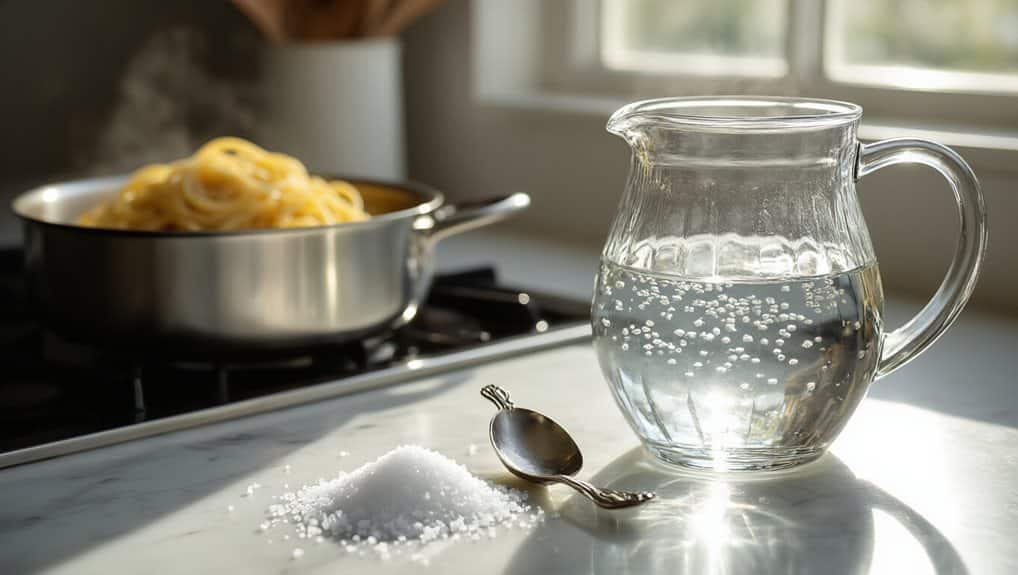
How much salt should you actually put in the water when you boil pasta? You aim for roughly ten grams per litre, which translates to about two teaspoons per four‑quart pot. This concentration gives the water a mild brine that seasons the pasta uniformly. It’s a practical rule that balances flavor without overwhelming the dish, and it works across most cooking setups. Eggplants are rich in antioxidants like anthocyanins, which provide anti-inflammatory benefits for arthritis.
How Much Salt for 1 lb (≈450 g) Dry Pasta?
After you’ve set the baseline of ten grams of salt per litre, you can translate that rule to a typical one‑pound (≈450 g) batch of dry pasta by looking at the water volume you’ll use.
Using four quarts (≈3.8 L) of water, add roughly 10 g of salt—about one tablespoon of table salt or 1.5 Tbsp kosher.
For accuracy, weigh the salt on a scale with at least 1 g resolution to keep your seasoning consistent.
Adjust up to 1.5–2 Tbsp if you prefer a saltier taste, or reduce when the sauce already contains salty ingredients.
A full palmful of coarse salt is also recommended by some experts for a richer flavor.
Measuring Salt Accurately: Tablespoons vs. Grams
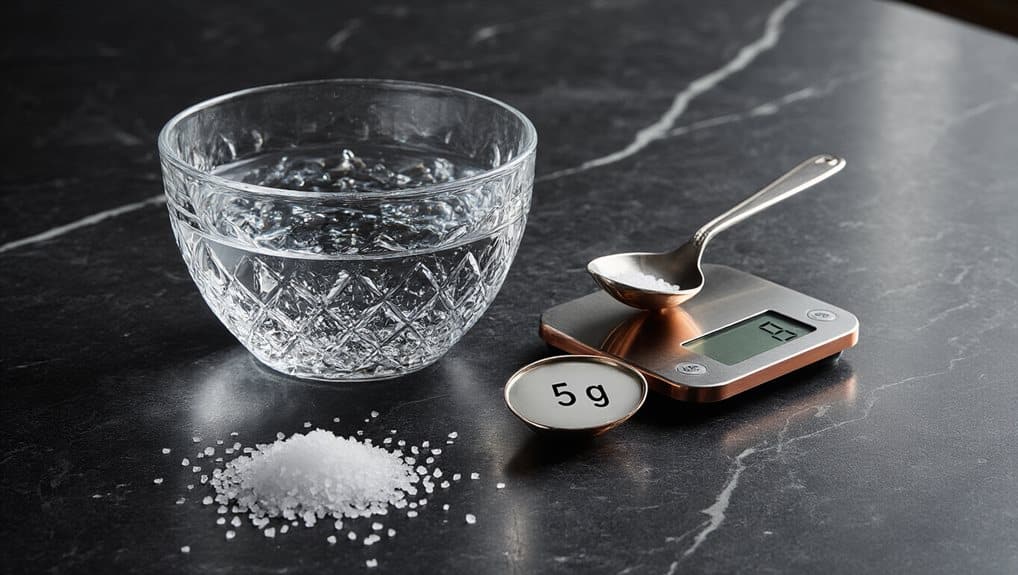
Ever wondered why a tablespoon of salt can feel so different from the same weight in grams? Tablespoons measure volume, while grams measure weight, so density matters. Table salt weighs about 15–18 g per US tablespoon, but flaky sea salt is only ~9 g. Using a kitchen scale removes this variability, giving you precise, repeatable seasoning each time you cook pasta. Like other cooked starchy foods, pasta should not be left in the 40–140°F danger zone for over two hours because bacteria can multiply quickly. The conversion factor is 14.79 g per tablespoon for water, illustrating how density influences weight‑volume relationships.
Why Add Salt After the Water Boils?
When you add salt after the water reaches a rolling boil, the higher temperature enhances the boiling point just enough to keep the pot bubbling vigorously without slowing the heat‑up. This timing also stops salt crystals from forming on the pot’s sides, which can happen if you season cold water. Aim to cool drained pasta within two hours before storing it in BPA-free containers to maintain food safety and quality.
As the noodles cook, the hot, salted water lets the flavor penetrate the pasta evenly, giving every bite a consistent taste.
Enhances Boiling Point
You might wonder why many cooks sprinkle salt into the water only after it’s already rolling.
Adding salt raises the boiling point slightly because dissolved ions hinder bubble formation, a colligative effect.
In typical pasta water (≈0.5% NaCl) the temperature rises less than 0.1 °C, so the change is negligible.
This tiny elevation can modestly affect texture without noticeably lengthening cooking time.
Prevents Salt Crystallization
Even though a pinch of salt barely nudges the boiling point, adding it after the water is already rolling prevents the salt from crystallizing at the bottom of the pot.
In cold water salt settles, risking pitting on stainless steel, especially with coarse sea salt.
When you sprinkle it into boiling water, the grains dissolve instantly, eliminating uneven crystals and protecting your pot while keeping the boil steady.
Maximizes Flavor Absorption
Why does adding salt after the water reaches a rolling boil enhance flavor absorption? When you stir salt into boiling water, the dissolved crystals spread evenly, letting pasta soak up sodium as it gelatinizes starch. This uniform exposure enhances bioavailability to nearly 100%, while preserving texture and preventing mushiness. The result is a firmer bite and a more lively, internal salt‑enhanced taste without over‑cooking.
Adjusting the Ratio for Sensitive Palates (1 % vs. 1.5 %)
How much salt should you really add when cooking pasta for a sensitive palate? Start with a 1% ratio (10 g per liter) to keep flavor mild and sodium intake low. If you find the sauce still bland, try 1.5% (15 g per liter) for a subtle enhancement without overwhelming taste. Both levels dissolve quickly, limit stickiness, and let most salt drain away, protecting sensitive palates. Just as Brie should be stored at 0F (-18C) when frozen to preserve it, keeping your salt ratio consistent helps you control the final flavor.
Chef‑Recommended Variations: From Fettuccine to Michelin
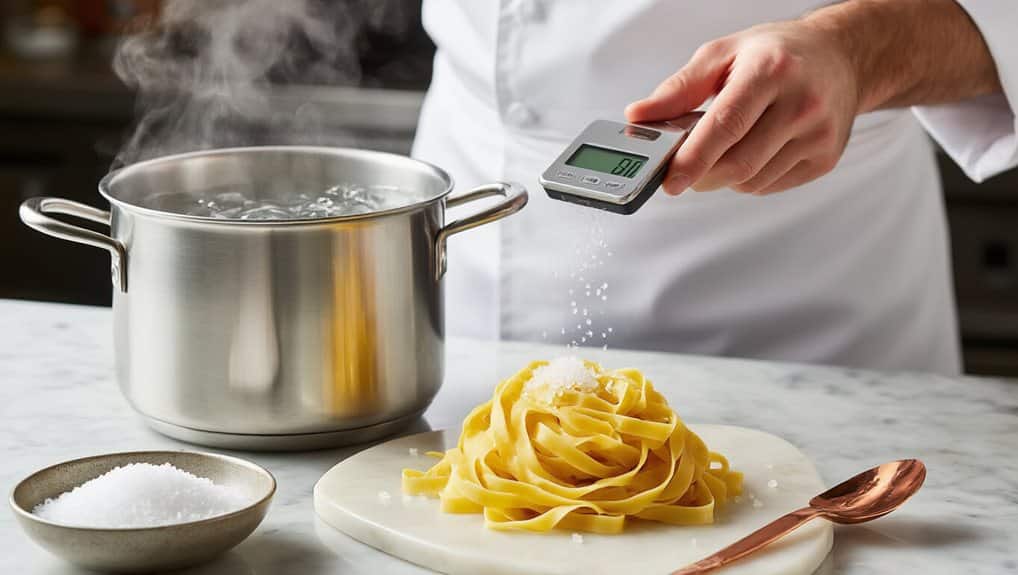
The chef‑recommended variations for pasta water start with the classic rule of 10 g of fine salt per liter, but they quickly depart depending on the dish. You might use 1.5–2 Tbsp in a six‑quart pot for standard fettuccine, lower it for salty sauces, or increase to a 1.5% “Goldilocks” level for fresh pasta. Adjust grain type and add salt after the water boils.
Special Cases: Fresh Pasta, Anchovies, and Bottarga
You’ll want to enhance the salt in the water when you’re cooking fresh pasta because its short cooking time doesn’t give the flavor enough time to develop.
If your sauce already contains salty ingredients like anchovies or bottarga, you should cut back or even skip the salt entirely, letting those components provide the seasoning.
Taste the water before you add the pasta and adjust as needed so the final dish stays balanced.
Fresh Pasta: Salt‑Boosted Boil
Ever wondered why fresh pasta tastes different from dried? Because it cooks quickly, you need a higher salt concentration.
Start with the standard 10 g per liter, then add a little extra—perhaps a half‑to‑full tablespoon per quart. Stir the salt into rolling‑boiling water, taste, and adjust before dropping in the pasta. This guarantees proper seasoning despite the brief cooking time.
Anchovies & Bottarga: Reduce Salt
Fresh pasta already needs a higher salt level, but when you add anchovies or bottarga you must dial back the salt in the boiling water. Anchovies release salt and umami as they melt, so the sauce becomes salty on its own. Reduce the boiling‑water salt, then taste after the sauce forms. Add final seasoning only at the end, using pepper or herbs if needed.
Troubleshooting Over‑Salty Pasta Water
Why does pasta water sometimes end up tasting like the sea?
If it’s over‑salty, rinse the cooked pasta under cold water for thirty seconds, or dilute the pot by adding cold water and extra unsalted pasta.
You can also mix in unsalted potatoes, rice, or a splash of lemon juice.
For sauce, add low‑sodium broth, butter, or fresh herbs to balance the flavor.
Using Salted Pasta Water to Boost Sauce Flavor
If you’ve ever rinsed over‑salty pasta, you already know that the water’s salt level can make or break the dish. By seasoning noodles from the inside out, salted water gives each bite a subtle baseline flavor, so the sauce can shine rather than mask bland pasta. The firmer, salt‑enhanced surface also clings to sauce, creating a balanced, cohesive taste without heavy seasoning.
Quick Reference Table: Water Volume, Pasta Weight, and Salt Amount
You’ll find the quick reference table matches water‑to‑pasta ratios, shows the exact salt‑per‑liter guidance, and reminds you to tweak the amount when your sauce already contains salt. Use the baseline of 1 pound pasta to 4 quarts water and 1 tablespoon salt, then adjust up or down based on the sauce’s saltiness. This lets you keep the pasta seasoning consistent without guessing each time.
Water‑to‑Pasta Ratio
How much water and salt should you actually use for a pound of pasta? You need about six quarts of water, which fits nicely in a seven‑eight quart pot. For that volume, add 1.5–2 tablespoons of fine salt, or roughly 10 g per liter. This ratio keeps the pasta moving, prevents sticking, and seasons it evenly without over‑salting.
Salt‑per‑Liter Guidance
Ever wondered exactly how much salt you need per liter of pasta water? Use 10 grams (about three‑quarters of a tablespoon) for a mild 1 % solution, or bump it to 15 grams (one and a half tablespoons) for a richer 1.5 % taste.
Scale linearly: 2 liters need 20‑30 grams, and fine salt works best for consistent results.
Adjust for Sauce Saltiness
After you’ve set the basic salt‑per‑liter ratio, the next step is to factor in how salty the sauce will be. Taste the water before adding pasta; if the sauce contains anchovies, bottarga, or a salty tomato base, cut the salt by roughly 20‑30 %. For a 6‑quart pot serving one pound of pasta, reduce a standard 10 g per liter to about 7 g, or use 1 ½ Tbsp instead of 2 Tbsp. This prevents over‑salting while still letting the pasta absorb flavor.
Wrapping Up
You’ve learned the basic rule: about 10 g of salt per litre of water, which translates to roughly 1 %–1.5 % of the water’s weight. Adjust the amount if you prefer milder or stronger seasoning, and remember to add the salt after the water reaches a rolling boil. Using properly salted water enhances the pasta’s flavor and helps the sauce cling, while avoiding an overly salty result. Follow the quick reference table for any pasta‑to‑water ratio, and you’ll consistently get perfectly seasoned pasta.


