
Cool the oil completely, then strain it through a fine‑mesh strainer lined with cheesecloth (or a coffee filter for extra clarity) into a clean glass or stainless‑steel container with an airtight lid. Store it in a cool, dark place away from heat and sunlight, and label it with the date and reuse count. Before each use, check that the oil is clear, light‑colored, and odorless, and test its acidity—discard it if it’s cloudy, dark, smells burnt, or the free‑fatty‑acid level exceeds 5.5 %. Following these steps lets you reuse oil safely, and the next section shows how many cycles are realistic.
Quick Guide
- Cool and strain used oil through a fine‑mesh strainer lined with cheesecloth, adding a coffee filter or bentonite clay for finer debris removal.
- Store the filtered oil in a clean glass or stainless‑steel container with an airtight lid, kept in a cool, dark place or refrigerated.
- Limit reuse to 3–5 cycles for most oils (up to 7 with diligent filtration); each use lowers the smoke point by ~10‑15 %.
- Before each use, inspect oil visually (clear, light‑colored), smell for off odors, and test acidity; discard if FFA exceeds 5.5 % or oil is cloudy.
- Dispose of rancid oil by cooling, sealing in a sturdy non‑recyclable container, and discarding in regular trash to avoid health risks.
How to Filter Frying Oil for Reuse
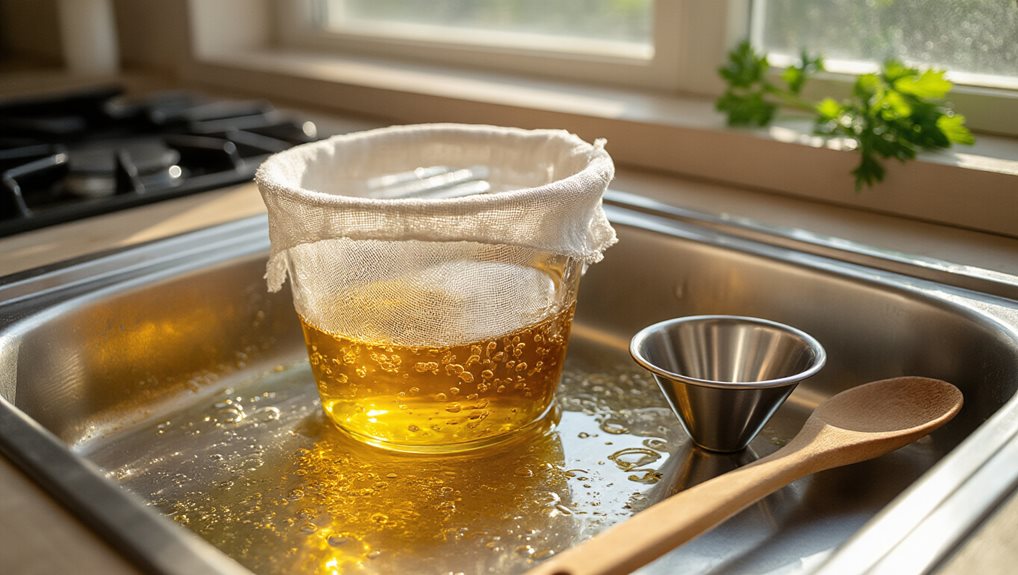
A good way to keep your frying oil usable is to filter it right after each use. Cool the oil completely, then pour it slowly through a fine‑mesh strainer lined with cheesecloth into a clean container. Use a clear organizer bin in the fridge to keep your labeled oil container visible and upright between uses. For finer debris, place a coffee filter in the strainer or use a Melitta cone filter. Label the container with the date, use type, and reuse count. Reheat gently if needed; the oil will clear as it warms. Adding a small amount of bentonite clay before filtering can help adsorb residual impurities.
Storing Reused Frying Oil Safely
Where should you keep your filtered frying oil to keep it fresh? Store it in a glass or stainless‑steel container with an airtight lid, then place the container in a cool, dark pantry or cupboard away from stoves and sunlight. Like choosing young, small, tender eggplants for roasting, minimizing exposure to heat and light helps preserve antioxidants and overall quality. If you want longer life, refrigerate the oil; label it with the date, food type, and reuse count. Before each use, smell and inspect the oil for off odors or cloudiness. Only 25% of cooking oil is properly recovered, highlighting the importance of proper storage.
How Many Times Can You Reuse Frying Oil?
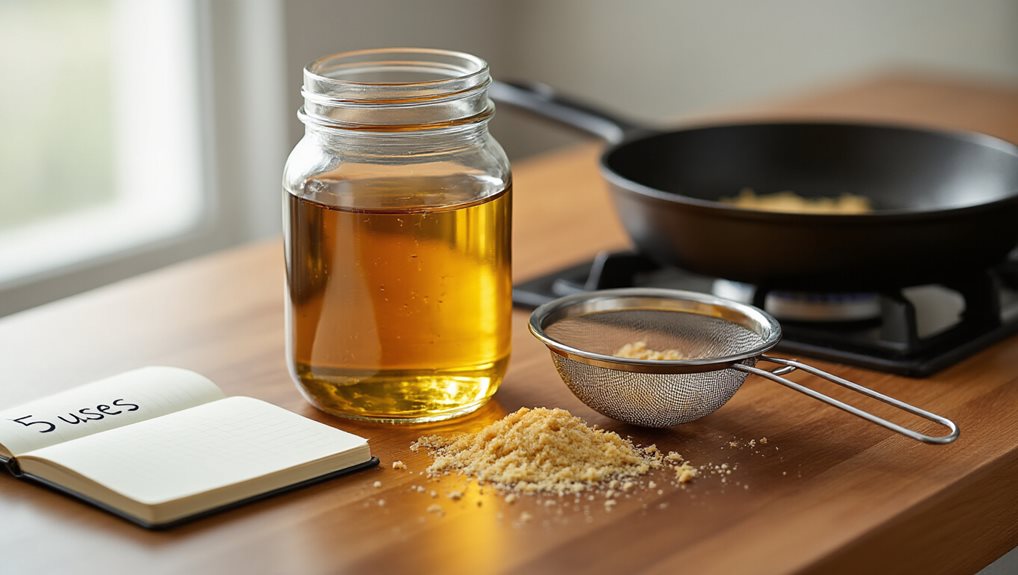
How many times can you safely reuse frying oil? In commercial kitchens, most chefs recycle oil three to five times, sometimes stretching to seven with careful filtration and storage. High‑volume operations may push it to thirty or forty cycles, but each use drops the smoke point by ten to fifteen percent.
Choose stable oils like peanut or canola, avoid heavy‑breading foods, and keep temperatures steady at 350‑375 °F to maximize reuse.
How to Test Oil Quality Before Each Reuse
You can quickly gauge oil health by looking for darkening or cloudiness and sniffing for any burnt or sour odors; fresh oil stays clear and neutral.
A simple acidity check, such as a dip‑strip or a handheld TPM meter, tells you whether free fatty acids have risen to unsafe levels.
Combine these visual and aroma cues with an easy acidity readout to decide if the oil is still good for another batch.
For comparison, tools like pizza stones are designed to absorb and retain heat evenly, which helps prevent soggy results when baking.
Visual and Aroma Test
Ever wonder how to tell if your frying oil is still good before you reuse it? First, look for a clear, light‑colored liquid; cloudiness or a milky sheen means moisture and spoilage.
Next, note the hue—golden oil darkens to brown or black as free fatty acids rise.
Finally, sniff the cooled oil; a faint, neutral scent is fine, but any burnt, sour, or metallic odor signals it’s time to discard.
Simple Acidity Check
Wondering whether your frying oil is still safe to reuse? A quick acidity check tells you if free fatty acids (FFA) are rising. Dip an FFA test strip in a small oil sample, compare its color to the chart, and note the percentage. If it reads above 5.5 %, discard the oil. The DGA hand‑held kit works similarly, letting you add drops of indicator until a pink hue stays, then calculate FFA by multiplying the drop count by 0.05.
Health Risks of Over‑Reusing Frying Oil
Why does reusing frying oil become a health hazard? Each heating cycle breaks down antioxidants, creates trans fats, acrylamide, and aldehydes, and raises peroxide levels. Those changes generate free radicals that cause oxidative stress, damaging liver, colon, and kidneys. Blood tests show higher cholesterol, LDL, triglycerides, and inflammatory markers. Over‑reused oil also raises cancer and cardiovascular risk, making repeated use unsafe. If your stored frying oil develops a rancid odor, a dark or murky look, or floating particles, discard it rather than reuse it.
How to Dispose of Used Frying Oil Responsibly
How can you get rid of used frying oil without creating a mess or harming the environment? First, let the oil cool completely. Then choose a sturdy, non‑recyclable container—like an old milk carton or glass jar—use a funnel, pour the oil in, seal the lid tightly, and add plastic wrap for extra safety. Finally, toss the sealed container into your regular household trash. For any leftover fresh herbs from frying, a keeper with a water reservoir can help maintain controlled moisture and keep them fresh longer in the refrigerator.
Quick Recap of Best Practices for Reusing Frying Oil
You should filter and strain the oil after each use, removing food particles and debris that can cause burning.
Then store the cooled oil in a dark, airtight container to limit exposure to light and air, which slows oxidation.
Finally, keep an eye on the oil’s color, smell, and thickness, and discard it if it turns dark, develops a rancid odor, or becomes unusually thick.
Filter and Strain Properly
Ever wonder how to keep your frying oil fresh without endless hassle? Filter daily, preferably during off‑peak hours, to remove crumbs and particles before they burn.
Skim first, then use a cone filter or reusable filter bag for micron‑sized debris.
Add powdered aids like FILSORB for free fatty acids, and consider a machine‑driven system for hands‑free, consistent cleaning.
This routine preserves taste and extends oil life.
Store in Dark, Airtight Containers
Why store your used frying oil in a dark, airtight container? Light, heat, and air speed breakdown, so an opaque, sealed vessel keeps oxidation low, preserving flavor and extending shelf life.
Choose stainless‑steel pots, opaque plastic pails, or glass jars with snug lids.
Keep them in a cool, dry spot, and you’ll reduce spills, waste, and cost while meeting safety standards.
Monitor Color, Smell, and Thickness
Keeping your oil in a dark, airtight container stops it from oxidizing quickly, but the real test of safety comes when you actually inspect the oil before each reuse. Look for darkening from clear to brown or black; a thick, sticky texture signals polymerization. Smell for rancid or off‑notes, especially before reheating. If any sign appears, discard the oil promptly.
Wrapping Up
By filtering, storing in airtight containers, and checking for off‑flavors or excessive smoke, you can safely reuse frying oil a few times. Remember to limit each batch to three or four uses, keep the oil cool, and discard it if it smells rancid or turns dark. Proper disposal—by recycling or solidifying before trash—prevents environmental harm. Following these steps lets you save money, maintain food quality, and avoid health risks.


