
Rinse the rice under cold water until it runs clear, then drain it well. Use a 1:2 grain‑to‑water ratio for most white rice, or 1.5:1 if you want extra fluff for long‑grain varieties, and add a teaspoon of oil or butter to keep grains separate. Bring the water to a gentle boil, cover with a tight‑fitting lid, and lower to a simmer for about 15 minutes. Turn off the heat, let the pot rest covered for ten minutes, then fluff the grains with a fork while sprinkling a bit more butter or oil. Continue for you’ll uncover tips for fixing sticky rice.
Quick Guide
- Rinse rice under cold water until water runs clear to remove excess starch and prevent clumping.
- Use a 1:2 grain‑to‑water ratio for white rice, reducing to 1.5:1 for fluffier, long‑grain results.
- Choose a tight‑fitting lid or heavy‑bottomed pot and lower water by about ¼ cup per cup to retain moisture.
- Bring to a gentle boil, then simmer on low heat with the lid on for ~15 minutes, followed by a 10‑minute rest.
- Fluff gently with a curved fork and add a teaspoon of oil or butter to keep grains separate.
Rinse Your Rice for Fluffy Rice
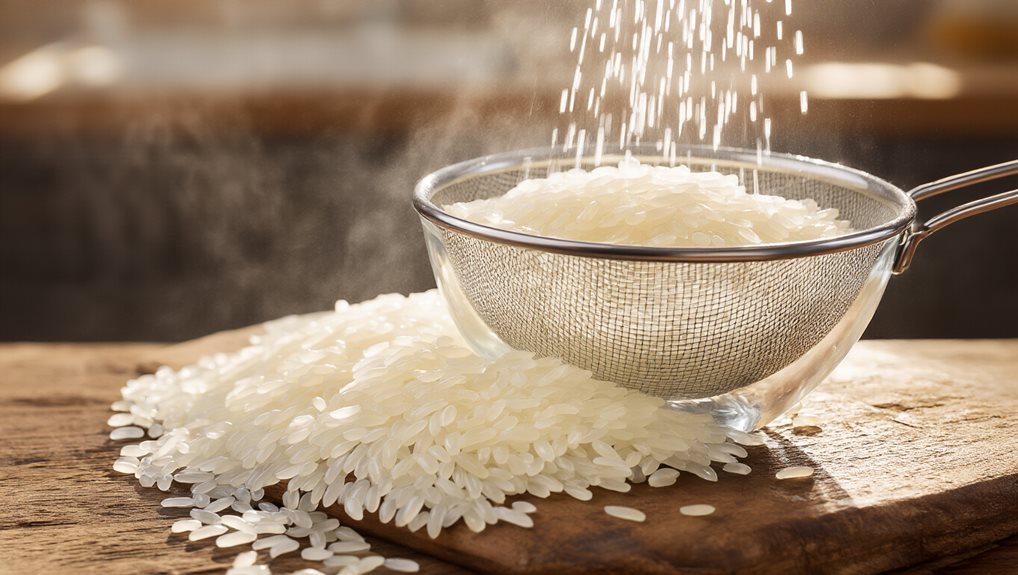
Rinsing your rice removes the loose surface starch that coats each grain during milling, and that starch is what makes the cooked rice clump together. You’ll wash the grains under cold running water until the water runs mostly clear, which usually takes under a minute. This step separates the grains, prevents gummy texture, and yields the fluffy, lighter rice you expect, especially for sushi or long‑grain varieties. For meal prep, you can portion leftover rice and use a vacuum sealer to help prevent freezer burn and keep it fresher longer in storage. Rinsing can reduce arsenic content, adding a health benefit to the texture improvement.
Pick the Perfect Rice‑to‑Water Ratio
You’ll start with the classic 1 : 2 grain‑to‑water ratio for most white rice, then adjust it if you’re using a heavy‑bottomed pot that retains heat longer. If your pot tends to evaporate water quickly, add a little extra—about a tablespoon per cup—to keep the grains from drying out. For long‑grain varieties or when you want extra fluff, you can drop the water to 1.5 : 1, but remember to account for any oil or butter you add, as that also affects the final texture. Adding a teaspoon of oil during cooking helps keep the grains from sticking to the bottom of the pot oil addition. Store any leftover rice at 32°F to 40°F to help maintain quality and slow spoilage.
1 Ratio Grain: 1:2
Ever wondered why the classic 1:2 rice‑to‑water ratio works so reliably for stovetop white rice? You measure one cup rice, then add exactly two cups water. This proportion gives enough moisture for the grains to absorb while staying separate, producing a fluffy texture. It scales linearly—two cups rice need four cups water, and so on—ensuring consistent results for any batch size.
2 Ratio Adjust for Pot Type
How does the pot you choose affect the perfect rice‑to‑water ratio? A tight‑fitting lid or heavy‑bottomed pot retains moisture, so you can drop a quarter cup of water from the standard 1 : 1.25‑1.5 ratio.
Conversely, a loose lid lets more steam escape, requiring a slight increase.
Test in ¼‑cup increments, note results, and adjust until the grains stay fluffy, not sticky.
Cook the Rice at a Gentle Simmer
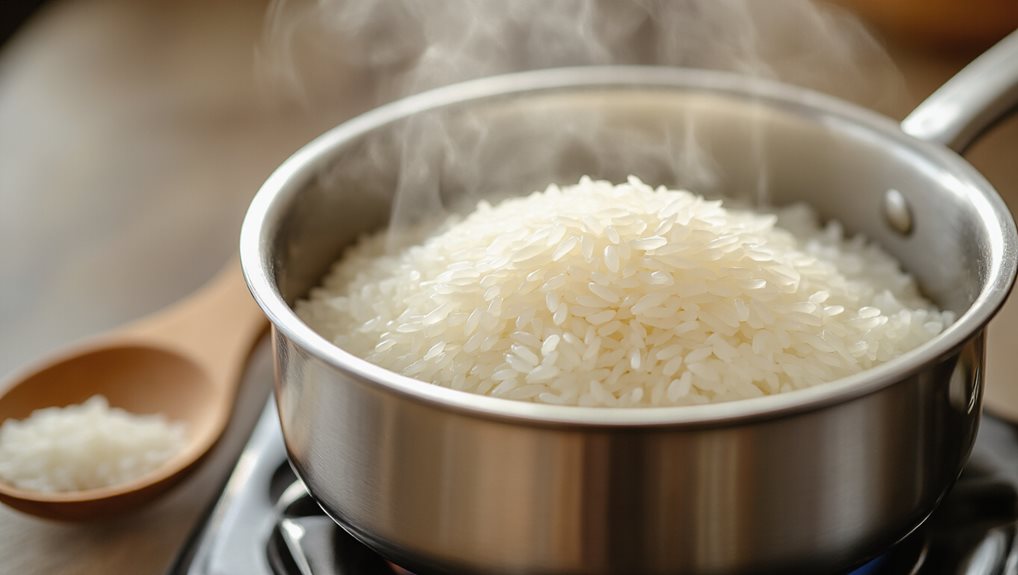
You’ll want to keep the heat low once the water reaches a gentle boil, then cover the pot tightly so steam stays trapped.
The low simmer lets the rice absorb water evenly without scorching the bottom, and the sealed lid prevents moisture from escaping.
After about fifteen minutes, turn off the heat and let the pot rest, still covered, to finish the fluffing process.
Just as guacamole stays safest when kept at 35-40°F, rice benefits from steady, controlled conditions rather than big temperature swings.
Low Heat Simmer
What makes a gentle simmer so effective for perfect rice?
You start with a rapid boil, then drop to low heat the moment bubbles appear. The low simmer keeps temperature steady, allowing steam to seep gradually into each grain. This prevents the rice from sticking or becoming mushy, and ensures even cooking. After 15‑20 minutes, let it rest under the lid.
Cover Tightly Throughout
Ever wondered why a tightly sealed lid makes rice turn out fluffy instead of soggy? When you cover the pot firmly, steam stays inside and cooks the grains evenly. Keep the heat low so the water simmers gently, preventing vigorous boiling that breaks grains. Let the lid stay on for the whole cooking time, then rest the rice undisturbed before fluffing.
Let the Pot Rest for a 10‑Minute Steam
When the lid stays tightly sealed after the rice finishes boiling, the pot should sit undisturbed for ten minutes. During this rest, trapped steam spreads evenly, letting each grain expand fully and soften without extra heat.
The steam penetration prevents clumping, keeping grains separate and fluffy. You also avoid overcooking, maintain moisture balance, and free yourself to multitask while the rice finishes steaming. If you’re storing leftovers, snap-lock lids with silicone seals help keep rice airtight and prevent it from absorbing refrigerator odors.
Fluff the Rice With a Fork
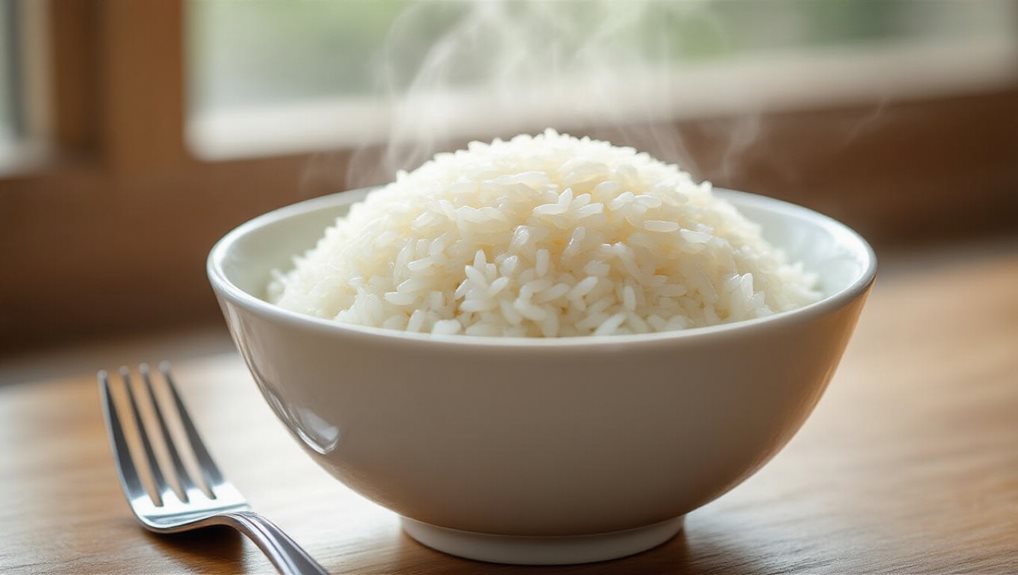
After the ten‑minute steam rest, you’ll notice the rice is still hot and the lid is still sealed, which is the perfect moment to fluff it.
Use a thin, slightly curved fork, slide its tines under the rice, and gently lift and push in a circular motion.
Work in small sections, applying light pressure so steam escapes and grains separate, yielding a light, airy texture.
For best results, keep the pot in a spot with consistent temperatures and away from heat swings while you fluff.
Add Butter or Oil to Keep Grains Separate
How does a little fat keep your rice grains from clumping together? You coat each grain with oil or butter, creating a slick barrier that reduces friction as the rice cooks. One tablespoon of sesame, olive, or coconut oil, or a pat of butter, spreads evenly when you stir or toast the rice before adding water. This simple step prevents sticking, enhances flavor, and promotes uniform heat distribution.
Fix Sticky‑Rice Issues
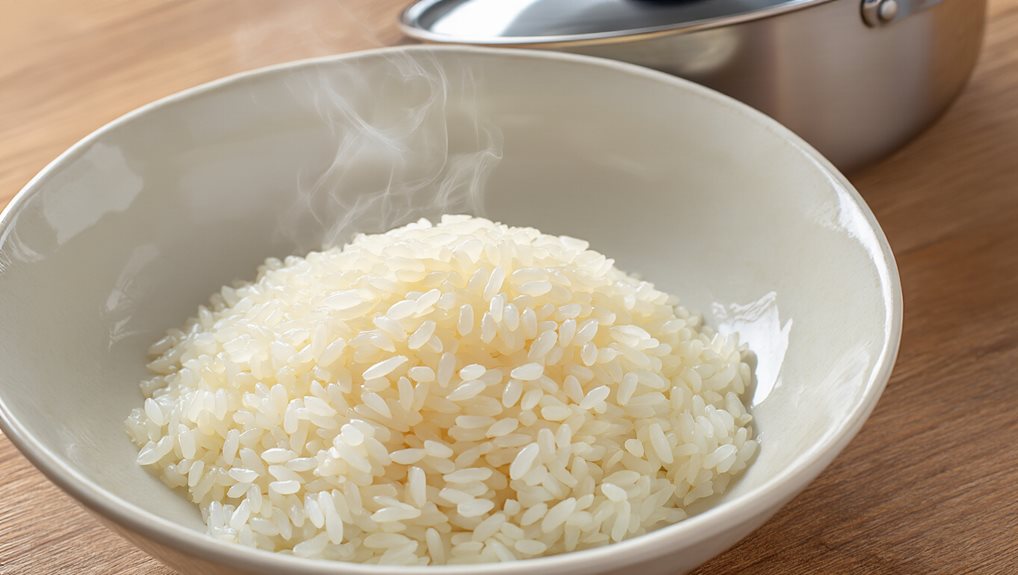
Adding a little fat helps keep the grains separate, but when rice still sticks together you can rescue it with a few quick fixes. Spread the rice on a parchment sheet, refrigerate twenty minutes, then microwave in one‑minute bursts until warm. Or bake thin layers at 325°F for five‑minute intervals. On the stove, drain excess water, cover with bread, and simmer low for three minutes. Finally, rinse before cooking, use the right water ratio, and let it rest with the lid on.
Wrapping Up
Now follow these steps, and you’ll consistently get fluffy, non‑sticky rice. Rinse the grains, use the right water ratio, simmer gently, then let them steam off the heat for ten minutes. Fluff with a fork, and add a little butter or oil if you like. If the rice turns out sticky, adjust the water amount or cooking time next time. This simple routine ensures light, separate grains every time.


