
Yes, peanut oil does go bad, but it lasts up to 2 years unopened if stored in a cool, dark place. Once opened, use it within 6 months for best quality, though it can stay safe for up to a year. Keep it tightly sealed, away from heat and light, to slow spoilage. If it smells sour, looks cloudy, or tastes bitter, toss it out. Refrigerating or freezing extends freshness considerably—there’s more to know about keeping it at its best.
Quick Guide
- Unopened peanut oil stays good for 1–2 years past the printed date when stored properly in a cool, dark place.
- Once opened, peanut oil is best used within 6 months, though it can last up to a year with proper storage.
- Signs of spoiled peanut oil include rancid odors, dark or murky appearance, sticky texture, and bitter taste.
- Store peanut oil in a tightly sealed, dark container away from heat and light to maximize shelf life.
- Refrigeration or freezing can extend the freshness of opened peanut oil for up to a year or longer.
Unopened Peanut Oil: How Long It Lasts
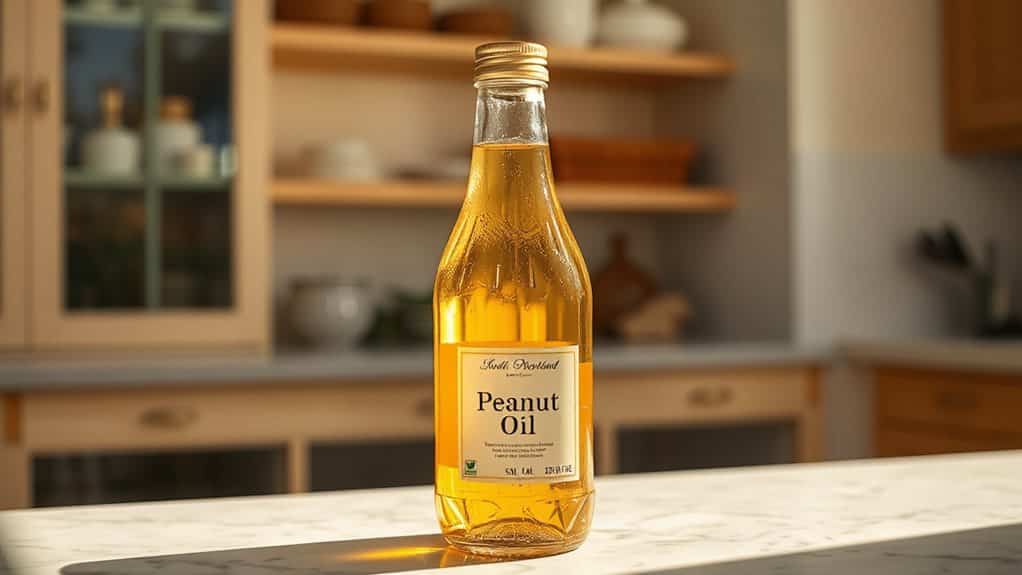
While you mightn’t think about it often, unopened peanut oil can last much longer than you’d expect when stored the right way. You can keep it for 1–2 years past the printed date, with peak quality around 24 months.
Store it in a cool, dark place like your pantry, away from heat and light. Aim for around 60°F and use tight-fitting lids to help prevent oxidation.
Refined oil lasts longer, and as long as the seal’s intact, it stays safe and usable.
Smoke point stability contributes to its extended shelf life when unopened.
Opened Peanut Oil: Shelf Life After First Use
Once you’ve opened a bottle of peanut oil, it’s best to use it within 6 months for best flavor and quality.
Keep it in a cool, dark place with the lid tightly sealed to slow down spoilage, and always check for rancid smells or off tastes before using. Glass containers with airtight seals help preserve freshness by limiting air exposure.
If it’s been over a year, or the oil smells like chemicals or window putty, it’s time to toss it.
Shelf life may extend to 1 year with proper storage, though quality typically declines after the 6-month mark.
Shelf Life After Opening
Since you’ve cracked the seal, the clock starts ticking on your peanut oil’s freshness, but you’ve got options to stretch its life. Store it in a cool, dark pantry for up to 6 months, or refrigerate it to slow rancidity and keep it good for 6 months or more.
For long-term use, freeze it—properly covered, it stays usable for up to a year or longer.
Signs of Spoilage
How can you tell when your opened peanut oil has gone bad? Check for rancid or chemical-like odors, darkening color, or a sour, bitter taste.
If the oil feels sticky, looks murky, or creates excessive foam when heated, it’s degraded.
These signs mean it’s time to toss it—don’t risk off flavors or poor cooking results. Stay safe and fresh.
Storage Tips for Longevity
To get the most out of your opened peanut oil, store it properly from the start.
Keep it in a cool, dark place, ideally in a glass or tin container with a tight seal.
Minimize air exposure by filling the container nearly full.
Refrigerate for longer storage—up to several months—or freeze for six months or more to maintain quality.
Recognizing Signs of Spoilage
Ever wonder how you can tell if that bottle of peanut oil sitting in your pantry has gone bad? Check for an unpleasant rancid or chemical-like smell, or a sour odor.
Look for darkening color or thick, sticky texture.
If it tastes bitter or off, it’s spoiled.
Excessive foam when heated also signals degradation.
Trust your senses—when in doubt, toss it out.
Another red flag is floating particles in the oil, which can indicate spoilage.
Best Storage Practices for Maximum Freshness
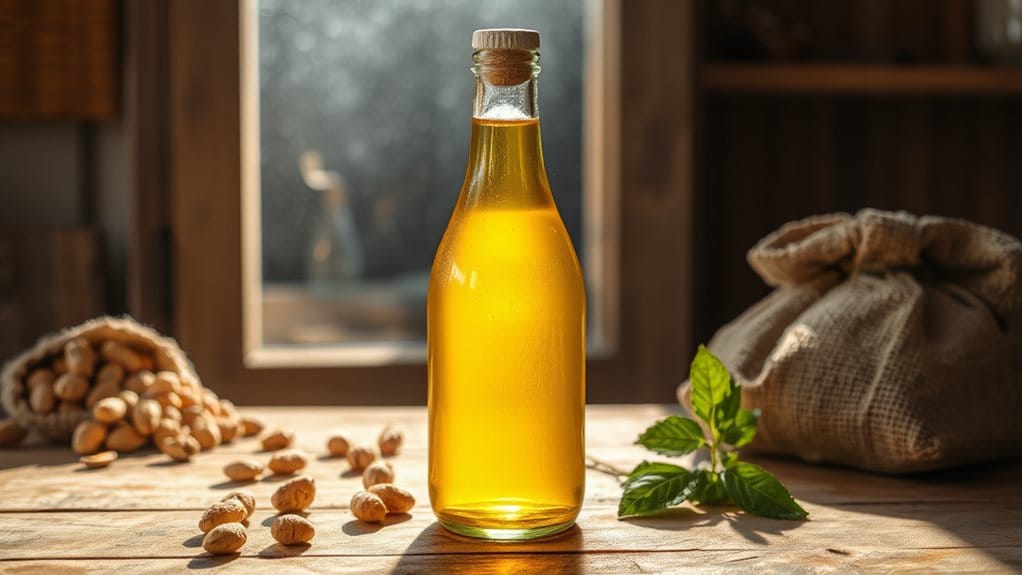
Keep your peanut oil fresh by storing it in a cool, dark place like a pantry, away from sunlight and heat.
Always seal the container tightly after use to limit air exposure, which can speed up spoilage.
Just as deviled eggs shouldn’t sit out for more than two hours, peanut oil also stays fresher when it’s not left exposed to warm room temperatures for long periods.
Choosing the right bottle—like tinted glass or stainless steel—makes a big difference in maintaining quality over time.
Store in Cool, Dark Places
Storing your peanut oil in a cool, dark place isn’t just a suggestion—it’s the key to keeping it fresh and flavorful.
Keep it away from heat and sunlight to slow oxidation and prevent rancidity.
Use dark glass or metal containers, and store in a dry pantry or basement.
This simple routine can extend your oil’s life up to a year or more.
Seal Tightly After Use
Once you’ve finished frying, sealing your peanut oil properly becomes just as important as how you stored it beforehand.
Pour it into a clean, airtight container right away to block oxygen and light.
Use glass, stainless steel, or dark plastic, and always seal tightly.
This simple step keeps your oil fresh, prevents rancidity, and extends its reuse life for months.
How Chemical Composition Affects Longevity
While you might think all peanut oils are created equal, the truth is their chemical makeup plays a major role in how long they stay fresh. High oleic acid and low linoleic acid levels enhance stability, slowing spoilage.
Antioxidants like tocopherols and phenolics fight degradation, while encapsulation helps preserve these compounds, reducing rancidity and extending shelf life effectively. To further slow oxidation after opening, store peanut oil in dark glass bottles and keep the container tightly sealed.
Refrigeration: Does It Make a Difference?
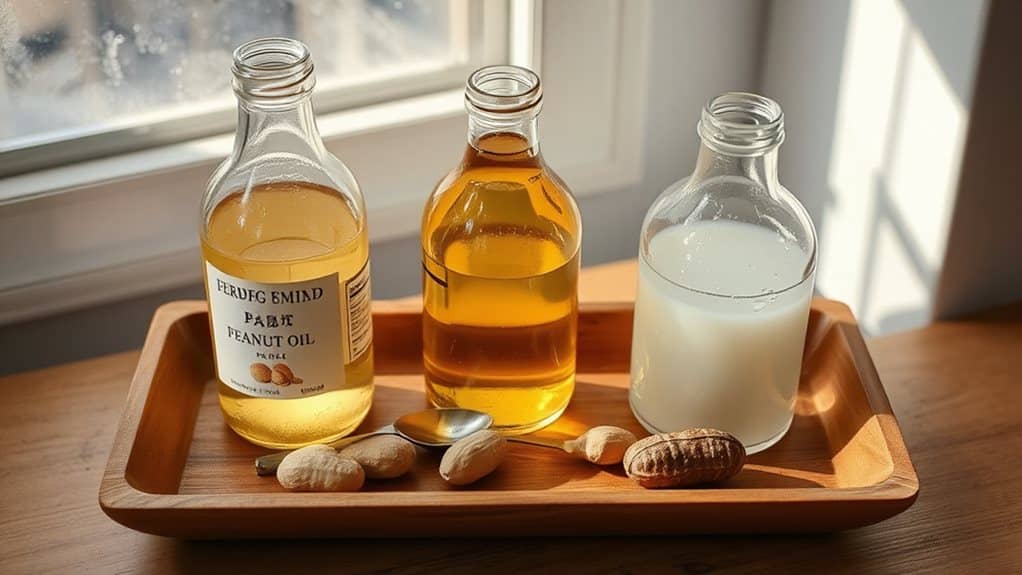
Ever wonder why your peanut oil sometimes turns bitter or smells off, even when you’re sure you stored it properly? Refrigeration slows spoilage by reducing oxidation and rancidity, especially after opening.
While cool, dark pantries work well for unopened bottles, refrigerating opened oil extends its life.
Just know it may solidify—thaw at room temperature before use.
Freezing Peanut Oil: Is It Worth It?
You’ve already seen how refrigeration can slow spoilage and keep opened peanut oil fresh longer, but what if you want to preserve it for even more extended periods?
Freezing it’s worth it if you buy in bulk or use it infrequently.
Portion the oil, seal it airtight, label it, and freeze at 0°F.
This stops oxidation, extends shelf life to 3–5 years, and preserves quality—just thaw in the fridge and use within two months.
Tips for Preserving Oil Quality During Use
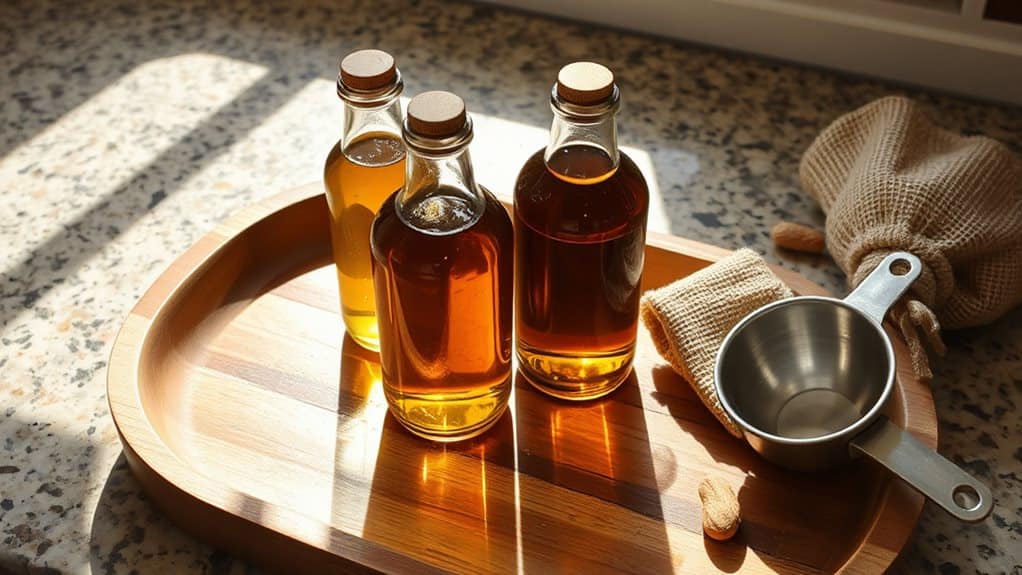
To keep your peanut oil in top condition every time you use it, pay close attention to how you handle and store it after opening.
Seal it tightly in a clean, airtight glass or metal container, and keep it in a cool, dark place.
Always strain out food bits, use dry utensils, and minimize air exposure to prevent rancidity and preserve flavor.
Wrapping Up
You now know peanut oil doesn’t last forever, but it can stay fresh a long time with proper care. Store it in a cool, dark place, keep the lid tight, and always check for off smells or flavors. Once opened, use it within six months for best quality. Refrigeration helps extend its life, though it may cloud. Freezing works too, but isn’t usually needed. With these simple steps, you’ll keep your oil safe and effective for cooking.


