
When you drop a cold egg into boiling water, the sudden jump from about 4 °C to 100 °C creates a steep thermal gradient that makes the outer shell expand far faster than the inner membrane and trapped air. This mismatch generates high internal pressure that the brittle calcium‑carbonate shell can’t tolerate, so micro‑cracks form and the shell often splits. The rapid heat also denatures proteins, squeezing water out and adding to the pressure. If you control the temperature rise and avoid vigorous agitation, you’ll keep the shells intact, and the next steps will show you exactly how.
Quick Guide
- Sudden temperature jump creates thermal shock, causing the shell to expand faster than the inner membrane and cracking it.
- Trapped air inside the egg expands rapidly when heated, raising internal pressure beyond the shell’s venting capacity.
- Microscopic flaws in the calcium carbonate lattice concentrate stress, making weak spots prone to fracture under rapid heating.
- Vigorous water movement makes eggs bounce, producing localized pressure spikes that can break the shell.
- Gentle, gradual heating and controlled simmering reduce thermal gradients and pressure spikes, preventing cracks.
Why Sudden Temperature Shock Cracks Eggs When Boiled?
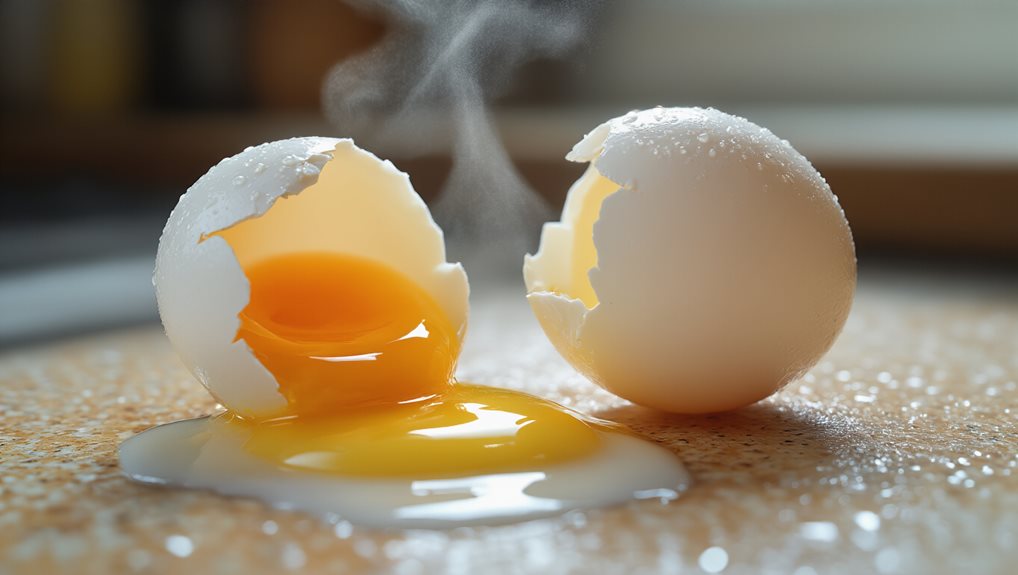
Why does a sudden temperature shock make eggs crack when you drop them into boiling water? The rapid rise from fridge‑cold to 100 °C forces the shell and inner membrane to expand at different rates. Using a water reservoir system to warm eggs more gently (instead of shocking them in boiling water) can reduce abrupt temperature swings.
The outer protein layer sets unevenly, creating pressure that the fragile shell can’t hold.
Cracks appear instantly, leaking white and distorting shape, because the thermal differential exceeds the egg’s structural tolerance. Thermal mass affects how quickly the water temperature drops when many eggs are added.
How Rapid Heat Denatures Proteins and Raises Internal Pressure?
How does rapid heat turn a liquid egg into a solid gel while building pressure inside? You heat the egg, and the weak bonds in protein chains break, letting the proteins unfold. They then form new strong bonds, squeezing water out and creating a dense gel. This sudden expansion and trapped steam raise internal pressure, especially because whites solidify before yolks. The uneven heating traps stress, making the egg prone to cracking. Like dairy that undergoes whey separation after freezing and thawing, eggs can also force moisture out as their structure changes under heat. The process also expels water as proteins reorganize, further increasing internal pressure.
How Eggshell Composition and Microscopic Flaws Influence Cracking?
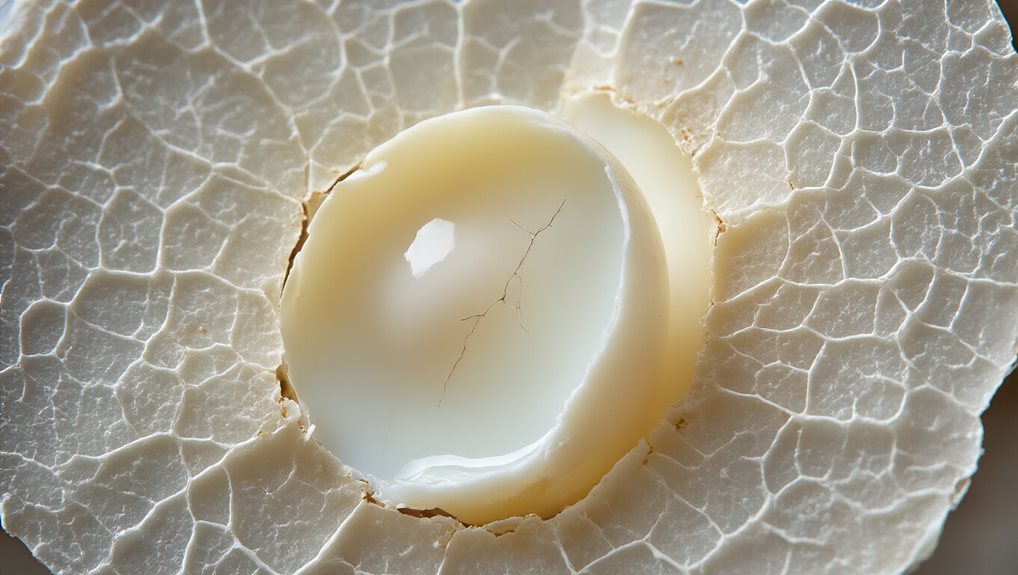
You’ll notice that the eggshell’s calcium carbonate lattice provides most of its strength, yet tiny imperfections in that lattice let stress concentrate and spread.
Those microscopic cracks and pores aren’t random; they tend to cluster in the palisade and mammillary layers where mineral composition varies.
When the shell heats unevenly, those flaw patterns become the weak points that let the egg split open.
As with food safety practices, small unseen changes can signal bigger risks, so paying attention to subtle warning signs matters even when everything looks fine at first glance.
Cium Carbonate Structure
What makes an eggshell both strong enough to hold its contents and prone to cracking under heat is the way its calcium carbonate crystals are arranged and where microscopic flaws hide.
The shell’s calcite crystals form a semi‑permeable lattice, interwoven with a thin organic matrix that guides crystal growth.
This matrix occupies only 1‑3 % of the weight but links crystals, creating tiny weak spots that expand when heat stresses the structure.
Microscopic Cracks Propagation
Ever wonder why a tiny flaw in an eggshell can turn into a full‑blown crack when the egg heats up? Heat expands the inner mammillary cones, where cracks start, and forces stress into the perpendicular palisade crystals. Their wedge shape and varying calcium‑phosphorus levels concentrate strain, while microscopic pores and impurity zones act as weak points, letting the crack radiate outward quickly.
Flaw Distribution Patterns
How does the way calcium, phosphorus, and trace minerals are arranged inside an eggshell dictate where cracks will appear?
You’ll notice that the palisade layer, rich in calcium carbonate, bears most stress; any uneven phosphorus or magnesium creates weak spots.
External cracks form where strength drops to ~29 N, while internal flaws—pimples, corrugation, or mottling—reflect mineral imbalances, diet, or stress.
Understanding these patterns helps predict where boiling will cause a crack.
Why Refrigerator‑to‑Boiling Temperature Gap Causes Egg Cracking?
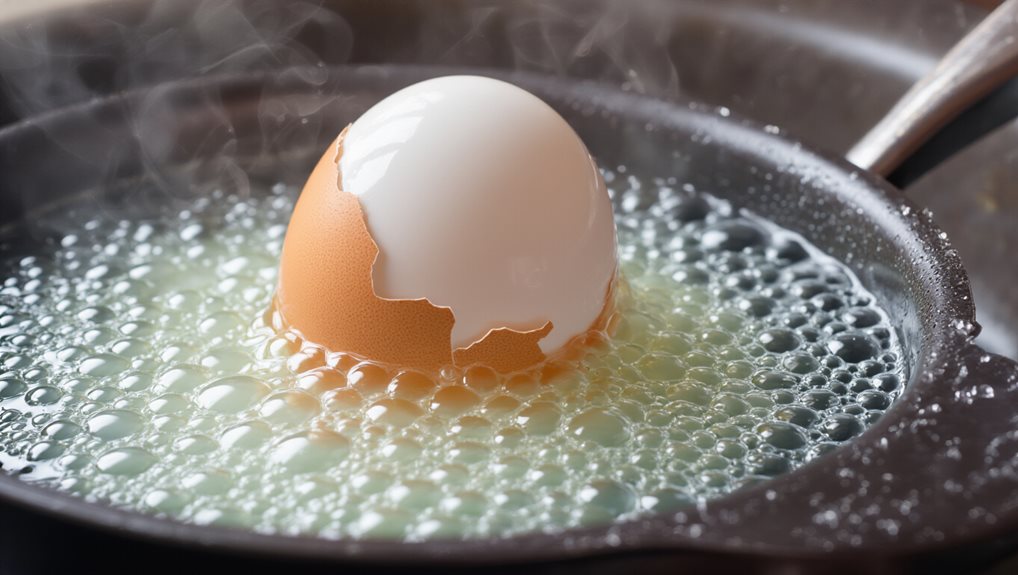
When you drop a cold refrigerated egg into boiling water, the sudden thermal shock makes the inner contents expand faster than the shell can accommodate, creating internal pressure that pushes against the brittle surface.
Because the shell’s elasticity has limits, that pressure can exceed its capacity and cause cracks, especially if the shell already has tiny flaws.
Understanding this rapid temperature gap helps you see why controlling the starting temperature can reduce breakage. Like refrigerated foods that are best eaten within 24 hours for optimal quality, minimizing abrupt temperature shifts can help preserve an egg’s structure during boiling.
Sudden Thermal Shock
Why does a cold egg suddenly crack when you drop it into boiling water? The rapid shift from fridge temperature to 212 °F creates a steep thermal gradient. The shell’s outer layer expands while the inner layer lags, generating stress that exceeds its strength. Micro‑cracks form in seconds, hidden until the albumin begins to coagulate and leak through those tiny fractures. This sudden thermal shock compromises the egg’s integrity.
Internal Pressure Build‑Up
Ever notice how a cold egg can burst open the moment you drop it into boiling water? When the temperature jumps from 4 °C to 100 °C, the trapped air expands rapidly, pushing against the shell. This pressure rise, about 2.5 × higher than at fridge temperature, outpaces the slow venting through microscopic pores, creating a force that can crack the shell before the water’s pressure equalizes.
Shell Elasticity Limits
Can a cold egg really survive the sudden jump from refrigerator to boiling water?
When the temperature rises 96 °C, the calcium‑carbonate shell expands slower than the inner white, creating a steep gradient. The brittle shell tolerates less than 0.1 % strain, so micro‑flaws amplify into radial cracks.
Pre‑heating to room temperature halves the gradient, keeping stress below the 10 MPa limit and preventing most failures.
How Boiling Agitation Increases Egg Cracking Risk?
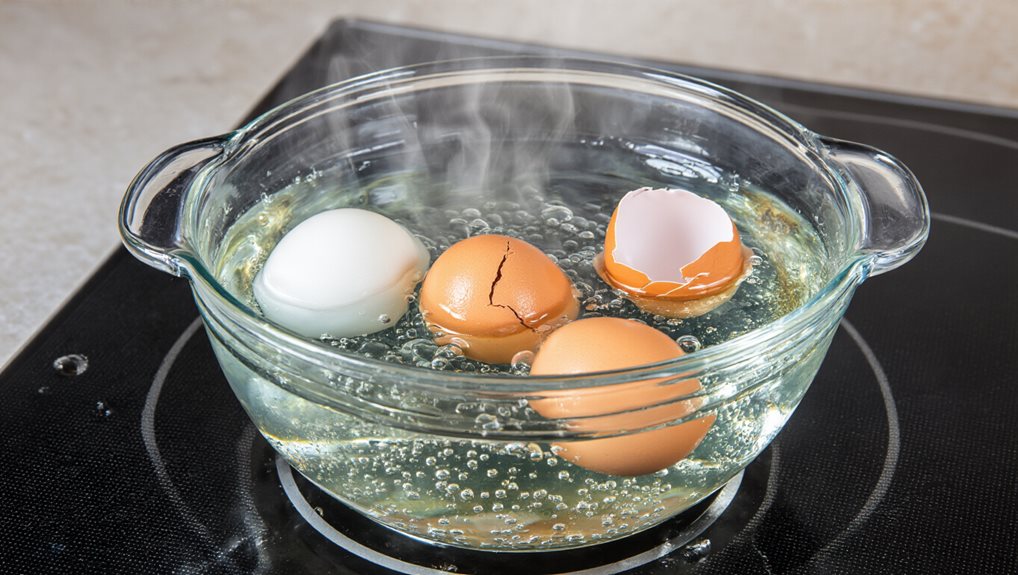
Ever wondered why a gentle stir can turn a perfect boiled egg into a cracked mess?
When the water rolls vigorously, eggs bounce, creating sudden pressure spikes inside the shell. Agitation speeds air‑pocket expansion and forces uneven heating, which stresses pores and existing micro‑cracks. The combined shock and shear forces push the shell beyond its limits, making cracks far more likely. Just as eggplant seeds can taste bitter when raw but improve with cooking, gentler heating reduces stress and helps prevent cracking.
Simple Techniques to Warm Eggs Gradually and Prevent Cracking
When water churns vigorously, the sudden jostling can crack even the toughest shells, so easing the temperature rise is a reliable way to keep eggs intact.
Start eggs in a dry pan, cover with cold water, then heat slowly to a gentle boil.
Use a single‑layer layout or a folded kitchen towel to cushion impacts.
After a brief rolling boil, let eggs sit in the hot water before cooling.
This gradual heat method reduces shock, keeps shells whole, and yields crack‑free boiled eggs.
Ingredient Hacks (Salt, Vinegar, Etc.) to Reduce Egg Cracking
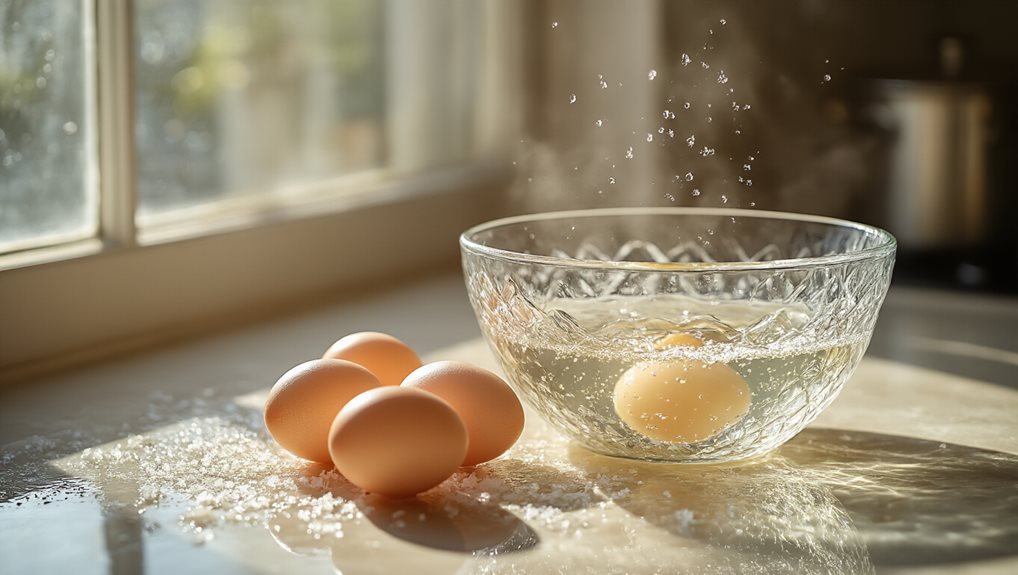
Why do a few crack in the pot?
Adding a tablespoon of salt to 500 ml water raises density, steadies eggs, and seals pores, while a pinch of vinegar reacts with calcium carbonate to loosen the shell slightly, preventing pressure spikes.
A quick pre‑wash in a solution of salt, vinegar, and a teaspoon of baking soda cleans, raises pH, and equalizes pressure, reducing cracks.
Best Practices for Gentle Boiling to Stop Egg Cracking
If you bring the water to a rapid boil before dropping the eggs in, you’ll avoid the sudden temperature jump that usually cracks shells.
Then lower the heat to a gentle simmer, keep the water at least an inch above the eggs, and place them in a single layer.
Use a slotted spoon to lower cold, refrigerated eggs slowly, and transfer them promptly to ice‑water after cooking.
Wrapping Up
By warming eggs gradually, you let the shell and interior adjust, preventing sudden pressure spikes that cause cracks. Using a room‑temperature start, a gentle simmer, or a pinch of salt or vinegar can further protect the shell. Keep the water steady, avoid rapid boils, and handle the eggs carefully. These simple steps let you enjoy perfectly intact boiled eggs every time.


