
Stainless steel pans stick because their microscopic pores and tiny crevices trap moisture and oil, forming a direct bond with food when the surface isn’t hot enough or properly coated. If you pre‑heat the pan on medium for 2–3 minutes, the metal expands, smoothing those pits and creating a thin vapor layer that lets oil spread into a uniform film. This film blocks food from touching the metal, while steam lifts the food briefly. Skipping pre‑heat, oiling a cold pan, or using excessive heat keeps the pores “active,” causing sticking; continue for deeper tips.
Quick Guide
- Microscopic pores and crevices on the pan surface trap moisture and oil, creating adhesion points for food.
- Insufficient pre‑heating leaves the metal cool, preventing the formation of a thin vapor layer that normally lifts food.
- Cold food rapidly cools the pan surface, collapsing any Leidenfrost vapor barrier and causing direct contact with the metal.
- Inadequate or uneven oil coating fails to fill surface pores, leaving exposed metal that binds to food proteins.
- Over‑high heat causes the oil to burn off or become too viscous, eliminating the protective film and increasing sticking.
Why Tiny Pores Become Sticky Traps on Stainless Steel Pans
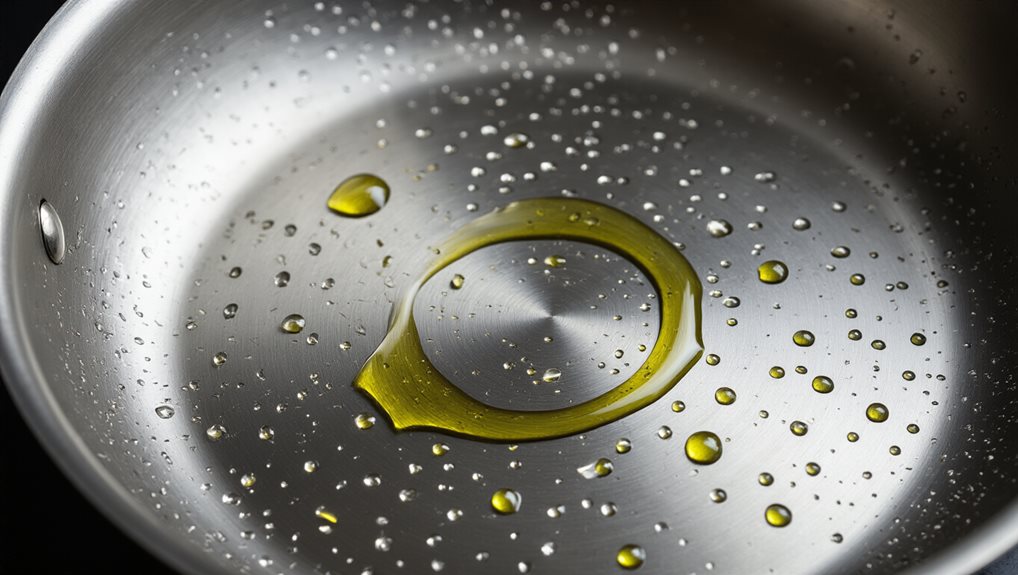
Why do tiny pores turn stainless steel pans into sticky traps? You’ll see under a microscope that the surface isn’t perfectly smooth; microscopic crevices form during manufacturing. Just like opting for BPA-free plastic in food storage, choosing the right materials and care helps prevent unwanted sticking and residue buildup over time. When you heat the pan, those pores contract, then expand rapidly as cold food contacts them, pulling moisture and oil inside. Proper heating reduces stickiness because expansion of surface imperfections limits contact with food.
Achieve Stainless Steel Non‑Stick With the Right Pre‑Heat Temperature
Ever wondered how a simple pre‑heat can turn a stubborn stainless steel pan into a natural non‑stick surface?
Heat the pan on medium for 2‑3 minutes, matching burner size to the base, then watch the temperature climb toward 430°F (221°C).
At that point the metal expands, smoothing microscopic pits, and a thin vapor layer forms.
Add room‑temperature oil, swirl, and let it shimmer before cooking.
Drop a few drops of water into the pan to confirm the temperature; the water should form small beads that sizzle and bounce, indicating the pan is properly heated. Labeling tools with a permanent marker can help you track prep dates when you portion and store ingredients.
Water‑Droplet Test for Instant Pan Temperature Confirmation
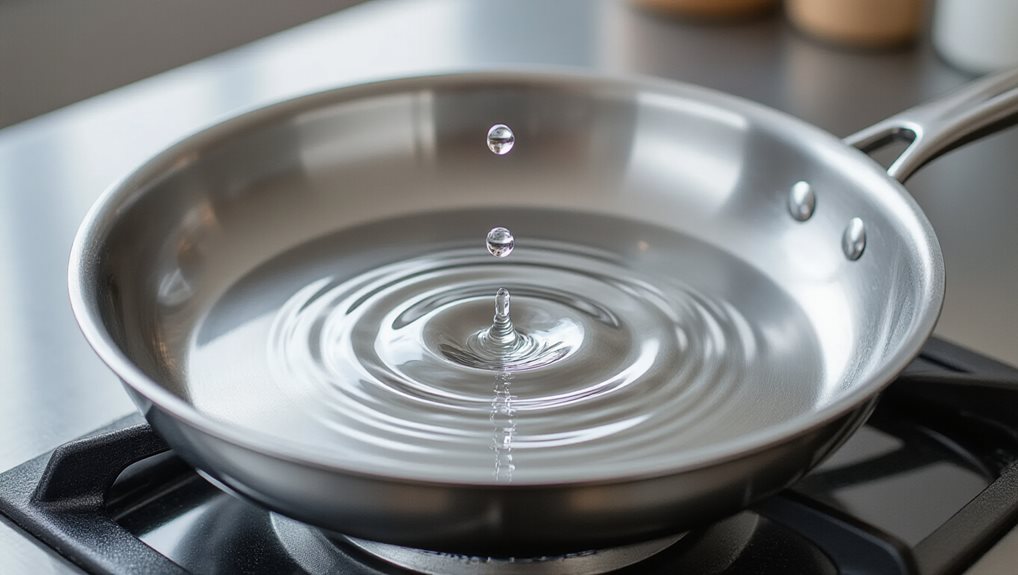
How can you know a stainless‑steel pan is hot enough before you add oil? Drop a teaspoon of water onto a dry, preheated pan. If a single, marble‑like bead forms and rolls, the pan has reached roughly 200°F, indicating the Leidenfrost effect. After cooking, let food cool before storing in BPA-free containers to help prevent warping and keep meals freezer-ready.
Sizzling or evaporating droplets mean it’s too cold; many tiny beads show it’s too hot. Wipe the water away before adding oil.
How Pre‑Heated Oil Creates a Non‑Stick Barrier on Stainless Steel
Ever wondered why a pre‑heated stainless‑steel pan feels almost slick before you even touch the food? When you heat the pan first, then add a thin coat of high‑smoke‑point oil, the oil spreads into microscopic pores and forms a uniform film.
This film blocks direct food‑metal contact, while steam from moisture lifts food, creating a temporary non‑stick barrier that lasts a few minutes. Just as vacuum sealers use 60–95 kPa suction to remove air quickly and prevent unwanted contact that leads to freezer burn, pre‑heating and oiling a stainless‑steel pan reduces direct contact points that make food cling.
Why Room‑Temperature Food Prevents Sticking (and Cold Food Doesn’t)
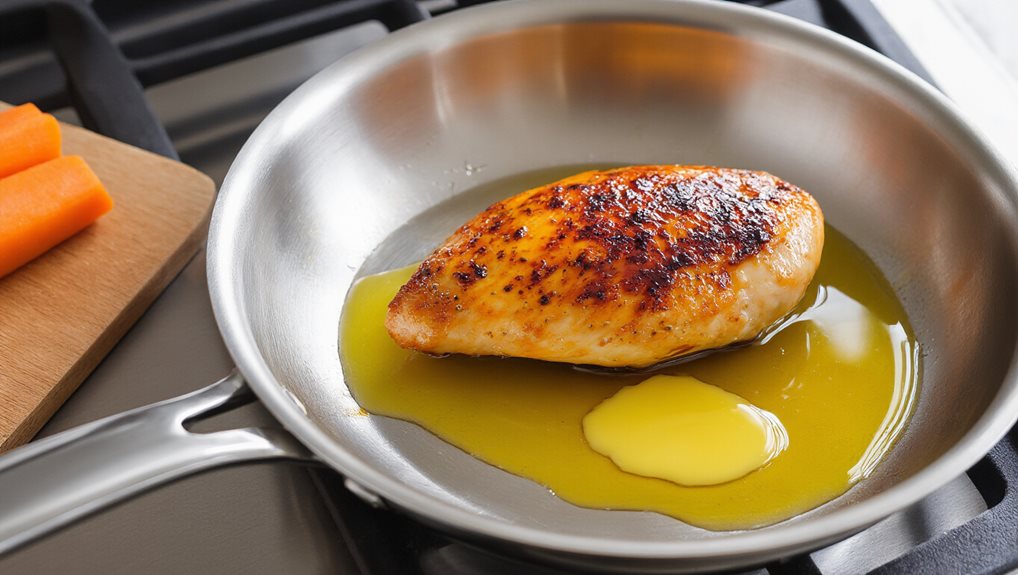
Why does room‑temperature food glide across a heated stainless‑steel pan while ice‑cold ingredients stick?
When food is at room temperature, its temperature matches the pan’s heat, preserving a stable vapor layer and preventing rapid cooling that would collapse the Leidenfrost effect.
Cold food drops the pan’s surface, condenses moisture, and causes uneven protein denaturation, leading to adhesion.
Letting foods rest ten to fifteen minutes before cooking keeps the pan hot, ensures uniform searing, and eliminates sticking.
Just as even heat distribution helps a pizza stone bake consistently, maintaining steady pan temperature helps prevent sticking.
Common Mistakes That Keep Pores in Flux: and How to Fix Them?
Ever wondered why a stainless‑steel pan can go from perfectly seared to stubbornly stuck in a single step? You’re likely skipping preheat, adding oil to a cold surface, or using high heat that overwhelms the metal’s pores.
Pat dry, let proteins warm, preheat 2‑3 minutes, test with water droplets, then add shimmering oil.
Keep temperature medium‑high, avoid sprays, and let the pan cool before washing.
Wrapping Up
By pre‑heating your stainless steel pan to the right temperature, testing it with a water droplet, and adding oil before the food hits the surface, you create a thin, non‑stick barrier that seals the tiny pores. Using room‑temperature ingredients and avoiding sudden temperature shifts keep the barrier intact, preventing food from clinging. Correct these common mistakes, and you’ll enjoy consistently smooth cooking without the frustration of stuck meals.


