
If you don’t have cornstarch, you can use alternatives like all-purpose flour, arrowroot, tapioca, or potato starch to thicken gravy. Flour needs more and longer cooking to remove the raw taste, while arrowroot and tapioca create clearer, glossy sauces. For gluten-free options, arrowroot or potato starch work well. Whisk these substitutes with cold water before adding, and cook until thickened. Exploring these options can help you perfect your gravy, and there’s more to uncover if you keep going.
Quick Guide
- Arrowroot powder creates a clear, glossy gravy similar to cornstarch and is a gluten-free alternative.
- All-purpose flour thickens well but requires more and longer cooking to eliminate raw taste.
- Potato or tapioca starch are suitable gluten-free options that thicken quickly and produce smooth sauces.
- Wondra flour dissolves easily, making it a convenient substitute for cornstarch in gravy.
- Roux (butter and flour) provides a rich, silky texture, ideal for a hearty gravy, but needs longer cooking.
Why Use Cornstarch for Gravy?
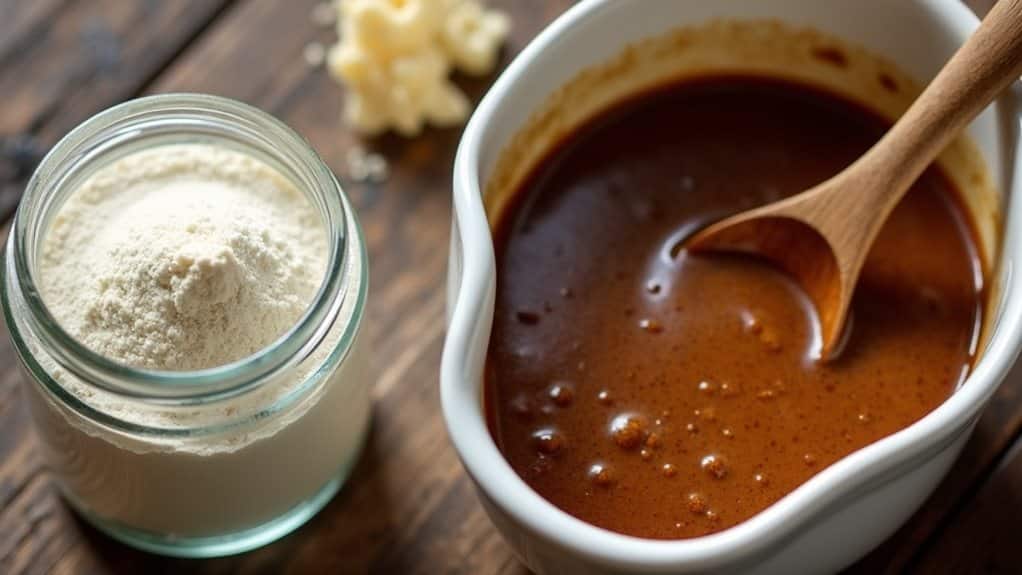
Cornstarch is a popular choice for thickening gravy because it provides a smooth, glossy finish that enhances the dish’s appearance.
It has a high thickening power, requiring less quantity, and thickens quickly once heated.
Plus, cornstarch is gluten-free, making it suitable for those with gluten sensitivities.
This combination of benefits makes it a practical, efficient thickening agent in gravy.
For longer storage of leftover gravy, vacuum sealers with dry and wet modes can help prevent freezer burn and extend freshness 5–7× longer.
When Should You Consider Substitutes?
You should consider using substitutes when cornstarch isn’t available or if you have dietary restrictions like gluten intolerance.
Additionally, switching to a different thickener can help you achieve a specific texture, appearance, or flavor in your gravy.
Finally, using alternative thickeners is useful when preparing gravy ahead of time, as some hold up better during reheating and storage.
If your gravy includes fats like avocado oil, keep it in a cool, dark place to slow oxidation and help maintain flavor.
Dietary Restrictions and Preferences
When cooking for individuals with specific dietary needs or restrictions, it’s important to think about suitable thickening alternatives to traditional cornstarch.
If you need gluten-free options, consider flour or arrowroot powder.
For vegan or dairy-free diets, tapioca or potato starch work well.
Always check labels to verify the substitute aligns with allergies and dietary restrictions.
Ingredient Availability and Convenience
Considering ingredient availability can help you decide when to switch to a substitute for cornstarch in gravy.
If cornstarch isn’t available, options like flour, rice or potato starch, arrowroot powder, or tapioca starch offer convenient thickening alternatives.
Choose based on what’s accessible in your pantry and the desired clarity or stability of your gravy.
Best Alternatives to Cornstarch for Thickening
If you’re looking to thicken gravy without cornstarch, several effective substitutes can do the job, each with its own advantages.
All-purpose flour works but needs more and longer cooking.
Wondra flour dissolves quickly.
Arrowroot creates a clear, glossy sauce but avoids dairy.
Potato and tapioca starch offer gluten-free options, providing smooth, consistent thickening.
For extra-silky results, you can also start with a foolproof roux of equal parts butter and flour, whisking in warm liquid gradually to prevent lumps.
How to Use Flour as a Cornstarch Substitute
To use flour as a cornstarch substitute in gravy, start by making a smooth slurry with cold water. Gradually add this slurry to your simmering gravy, stirring constantly to prevent lumps.
Cook the mixture for several minutes to activate thickening and eliminate the raw flour taste.
Keep in mind, flour thickens more slowly and results in a slightly opaque gravy.
For best results, stir steadily to promote even heat distribution as the gravy simmers.
Other Flours and Starches for Thickening
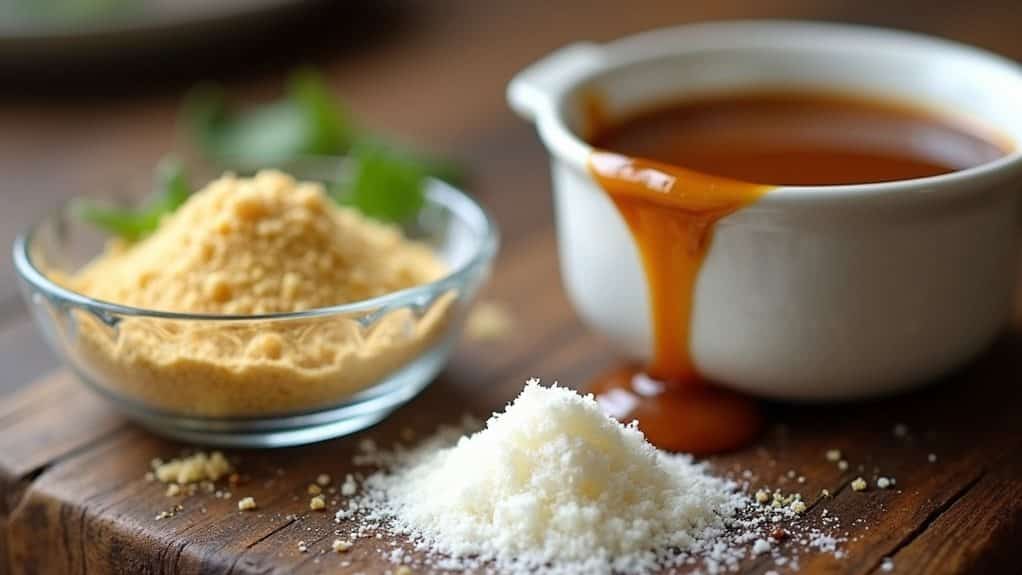
Different flours and starches can be excellent alternatives to cornstarch for thickening gravy, each with its own unique properties.
All-purpose flour is common but needs twice the amount.
Potato starch thickens at lower temperatures and adds a silky texture.
Tapioca starch keeps sauces clear and stable.
Rice flour offers a neutral flavor for versatile use.
For consistent results, use precise timing while heating your gravy so it thickens evenly without scorching.
Tips for Perfectly Thick and Smooth Gravy
Achieving perfectly thick and smooth gravy requires careful technique and attention to detail.
Use a suitable thickening agent, like a slurry made with cold water or liquid, to guarantee a smooth texture.
Gradually add it while stirring constantly, then cook for at least a minute to adjust consistency and eliminate raw flavors.
Strain if lumps form for ideal results.
Troubleshooting Flour-Based Gravy
When making flour-based gravy, lumps can be a common problem, but they’re usually easy to fix with the right techniques.
To prevent clumping, whisk the flour with cold water or fat before adding it to hot liquid.
If lumps form, strain the slurry into the gravy and cook longer, ensuring proper thickening and a smooth consistency.
Storing and Reheating Your Thickened Gravy
Proper storage and reheating techniques help preserve the quality of your thickened gravy and prevent waste. Store it in an airtight container in the refrigerator for 3-4 days.
When reheating, do so gently over low to medium heat, stirring frequently.
If the gravy loses thickness, add a small slurry of cornstarch or flour to restore the desired consistency.
Wrapping Up
Choosing the right substitute for cornstarch depends on your dietary needs and kitchen supplies. Flour, arrowroot, tapioca, and other starches can all effectively thicken gravy when used correctly. Each has its own advantages and best practices, so understanding how to incorporate them guarantees your gravy remains smooth and flavorful. With a little experimentation and attention to detail, you can achieve perfect consistency every time, even without cornstarch.


