
Yes, you can freeze most Thanksgiving leftovers, like turkey, stuffing, mashed potatoes, squash, and rolls, for later use. To keep them safe and fresh, store leftovers in airtight containers or resealable bags, label them with dates, and divide large portions into smaller sizes. Proper packing prevents freezer burn and makes reheating easier. Most leftovers stay good for 3-4 months, but some, like stuffing, should be consumed sooner. Keep these tips in mind for successful storage and reheating.
Quick Guide
- Yes, most Thanksgiving leftovers like turkey, mashed potatoes, stuffing, squash, and rolls freeze well.
- Properly store leftovers in airtight, labeled containers to prevent freezer burn and maintain quality.
- Portion leftovers into small, manageable sizes for easier reheating and to reduce waste.
- Freeze leftovers within two hours of refrigeration, ideally within 3-4 months for optimal freshness.
- Reheat leftovers to an internal temperature of 165°F for safety before eating.
Which Leftovers Should You Freeze?
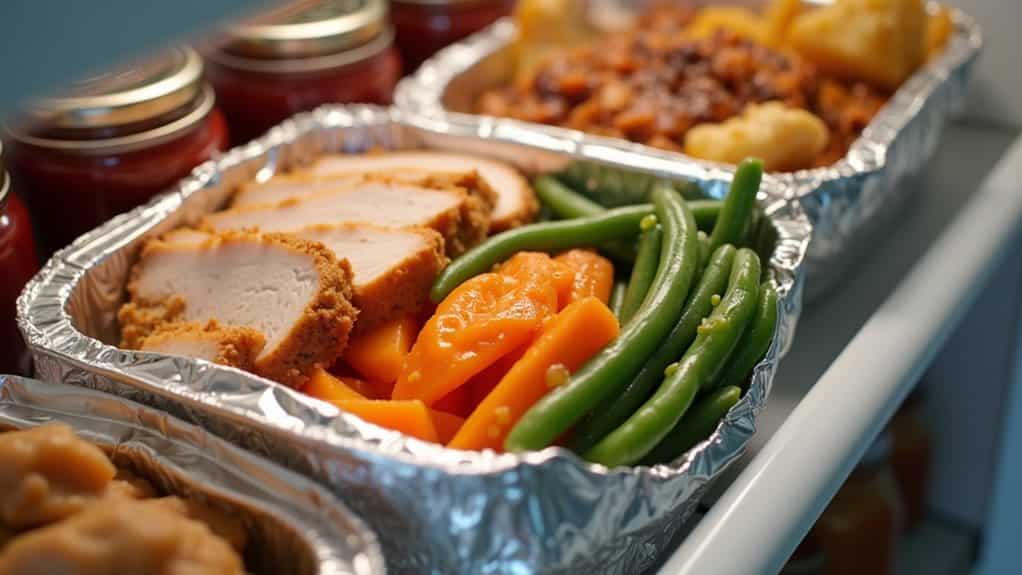
Not all leftovers are suitable for freezing, so it’s important to choose wisely if you want to extend their shelf life.
Leftovers like roast turkey, mashed potatoes, squash, stuffing, and rolls generally freeze well, maintaining quality for several months.
Proper food storage guarantees these items stay safe and fresh, making it easier to enjoy them later without sacrificing flavor or texture.
For best results, spread portions in a single layer to prevent freezer burn and help them freeze more evenly.
How to Properly Store and Package Leftovers
To keep your leftovers fresh and safe to eat later, it’s important to choose the right containers and pack them properly.
Using airtight containers or resealable bags helps prevent freezer burn and preserves quality.
Dividing food into smaller portions makes reheating easier.
Label each package with the freezing date so you can use the oldest leftovers first and avoid waste.
For longer freezer storage, using a vacuum sealer with double heat seal closures can help maintain vacuum integrity and reduce leaks.
Airtight Container Selection
Choosing the right containers is essential for keeping your leftovers fresh and safe in the freezer.
Use airtight containers made of glass or BPA-free plastic to prevent freezer burn and preserve quality.
Select ones with tight-fitting lids that seal completely, and leave some headspace for expansion.
For easier use, opt for portioned-sized containers or divide leftovers into smaller portions.
Portioning for Convenience
Portioning leftovers into smaller, manageable sizes makes reheating more efficient and helps prevent waste. Use airtight containers or silicone trays to divide foods into small portions that match typical serving sizes, like ½ or 1 cup.
Tightly seal all packages to prevent freezer burn, and label them clearly for easy identification. This approach keeps leftovers fresh and ready to enjoy.
Freezer Organization Tips for Easy Leftover Access
Using clear, labeled containers makes it easy to identify leftovers quickly, saving you time when reheating.
Implementing stackable storage solutions helps maximize freezer space and keeps items organized.
For the best seal, choose containers with BPA-free silicone gaskets to help prevent air and moisture from getting in.
Grouping similar foods together and placing frequently used leftovers at the front guarantees you can access what you need without hassle.
Use Clear, Labelled Containers
Clear, airtight containers are essential for keeping your leftovers fresh and easy to identify in the freezer.
Use clear, labelled containers made of freezer-safe materials like glass or BPA-free plastic to prevent freezer burn.
Label each container with the date and contents, which helps with organization, quick identification, and tracking leftover freshness.
This ensures your leftovers stay tasty and well-preserved.
Implement Stackable Storage Solutions
Implementing stackable storage solutions can substantially improve your freezer organization and make leftovers easier to access. Use stackable containers or trays, like silicone trays or plastic bins, to maximize space.
Opt for airtight storage options to prevent freezer burn, and label each container with dates and contents.
Arrange them for quick access, reducing the time spent searching through your freezer.
How Long Can You Keep Leftovers in the Freezer?
Have you ever wondered how long your leftovers can stay safe and tasty in the freezer? Generally, leftovers should be stored in the freezer within two hours of refrigeration to maintain quality. Consider blanching before freezing to extend shelf life and reduce texture changes like freezer burn.
Most leftovers, like turkey, can last 3-4 months, while items like mashed potatoes or stuffing are best consumed within 1 month for peak flavor.
Reheat and Reuse Leftovers Safely
Reheating leftovers safely is crucial to prevent foodborne illnesses and enjoy your meal without worry.
When reheat leftovers from the freezer, make sure they reach an internal temperature of 165°F (74°C).
Use a microwave-safe dish, cover the food, and rotate it for even heating.
Check multiple spots with a thermometer to confirm it’s safe to reheat and enjoy.
If you’re reheating leftover rice-based dishes, remember that 1 lb. of long-grain white rice equals approximately 2 ¼ cups when uncooked, which can help with portion planning.
Common Mistakes to Avoid When Freezing Leftovers
Freezing leftovers might seem straightforward, but making common mistakes can compromise their safety and quality. Avoid refreezing thawed leftovers, as this increases bacteria risk.
Don’t freeze foods with high water content or store leftovers in large containers, which can cause texture issues.
Also, follow recommended storage times and handle dairy or egg-based dishes properly to guarantee food safety.
Wrapping Up
Freezing Thanksgiving leftovers is a practical way to reduce waste and enjoy your meal later. Just make sure you select appropriate foods, store them properly, and label with dates to prevent spoilage. Keep in mind that most leftovers stay good for three to four months in the freezer. When reheating, do so thoroughly to guarantee safety. By following these guidelines, you can savor your holiday favorites well beyond turkey day, with minimal risk and maximum convenience.


