
You can swap eggs with several kitchen staples that give moisture, binding, or lift. Use a quarter‑cup of applesauce for fudgy brownies, or half a mashed banana for muffins and quick breads. Mix one tablespoon ground flaxseed or chia with three tablespoons water, let it gel, and add it for a nutty binder. Blend silken tofu for creamy, dense textures, or whisk aquafaba with cream of tartar for meringues and fluffy cakes. For light binding, stir a cold‑water slurry of arrowroot, cornstarch, or tapioca. Quick leavening works with 1 tsp baking soda plus 1–2 tsp vinegar, or replace each egg with ¼ cup carbonated water and neutral oil, cutting other liquids by 2 Tbsp. Keep exploring for more tips on perfect egg‑free baking.
Quick Guide
- Applesauce (¼ cup per egg) adds moisture and density, ideal for fudgy brownies and cakes.
- Mashed banana (½ large banana per egg) supplies binding and moisture, perfect for quick breads and pancakes.
- Ground flaxseed or chia mixed with water (1 Tbsp + 3 Tbsp) forms a gel that binds and imparts a subtle earthy flavor.
- Aquafaba whisked to stiff peaks replaces egg whites for meringues, macarons, and airy cakes.
- Vinegar + baking soda (1 tsp soda, 1–2 tsp vinegar) creates instant leavening, useful for muffins and brownies.
Egg‑Free Baking 101: When and Why to Use Substitutes
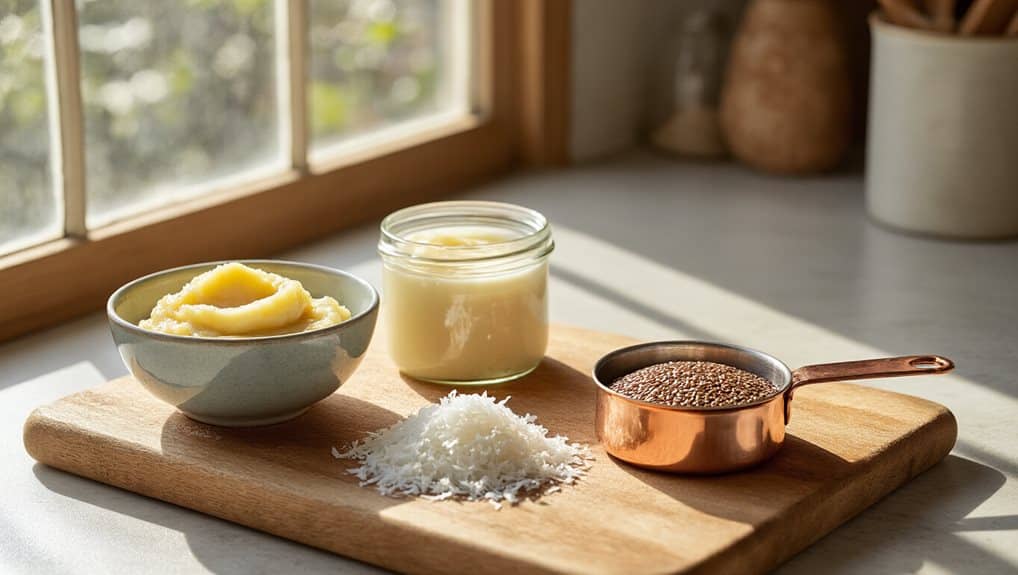
Why bother with egg‑free baking? You turn substitutes when you need moisture, binding, or lift without animal products. Applesauce adds moisture and dense texture, using a quarter cup per egg, perfect for fudgy brownies. Aquafaba whips into soft peaks, replacing egg whites in meringues and cakes. Mashed banana supplies binding and moisture, half a large banana per egg, giving a mild flavor and moist crumb. Use vinegar and baking soda for leavening in light cakes. Just like fermented foods kept cold can last up to six months in the fridge, many egg-free staples keep best when stored properly to avoid spoilage. Flaxseed can also provide structure and binding when mixed with water.
Use Ground Flaxseed or Chia Seeds for Binding & Earthy Flavor
Ever wondered how a simple seed can replace eggs while adding a subtle earthiness to your bake? Mix one tablespoon ground flaxseed or chia with three tablespoons water, whisk, and let it gel for a few minutes. This creates a nutty, cohesive binder that works in muffins, pancakes, and quick breads. Use up to two per recipe, adjusting water for moisture. For quick breads made ahead, freezing at 0°F helps preserve freshness longer. It only takes 5 minutes to prepare.
Blend Silken Tofu for Creamy Binding in Dense Breads & Pies
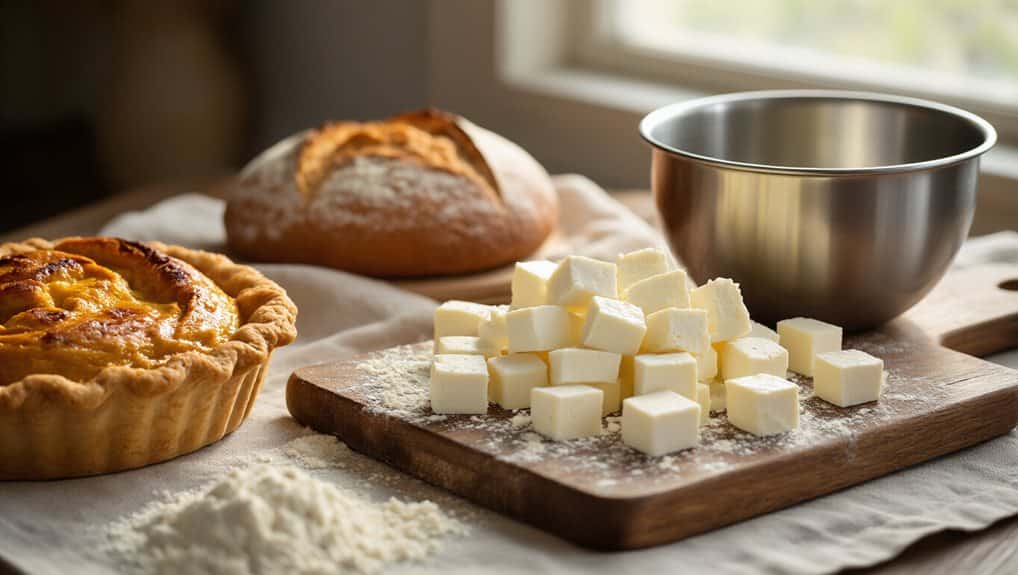
If you’ve already seen how ground flaxseed or chia can bind and add earthiness, you’ll find that silken tofu takes the creamy binding a step further for dense breads and pies. Blend ¼ cup silken tofu until perfectly smooth, then substitute it for each egg. It adds moisture, a custardy texture, and neutral flavor, keeping brownies, pound cakes, and hearty pies moist without adding lift. Use fresh, not firm tofu. For tofu-bound custard pies, cool them completely and wrap tightly to prevent freezer burn before freezing.
Mix Starch Slurries (Arrowroot, Cornstarch, Tapioca) for Light Binding
Pick the starch that fits your recipe—arrowroot gives a silky finish, cornstarch is easy to find, and tapioca adds a bit of chew. Mix the chosen powder with the right amount of water, usually about 2 Tbsp starch to 3 Tbsp liquid for each egg you’re replacing, and stir until smooth.
If you’re using cocoa in the same recipe, keep it in a sealed container to avoid moisture exposure that can cause clumping and off flavors.
Before you bake, check the batter’s thickness; it should coat a spoon and hold together, then adjust with a splash more liquid or a pinch more starch if it feels too thin or too thick.
Choose Proper Starch
Why bother with a single starch when you can blend a few to get the right light binding? Choose cornstarch for its reliable gel at 203 °F, but mix in arrowroot or potato starch to adjust texture and accommodate dietary needs. Prepare each as a cold‑water slurry, then add to hot batter for even distribution. This combination enhances tenderness in cookies, cakes, and gluten‑free mixes while preventing lumps.
Adjust Liquid Ratio
How much water should you add to a starch slurry for a reliable egg substitute? Use one part starch to two‑or‑three parts water, letting the mix rest a minute before whisking.
Arrowroot, cornstarch, and tapioca behave similarly, so a 1:2 ratio yields a light binder.
Adjust slightly thicker if you need extra thickening, but keep the consistency medium‑thick for best results.
Test Texture Before Baking
A quick test of your starch slurry before it hits the oven can save you a batch of flat or gummy baked goods. Stir the mixture until it’s smooth and viscous, then let it sit a minute to gel. Check that it coats a spoon without dripping and feels slick between your fingers. Compare its thickness to raw egg white; if it holds shape lightly, it’s ready for batter.
Whisk Aquafaba for Meringues, Macarons, and Fluffy Cakes
You’ll whisk aquafaba with cream of tartar and sugar until it forms stiff, glossy peaks, then you can fold in flavors like vanilla, citrus zest, or cocoa to enhance the taste of your meringues. When you pipe the meringue for macarons, keep the bowl cool and use a medium‑high speed so the batter stays smooth and glossy before it rests.
For light, fluffy cakes, bake the aerated aquafaba mixture at a moderate temperature and avoid over‑mixing after the peaks form, which preserves the airy structure. If you’re topping a cheesecake with aquafaba meringue, keep the finished cake at 36-40F to maintain freshness and reduce spoilage.
Whisking Techniques for Stiff Peaks
I’ll start by showing you how to turn aquafaba into the stiff, glossy peaks needed for meringues, macarons, and fluffy cakes.
Use a balloon whisk on a stand mixer or hand‑beater, add ⅛ tsp cream of tartar at the frothy stage, then whip for 8‑10 minutes.
Gradually incorporate caster sugar, watching the foam become ribbony and glossy before it holds firm peaks.
Flavor Pairings to Enhance Meringues
Ever wondered how a simple flavor enhancement can turn an ordinary aquafaba meringue into a standout treat?
Whisk in ½–1 teaspoon vanilla once stiff peaks form to mask bean notes.
Add a splash of lemon juice or a pinch of cream of tartar for structure and brightness.
Incorporate ground sugar with cornstarch before whipping for smoother texture, then pipe and bake at low temperature.
Baking Tips for Light, Fluffy Cakes
After perfecting flavor twists for aquafaba meringues, the next step is learning how to turn that airy foam into light, fluffy cakes.
Whisk 50 ml aquafaba with ⅛ tsp cream of tartar until soft peaks form, then add sugar gradually; continue whipping until stiff, glossy peaks appear.
Fold dry ingredients gently, bake at a lower temperature, and let the door stay ajar for moisture‑free texture.
Add Vinegar + Baking Soda for Quick Leavening in Cakes & Pancakes
Ever wondered how a splash of vinegar and a pinch of baking soda can make your pancakes rise without eggs? Mix 1 tsp baking soda into dry ingredients, then add 1‑2 tsp vinegar to liquids just before folding batter. The instant CO₂ expands existing bubbles, giving light texture. Use immediately, avoid over‑mixing, and test soda freshness for vigorous fizz. This simple ratio replaces one egg’s leavening and binding.
Give Muffins & Brownies a Lift With Carbonated Water & Neutral Oils
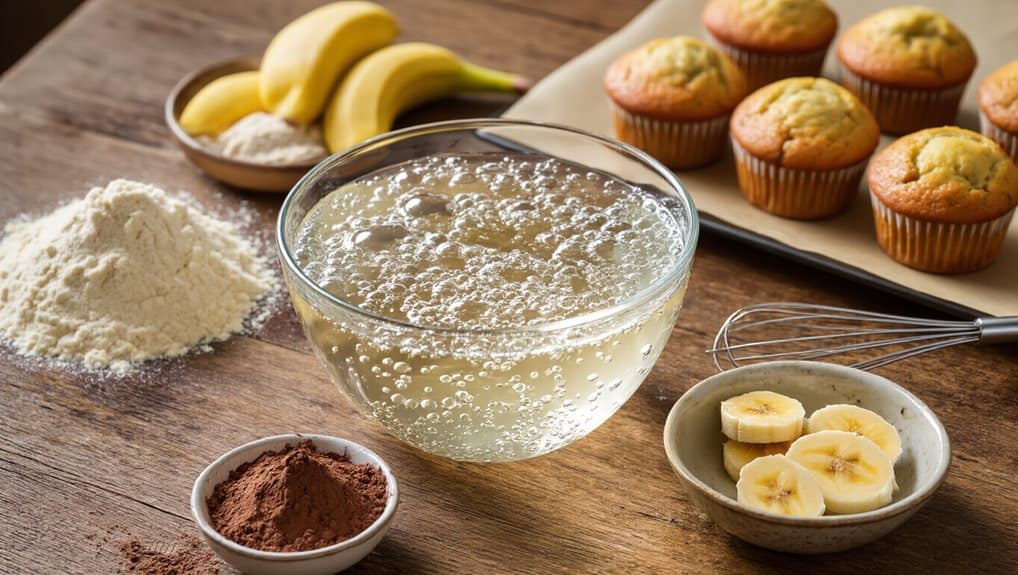
How can you give muffins and brownies a noticeable lift without using eggs? Mix ¼ cup carbonated water with ¼ cup neutral oil per egg for muffins, and 3 Tbsp each for brownies. The fizz creates CO₂ bubbles that expand in heat, while the oil adds moisture and tenderness. Reduce other liquids 2 Tbsp, bake at 375 °F (muffins) or 350 °F (brownies) for optimal rise.
Wrapping Up
Now that you’ve got a toolbox of egg alternatives, you can tackle any recipe without missing the egg’s role. Choose flax or chia for a nutty binder, tofu for creamy heft, starch slurries for light structure, aquafaba for airy meringues, vinegar‑plus‑baking soda for quick lift, and carbonated water with oil for fluffy muffins and brownies. Each substitute works best in specific textures, so experiment and adjust until you hit the perfect result.


