
Pick the substitute that matches your recipe’s moisture, lift, and flavor goals. Dairy‑free margarine works 1:1 for cakes and cookies, giving neutral taste and reliable rise, while shortening adds lift without moisture. Ghee lends buttery richness but use less to avoid heaviness. Vegan butters like Violife or Earth Balance perform well in buttercreams and baked goods, and nut butters or cashew puree keep cakes soft. Fruit purees (applesauce, banana, pumpkin) add moisture and density, and aquafaba emulsifies oil to mimic eggs. Adjust ratios and you’ll discover more detailed tips.
Quick Guide
- Use dairy‑free margarine 1:1 for cakes and cookies for neutral flavor and reliable rise.
- Substitute ghee or vegan butter (e.g., Violife, Earth Balance) weight‑for‑weight, reducing by 20 % if extra moisture is needed.
- For frostings, whisk coconut cream with refined coconut oil (3 parts cream : 1 part oil) for a light, stable emulsion.
- Replace butter with nut butters (almond) or cashew puree (add a splash of coconut oil) to retain moisture and tenderness.
- Incorporate fruit or vegetable purees (applesauce, banana, pumpkin, avocado) at ½‑100 % of butter weight, adjusting liquids accordingly.
Choose the Right Butter Substitute for Your Baking Goal
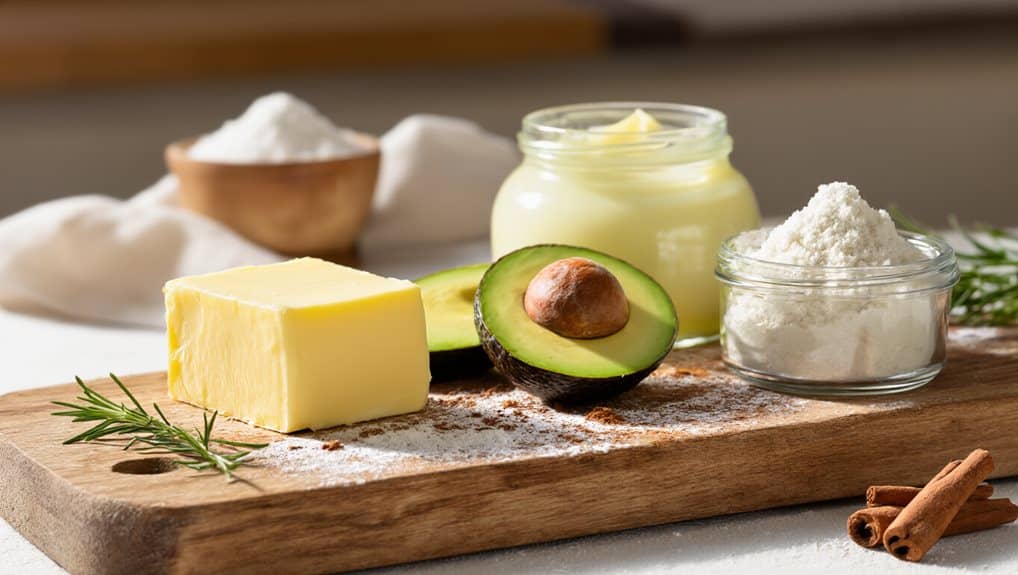
Which butter substitute fits your baking goal? If you need a 1:1 swap for cakes or cookies, dairy‑free margarine works well, offering a neutral flavor and reliable rise.
Shortening, 100% fat, also creams easily and enhances lift without adding moisture. For longer storage, vacuum sealing removes air to help prevent freezer burn and can extend freshness 5–7× longer.
Ghee adds rich buttery taste and works for bread‑type treats, but use less to avoid heaviness.
Choose based on flavor, texture, and dietary needs. Vegan options like coconut oil can also be used for a subtle tropical note.
Coconut‑Oil Butter Substitutes: Frostings vs. Cookies
You’ll find that whisking coconut cream with refined coconut oil creates a smooth emulsion that gives frostings a light, airy texture while keeping the flavor neutral. When you use the same oil in cookies, its low melting point spreads quickly, producing a crisp edge and a soft, chewy interior that you can control with the amount of oil and added spices. Adjust the ratios—about three parts cream to one part oil for frostings and three‑quarters cup liquid oil for cookies—to balance texture and taste without overpowering the final product. If you’re using frozen dairy, thaw it slowly in the fridge and whisk well to counter fat separation. The fat‑to‑water balance in butter influences leavening and tenderness.
Coconut Oil Emulsification
Coconut oil behaves differently in frosting and cookie recipes because its solid‑to‑liquid shift can be controlled through temperature and mixing.
You emulsify oil in cookies by creaming with sugar, egg, or eggnog, creating a chewy texture that firms after chilling.
In frostings, you blend oil with syrup, cocoa, or extracts, then beat at low then medium speed for a pipeable, fluffy consistency that stays stable at room temperature.
Texture Balance in Frostings
How does the texture of a frosting change when you swap butter for coconut oil?
Softened coconut oil creamed with vanilla yields a light, fluffy base in just a minute or two. Add sifted powdered sugar slowly on low speed, then a splash of milk for spreadability. The result is a dense, smooth buttercream that pipes well, but it stays firm only when chilled.
Cookie Crispness Control
Swap butter for coconut oil in a cookie dough and you’ll notice the spread and crunch change almost immediately. Because coconut oil melts faster and contains no water, the dough spreads thin, yielding crisper, lighter biscuits. It also limits gluten development, so cookies become short and crumbly. Expect a paler crust, a subtle coconut flavor, and a greasier mouthfeel—ideal for crispness control.
Vegan Butter Substitutes – Brand Comparisons & Best Uses
What makes a vegan butter truly work in the kitchen? You need a blend that melts evenly, carries flavor, and stays stable in heat. Violife scores 4.5 / 5 and shines in buttercream and general baking, while Earth Balance sticks give reliable, affordable performance for cookies and cakes. Miyoko’s cultured blocks add tangy depth for European‑style pastries, and Country Crock avocado oil mimics real butter’s melt. Choose Trader Joe’s for budget‑friendly, temperature‑sensitive recipes. For best texture, avoid refrigeration speeds staling and keep your vegan butter (and finished baked goods) in a cool, dry spot.
Nut‑Butter & Puree Butter Substitutes for Cookies & Cakes
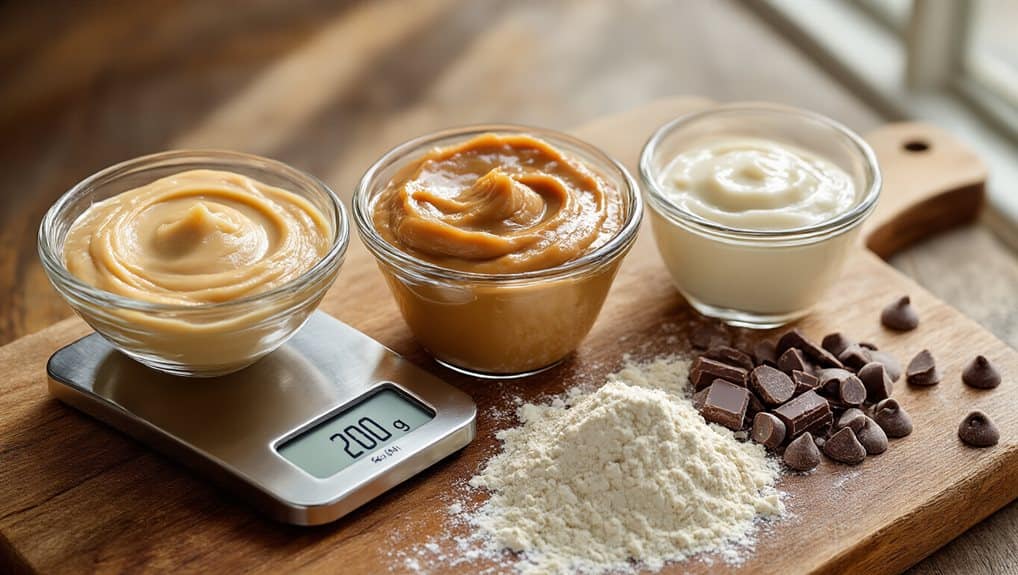
You’ll find that almond butter gives you a balanced flavor and texture that works just like regular butter in cookies and cakes, so you can swap it in at a 1:1 ratio.
Cashew puree adds extra moisture, keeping baked goods soft and tender without changing the amount you use.
Both options let you customize crunch or creaminess by adding chopped nuts or seeds, giving you flexibility while staying simple.
For the best results, store nut butters in a cool, dry place away from heat and sunlight to help maintain freshness.
Almond Butter Balance
Almond butter brings a smooth, mildly sweet profile to baked goods, making it a reliable stand‑in for traditional butter in cookies and cakes. You can replace butter cup‑for‑cup without adjusting other ingredients, and the fat and protein match almond’s health benefits.
Its creamy texture works well in no‑bake cookies, muffins, and energy bites, delivering a consistent chew while keeping moisture balanced.
Cashew Puree Moisture
Ever wondered how a simple cashew puree can keep your cookies soft and your cakes moist? Roast cashews at 300°F, then process 8‑10 minutes until the natural moisture releases into a silky paste. Add a splash of melted coconut oil for extra smoothness, and scrape the sides often. This moisture‑rich puree replaces butter, yielding tender, flavorful baked goods.
Ghee & Specialty Oil Butter Substitutes for Flavor
What makes ghee and specialty oils stand out as butter alternatives is their pure‑fat composition, which changes both texture and flavor in baked goods.
You’ll notice ghee creates tender, crumbly biscuits and shortbread, while spreading thin, crisp cookies.
Use it weight‑for‑weight, but cut the amount 20 % if you want moisture.
Coconut oil mimics ghee’s structure, and vegan butter offers similar spreadability without the nutty taste.
If you’re pairing these rich fats with fruit-based add-ins like applesauce, remember refrigerate immediately after opening to prevent rapid spoilage.
Fruit & Veg Puree Butter Substitutes for Quick Breads
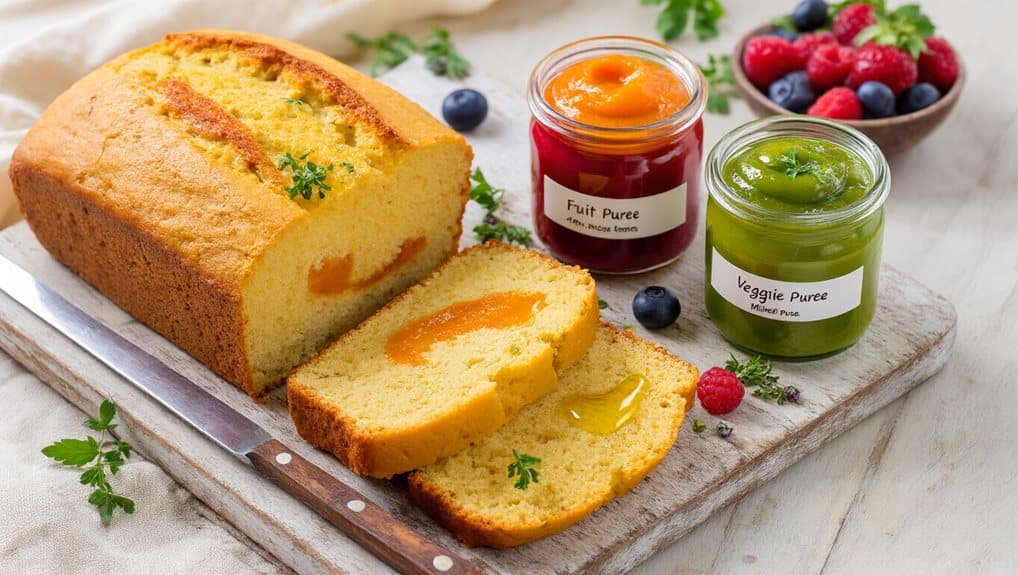
A quick‑bread recipe can stay moist and tender when you swap butter for fruit or vegetable purees, and each puree brings its own balance of flavor, texture, and nutrition. Applesauce replaces butter 1:1, adding sweetness but making the crumb denser; use unsweetened for sugar control.
Mashed banana works at half the butter amount, giving a cake‑like texture.
Pumpkin puree, at ¾ cup per cup butter, adds fiber and works well in spiced or chocolate breads.
Avocado matches butter 1:1, boosting healthy fats without overpowering taste.
Sweet potato, at ¾ cup per cup butter, supplies color and subtle sweetness, especially in chocolate recipes.
Adjust liquids slightly for each puree.
Aquafaba & Homemade Emulsifier Butter Substitutes
Curious how a simple bean broth can replace butter in your baking? Aquafaba, the liquid from chickpeas, emulsifies oil and mimics egg binding. Mix reduced aquafaba with cold‑pressed rapeseed oil, chill in an ice bath, and whisk until smooth for a vegan butter. Use one tablespoon per yolk, two for whites, three for whole eggs, and store reduced batches frozen for later.
Adjusting Texture, Flavor, & Browning With Butter Substitutes
After exploring how aquafaba can mimic butter’s binding power, the next step is learning how different substitutes change texture, flavor, and browning. Use mashed avocado for a buttery mouthfeel in chocolate desserts, 1:1, and nut butter for creamy consistency with a neutral taste if unroasted. Pumpkin purée (3:4) adds moisture and shape, while ghee enhances browning and flavor without lactose. Adjust ratios, add spices, and bake promptly.
Wrapping Up
Pick the substitute that matches your recipe’s goal, whether you need a crisp cookie, a tender cake, or a rich frosting. Remember that coconut oil works best in sweet spreads, vegan butters shine in pastries, nut‑butters add moisture to cookies, and ghee brings a buttery flavor with a higher smoke point. Fruit purees enhance nutrition in quick breads, while aquafaba can replace both butter and eggs in light treats. Adjust quantities and baking times as needed, and you’ll achieve consistent texture and flavor without compromising.


