
You can swap dairy milk for soy, oat, almond, or coconut milk, each offering a different balance of protein, moisture, and flavor. Soy milk works 1:1 and adds about 8 g protein per cup, helping cakes and breads rise and brown nicely. Oat milk gives a creamy, thick texture and natural sweetness, making it great for pastries. Almond milk is neutral and works well in vanilla‑style treats, while coconut milk adds tropical notes and extra moisture, suitable for richer baked goods. Adjust bake times slightly if the substitute is higher in water, and you’ll keep the texture on point—continue for more detailed tips.
Quick Guide
- Use unsweetened soy milk 1:1 for dairy milk; its protein (≈8 g / cup) supports rise and crumb.
- Substitute oat milk 1:1 for extra moisture and natural sweetness, but add a few extra bake minutes for oat starch.
- Almond milk works 1:1 in cakes and cookies; its neutral flavor lets other ingredients shine, though slightly higher water may shorten bake time.
- Full‑fat canned coconut milk replaces heavy cream or whole milk 1:1, adding tropical flavor and richness, but thin with water if using low‑fat versions.
- For a buttermilk effect, stir 1 Tbsp apple cider vinegar into any unsweetened plant milk and let sit 5 minutes before using.
Can You Really Swap Dairy Milk for Plant‑Based Milks in Baking?
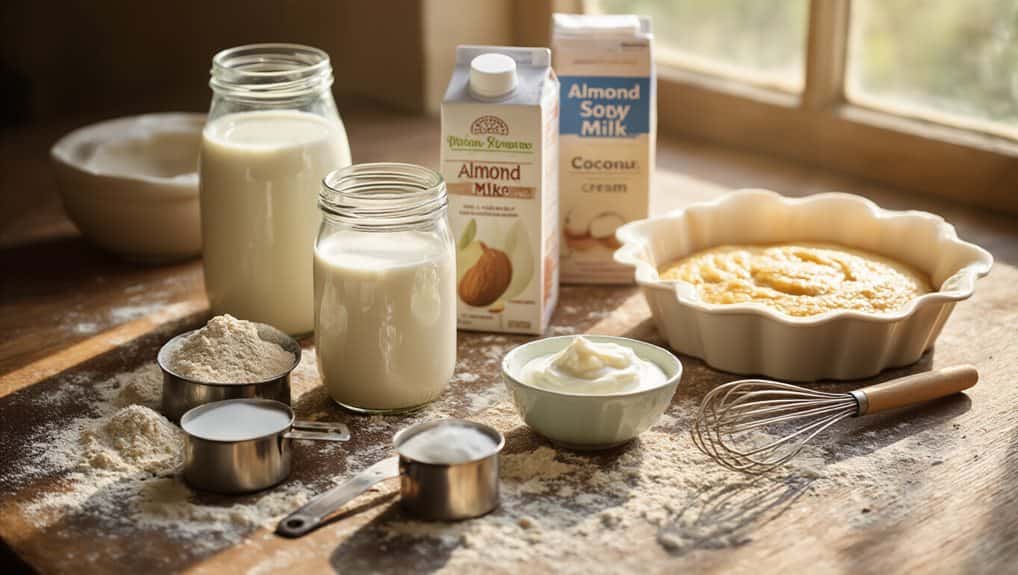
Can you really swap dairy milk for plant‑based milks in baking? Yes, but soy milk works best because it supplies 7‑8 g protein per cup, matching cow’s milk and giving cakes and breads firm structure. Its protein prevents crumbly loaves and yields a texture finer than almond or oat milks. Fortified soy also provides calcium, vitamin D and B12, making it a nutritionally close dairy alternative. Cooking can also enhance health benefits in certain foods, much like how preparing eggplant can make it easier to enjoy its nutrients. Protein stability helps maintain batter consistency during baking.
Choosing the Right Non‑Dairy Milk for Texture and Flavor
Which non‑dairy milk you pick can change both the texture and flavor of your baked goods, so it’s worth matching the milk’s properties to the recipe’s needs. Oat milk adds natural sweetness and fiber, perfect for cookies and pastries. Almond milk offers a neutral, creamy base for vanilla cakes. Coconut milk, especially full‑fat canned, mimics heavy cream for scones or buttercream. Cashew milk provides a nutty richness for sweet and savory treats, while pea milk boosts rise in yeast breads but may cause crumbling in delicate cakes. Soy milk matches protein levels of dairy milk, making it a reliable all‑purpose substitute. If you’re baking with fats like avocado oil alongside these milks, watch for signs of rancidity such as an off smell or bitter taste to avoid dulling flavor.
Soy Milk – High‑Protein, 1:1 Dairy‑Free Substitute for Cakes & Breads
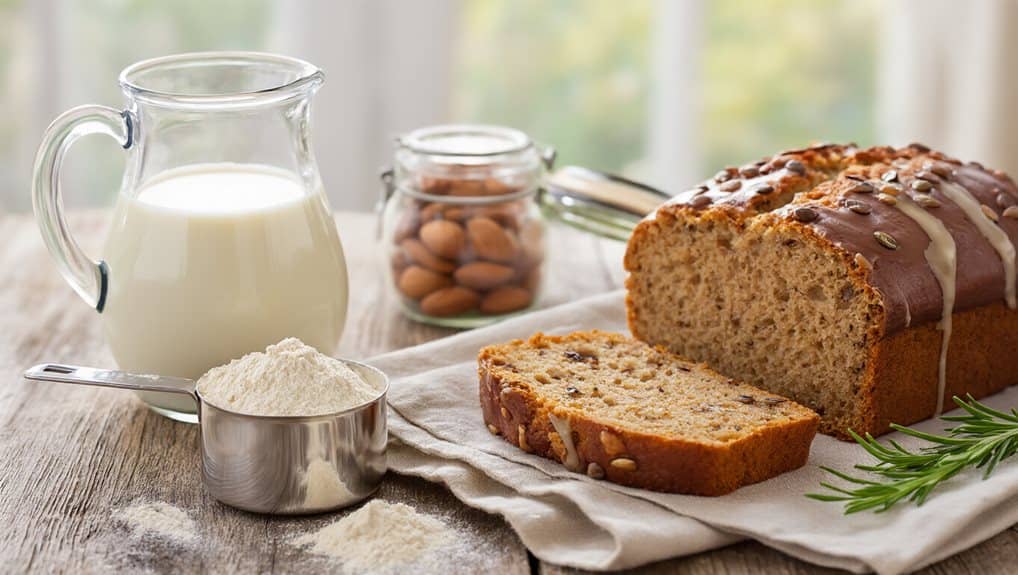
You can swap milk for soy milk cup-for-cup, and the extra protein will give your cakes and breads a stronger structure without changing the recipe balance. Its mild, slightly nutty flavor blends easily with most batters, so you won’t notice a drastic taste shift. If your recipe includes chocolate, store it in airtight containers at 60-70F away from sunlight to help maintain quality and prevent spoilage.
Because soy milk matches dairy milk’s liquid volume, you keep the same mixing ratios and still end up with a tender crumb and good rise.
Protein Boost for Structure
Boost your baked goods’ structure by swapping dairy milk for soy milk, which delivers the same 8 grams of protein per cup as cow’s milk. This protein mimics dairy, giving dough and batter the binding strength needed for rise and stability.
Its viscosity matches whole milk, so texture stays consistent, and the Maillard reaction improves browning, yielding professional‑looking crusts without extra frosting.
Mild Flavor Complements Recipes
Swapping dairy milk for soy milk not only enhances protein but also brings a subtle, nutty flavor that blends seamlessly into cakes and breads.
You’ll notice the gentle taste elevates muffins, cookies, and loaves without overpowering other ingredients. The natural sweetness and nutty note complement vanilla or chocolate, while the fortified calcium and vitamin D keep the bakery profile balanced and dairy‑free.
Seamless 1:1 Substitution
Ever wondered whether you can replace dairy milk with soy milk in your cake and bread recipes without a hitch? Use a 1:1 ratio—one cup soy milk for one cup dairy milk—no conversions needed. Soy’s 8.1 g protein per cup gives strong structure, while its 132 cal, 5.1 g fat, and 12.2 g carbs keep nutrition balanced. Opt for unsweetened soy, add a tablespoon of apple cider vinegar if you need a buttermilk effect, and enjoy a smooth, dairy‑free result.
Oat Milk – Creamy, Thick, Ideal for Vegan Pastries

Why choose oat milk for your vegan pastries? It adds moisture, thickens batter, and creates stable foam for airy toppings. The natural beta‑glucan fiber supports digestion, while its protein mimics soy’s amino acids. Enzymes break down starch, increasing sweetness without sugar. Its higher viscosity yields creamy texture, and the subtle oat flavor enhances the pastry’s sensory profile. Just as proper storage methods help keep green beans fresh longer, using oat milk can help maintain moisture and texture in vegan pastry batters.
Almond Milk – Neutral Flavor, Perfect for Vanilla‑Style Treats
You’ll find that almond milk’s neutral flavor lets vanilla shine without competing notes, so it’s a reliable swap for vanilla cakes. Because it contains more water than cow’s milk, you’ll usually need to shorten the baking time by a few minutes to avoid a soggy crumb. Just keep an eye on the temperature and stir gently, and the result will be a moist, tender cake with a clean vanilla taste. If you warm almond milk in the microwave first, avoid using wooden utensils since wooden items are best kept out of microwaves.
Neutral Flavor Profile
Is it the neutral taste you need for a vanilla‑style cake? Almond milk offers a plain, almost dairy‑like flavor that doesn’t dominate baked goods.
Unsweetened, unflavored varieties lack aftertaste, letting other ingredients shine.
It matches skim milk’s profile, so you substitute 1:1, then add a bit of fat if you use whole‑milk recipes.
Choose simple, additive‑free almond milk for true neutrality.
Ideal for Vanilla Cakes
Ever wonder which milk substitute keeps a vanilla cake’s flavor pure while still giving it a light, moist crumb? Unsweetened almond milk delivers a neutral taste that lets vanilla shine, yet it adds moisture and a tender crumb.
With only 40 calories per cup, low carbs, and fortified calcium and vitamin D, it supports weight management and bone health without altering the cake’s delicate flavor profile.
Adjust Baking Times
Since almond milk’s higher water content speeds up cooking, you’ll need to shorten the bake time when swapping it for cow’s milk in a vanilla cake. Set the timer for a few minutes less, then check browning and doneness with a fork. Watch closely near the end to avoid drying out, and remember the 1:1 substitution as your starting point. Adjust as needed based on texture and color.
Coconut Milk – Moisture‑Rich, Adds Subtle Tropical Notes
Ever wonder why coconut milk can turn a simple cake into a moist, tropical treat? Its natural fats lock in water, giving a tender crumb and extended shelf life. The built‑in sugars caramelize, creating golden crusts and subtle sweet notes.
Use a 1:1 swap for low‑fat milk, or thin high‑fat milk with water. Dissolve powder fully for smooth batter and consistent texture.
Dairy‑Free Alternatives: Sour‑Cream‑Style and Yogurt‑Style Swaps
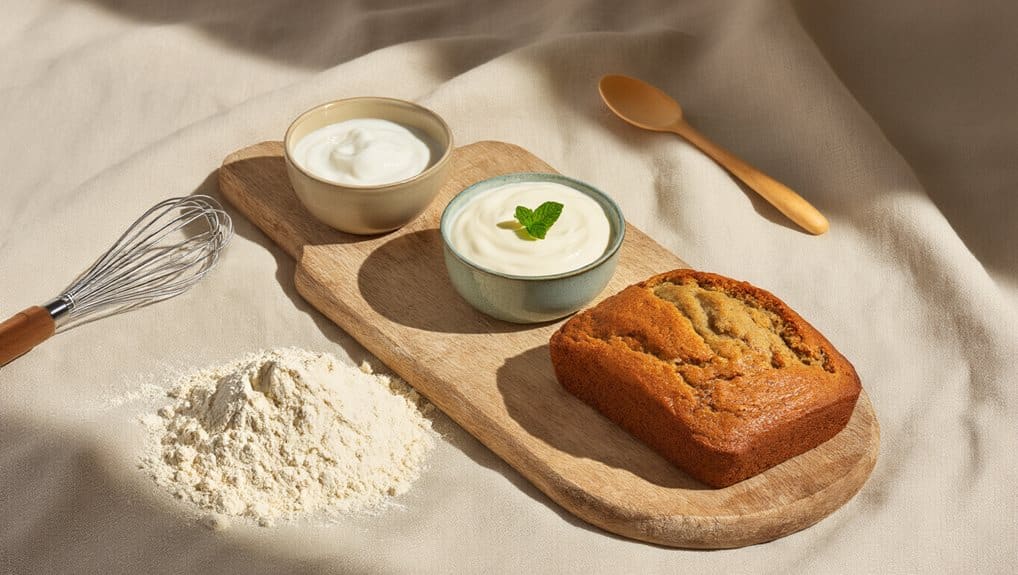
If coconut milk gives your baked goods extra moisture, swapping it for a dairy‑free sour‑cream or yogurt alternative can add the tangy richness you’d get from dairy without sacrificing texture.
Use a quick soy‑milk sour‑cream (hot soy milk, lemon juice, salt, sugar) for a creamy base, or blend vegan yogurt with soy milk and lemon juice for a lighter, tangy swap.
Both prep in a minute and keep your batter smooth.
Adjusting Baking Times, Sweetness, and Moisture When Using Milk Substitutes
How do you keep your baked treats on schedule when you swap dairy milk for a plant‑based alternative? Check doneness with a toothpick, because oat milk’s starch can make batter wetter and may need a few extra minutes, while coconut milk’s thickness often shortens time. Unsweetened milks let you control sugar; oat and almond milks add natural sweetness, reducing added sweetener. Adjust liquid volume for thicker substitutes to balance moisture and texture.
Wrapping Up
You can replace dairy milk with a plant‑based option and still get great results, as long as you match the milk’s thickness and flavor to your recipe. Choose soy for protein‑rich cakes, oat for creamy pastries, almond for neutral‑flavored treats, or coconut for tropical moisture. Remember to adjust baking time, sweetness, and liquid ratios if needed. With these simple swaps, you’ll bake successfully without dairy while keeping texture and taste on point.


