
To thicken soup without cream, use natural ingredients like pureed vegetables (such as carrots, squash, or potatoes), cooked grains (rice, oats, or quinoa), or legumes (beans or lentils) that absorb liquid and add creaminess. Pantry staples like cornstarch or flour mixed with cold water form quick slurries for instant thickening. You can also try gluten-free options like xanthan gum or ground nuts. Techniques like simmering uncovered or combining these methods improve texture—continues to offer useful tips for perfect soup consistency.
Quick Guide
- Puree cooked vegetables like carrots, potatoes, or squash and stir into the soup for natural thickening.
- Add cooked grains such as oats, rice, or quinoa to absorb excess liquid and create a hearty texture.
- Use a slurry of cornstarch or gluten-free flour mixed with cold water, then stir into hot soup to thicken quickly.
- Incorporate pureed legumes like white beans or lentils for added creaminess and protein.
- Simmer the soup uncovered to evaporate excess liquid, naturally increasing thickness.
Why Thicken Your Soup Without Cream?
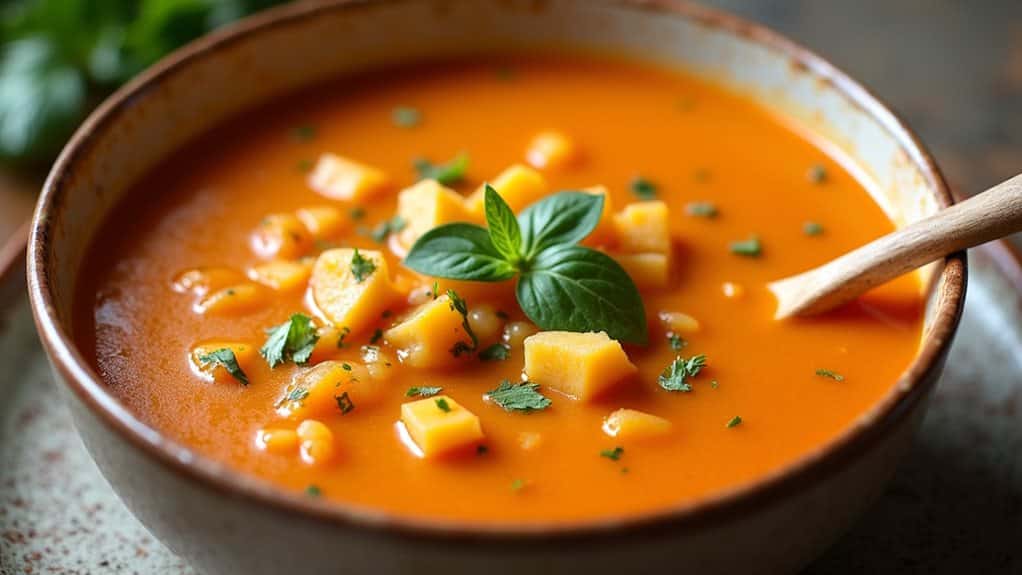
You might choose to thicken your soup without cream for several practical reasons. Using alternatives like beans, pureed vegetables, or grains can create a creamy texture while reducing calories and fat.
It also avoids lactose intolerance or dairy allergies. These options provide similar thickening effects and add nutritional value, making your soup healthier and suitable for a wider range of dietary needs.
For batch cooking, a vacuum sealer with double heat seal technology can help maintain freezer storage quality and reduce freezer burn.
Natural Vegetable and Grain Thickeners for Healthy Soups
Using pureed vegetables like carrots, squash, or potatoes can naturally thicken your soup while enhancing its flavor and nutrients.
Adding cooked grains such as oats, quinoa, or rice helps absorb excess liquid and creates a hearty texture.
Incorporating pureed legumes like white beans or lentils offers creaminess and extra protein without relying on dairy or fats.
Keep soy sauce tightly sealed in a cool, dark place to reduce oxidation effects that can dull its flavor.
Pureed Vegetables for Thickness
Pureed cooked vegetables are a simple and healthy way to thicken soups naturally.
Using pureed vegetables like carrots, squash, or potatoes helps thicken a soup while adding flavor and nutrients.
Blending these vegetables directly from the soup or separately cooked creates a smooth, hearty texture without dairy or additives, making your soup richer and more nutritious.
Grain-Based Thickening Options
Grain-based thickeners are a versatile and healthy way to improve the texture of your soup naturally. You can incorporate cooked grains like rice, oatmeal, quinoa, or barley, which absorb liquid to create thickness.
Grain flours such as rice or oat flour also work well when stirred into simmering soup, providing gluten-free, nutritious options without altering flavor considerably.
Pantry Staples for Cream-Free Soup Thickening
Have you ever needed to thicken soup quickly without adding cream? Pantry staples like cornstarch and all-purpose flour are effective options.
Mix cornstarch with cold water before adding to hot soup to avoid clumping.
All-purpose flour can be cooked briefly with butter or oil, then stirred in to thicken, providing a simple, accessible solution.
Gluten-Free and Low-Carb Thickening Options
If you need to thicken your soup without gluten or extra carbs, several effective options are available.
Xanthan gum is a small but powerful amount that can considerably thicken liquids.
While potato flakes or starch provide quick results with a neutral taste.
You can also use pureed vegetables like cauliflower or zucchini, which naturally add thickness and enhance nutrition.
Or ground nuts for a creamy texture.
Eggplants are rich in antioxidants like anthocyanins, which provide anti-inflammatory benefits.
Xanthan Gum Benefits
Did you know that xanthan gum is an excellent thickening option for those following gluten-free or low-carb diets?
This thickening method uses just a small amount of xanthan gum to create a gel-like network that thickens liquids quickly, even when cold.
It doesn’t change the flavor or color, making it a practical choice for maintaining your soup’s natural taste.
Potato Flakes Usage
Potato flakes are a versatile option for thickening soups, especially if you’re aiming for a gluten-free meal. You can thicken soup by gradually adding potato flakes while stirring continuously to prevent clumping.
They hydrate quickly, so small increments give you control over the desired consistency. Keep in mind, potato flakes are high in carbs, so use sparingly for low-carb options.
Vegetable Purees Effect
Vegetable purees offer a natural way to thicken soups while enhancing flavor and nutrition. By blending cooked vegetables like carrots, squash, or cauliflower, you create a gluten-free, low-carb thickening option that adds creaminess without dairy.
These purees can be added gradually during cooking, providing consistent thickening and a nutritious enhancement to your soup.
Quick and Easy Techniques to Thicken Soup
One of the quickest ways to thicken soup is by simmering it uncovered, allowing excess liquid to evaporate.
You can also stir in a slurry made from flour or cornstarch, combining equal parts with cold water before adding it to the hot soup.
This instantly thickens the broth, creating a richer texture without needing cream.
Troubleshooting Common Thickening Problems
When your soup isn’t reaching the desired thickness, it’s important to identify and address common issues during thickening.
Clumping often occurs with cornstarch slurry or flour if added directly to hot soup. To prevent this, dissolve these powders in cold water first, then stir gradually while simmering.
This method helps achieve a smooth, consistent texture without lumps.
Combine Methods for Perfect Soup Texture and Flavor
To achieve the perfect soup texture and flavor, combining multiple thickening techniques can make a significant difference.
Using flour with other methods, like pureed vegetables or beans, creates a smooth, well-balanced consistency without cream.
Layering techniques—such as bread, nuts, or potatoes—enhance flavor and improve thickening, giving you control over the final texture.
If you thicken with nut butters, follow best storage practices to keep them fresh and avoid off flavors.
Wrapping Up
Thickening your soup without cream is straightforward and versatile. Using natural ingredients like vegetables, grains, or pantry staples allows you to customize textures while keeping your soup healthy. Experiment with different methods, such as pureeing or adding thickening agents like arrowroot or oats, to achieve your desired consistency. Combining techniques can often yield the best results. With these practical tips, you can easily create rich, satisfying soups customized to your dietary needs and taste preferences.


