
Your cake feels dense because the batter has too much gluten, not enough leavening, or improperly tempered fat. Over‑mixing after the flour appears creates a strong gluten network that traps moisture and makes the crumb tough. Stale or insufficient baking powder or soda leaves the cake flat, while butter that’s too warm melts and collapses the air you creamed in. Using low‑protein flour, folding gently, and keeping butter at room temperature preserve air pockets, giving a lighter texture. Continue for tips on fixing the problem.
Quick Guide
- Too much flour or too little liquid creates a low wet‑to‑dry ratio, making the crumb heavy and compact.
- Stale or insufficient leavening agents fail to generate enough gas, so the cake doesn’t rise properly.
- Overmixing after flour is added develops gluten, tightening the structure and producing a dense texture.
- Butter that’s too warm or melted collapses trapped air during creaming, reducing the cake’s volume.
- Baking at an incorrect temperature or opening the oven early prevents proper expansion, resulting in a dense crumb.
What Makes a Cake Dense? – Quick Overview
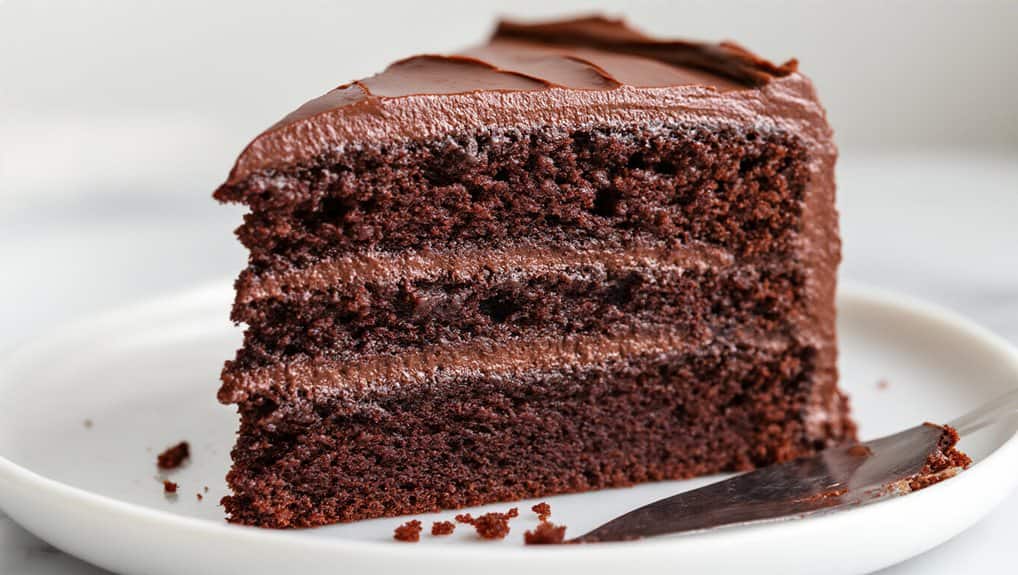
Why does a cake sometimes turn out heavy instead of light? You’ll get density when flour ratios dominate, soaking up excess moisture, or when leavening agents are stale or insufficient.
Too‑warm butter collapses trapped air, and a too‑hot oven sets the crust before the interior can expand. Just as herb keepers use vented lids to balance moisture and airflow, cakes need the right humidity and circulation while baking so the crumb can expand instead of turning heavy.
Following exact temperature, timing, and ingredient proportions keeps the crumb light and airy. Overmixing can also develop gluten, making the cake tougher and denser.
Why Overmixing the Batter Traps Air and Adds Gluten?
When you keep mixing a cake batter past the point where the flour just disappears, the mechanical action starts to develop gluten strands and push out the air bubbles you originally folded in. Using the right pan volume matters too—an 8 x 8 pan is roughly half the size of a 9 x 13 pan, so overfilling can bake up thicker and feel heavier even if the batter is properly mixed. Those gluten strands create a stretchy network that traps moisture, while the friction‑generated heat further deflates bubbles. The result is a dense, chewy crumb that lacks the light lift you expect. Over‑mixing also makes the batter appear smoother and more dense, resembling cookie‑dough rather than a light, airy mixture.
How Butter Temperature Controls Air Retention in Cake Batter?
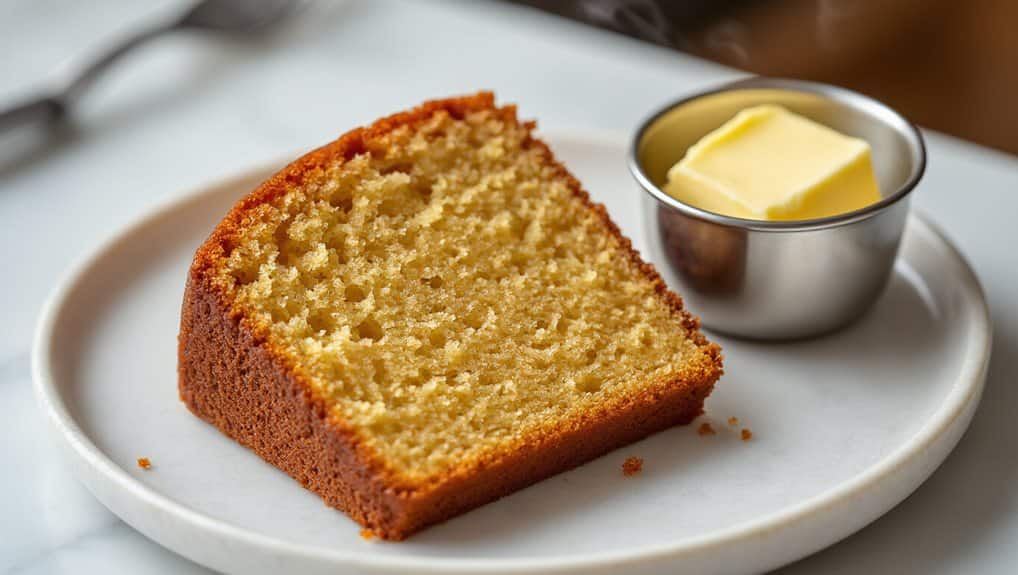
You’ll notice that butter kept at room temperature (around 65‑70 °F) traps the most air when you cream it with sugar, giving the batter a light, fluffy texture. If the butter is too cold, it stays chunky and forces you to over‑mix before air can be incorporated, while overly warm butter melts completely and eliminates air pockets altogether. Just as soaking wooden skewers in water helps maintain moisture and reduce ignition risk, keeping butter properly tempered helps preserve the air structure you’re trying to build.
After you’ve creamed the butter, fold the flour in gently to keep the captured air from escaping.
Room Butter Temperatures Matter
Ever wondered why a cake that seems airy in the bowl ends up heavy on the plate? When butter sits at room temperature, about 65 °F (18 °C), it stays cool to the touch but soft enough to trap air during creaming. This softness lets the butter emulsify evenly, holding bubbles that expand while baking. If butter’s too cold, it cracks and creates pockets; if too warm, it melts, releasing air and making the cake dense. Use a cool‑to‑touch test and keep all ingredients at the same temperature for consistent, light results.
Proper Creaming Speed
If you keep the butter at or just below 65 °F while you cream, the mixer’s friction will only raise its temperature a few degrees, letting the fat stay firm enough to trap air bubbles without melting.
Cream on medium speed for 4–5 minutes; faster speeds heat butter quickly, causing over‑creaming and bubble collapse, while slower speeds leave sugar under‑dissolved, yielding a dense crumb.
Gentle Folding After Flour
How does butter temperature affect the air you’ve just trapped during creaming? If butter stays around 70°F, it holds those air pockets when you gently fold in flour; the batter stays light. Cold butter hardens, collapsing air and making dense cake. Warm butter melts, turning the batter greasy and losing structure. Keep all ingredients at room temperature, and fold slowly to preserve the trapped air.
What Happens When You Over‑Cream Butter and Sugar?
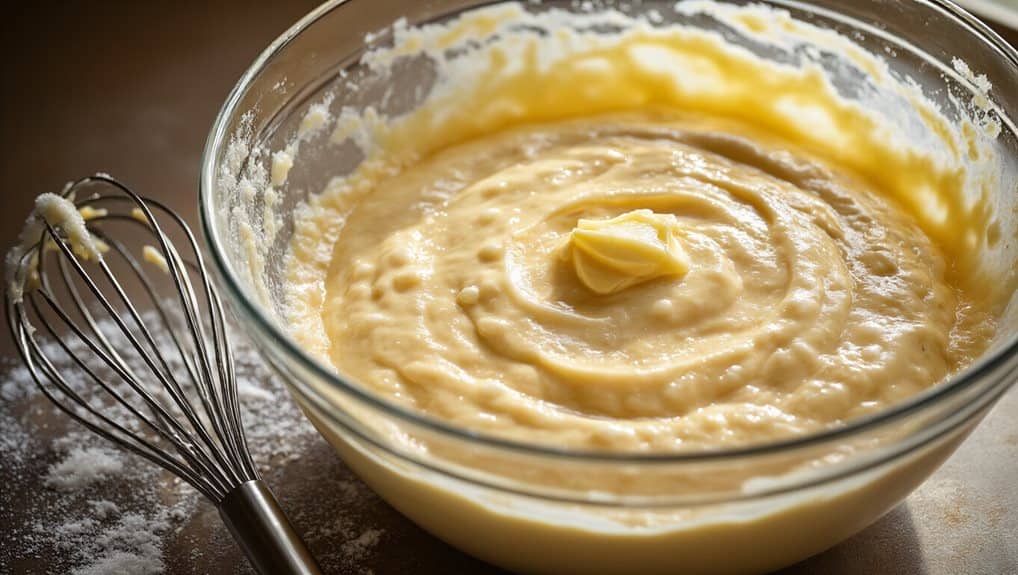
Why does a cake turn dense when you over‑cream butter and sugar? You trap air early, then collapse those bubbles by mixing too long or too fast, especially with warm butter. The emulsion breaks, fat coalesces, and gluten forms stronger, all of which stiffen the batter.
Just like using airtight containers prevents moisture and air exposure from ruining walnuts, keeping your mixing controlled helps protect the batter’s structure from breaking down.
Less air expands during baking, so the crumb stays tighter, the cake sinks, and the texture becomes heavy.
Choosing Flour for a Light, Non‑Dense Cake (Sift Tips Included)
Ever wondered which flour will keep your cake light and airy? Choose low‑protein cake flour (7‑9% protein) for the finest crumb; bleed it for the tallest rise.
If you lack cake flour, replace 2 Tbsp per cup of all‑purpose with cornstarch, then sift twice to break clumps.
Pastry flour works too, offering a soft texture with a bit more structure.
Sifting aerates the flour, ensuring even distribution and a fluffier bake.
If you’re prepping ingredients ahead, a double heat seal on a vacuum sealer can help keep flour dry and clump-free in pantry storage.
How to Match Acids, Liquids, and Leavening for Proper Rise?
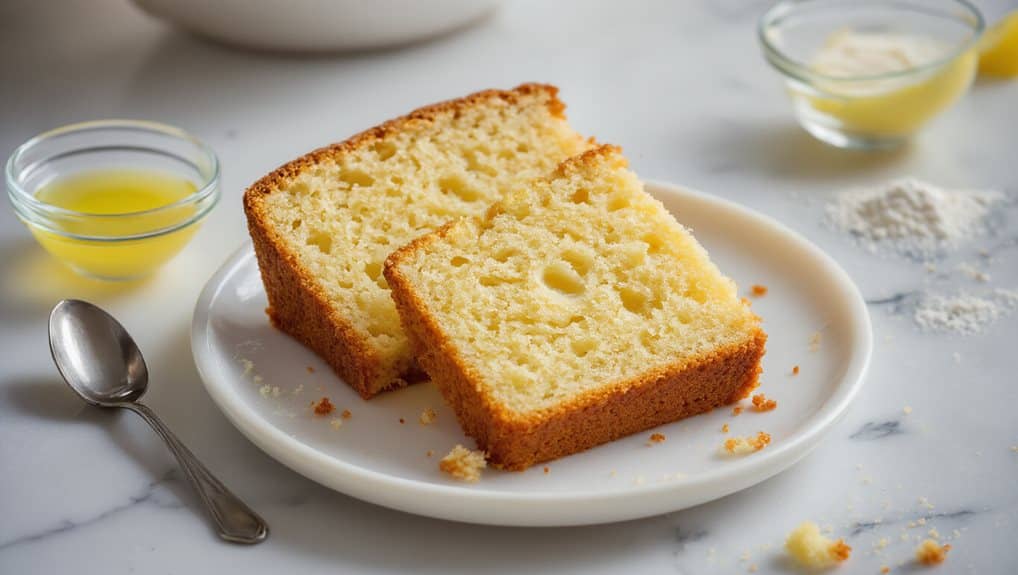
You’ll need to balance the acid‑leavening ratio so the soda has enough acidity to generate CO₂, but not so much that it tastes bitter.
At the same time, keep the liquid‑flour proportion in check; too much liquid dilutes the reaction while too little leaves the batter dry and hampers rise.
Acid‑Leavening Ratio
How do you match the acids, liquids, and leavening agents so a cake rises properly? Use about 2 % baking soda of the flour weight, then add enough acid—like buttermilk, lemon juice, or cream of tartar—to neutralize it completely. Aim for a 1:1 molar ratio; excess acid gives tang, excess soda leaves bitterness. Keep acid in wet ingredients and soda in dry, then combine just before baking.
Liquid‑Flour Balance
Why does a cake sometimes stay flat even when you’ve added enough leavening? You need the right liquid‑flour balance.
Flour absorbs liquids to form a gluten network; cake flour, low‑protein, so more liquid without tightening crumb.
Match acids like sour cream with baking soda, and keep liquid‑to‑flour ratios high (0.4‑0.7 g/ml) for tender, airy texture while preventing collapse.
Gentle Mixing After Flour: Folding Techniques to Preserve Air
Ever wonder why a cake can turn dense even after you’ve added the flour? You need to fold, not stir. Use a flexible silicone spatula, cut through the middle, sweep across the side, and lift over the top while rotating the bowl. Add light mixtures—egg whites or whipped cream—gradually, stopping when the batter is streak‑free. This traps air, prevents gluten overdevelopment, and yields a light crumb.
Balancing Liquids in Moisture‑Rich Cakes (Banana Example)
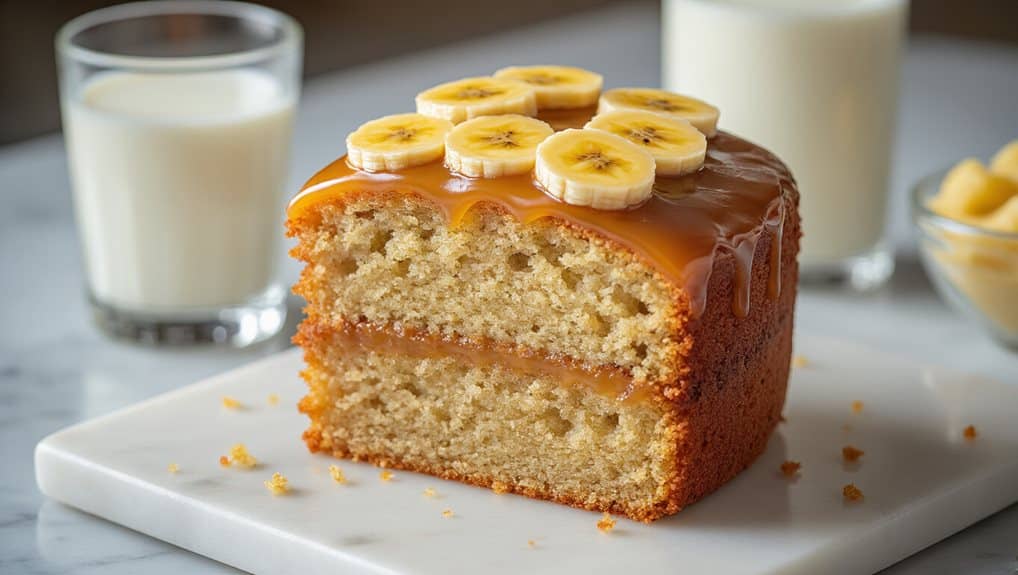
You’ll notice that a one‑to‑one banana‑to‑flour ratio keeps the batter from turning soggy, so if you use four medium bananas, use about a cup of flour.
If the batter still feels too wet, add a tablespoon of flour at a time until it holds its shape while still being pourable.
Adjusting the wet‑ingredient balance this way helps you avoid a dense, heavy crumb without sacrificing flavor.
Banana‑to‑Flour Ratio
How much banana you add compared to flour determines whether a cake rises light and airy or stays heavy and dense. Aim for 200‑250 g mashed banana per 200 g plain flour, or 1 cup banana (≈225‑240 g) with 240 g flour, to keep the crumb fluffy. Increase flour to 375 g when using 345 g banana, and use 225 g self‑raising flour for 390‑450 g banana. Measure flour by spoon‑and‑level for accuracy.
Adjusting Wet‑Ingredient Balance
What happens when the liquid proportion in a banana‑based batter tips too far toward the dry side? You’ll get a dense, heavy crumb because the wet‑to‑dry ratio is off. Adding 1‑2 Tbsp sour cream or yogurt lifts moisture and lightens texture. A couple of tablespoons of oil further balances the batter, preventing dry flour dominance. Adjust these liquids until the batter feels pourable, not stiff.
Oil vs. Butter: Which Gives More Volume Without Density?
Why does oil often produce a taller, lighter cake than butter?
Oil coats flour evenly, limiting gluten and letting the batter rise without the extra water butter butter brings. Since oil is 100 % fat, it adds less weight per cup, so the crumb stays airy and moist.
Butter’s water strengthens gluten, creating a tighter, denser structure, even though it offers richer flavor.
Troubleshooting Checklist: Fix a Dense Cake Batter in 5 Steps
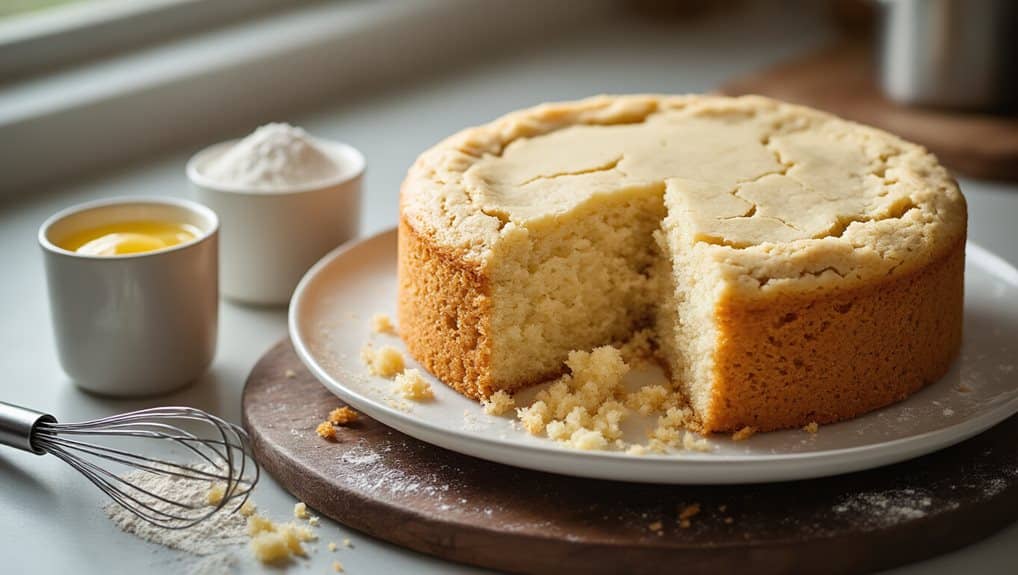
Ever wondered why your cake batter turns out dense despite following the recipe? Measure flour precisely—fluff, spoon, level, or weigh.
Mix only until combined; stop before gluten over‑develops.
Use room‑temperature eggs, butter, and milk for better aeration.
Check baking powder and soda are fresh and measured accurately.
Verify oven temperature with a thermometer and bake at the recommended heat without opening the door early.
Wrapping Up
You’ve learned that dense cake usually stems from overmixing, wrong butter temperature, excess gluten, or imbalance in liquids and fats. By keeping butter soft, mixing just enough to combine, sifting flour, folding gently, and choosing the right fat—oil for moisture or butter for flavor—you’ll preserve air and avoid a heavy crumb. Follow the five‑step checklist, adjust one factor at a time, and you’ll consistently bake light, fluffy cakes.


