
Blend oil and butter in equal parts, then cream them with sugar to lock in moisture and keep the crumb tender. Use room‑temperature sour cream, yogurt, or milk for richness, and add a splash of water or simple syrup after baking to hydrate the interior. Bake at 350 °F for 15‑17 minutes, checking doneness with a toothpick or internal temp of 200‑209 °F, then cool on a rack before frosting. Store unfrosted cupcakes in an airtight container, layer with plastic wrap, and keep them below 75 °F; freeze individually wrapped cupcakes for longer storage. If you follow these steps, the next tips will show you how to troubleshoot dry‑cupcake issues and add post‑bake fillings for extra moisture.
Quick Guide
- Brush warm cupcakes with thin layers of simple syrup (equal parts sugar and water) while they cool to add moisture without sogginess.
- Store cupcakes in airtight containers, layering plastic wrap between layers, and keep them below 75 °F to prevent drying.
- Use a fat blend of equal parts oil and butter, melted then creamed with sugar, to coat flour proteins and retain moisture.
- Cool cupcakes on a rack for 10‑15 minutes, then let them fully cool for about an hour before frosting to lock in moisture.
- Freeze unfrosted cupcakes after cooling, double‑wrapping each piece, and thaw slowly in the refrigerator before bringing to room temperature.
Pick the Best Moisture‑Boosting Ingredients for Moisture Cupcakes
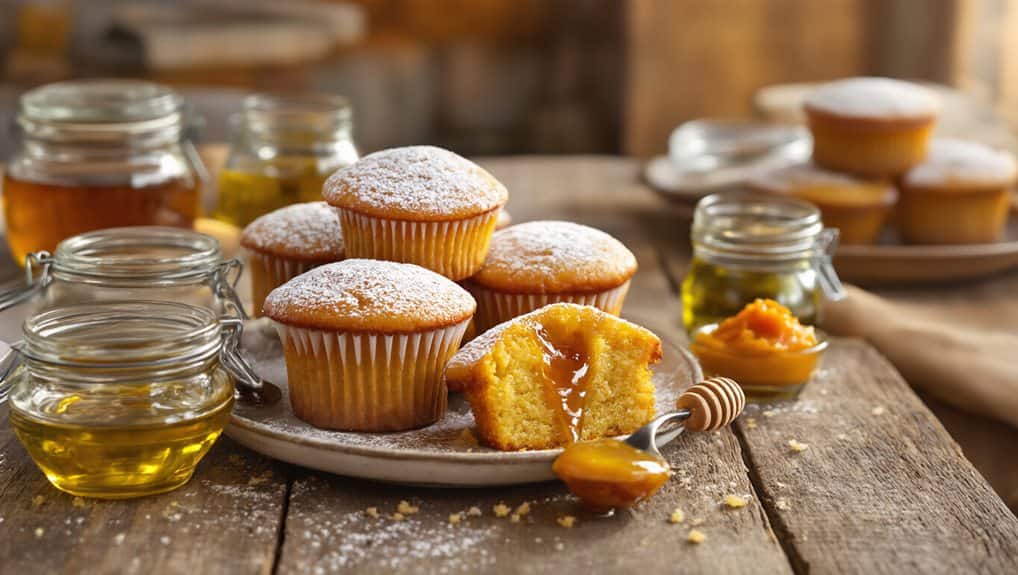
Choosing the right moisture‑boosting ingredients is key to keeping cupcakes soft and fresh after baking. You’ll want 1½ teaspoons of vegetable or canola oil to lock in moisture, especially on day four, and combine it with butter for flavor without density. Add room‑temperature sour cream or full‑fat milk for richness, and a splash of water (¼ cup) to keep the batter light yet moist. For a fun twist at gatherings, consider pairing cupcakes with Tropical Punch and Lemonade for a refreshing party drink. Incorporating Japanese‑inspired folding techniques helps retain air and further enhances the crumb’s tenderness.
Mix Ingredients to Create a Tender, Moist Crumb
You’ll want to blend oil with butter so the fat stays soft and the crumb stays tender, while yogurt adds moisture and a slight tang that keeps the texture light. Store your cupcakes in an airtight container and keep them away from heat, similar to how corrosion resistance helps protect high-carbon stainless steel from damage over time.
Adding brown sugar and a splash of molasses gives the cupcakes a richer flavor and extra humectancy, preventing them from drying out. Use fresh butter to ensure the fat incorporates smoothly and maintains moisture.
Oil and Butter Blend
A blend of oil and butter gives cupcakes the best of both worlds: the rich flavor and airy crumb that butter creates, plus the lasting moisture and tender texture that oil provides. Use equal parts, melt the oil, then cream it with butter and sugar to trap air. This mix coats flour proteins, slows gluten, and keeps crumbs moist for days while preserving buttery taste.
Yogurt for Tenderness
Yogurt’s creamy texture and protein content work together to give cupcakes a tender, moist crumb without making them heavy. You’ll protein 1/3‑1 cup plain or Greek yogurt, preferably whole‑milk, and fold it gently after the dry ingredients are mixed.
The acid reacts with baking soda for lift, while the protein binds moisture, extending freshness for days.
Use room‑temperature yogurt and avoid over‑mixing to keep the crumb light.
Brown Sugar & Molasses
After using yogurt to enhance tenderness, swapping in brown sugar and molasses adds another layer of moisture and flavor. The molasses in brown sugar holds water and a slight acidity, which keeps the crumb soft and tender. It also gives a caramel‑like taste and a golden hue.
Pack it tightly, combine with oil or sour cream, and you’ll see longer freshness and a richer, chewier texture.
Bake at the Right Temperature and Time to Prevent Drying
Getting the temperature and timing right is the single most effective way to keep cupcakes moist after baking. Preheat your oven to 350 °F (176 °C) and confirm the heat with a thermometer; place the rack in the middle for even bake. Bake 15‑17 minutes, checking a toothpick or internal temperature (200‑209 °F). Remove promptly when done. Just like the two-hour rule for refrigerating cooked bacon grease helps maintain safety and quality, letting cupcakes sit too long in a hot pan can dry them out fast.
Cool Cupcakes Properly on a Rack for Maximum Softness
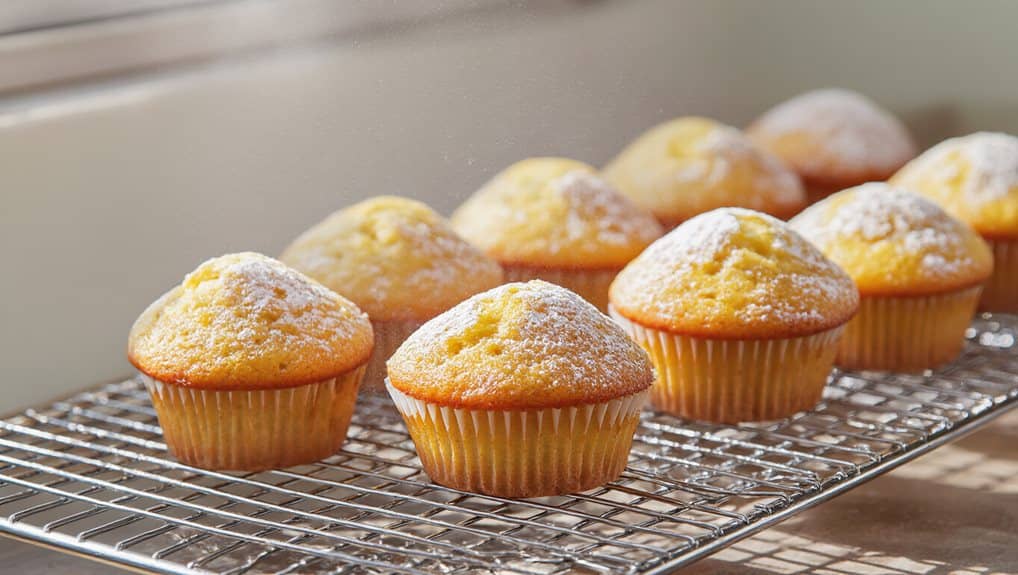
Now that your cupcakes have baked at the right temperature, the next step is to cool them correctly on a rack to keep them soft. Let them rest in the pan only one to two minutes, then transfer them onto a wire rack. The rack lets air circulate, preventing steam traps that dry or gummy the texture.
Just as Greek yogurt separates when frozen and changes texture, trapping steam around cupcakes can also affect their final softness.
Cool on the rack for ten to fifteen minutes before moving them, and allow a full hour before frosting to preserve moisture.
Store Unfrosted Cupcakes in Airtight Containers for Up to 3 Days
You’ll keep your unfrosted cupcakes fresh by sealing them in a sturdy airtight container, and a layer of plastic wrap inside adds an extra barrier against moisture loss.
Choose a tall, BPA‑free container so the cupcakes stay in a single layer without being squished, and make sure the lid fits tightly.
Store the container in a cool, dry place below 75°F to avoid moisture exposure that can affect texture.
This simple step lets you store them at room temperature for up to three days without drying out.
Sealight Containers Preserve Freshness
Because airtight containers lock in moisture, they keep unfrosted cupcakes from drying out and extend their shelf life to up to three days at room temperature. You should cool cupcakes on a wire rack for an hour, then place them in a single layer inside a plastic or glass container with a tight‑fitting lid. Keep the container away from sunlight, avoid overcrowding, and use a silicone liner if you need extra protection. This method preserves texture and prevents contamination.
Layer With Plastic Wrap
How can you keep unfrosted cupcakes moist for three days without sacrificing texture? First, cool each cupcake completely, then wrap it tightly in plastic wrap, keeping the liner on. Place the wrapped cupcakes in a single layer inside a resealable bag or airtight container. If you need to stack, separate layers with parchment paper. Store at room temperature away from sunlight; the wrap and container together lock in moisture for up to three days.
Wrap and Refrigerate Frosted Cupcakes Without Cracking the Frosting
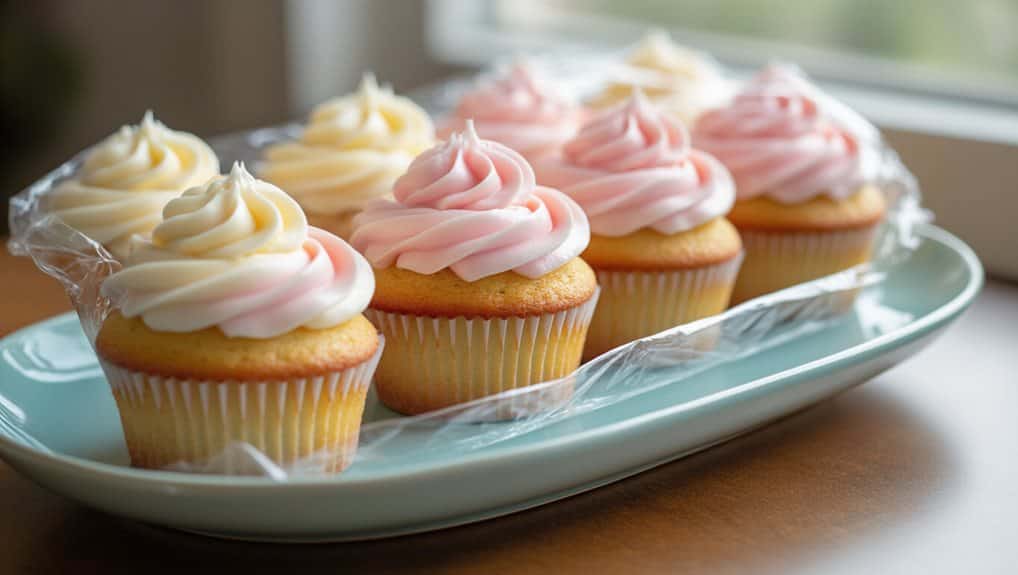
Ever wonder how to keep frosting intact while you store frosted cupcakes?
First, chill them on a sheet for 2‑3 hours or freeze one hour until the frosting firms but isn’t hard.
Then wrap each cupcake in plastic, keeping the liner on, and place them in an airtight container or zip‑lock bag.
Store in the fridge for up to a week, avoiding whipped‑cream frostings.
Bring Frosted Cupcakes to Room Temperature Before Serving
You’ll want to let the frosting soften a bit before you serve, so set the cupcakes on a room‑temperature plate for a short while.
Using a surface that’s already at room temperature helps prevent condensation from forming under the frosting, which can make the cupcakes soggy.
This quick step keeps the texture smooth and the flavor fresh without any extra hassle.
Allow Frosting to Soften
Ever wonder why a cupcake feels dense and dry when you bite into it straight from the fridge? Let the frosting soften by leaving frosted cupcakes on the counter for about an hour before you serve. This room‑temperature step restores moisture, prevents a firm bite, and works for buttercream, ganache, or cream‑cheese frosting. The softer topping makes each bite more enjoyable.
Use Room‑Temperature Surface
Why let a frosted cupcake sit straight out of the fridge? Cold frosting feels dense and dry, so transfer the cupcakes to a countertop in an airtight container. Let them rest about an hour; the buttercream or ganache softens, restoring moisture and a tender crumb. Keep the area cool and dry, and you’ll enjoy a fluffy, flavorful bite without refrigeration‑induced stiffness.
Prevent Condensation Buildup
Ever noticed how a perfectly frosted cupcake turns soggy after it sits out of the fridge? Bring cupcakes to room temperature gradually: keep them in the fridge for 24 hours after freezer exposure, then place them in a cardboard box until they’re warm. This minimizes temperature swings, avoids moisture condensation, and keeps frosting firm without sogginess.
Add Fillings or Syrups After Baking for Extra Moisture
How can you enhance a cupcake’s moisture without baking it again? Brush warm cupcakes with simple syrup—equal parts sugar and water—using thin layers for even absorption. Inject whipped cream or fruit puree through small holes for interior moisture, and drizzle honey or molasses in stages while cooling. Each method adds hydration, preserves texture, and boosts flavor without extra baking.
Freeze Moisture Cupcakes for Long‑Term Preservation
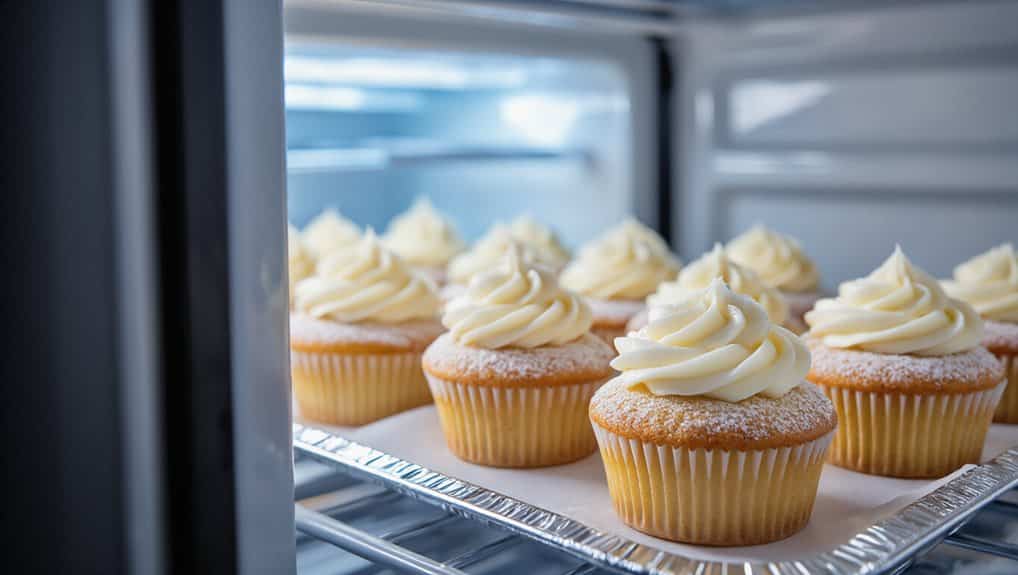
Moisture‑preserving cupcakes can stay fresh for months if you freeze them correctly. First, cool them completely on a wire rack for one to two hours to avoid steam. Wrap each unfrosted cupcake tightly in plastic or foil, then double‑wrap the pan. Store in a single layer inside an airtight freezer bag or container. Thaw slowly in the fridge before bringing to room temperature.
Troubleshoot Common Dry‑Cupcake Problems and Quick Fixes
Even after you’ve conquered freezing cupcakes for long‑term storage, you may still end up with a dry crumb if something goes wrong during baking. Overbaking, high heat, or convection can evaporate moisture; lower the temperature or switch to conventional mode.
Too much flour, too little sugar, or whole‑wheat substitution saps wetness—measure in grams and stick to the recipe.
Mix butter until fluffy, then add flour briefly; avoid overmixing.
Verify fresh leavening and full liquid amounts.
Wrapping Up
By choosing moisture‑boosting ingredients, mixing gently, and baking at the right temperature, you’ll keep cupcakes tender and soft. Cool them on a rack, store them airtight, and bring frosted cupcakes to room temperature before serving. Add syrups or fillings after baking for extra juiciness, and freeze leftovers for longer storage. If they dry out, a quick brush of simple syrup or a brief reheating can revive them, ensuring every bite stays delightful moist.


