
Your homemade Alfredo sauce will last 3-4 days in the refrigerator when stored properly in an airtight container. If you've bought it from the store, unopened sauce can stay fresh for 6-18 months in your pantry, while opened store-bought versions remain good for 3-14 days in the fridge. You'll know it's spoiled if you notice sour smells, discoloration, or unusual texture changes. For longer storage, you can freeze Alfredo sauce for up to 4 months at 0°F, though you'll need to thaw and reheat it carefully to maintain its creamy consistency. Understanding proper storage techniques can help you maximize your sauce's shelf life and maintain its quality.
TLDR
- Homemade Alfredo sauce stays fresh for 3-4 days when stored properly in an airtight container in the refrigerator.
- Unopened store-bought Alfredo sauce can last between 6-18 months when stored in a cool, dry pantry.
- Once opened, store-bought Alfredo sauce remains good for 3-14 days in the refrigerator, depending on the manufacturer's guidelines.
- Frozen Alfredo sauce maintains quality for up to 4 months when stored at 0°F in airtight containers.
- Signs of spoiled Alfredo sauce include sour smells, discoloration, unusual texture changes, or visible mold growth.
What Is Alfredo Sauce

Alfredo sauce is a rich, creamy Italian-American pasta sauce made primarily from butter, heavy cream, and Parmesan cheese. While the authentic Italian version uses just Parmesan, butter, and pasta water, you'll find the American adaptation includes heavy cream and often garlic. To maintain its creamy texture, it's important to prevent separation during cooking and reheating. You can adjust the sauce's thickness by adding pasta water or cream, and it pairs perfectly with fettuccine and various proteins. This beloved sauce takes just 10 minutes to prepare and requires minimal kitchen equipment.
Storage Times by Type
You'll find significant differences in how long your Alfredo sauce lasts based on whether it's homemade or store-bought.
While homemade Alfredo sauce typically keeps for 3-4 days in the refrigerator, high-fat dairy in the sauce can help extend its freshness during storage. Unopened store-bought versions can last 6-18 months in your pantry.
Once you've opened a store-bought Alfredo sauce, you'll need to refrigerate it, where it can stay good for 3-14 days depending on the manufacturer's guidelines. For optimal storage, keep your sauce in airtight containers to maintain freshness and prevent contamination.
Store-Bought vs. Homemade Duration
The key difference between store-bought and homemade Alfredo sauce lies in their storage times.
Store-bought versions can last 6-18 months unopened in your pantry and 3-14 days in the fridge once opened, thanks to preservatives.
In contrast, your homemade Alfredo sauce will only stay fresh for 3-4 days when refrigerated, even when stored properly in an airtight container. To maintain quality, you should store your sauce in airtight containers to prevent unwanted odor absorption and potential spoilage.
Opened vs. Sealed Timelines
When it comes to storage times, sealed and opened Alfredo sauce have drastically different shelf lives.
You'll find that unopened, store-bought Alfredo sauce can last 6-18 months when properly stored in a cool, dry place.
Once you've opened the sauce, you'll need to refrigerate it immediately and use it within 3-4 days for the best quality and safety. Store tightly sealed in the refrigerator to maintain freshness and prevent contamination.
Proper Storage Methods

Properly storing Alfredo sauce makes all the difference in maintaining its creamy texture and rich flavor. To prevent separation during reheating, store it in airtight containers at the back of your fridge, keeping temperatures below 40°F.
When freezing, let the sauce cool completely and leave space for expansion. For longest-lasting results, consume frozen Alfredo sauce within three months of storage. You'll want to use clean glass jars or freezer-safe containers, and don't forget to label everything with dates.
Signs of Spoiled Sauce
Even with perfect storage, identifying spoiled Alfredo sauce can save you from an unpleasant dining experience.
Watch for telltale signs like sour or rancid smells, which are often the first indicators of spoilage.
You'll want to check for yellowish or brown discoloration, unusual texture changes, or separation.
If you spot any fuzzy mold growth or notice a grainy consistency, it's time to discard the sauce. Additionally, be cautious as cooked eggs are highly perishable and can harbor harmful bacteria if not stored properly.
Freezing Alfredo Sauce

Freezing Alfredo sauce provides an excellent way to extend its shelf life and maintain your sauce's delicious flavors.
You'll want to let the sauce cool to room temperature, then transfer it to airtight containers or freezer bags, leaving space for expansion.
For best results, store it at 0°F for up to 3-4 months, and consider portioning it into smaller servings for easier thawing later. Proper storage ensures optimal freshness and helps you enjoy your sauce at its best when you're ready to use it.
Thawing and Reheating Tips
Once you've frozen your Alfredo sauce, knowing the right thawing and reheating methods will help maintain its creamy texture and rich flavor.
You can thaw the sauce by adding it directly to your cooking or warming it gently on low heat.
For reheating, use your stovetop over low heat while stirring frequently, or microwave in 30-second intervals.
Add a splash of milk if needed to maintain consistency.
Extending Shelf Life
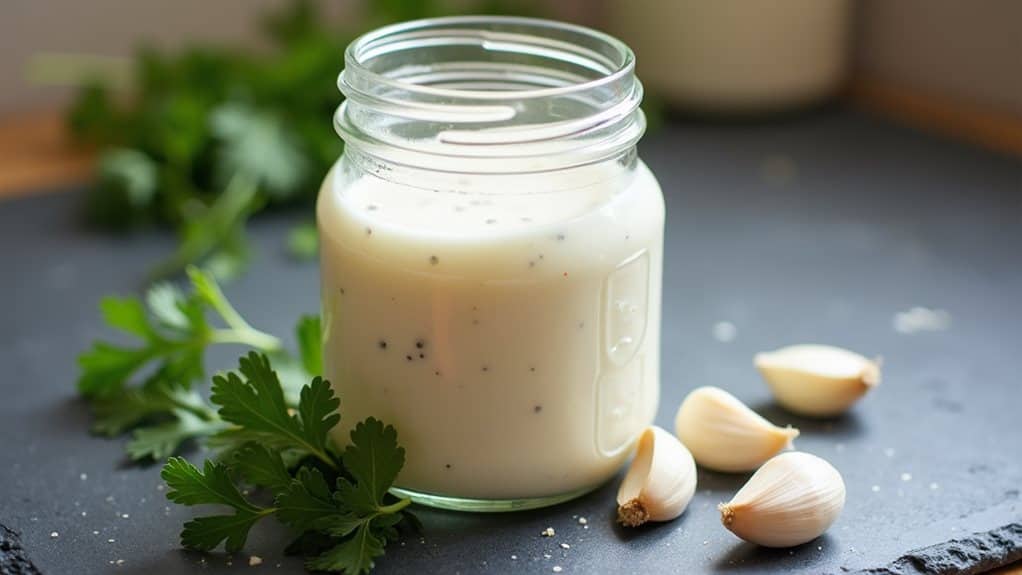
To maximize your Alfredo sauce's shelf life, you'll need to maintain consistent temperature control at or below 40°F in your refrigerator, keeping it away from the door where temperatures fluctuate.
You can protect your sauce's quality by storing it in airtight containers that shield it from moisture and unwanted odors from other foods.
Breaking down larger batches into smaller portions will help you avoid repeated exposure to air and temperature changes, which can greatly extend the sauce's usability.
Proper Temperature Control
Maintaining proper temperature control is essential for maximizing your Alfredo sauce's shelf life.
You'll want to store it at 40°F (4°C) or below in your refrigerator, avoiding the door where temperatures fluctuate.
Place your sauce in shallow containers and let it cool slightly before refrigerating, making sure to refrigerate within two hours of cooking or opening to prevent bacterial growth.
Best Storage Practices
Beyond temperature control, proper storage techniques can greatly extend your Alfredo sauce's shelf life.
Store your sauce in airtight containers or freezer bags, leaving an inch of headspace for expansion.
You'll want to label each container with the date and contents, then organize them with older items in front.
For easy portioning, try freezing the sauce in ice cube trays before transferring to freezer bags.
Restaurant Leftovers Storage Guide
Proper storage of restaurant leftovers can mean the difference between enjoying another delicious meal and risking foodborne illness.
When you're bringing home leftover Alfredo sauce from a restaurant, transfer it to a shallow, airtight container within two hours of dining. Label the container with the date, and refrigerate it immediately.
You'll want to store it separately from raw foods and consume it within 3-4 days.
Safety Precautions
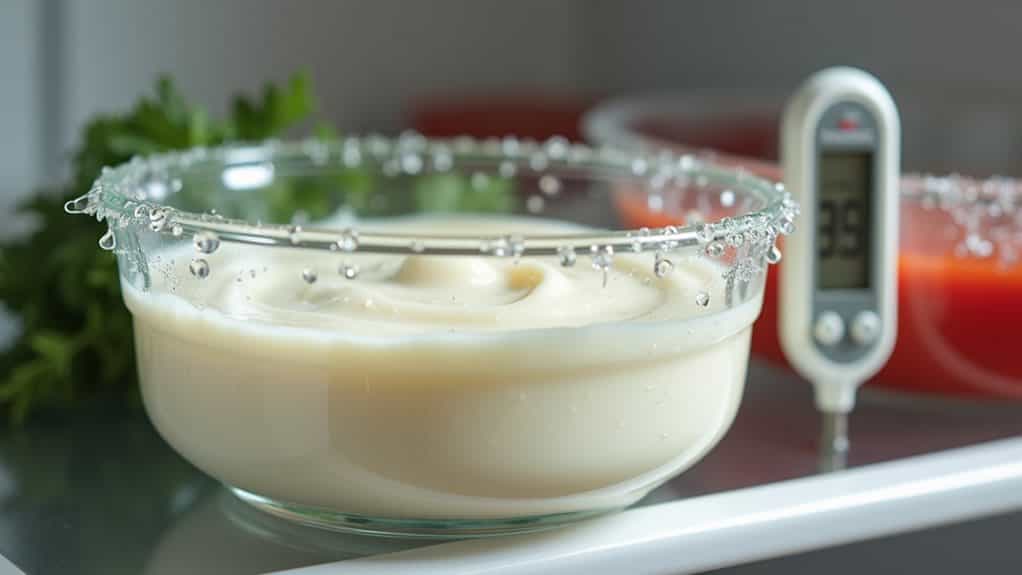
Safe handling of Alfredo sauce requires careful attention to several key practices.
You'll need to store it in airtight containers away from raw meats, and always use clean utensils when serving.
Keep the sauce at or below 40°F, and don't leave it in the fridge door where temperatures fluctuate.
When reheating, verify it reaches 165°F throughout, stirring frequently for even heating.
And Finally
Now you're equipped to handle your Alfredo sauce like a pro. Whether you're storing homemade or store-bought sauce, remember to keep it refrigerated, watch for signs of spoilage, and use it within the recommended timeframes. If you're freezing your sauce, follow proper methods and thawing techniques. With these storage guidelines, you'll maximize your sauce's shelf life while keeping it safe and delicious for your next pasta dish.


