
Pine nuts can definitely go bad, typically lasting 3-6 months at room temperature or up to a year when refrigerated. You’ll know they’re spoiled if you notice yellowing, black rings, mold, or an unpleasant odor. To keep them fresh, store them in breathable containers away from heat and moisture, or freeze them in airtight containers for long-term storage. Regular inspection and proper storage temperatures between 32-36°F will help maintain their quality. Let’s investigate the best methods for maximizing their shelf life.
Quick Guide
- Pine nuts can go bad within 3-6 months at room temperature but last up to 12 months when refrigerated.
- Store pine nuts in breathable containers away from heat, moisture, and sunlight to prevent spoilage.
- Watch for yellowing, black rings, mold growth, or unpleasant odors as signs of spoiled pine nuts.
- Freezing extends pine nut shelf life significantly, especially when stored in airtight containers at 0°F or below.
- Toast pine nuts before storage and ensure they’re completely cool to maintain freshness and prevent moisture buildup.
Understanding Pine Nut Shelf Life
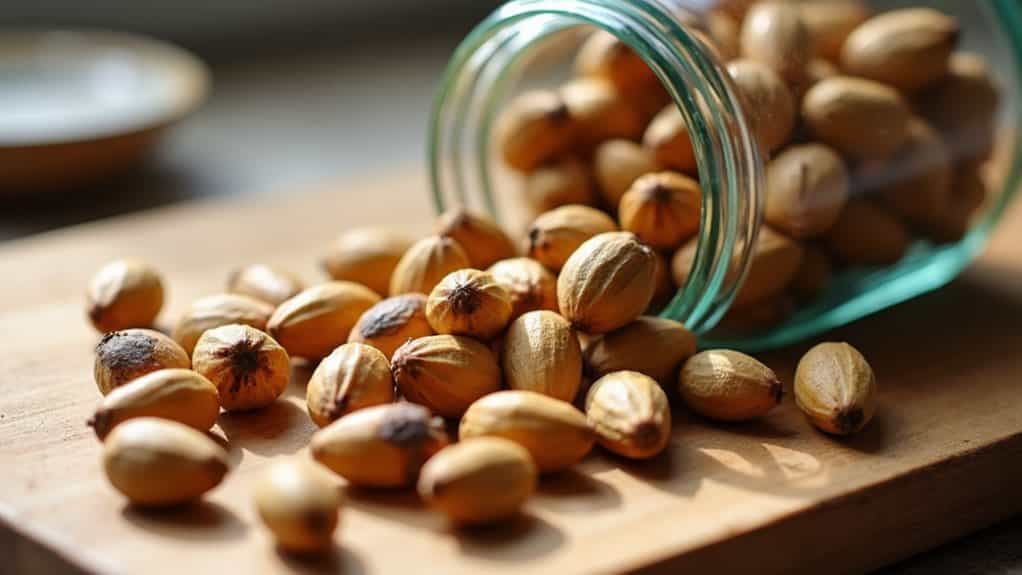
When it comes to preserving pine nuts, understanding their shelf life is essential for maintaining their quality and preventing waste.
You’ll get about 3-6 months of shelf life at room temperature, while refrigeration extends this to around 12 months. Proper storage is crucial, as air exposure can lead to spoilage and rancidity.
If you’re planning for long-term storage, freezing is your best option, as it can preserve pine nuts almost indefinitely when stored properly. For optimal freshness, store them in an air-tight container away from heat, moisture, and direct sunlight.
Best Storage Methods for Pine Nuts
Proper storage techniques can make the difference between preserving your pine nuts’ rich, buttery flavor and ending up with rancid, inedible nuts.
Avoid storing pine nuts in airtight containers or bags, as this can lead to moisture buildup and spoilage. Proper storage is crucial for maintaining freshness and nutrients.
You’ll find three effective methods: cool and dry storage in breathable containers, refrigeration for short-term use, or freezing for long-term preservation.
For best results, consider toasting your pine nuts before storage, and always guarantee they’re completely cool before storing.
Warning Signs of Spoiled Pine Nuts
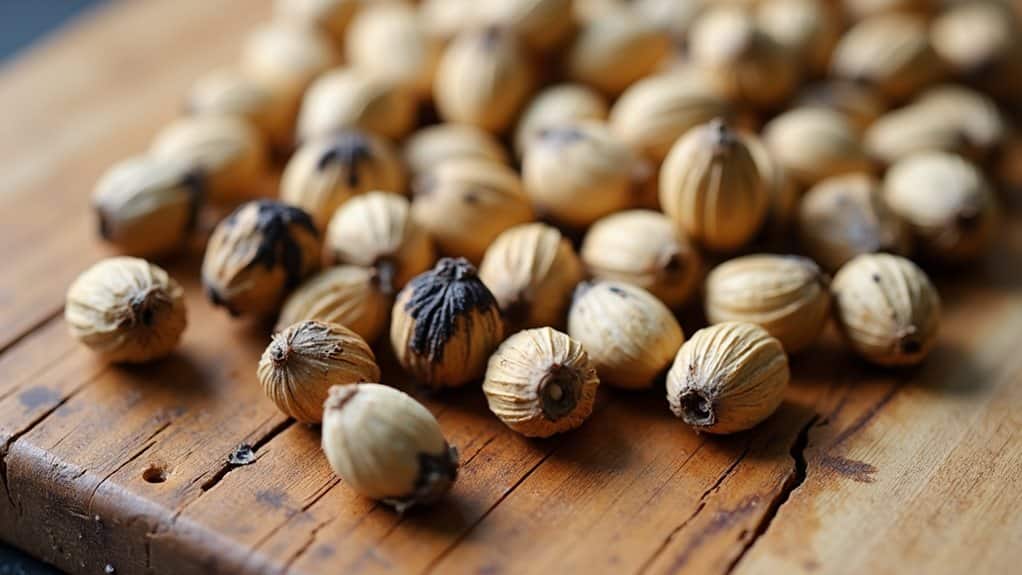
Identifying spoiled pine nuts requires attention to multiple sensory cues that can alert you to potential problems.
Look for any changes in color, such as yellowing or black rings, and watch for mold growth. Proper storage is essential to prolong their freshness and prevent spoilage.
Unlike most nuts that last 6-9 months, pine nuts have a significantly shorter shelf life of 2 months.
You’ll notice a strong, unpleasant odor if they’re rancid, along with bitter or metallic tastes.
If your pine nuts display any of these warning signs, it’s best to discard them.
Freezing Pine Nuts for Maximum Longevity
Since pine nuts contain high levels of natural oils, freezing them correctly is your best defense against spoilage.
To maximize longevity, toast the nuts first and let them cool completely.
Store them in airtight containers or freezer bags, removing as much air as possible.
You’ll want to keep your freezer at 0°F or below, which can preserve your pine nuts for up to a year. Additionally, regular checks on food storage conditions can help prevent spoilage and ensure safety.
Proper Container Selection for Pine Nuts
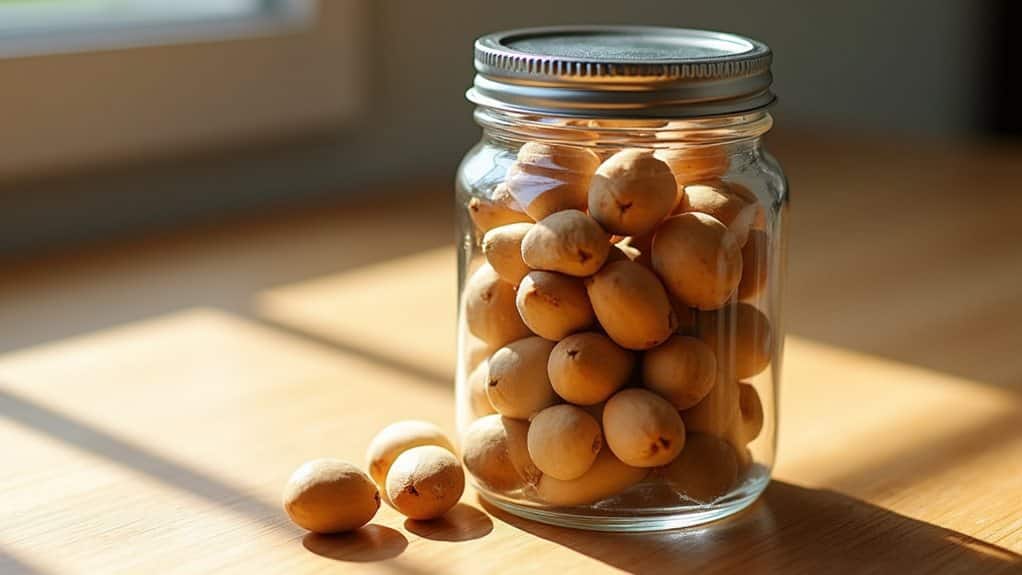
When it comes to storing pine nuts, choosing the right container can make the difference between keeping them fresh and finding a rancid mess.
You’ll want to avoid airtight sealed containers for room-temperature storage, as they can trap moisture. Instead, opt for paper bags or cotton sacks that allow airflow.
For refrigerated storage, you can use glass or plastic containers with tight-fitting lids.
Essential Tips for Maintaining Pine Nut Freshness
To keep your pine nuts fresh for months, you’ll need to select containers that let them breathe while protecting them from moisture and strong odors.
You should maintain storage temperatures between 32-36°F and humidity levels of 40-60% for ideal preservation.
Make it a habit to inspect your pine nuts regularly for any signs of spoilage, including mold growth, off-putting smells, or changes in appearance that could indicate they’ve gone bad.
Choose Proper Storage Containers
Proper storage containers play an essential role in maintaining the quality and extending the shelf life of your pine nuts.
Choose breathable options like paper bags or cotton sacks instead of airtight plastic containers, which can cause rancidity.
Glass jars with ventilation holes work well for short-term storage, while heavy-duty freezer bags are suitable for long-term freezing.
Just remember, your containers should allow for air circulation.
Monitor Temperature and Humidity
Since temperature and humidity directly impact the quality of your pine nuts, monitoring these conditions is essential for maintaining their freshness.
Keep them at temperatures between 0-10°C, with relative humidity between 55-70%. For short-term storage, aim for 32-36°F, while freezer storage works best for long-term preservation.
Store your nuts in moisture-proof containers and avoid warm, humid areas that can cause rancidity.
Check for Quality Regularly
Regular quality checks serve as your first line of defense against spoiled pine nuts and can save you from consuming rancid or deteriorated nuts.
Check your pine nuts for any off-putting smells, discoloration, or unusual texture. Look out for signs of mold, excessive dryness, or oily residue.
You’ll want to discard any nuts that appear stained, show signs of rotting, or smell rancid.
Wrapping Up
You’ll find that pine nuts can stay fresh and flavorful when you follow proper storage guidelines. Store them in an airtight container in your fridge for up to three months, or freeze them for up to a year. Always check for signs of rancidity before use, and remember that proper storage is key to preserving their delicate flavor and nutritional value. With these practices, you’ll get the most from your pine nuts.


