
Pick boneless, skinless breasts (or thighs for more flavor), trim any skin, then poach them in water or stock until tender. Let the meat rest ten minutes, keeping it warm. Hold a fork in each hand with the handles near the base and the tines pointing down, shoulders shoulder‑width apart. Place the dominant fork in the center of the breast and the other on the edge, then pull the tines apart slowly, following the grain. If the shreds feel dry, splash a little broth and give them a quick reheating. Use this method and you’ll master quick, fluffy shreds, and the next steps will show you how to store and reuse them efficiently.
Quick Guide
- Cook boneless, skinless chicken breasts (or thighs) by poaching in water or stock until tender, then let rest 10 minutes.
- Hold a fork in each hand, tines outward, shoulders shoulder‑width apart, and align tines parallel to the grain.
- Using the dominant fork in the center, pull the tines apart slowly, following the grain to create even shreds.
- If the chicken is dry, stir in a splash of warm broth or water and gently reheat before shredding.
- Store shredded chicken in an airtight container with a silicone gasket to retain moisture and keep fresh up to four days.
Prepare Chicken for Shredding
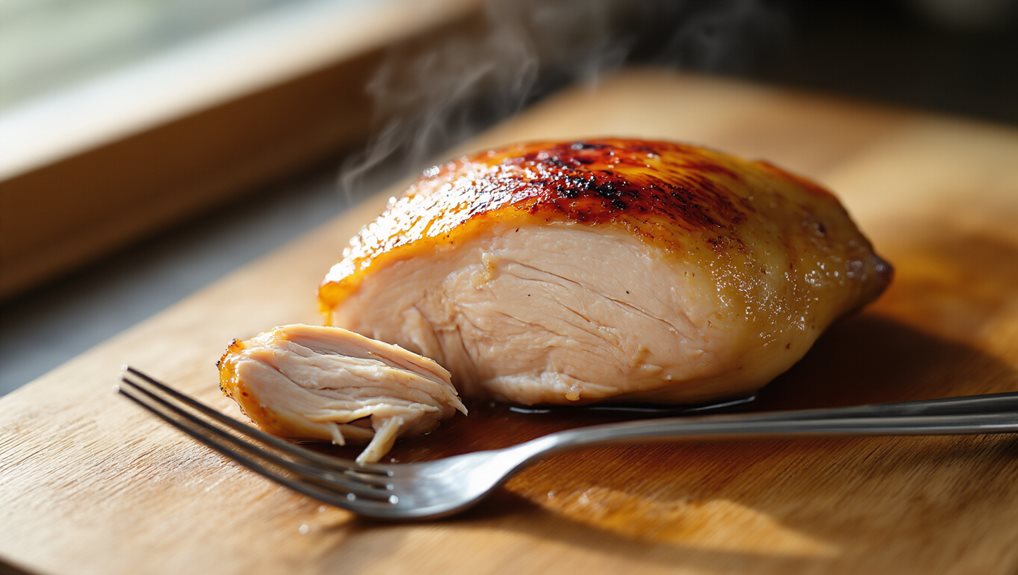
How do you get chicken ready for shredding? Choose boneless, skinless breasts for easy pull, or thighs for richer flavor. Remove any skin, then poach in water or stock, covering the meat by an inch. After boiling, simmer with a lid until tender, then let it rest ten minutes on a plate, keeping it warm and juicy before you begin shredding. Store leftover shredded chicken in an airtight container with a silicone gasket to help prevent moisture loss and odor transfer. The stovetop method also preserves nutrients due to its shorter cooking time.
How to Hold the Forks for the Best Pull
Ever wondered why a proper fork grip makes shredding chicken effortless? Hold one fork in each hand, handles near the base, tines outward and down. Position the dominant fork in the center, the other on the edge, keeping shoulders shoulder‑width apart. Keep wrists flexible, spread tines slightly, and align them parallel to the grain for smooth, controlled pulls. If you’re shredding chicken for pizza or sandwiches, remember deli meats like pepperoni should only sit out for up to 2 hours to prevent bacteria growth. Using a hand mixer on low speed can also quickly shred chicken, offering a hand mixer option when you prefer an appliance.
Pull the Fork Tines to Shred Chicken Perfectly
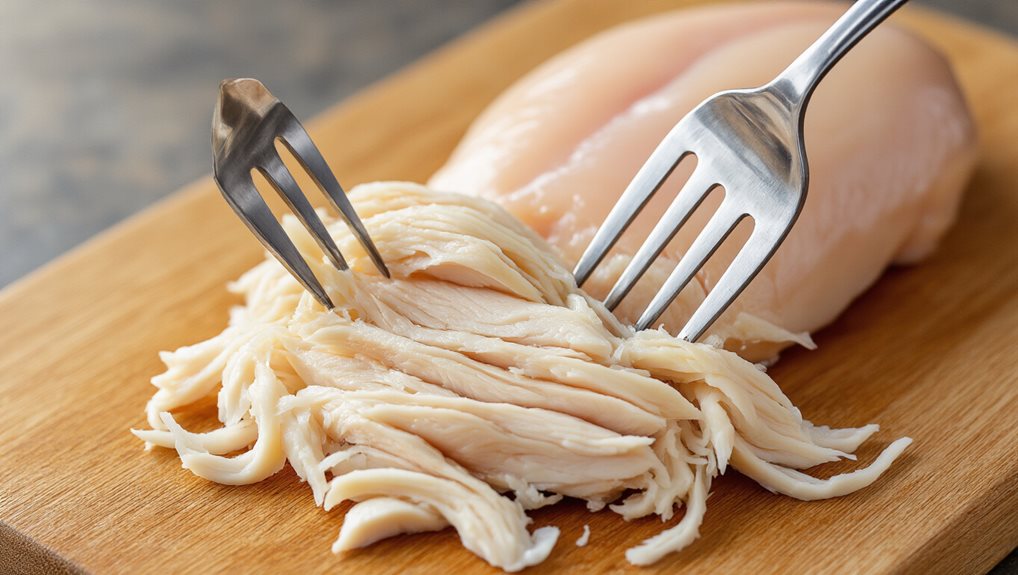
Why should you focus on the fork tines when shredding chicken? Pull the tines apart slowly, following the grain, to control shred thickness.
Warm chicken shreds easier, so let it cool just enough to handle without losing juices.
Adjust angle and speed for larger or smaller pieces, and make multiple passes if finer texture is needed, keeping moisture intact.
If you’re saving leftovers, store shredded chicken in airtight containers to block air and moisture and help preserve quality.
Troubleshoot Common Shredding Problems
If your chicken feels like a dry rope and the fork tines struggle to pull it apart, you’re probably dealing with overcooking or insufficient moisture.
Warm, properly cooked meat will slip apart easily, while cooled or undercooked pieces stay stubbornly together.
Adjusting cooking time, adding a splash of broth, and shredding while the chicken is still warm will keep the fibers supple and the process smooth.
Just like cooking methods can reduce bitterness in eggplant seeds, adding a little liquid and working while the meat is warm helps keep chicken fibers tender and easy to shred.
Dry Chicken Too Dry
A dry chicken texture usually means the meat lost too much moisture during cooking, which makes shredding difficult. Overcooking or using high heat evaporates juices, and shredding before the 5‑10‑minute rest compresses fibers.
To rescue, stir in 2‑4 Tbsp broth or warm water, cover, and heat low for 3‑5 minutes. Let it rest briefly, then add a drizzle of oil or butter for smooth, pliable strands.
Shredding Too Tough
Pull the chicken apart while it’s still warm, because cooled meat firms up and resists separation. If the bird is overcooked, moisture escapes, fibers tighten, and they snap instead of sliding. Let it stay hot, avoid excessive force, and remove fat, sinew, and bones before shredding. Gentle pressure lets the meat separate cleanly, producing long, tender strands without tearing.
Alternative Tools to Shred Chicken Without Forks
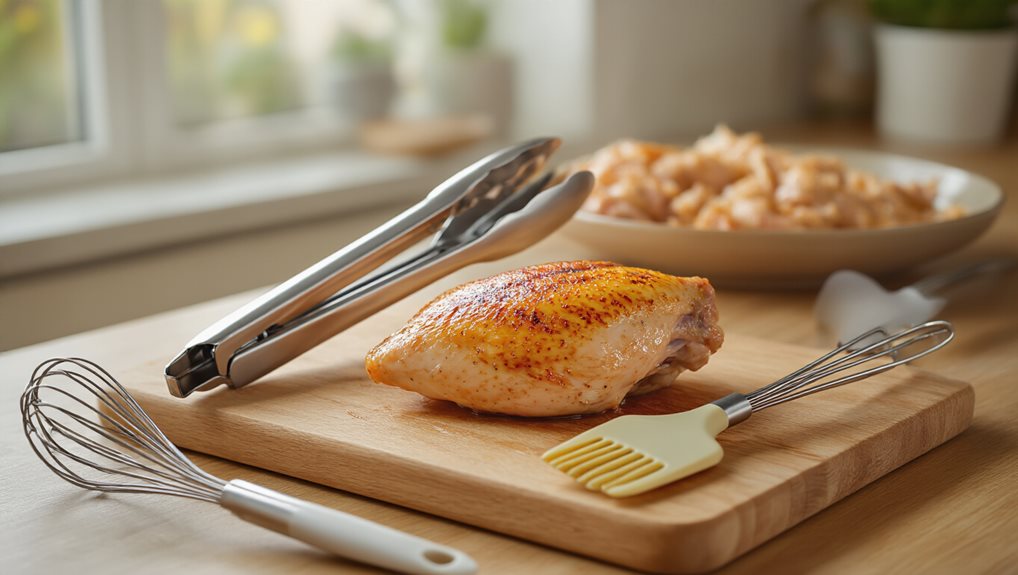
You can swap the fork for a hand mixer, which shreds chicken in under a minute with just a few low‑speed strokes.
A food processor set to pulse gives you control over texture while handling larger batches quickly.
If you prefer a dedicated gadget, shredding claws let you pull apart meat without any motorized equipment.
Store leftover shredded chicken in clear organizer bins to keep portions visible and easy to grab from the fridge.
Hand Mixer Method
Ever wondered how a hand mixer can turn warm, cooked chicken into perfectly shredded pieces in seconds?
Place the warm, seasoned chicken straight into the mixer bowl, attach the flat beater, and set the handheld mixer to a low speed.
Run it for 30 seconds to a minute, watching the fibers separate quickly.
The result is consistent, fluffy shreds without any manual effort, perfect for small batches.
Food Processor Pulse
Wondering how a food processor can turn cooked chicken into perfect shreds in seconds? Use the slicer disk, not the shredding blade, and add cooled chicken through the top opening without pushing. Pulse briefly, letting gravity feed the meat, then stop to check texture. Remove any large pieces and pulse again if needed. This method yields fine, even shreds quickly, perfect for dips and fillings.
Shredding Claws or Forks
Shredding claws give you a quick, hands‑free way to pull cooked chicken apart, and they work especially well when you need a large batch ready fast. You hold the meat steady with one claw, then rake and pull with the other, producing uniform shreds in a mixing bowl. The ergonomic handles reduce fatigue, and the tines keep fingers clean. Dishwasher‑safe models clean easily, and they work on pork, turkey, or beef too.
Store and Reuse Shredded Chicken for Recipes
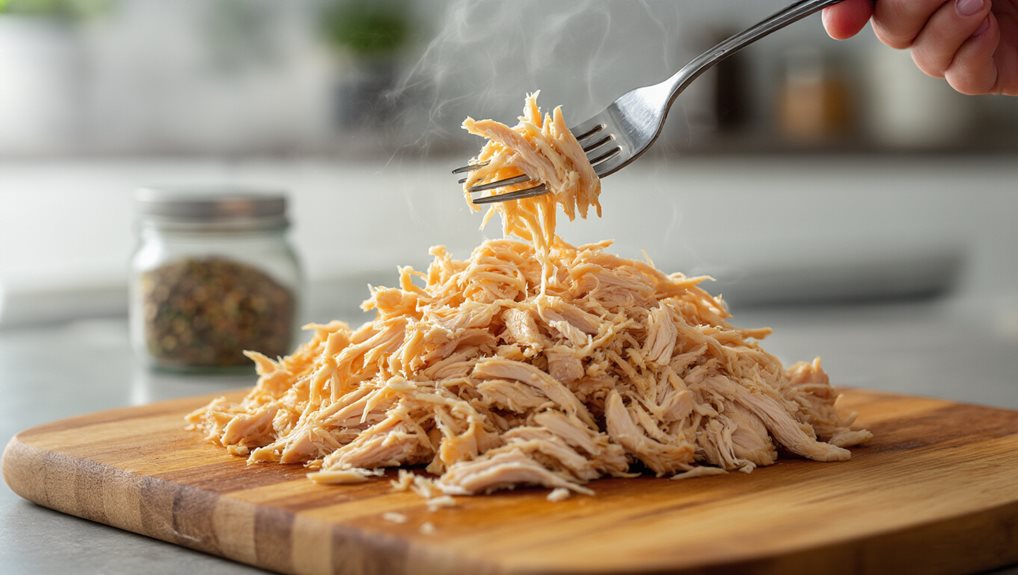
Storing shredded chicken properly lets you keep it fresh for up to four days in the refrigerator and then safely transfer it to the freezer by day three to avoid waste.
Cool it to room temperature, then seal it in an airtight container on a middle shelf; keep the fridge at 40 °F.
Transfer to gallon‑size freezer bags by day three, label, and freeze indefinitely.
Thaw in the fridge six hours before reuse.
Wrapping Up
Now you’ve got a quick, reliable way to shred chicken with a fork, you can handle any recipe that calls for tender, bite‑size pieces. The technique works for cooked, cooled chicken and takes just a few minutes, so you won’t waste time or effort. Remember to hold the fork firmly, pull the tines evenly, and adjust pressure if the meat resists. With this method, you’ll always end up with perfectly shredded chicken ready for tacos, salads, soups, or any dish you choose.


